
The first time many people hear the phrase “What is bologna made of?”, they probably imagine a much more complicated answer than they actually need.
Those perfectly round, pink slices found in sandwiches and lunchboxes have inspired jokes and plenty of curiosity for generations. The smooth texture looks nothing like a traditional cut of meat, and its mild flavor gives few clues about how it was produced.
But the reality is much more straightforward.
Bologna is a type of processed sausage with roots in European culinary traditions. Its history can be traced to Bologna, Italy, where the famous mortadella became an important part of local food culture. Over time, American producers developed their own version, creating the soft, finely textured lunch meat that became a familiar household staple.
So what exactly goes into bologna, and why does it look so different from ordinary meat?
Where Did Bologna Come From?
The name itself provides the first clue.
Bologna is associated with the Italian city of Bologna and the traditional sausage known as mortadella Bologna.
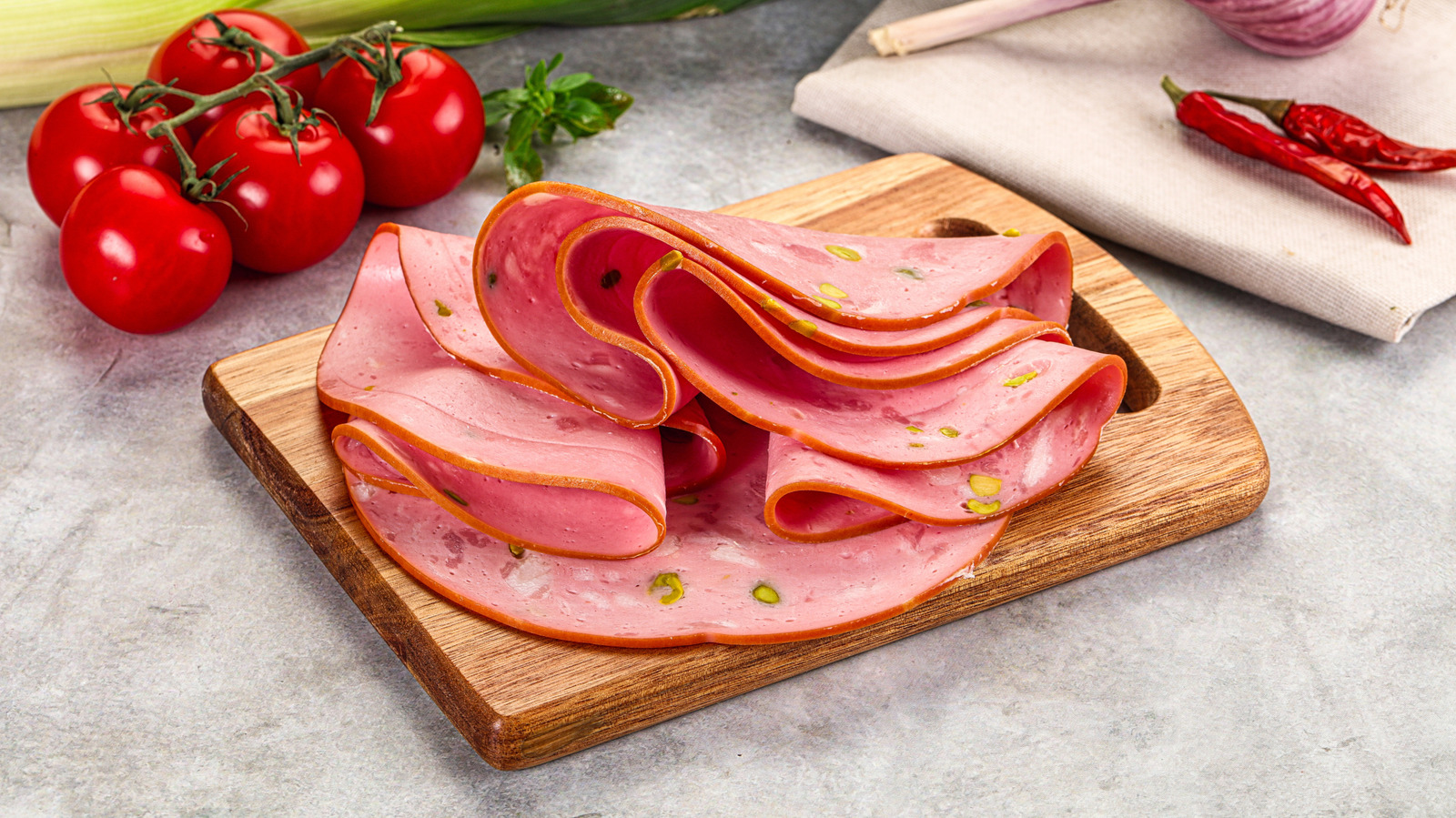
Mortadella has been produced in Italy for centuries and has a very distinctive appearance. Unlike the smooth American lunch meat, traditional mortadella typically has a more noticeable texture, with small cubes of fat distributed throughout the sausage.
It may also contain seasonings and, depending on the recipe, ingredients such as pistachios.
When similar sausage traditions developed in other countries, recipes and production methods changed.
The American version eventually became much smoother and more uniform, making it particularly suitable for slicing and packaging.
What Is Bologna Made Of?
The exact recipe varies between manufacturers, but bologna is generally made from finely ground meat combined with water, seasonings, and other ingredients used to create its characteristic texture.
Depending on the product, the meat may include beef, pork, chicken, turkey, or combinations of these.
The meat is finely processed rather than left in large pieces.
This is one of the main reasons bologna has such a smooth appearance.
Other ingredients may include salt, spices, sugar, preservatives, and ingredients that help maintain the desired texture.
Because recipes differ between brands and varieties, the most reliable way to know exactly what is in a particular package is to check its ingredient label.
Why Does Bologna Look So Smooth?
The smooth texture is one of the most recognizable characteristics of American bologna.
The meat is finely ground and blended during production.
Instead of leaving large pieces of muscle or visible fat throughout the product, manufacturers create a more uniform mixture.
This mixture is then placed into a casing and processed under controlled conditions.
The result is a firm but soft sausage that can be sliced into thin, even pieces.
That consistency is particularly useful for sandwiches.
Every slice looks almost identical, which is part of the reason bologna became so popular as an everyday lunch food.
Is Bologna Really “Mystery Meat”?
The phrase “mystery meat” is mostly a cultural nickname rather than an accurate description of how regulated meat products are produced.
Commercial bologna is manufactured according to food safety and labeling requirements.
The ingredients used in a particular product should be identified on its packaging.
The misconception partly comes from the fact that finely processed meat looks very different from a steak, chicken breast, or other recognizable cut.
When meat is ground and blended into a uniform mixture, it becomes difficult to identify the original appearance of the individual ingredients.
That visual difference can make the product seem mysterious even when its recipe is clearly documented.
What Gives Bologna Its Pink Color?
The familiar pink color is another feature that often raises questions.
Processed meats can retain a characteristic pink or reddish appearance because of the curing and processing methods used during production.
Certain curing ingredients, including sodium nitrite in products where it is permitted and used, can contribute to the characteristic color and flavor associated with cured meats.
The exact formulation depends on the manufacturer and type of bologna.
This is why two products that look similar on the shelf can have somewhat different ingredient lists.
Why Does Bologna Taste So Mild?
Bologna is designed to have a relatively mild and approachable flavor.
Unlike heavily seasoned sausages, it usually does not rely on strong spices to dominate the taste.
Salt and seasonings provide the basic flavor profile, while the finely processed meat creates its characteristic texture.
This mild taste is one reason bologna became popular with families.
It works well in simple sandwiches and can easily be combined with cheese, lettuce, tomatoes, mustard, mayonnaise, or other familiar ingredients.
Bologna Versus Mortadella
Although the two foods are closely connected historically, they are not identical.
Traditional mortadella is generally more visually distinctive.
Large pieces of fat are often visible throughout the sausage, creating a characteristic mosaic pattern.
Some varieties also contain pistachios or other seasonings.
American bologna, by comparison, is usually much finer and smoother.
The difference reflects how food traditions change as they move between countries.
An American producer adapting an Italian-inspired sausage was not necessarily trying to reproduce traditional mortadella exactly.
Instead, the product evolved to suit local preferences, production methods, and the growing demand for affordable sliced lunch meat.
How Is Bologna Produced?
While manufacturing methods differ, the general process involves several stages.
First, the selected meat ingredients are prepared and finely ground.
The meat is then blended with water, salt, seasonings, and other ingredients specified by the recipe.
The mixture is processed until it reaches the desired consistency.
It is then placed into a suitable casing and cooked or otherwise processed under controlled conditions.
After processing, the sausage is cooled and prepared for slicing and packaging.
Modern food manufacturing allows producers to maintain a consistent texture and appearance across large quantities of product.
That consistency is one of the major differences between industrial lunch meat and traditional small-batch sausages.
Why Did Bologna Become So Popular?
Convenience played a major role.
Bologna could be sliced quickly and used immediately in a sandwich.
It did not require complicated preparation, making it particularly useful for packed lunches.
Its relatively mild flavor also made it easy to pair with common sandwich ingredients.
For generations of families, bologna became associated with school lunches, quick meals, picnics, and simple snacks.
In that sense, its popularity was not necessarily based on novelty.
It was based on practicality.
Is Bologna Healthy?
Like many processed meat products, bologna is best enjoyed as part of a varied diet rather than treated as a primary source of nutrition.
The nutritional profile depends on the specific product.
Many varieties contain notable amounts of sodium and fat, while the amount of protein can vary.
Anyone trying to reduce sodium or saturated fat should compare nutrition labels when choosing between different products.
A sandwich containing bologna can also be balanced with vegetables, whole-grain bread, and other nutrient-rich foods.
As with many foods, overall dietary patterns and portion sizes matter more than treating one ingredient as either completely good or completely bad.
Why Does Bologna Have Such a Long Cultural History?
Food often carries memories that go far beyond its ingredients.
For one person, bologna might bring back memories of childhood lunches.
For another, it may be something they discovered much later.
The food has also appeared in countless family recipes and regional variations.
Its simplicity makes it adaptable.
It can be served cold in sandwiches, warmed in a pan, combined with eggs, or incorporated into other simple meals.
That flexibility helped it remain familiar even as eating habits changed.
The Story Behind a Familiar Slice
There is something interesting about foods that become so ordinary that people stop thinking about where they came from.
A slice of bologna may look simple, but its history connects Italian sausage-making traditions with American food manufacturing.
The name points back to Bologna.
The modern texture reflects industrial production.
Its popularity reflects changing ideas about convenience and affordable meals.
And its continued presence in supermarkets shows how strongly familiar foods can become part of everyday culture.
So, what is bologna made of?
The short answer is finely processed meat combined with water, salt, seasonings, and other ingredients that vary by recipe and manufacturer.
The longer answer is much more interesting.
Bologna is a food shaped by history, technology, tradition, and changing tastes.
What once began with European sausage-making traditions eventually became a familiar American lunch staple.
And perhaps that is why the question remains so popular.
Sometimes, the most ordinary foods have the most interesting stories hiding behind them.