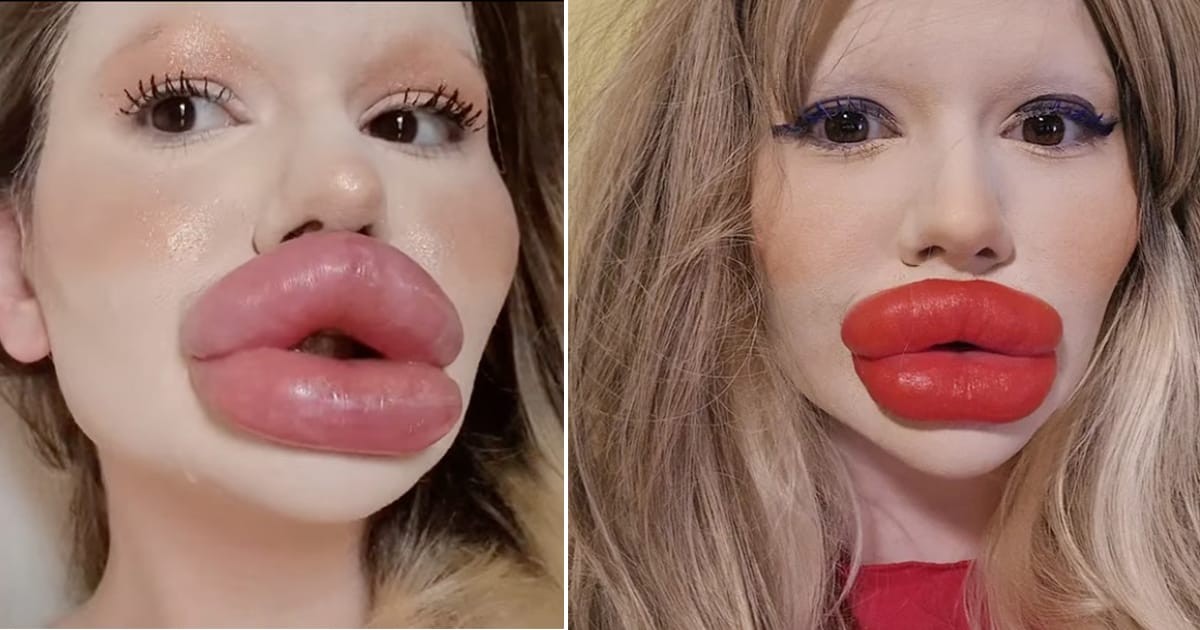
24-Year-Old Andrea Ivanova is on a Quest for the World’s Biggest Lips
Everyone possesses a unique beauty, and it is that diversity which brings vibrancy and richness to our world. However, contemporary beauty standards promoted by the fashion industry and mass media often impose narrow ideals that can leave many feeling dissatisfied about their appearance. These unrealistic benchmarks of ‘perfection’ can drive individuals to seek cosmetic enhancements in hopes of meeting societal expectations.
While many people opt for minimal changes such as subtle make-up or non-invasive touch-ups, a subset of individuals pursue more substantial cosmetic procedures. This is particularly evident in the story of Andrea Ivanova, a young woman from Sofia, Bulgaria, who has become internationally recognized for her pursuit of having the world’s largest lips.
The Influence of Social Perception on Appearance
Throughout history, the perception of beauty has evolved across cultures and eras. In recent times, the amplification of certain facial features—especially through social media—has driven the popularity of cosmetic procedures. Fuller lips, in particular, became a popular beauty trend during the late 2010s, influenced by celebrities and social platforms like Instagram and TikTok.
The phenomenon of augmenting lips is often associated with self-expression, confidence, and sometimes with the desire for positive attention. However, when taken to extremes, such pursuits may raise questions about self-image, psychological well-being, and broader societal pressures.
Andrea Ivanova’s Journey and Motivation
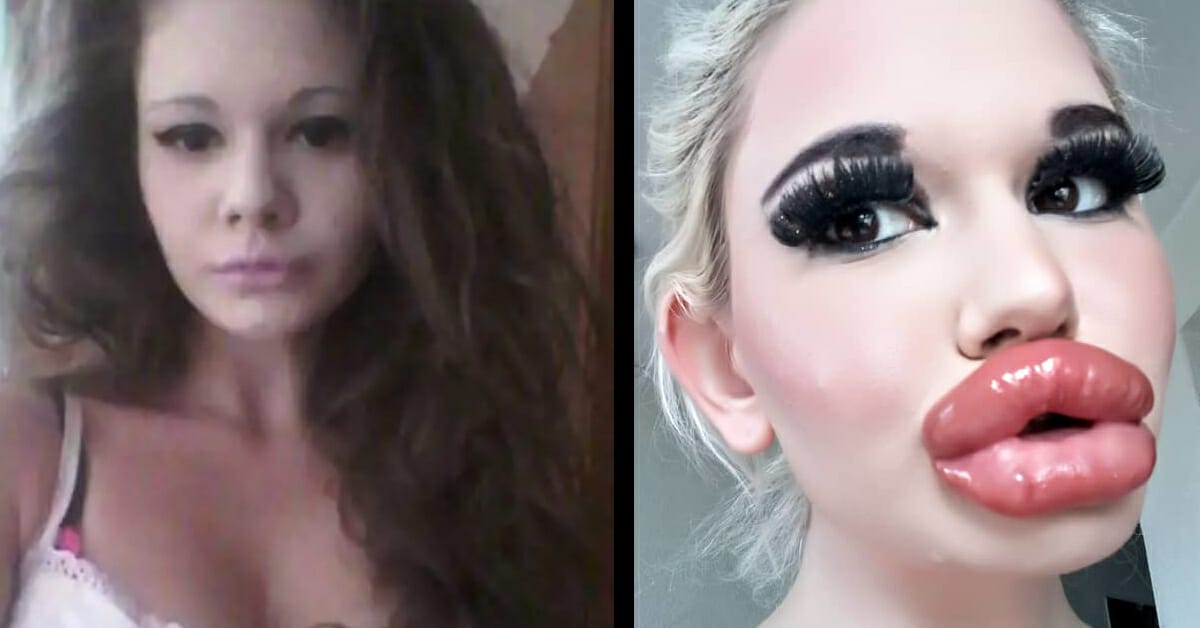
At just 24 years old, Andrea Ivanova has committed herself to a path that few would consider: achieving the largest lips in the world via cosmetic interventions. Andrea’s fascination with lip augmentation began in her late teens, and since then, she has dedicated significant time, resources, and effort toward this goal.
In her own words, Ivanova describes feeling happier and more confident with her increasingly fuller lips. She shares her journey openly on social media platforms, amassing a following both in Bulgaria and internationally. Her pursuit, however, is not without controversy, attracting both support and criticism as public interest in her story has grown worldwide.
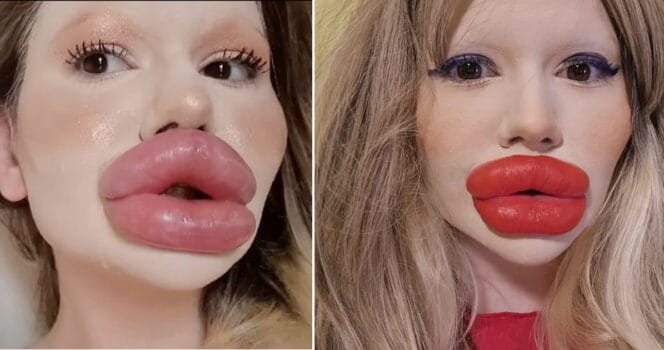
According to reputable news outlets, including Unilad and Malay Mail, Andrea has undergone a total of 27 lip augmentation procedures using hyaluronic acid injections, which has resulted in a dramatic transformation of her appearance.
The Lip Augmentation Procedures and Financial Commitment
Ivanova’s commitment is not only emotional but also financial. Each hyaluronic acid lip injection costs about $150 in Bulgaria. With 27 procedures already performed, her total expenditure is estimated at around $5,000. For context, cosmetic procedures such as lip fillers are typically considered elective and not covered by health insurance, making them accessible primarily to those willing and able to invest considerable personal funds.
Despite the mounting cost and expert medical advice against further augmentation, Andrea has expressed her desire to continue her journey. She openly acknowledges that her aim is to hold the official record for the world’s largest lips, although currently, there is no formal recognition of such a record by organizations like Guinness World Records.
Andrea claims to have studied German philology at the university in Sofia, further highlighting her diverse interests beyond cosmetic enhancement.
Physiological and Health Considerations of Repeated Interventions
The repeated injection of fillers comes with well-documented medical risks. According to the Mayo Clinic and other leading health institutions, potential side effects of lip fillers include swelling, bruising, infection, tissue damage, uneven results, and allergic reactions. While many individuals tolerate minor interventions well, the cumulative effect of multiple procedures can increase these risks.
Andrea herself has admitted to experiencing difficulty eating in the days following her injections, stating, “It was hard to eat after the injection, and two to three days after the procedure get more difficult. However, there are no restrictions on what I can eat.” While such symptoms are commonly reported after cosmetic injections, experts recommend moderation and careful medical supervision, particularly when pursuing extreme outcomes.
Several medical professionals, as relayed by Andrea, have advised her to stop further augmentations. Nonetheless, at least one doctor has agreed to continue with additional injections, provided sufficient time lapses between sessions, reportedly suggesting a minimum two-month interval for safety.
Societal Reactions and the Role of Social Media
Andrea’s story has elicited substantial attention online. On one hand, she has garnered support from individuals who view her pursuit as a statement of personal autonomy—championing each individual’s right to modify their body as they see fit. On the other hand, her dramatic transformation has sparked criticism and concern, with some suggesting her appearance is a result of pressure exerted by unrealistic beauty standards, or that she may be putting her health at risk for online fame and validation.
Andrea reports receiving numerous messages from admirers around the world, including offers of money, trips, and meetings. Some of her followers, who are familiar with the field of cosmetic augmentation, claim that her lips are unmatched in size, though there is no official confirmation of this claim.
The online reaction to her appearance has not been entirely positive, as Andrea receives a significant amount of negative comments and cyberbullying. She acknowledges this public scrutiny but remarks, “I think everyone should look however they want.” Her response underscores an important point in the discussion about body modification, namely the need for respect and autonomy in personal choices, so long as they do not harm others.
Understanding the Psychology of Body Modification
Plastic surgery and cosmetic interventions are complex choices, influenced by a blend of personal, psychological, and social factors. Research published by the US National Library of Medicine indicates that individuals who undergo repeated cosmetic procedures may experience both improved self-esteem and stress related to body image. Some experts suggest that moderate cosmetic changes can have positive effects on self-perception, but extreme modifications might signal underlying psychological concerns, including body dysmorphic disorder (BDD).
It’s important to recognize that Andrea’s journey would benefit from ongoing medical and psychological support, as is the case with anyone making repeated or extreme body modifications. Professional organizations such as the American Board of Cosmetic Surgery recommend comprehensive consultations and mental health evaluations for those seeking significant cosmetic changes.
Broader Context: The Global Cosmetic Surgery Industry
The global market for aesthetic procedures has grown dramatically over the past decade. According to reports from the International Society of Aesthetic Plastic Surgery, millions of cosmetic procedures are undertaken annually worldwide. Non-surgical treatments such as hyaluronic acid fillers now account for a significant portion of these, reflecting a shift towards less invasive options.
Eastern Europe and the Balkans, including Bulgaria, have seen a rise in the demand for aesthetic procedures, fueled by social media, trending beauty standards, and the accessibility of clinics offering competitive prices. While the cost of such procedures remains lower than in Western Europe or the US, the risks and responsibilities are universal.
International and Professional Perspectives
Responses to Andrea’s journey vary across cultures and professional communities. In Western societies, personal autonomy is highly valued, and cosmetic enhancements are widely accepted within moderation. However, medical and psychological experts routinely warn against pursuing extreme changes, emphasizing the need for informed consent and careful consideration of potential health impacts.
In the broader international media, Andrea’s story is often presented as both a curiosity and a cautionary tale about the extremes of beauty trends and the power of digital influence. Psychologists and medical professionals, citing evidence-based research, caution that repeated cosmetic procedures may become addictive and highlight the importance of addressing any underlying psychological issues.
Promoting Acceptance and Informed Choices
The ongoing dialogue around cosmetic enhancement underscores the value of self-acceptance and the risks associated with striving for unattainable ideals. While cosmetic intervention remains a personal choice, experts encourage individuals to seek professional guidance and to consider both the psychological and physical long-term implications. Society at large benefits when diversity in appearance is valued and when individuals feel empowered to make informed, respectful decisions about their own bodies.
Conclusion
Andrea Ivanova’s high-profile quest for the largest lips in the world serves as a window into current trends, motivations, and debates surrounding cosmetic procedures. Her story highlights the diverse array of factors—from cultural and economic, to psychological and technological—that shape our understanding of beauty and identity in the modern era. As society continues to grapple with evolving beauty standards, Ivanova’s journey invites both empathy and critical reflection on how we define, pursue, and respect individual expressions of self-image.
Sources
- Unilad
- Malay Mail
- BBC News
- Mayo Clinic
- International Society of Aesthetic Plastic Surgery (ISAPS)
- US National Library of Medicine
Disclaimer: This content is intended for entertainment purposes only and is not based on real events.