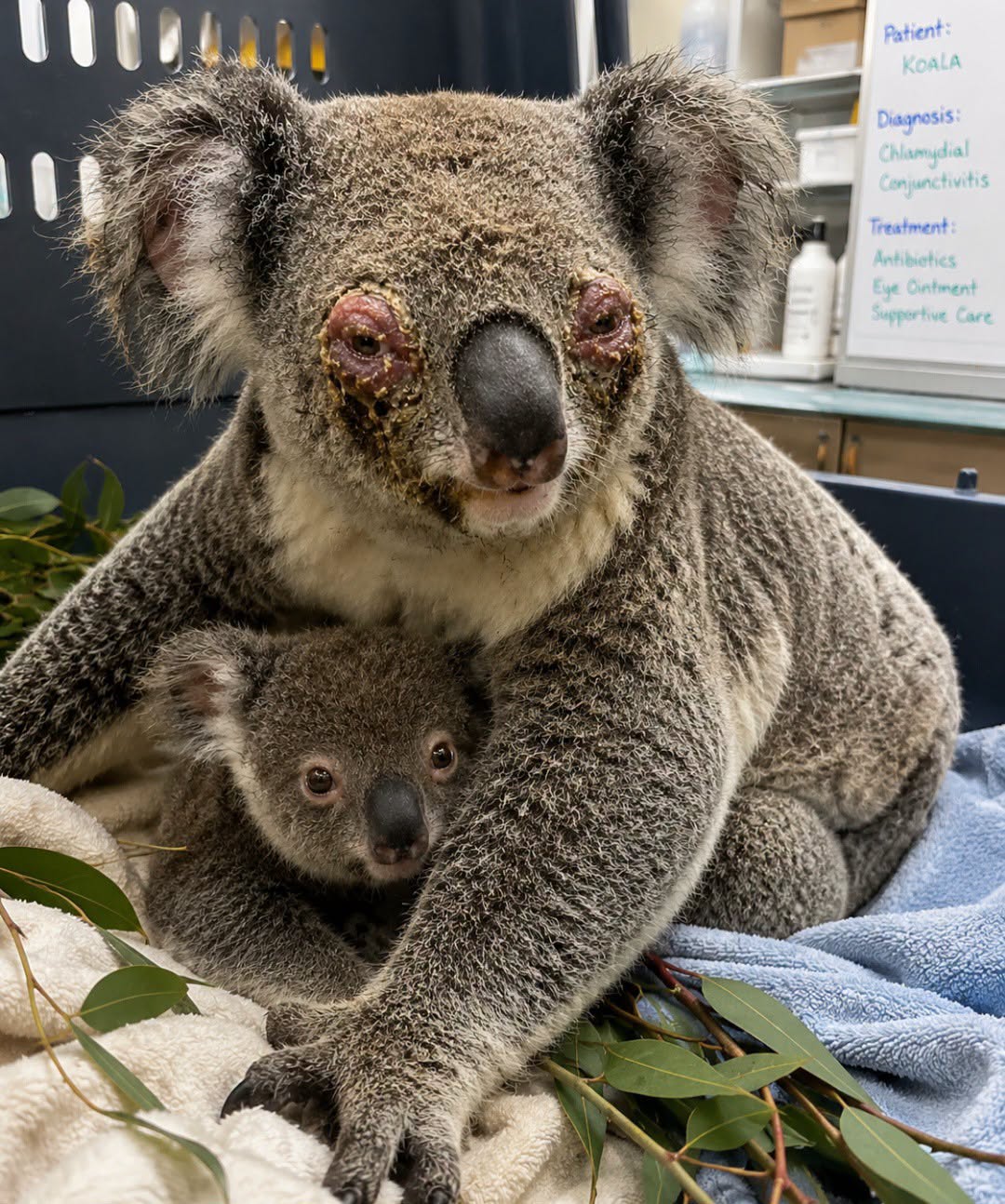
Early one quiet morning, a wildlife rescue hotline received an urgent call from concerned motorists. A female koala was clinging motionless to a eucalyptus tree beside a busy road. She wasn’t climbing higher into the branches, searching for fresh leaves, or moving away from the noise of passing vehicles.
Instead, she remained perfectly still.
Nestled safely against her chest was her tiny joey, holding tightly to the only place it knew as home.
At first glance, rescuers feared the mother had been injured in an accident. However, as they carefully approached, another explanation became clear. Her eyes appeared swollen shut, making it difficult for her to see the world around her.
Although stories like this often circulate online with emotional descriptions, they also shine a light on a very real conservation issue affecting Australia’s koalas. Eye infections associated with chlamydial disease are among the most significant health challenges facing wild koala populations today.
The story reminds us not only of the remarkable bond between mother and joey but also of the importance of wildlife rescue, veterinary science, and habitat conservation.
What Is Chlamydial Disease in Koalas?
Chlamydial disease is one of the most common infectious illnesses affecting wild koalas throughout many parts of Australia.
Unlike the human infection that shares a similar name, koala chlamydia is caused primarily by the bacterium Chlamydia pecorum. The disease spreads naturally among koalas and has become a major conservation concern in several regions.
Veterinarians have spent decades studying the illness because of its widespread impact on both individual animals and entire populations.
Common symptoms may include:
- Inflamed or swollen eyes
- Watery or thick eye discharge
- Difficulty seeing
- Urinary tract infections
- Reduced fertility
- General weakness in advanced cases
Without timely treatment, severe eye infections may reduce vision significantly, making survival in the wild much more difficult.

Why Eye Infections Can Become So Serious
Koalas depend heavily on healthy eyesight.
Although they are known for spending much of their lives resting in eucalyptus trees, they still need clear vision to climb safely, locate food, recognize nearby threats, and care for their young.
When inflammation affects the eyes, everyday tasks become increasingly challenging.
Veterinary teams treating rescued koalas often begin by carefully cleaning the affected eyes before administering antibiotics and supportive care. Recovery varies depending on how advanced the infection has become before treatment begins.
Many koalas improve with early intervention, while others require weeks of ongoing rehabilitation.
The Incredible Bond Between Mother and Joey
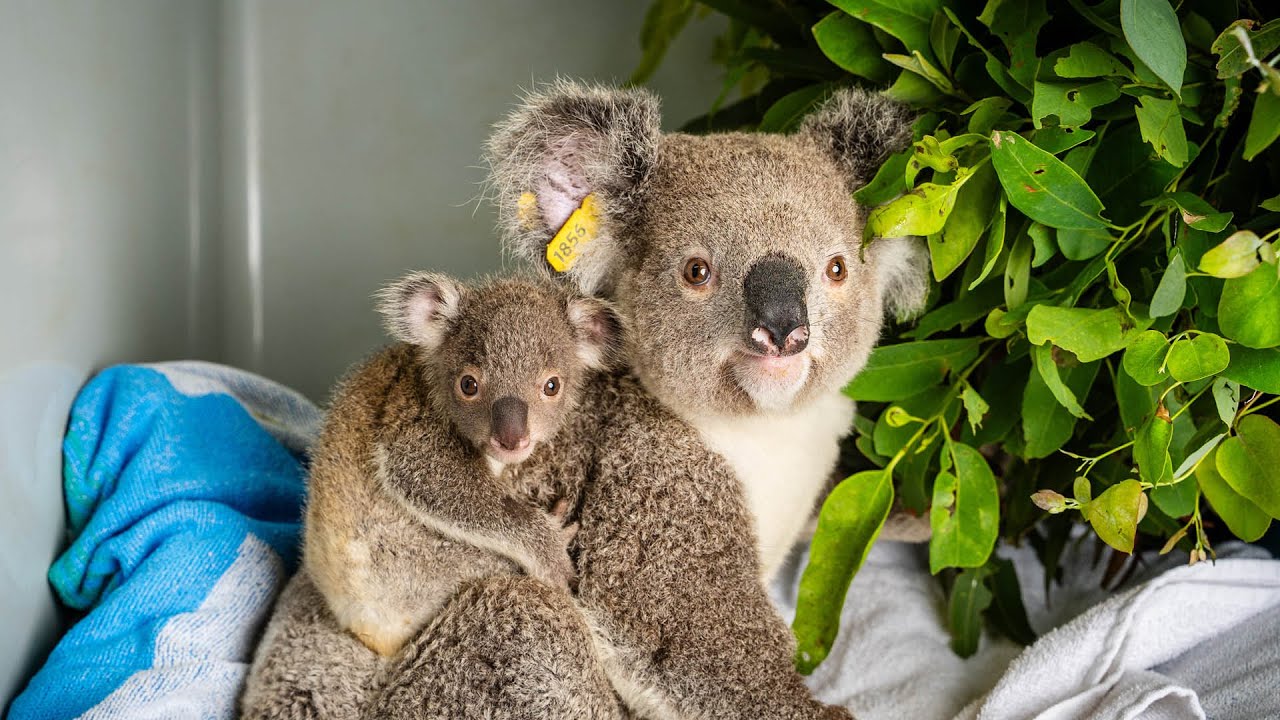
One of the most touching aspects of many wildlife rescues is witnessing the remarkable relationship between a koala mother and her joey.
For the first several months of life, joeys remain almost entirely dependent on their mothers.
They stay safely inside the pouch before gradually riding on their mother’s back or clinging closely to her chest as they grow.
This close physical connection provides:
- Warmth
- Protection
- Food
- Emotional security
- Opportunities to learn climbing and feeding behaviors
Even during illness, many mothers continue instinctively protecting their young.
Wildlife carers frequently report that joeys seek comfort by remaining close to their mothers during examinations and treatment, highlighting one of nature’s strongest parental bonds.
How Wildlife Hospitals Help Sick Koalas
Australia has developed an extensive network of wildlife hospitals, rescue organizations, veterinarians, and trained volunteers dedicated to helping injured and sick native animals.
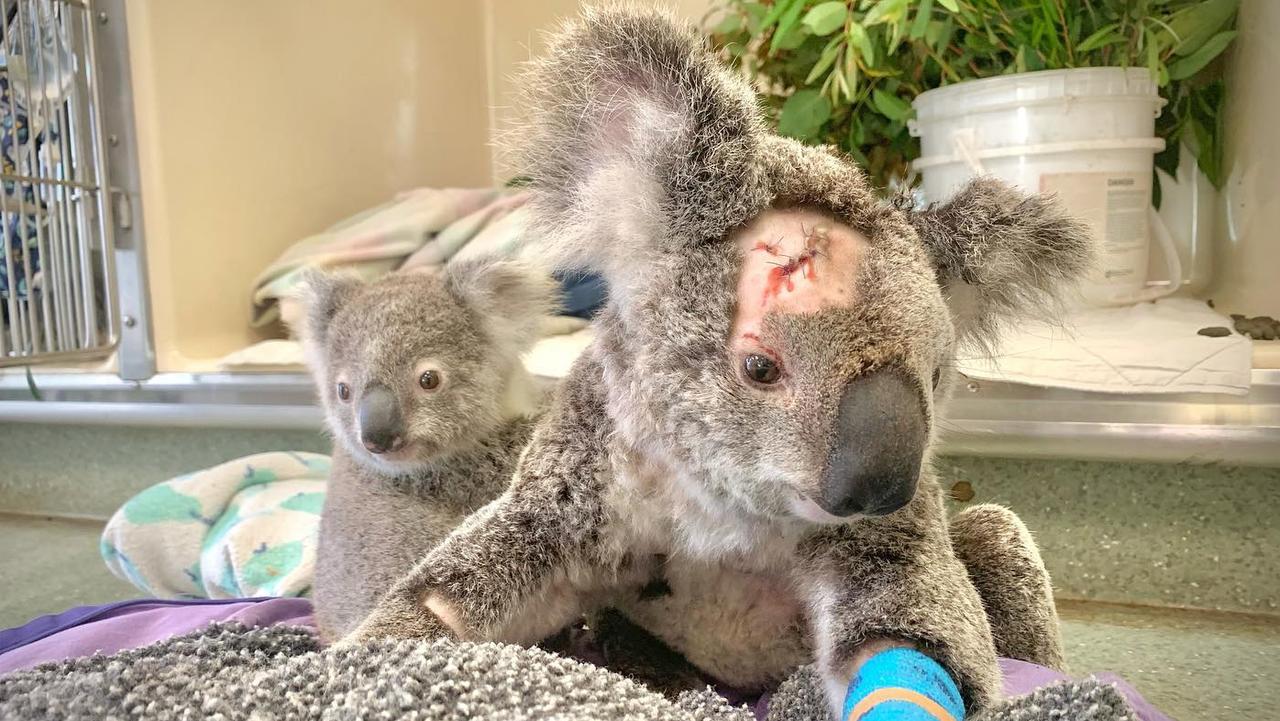
When a koala showing signs of illness is rescued, veterinary teams typically begin with a full health assessment.
Treatment may include:
Careful Medical Examination
Veterinarians evaluate the eyes, ears, breathing, hydration, and overall body condition.
Diagnostic Testing
Laboratory testing may help confirm bacterial infections and determine the most appropriate treatment plan.
Antibiotic Therapy
Chlamydial infections often require carefully managed antibiotic treatment over several weeks.
Fluid Therapy
Hydration helps support recovery, especially if an animal has been eating or drinking less than normal.
Nutritional Support
Fresh eucalyptus leaves are provided while carers monitor appetite and overall health.
Long-Term Monitoring
Before release, veterinarians ensure the koala can climb, feed independently, and navigate safely in its natural environment.
Every rescue is unique, and outcomes depend on many factors including the animal’s age, general health, and how early treatment begins.
Why Koalas Face Multiple Challenges
Disease is only one of several pressures affecting koala populations.
Scientists emphasize that multiple environmental factors often interact, making conservation increasingly complex.
Some of the biggest challenges include:
Habitat Loss
Urban expansion and land clearing reduce the availability of eucalyptus forests that koalas depend upon.
Road Traffic
As habitats become fragmented, koalas may need to cross roads more frequently while searching for food or mates.
Climate Change
Longer droughts, heatwaves, and changing weather patterns can reduce food quality and increase environmental stress.
Bushfires
Large wildfires can temporarily reduce habitat availability and increase the need for wildlife rehabilitation.
Disease
Chlamydial disease continues to affect many wild populations, particularly where environmental pressures already exist.
Researchers believe improving habitat quality may also strengthen overall population resilience.
What Science Says About Chlamydia in Wild Koalas
Scientific research continues to improve our understanding of the disease.
Studies suggest that not every infected koala develops severe symptoms. Some animals may carry the bacteria while showing few outward signs, whereas others become seriously ill.
Researchers are currently investigating several important questions:
- Why some koalas develop more severe disease than others
- How genetics influence resistance
- The relationship between environmental stress and illness
- New vaccines that may help protect wild populations
Encouragingly, vaccine research has shown promising early results in several field studies, although continued research is needed before widespread implementation.
These scientific advances offer hope for future conservation efforts.
Koalas in Australian Culture
Long before becoming an international wildlife symbol, koalas held important cultural significance for many Aboriginal and Torres Strait Islander peoples.
Traditional knowledge reflects deep respect for native animals and the ecosystems they inhabit.
Across different Indigenous cultures, stories involving koalas may represent themes such as:
- Harmony with nature
- Patience
- Balance
- Family care
- Respect for Country
Because traditions vary between communities, there is no single universal interpretation.
These cultural perspectives remind us that wildlife conservation is not only a scientific endeavor but also an opportunity to honor thousands of years of ecological knowledge.
Myths and Misconceptions About Sick Koalas
Stories shared online can sometimes create misunderstandings.
Here are several common myths.
Myth: Every koala with swollen eyes is permanently blind.
Not necessarily.
Many eye infections improve significantly with prompt veterinary treatment.
Myth: Chlamydial disease affects every koala population equally.
In reality, infection rates vary considerably between regions.
Myth: Humans can easily catch koala chlamydia.
The strain affecting koalas is different from the one commonly associated with human infections. Wildlife experts advise normal hygiene practices when handling any wild animal, but there is no evidence that casual observation of koalas poses a health risk.
Myth: Sick koalas should always be left alone.
If a koala appears unusually weak, remains on the ground, or seems unable to climb, contacting licensed wildlife rescue organizations is generally the safest response.
How the Public Can Help Protect Koalas
Everyone can contribute to koala conservation in simple but meaningful ways.
Drive Carefully
Watch for wildlife crossing signs, especially near forested areas.
Protect Habitat
Supporting conservation programs helps preserve native eucalyptus forests.
Report Sick or Injured Wildlife
Licensed wildlife rescue groups are trained to assess animals safely.
Support Scientific Research
Many conservation organizations fund research into vaccines, rehabilitation, and habitat restoration.
Learn From Reliable Sources
Accurate information helps reduce misconceptions while encouraging responsible conservation.
The Future of Koala Conservation
Australia’s koala populations continue to face significant challenges, but there are also reasons for optimism.
Researchers, veterinarians, Indigenous communities, conservation organizations, volunteers, and local residents increasingly work together to improve outcomes for native wildlife.
Innovations in disease management, habitat restoration, wildlife corridors, and vaccine development represent important steps forward.
Every rescued koala contributes valuable information that helps scientists better understand the species and improve future conservation strategies.
Conclusion
The image of a mother koala holding tightly to her joey speaks to something universal—the instinct to protect, nurture, and endure through difficult circumstances.
While emotional stories shared online often capture public attention, the deeper reality is equally meaningful. Chlamydial disease remains a genuine conservation challenge, yet ongoing scientific research, veterinary care, and dedicated wildlife rescue efforts continue to improve the outlook for many koalas.
By combining compassion with evidence-based knowledge, we gain a clearer understanding of both the challenges these remarkable marsupials face and the remarkable work being done to protect them.
Human curiosity often begins with a moving story, but it grows strongest when paired with careful observation, scientific discovery, and a shared commitment to preserving the natural world for future generations.
Sources
- International Union for Conservation of Nature (IUCN) – Koala Species Assessment: https://www.iucnredlist.org
- Australian Government Department of Climate Change, Energy, the Environment and Water – Koala Conservation: https://www.dcceew.gov.au
- University of Sydney – Koala Health Research: https://www.sydney.edu.au
- Australia Zoo Wildlife Hospital: https://wildlifewarriors.org.au
- CSIRO – Australian Wildlife Research: https://www.csiro.au
- World Wildlife Fund (WWF) Australia – Koala Conservation: https://www.wwf.org.au