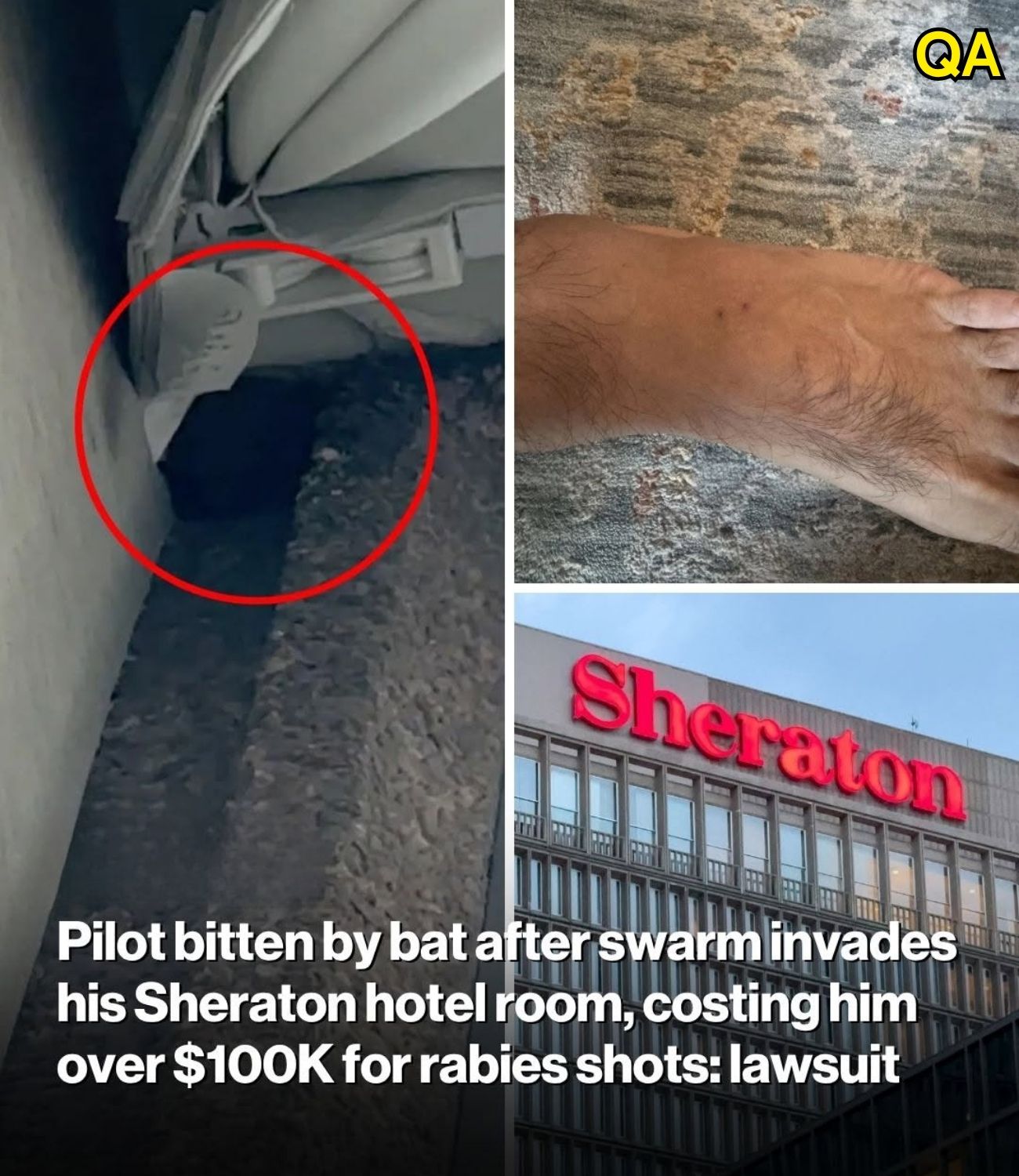
A commercial airline pilot has filed a civil lawsuit after a swarm of bats allegedly invaded his room at the Sheraton Denver Downtown Hotel, leading to a bat bite, extensive rabies post‑exposure treatment and what he claims are more than $100,000 in medical costs. The case highlights ongoing concerns about hotel safety, wildlife control in urban properties and the high cost of rabies prevention in the United States.
Alleged bat incident at a downtown Denver hotel
According to the lawsuit, the pilot was staying at the Sheraton Denver Downtown Hotel on August 29 while in the city for work‑related training. Court filings state that during the night he woke to find multiple bats flying around his room. His attorney, quoted in earlier media coverage, described the situation as frightening and unexpected for a paying guest in a major hotel brand.
The complaint alleges that the pilot was bitten by one of the bats in his sleep. The exact number of bats and how they entered the room are issues now at the center of the legal dispute. The suit claims the hotel failed to maintain the property in a reasonably safe condition and did not adequately protect guests from wildlife intrusions, particularly in an urban setting where bats are known to roost in some older buildings and structures.
Hotel representatives and the property’s parent companies had not publicly commented in detail at the time of writing, and the claims in the lawsuit have not yet been tested in court. Under US civil law, the defendants will have an opportunity to respond and present their version of events.

Rabies risk and emergency medical response
Because bats are a significant reservoir for rabies in North America, any direct contact — especially a bite — is treated as a potential exposure by health authorities. The lawsuit states that after discovering the bat bite, the pilot sought urgent medical care and was advised to undergo a full course of rabies post‑exposure prophylaxis (PEP).
Rabies is a viral disease that affects the central nervous system. Once clinical symptoms appear, the disease is almost always fatal. However, according to the US Centers for Disease Control and Prevention (CDC), prompt and appropriate post‑exposure treatment is nearly 100% effective at preventing the disease. This treatment typically includes thorough wound cleaning, a dose of human rabies immune globulin (HRIG) and a series of rabies vaccine injections over several days.
The pilot’s lawsuit alleges that because of the bat bite and the possibility that the bat could not be tested or observed, he was required to complete the full recommended protocol. The legal filing claims the costs of emergency care, immune globulin, vaccines, follow‑up visits and associated travel and time away from work exceeded $100,000. In the United States, rabies PEP is known to be expensive, particularly when billed through private hospital systems; published analyses and insurer data indicate that full courses can range from several thousand dollars to tens of thousands of dollars depending on location, dosing, and billing practices.
How common are bat–human encounters in hotels?
Bat encounters are more frequently reported in homes, cabins and barns than in large hotels. However, public health records and news reports document occasional cases in which bats have entered hotels, dormitories or other multi‑unit buildings, especially older structures or those located near parks, water or older urban infrastructure that provides roosting spaces.
In many US states, health departments advise that any bat found in a sleeping area — whether in a private home or a hotel room — should be treated as a potential exposure if the person may have been asleep, intoxicated, very young, elderly, or otherwise unable to reliably determine whether a bite occurred. This is because bat bites can be small and not always obvious to the naked eye. Consequently, health officials often recommend that individuals in such situations contact a medical provider or local health department immediately to discuss the need for PEP.
While bat incidents in hotels appear to be relatively rare compared with other types of guest injuries or complaints, they can carry outsized medical and legal consequences due to the severe nature of rabies and the cost of treatment.
Legal claims against the Sheraton Denver Downtown Hotel
The pilot’s lawsuit, filed in Denver, names the Sheraton Denver Downtown Hotel and associated corporate entities as defendants. The complaint alleges, among other things:
- Negligence in maintaining the hotel in a safe condition for guests.
- Failure to implement adequate pest and wildlife control measures.
- Failure to warn guests about potential bat activity or take timely steps to address it.
- Resulting physical injury, emotional distress and substantial financial losses related to medical care and lost income.
In US hospitality law, hotels are generally required to exercise “reasonable care” to protect guests from foreseeable hazards. This includes maintaining premises, responding to known problems and complying with local health and building codes. Whether bats in a high‑rise downtown property constitute a foreseeable hazard will likely be a central question in this case. The plaintiff is seeking financial damages to cover medical bills, related expenses and other alleged harms.
Legal experts note that premises liability cases involving wildlife can be complex. Plaintiffs typically must show that the property owner either knew or reasonably should have known about a risk and failed to take adequate steps to address it. Defendants may argue that certain wildlife incidents are unpredictable or that they complied with all required inspection and pest‑control standards.
Health authorities’ guidance on bats and rabies
The World Health Organization (WHO) and the CDC both identify bats as important hosts for rabies viruses in many regions, including North and South America. In the United States, rabies in domestic dogs has been largely controlled through vaccination, but the majority of recent human rabies deaths have been linked to contact with bats.
The CDC advises that people should seek medical advice if:
- They are bitten or scratched by a bat.
- They wake up to find a bat in their room.
- A bat is found in a room with a child, person who is sleeping, or someone who cannot reliably report if a bite occurred.
Health professionals may recommend capturing the bat safely — if this can be done without risk — so it can be tested by a laboratory. If the bat tests negative for rabies, PEP may not be necessary. However, when the animal cannot be captured or tested, the default recommendation is often to proceed with prophylaxis, because of the disease’s severity if infection were to develop.
For individuals who travel frequently, including airline pilots and flight crews, infectious disease specialists emphasize awareness of local health resources and rapid access to care. Many major hotels have protocols for assisting guests in contacting emergency services or public health officials when unusual incidents occur, including wildlife intrusions.
The cost of rabies post‑exposure prophylaxis in the US
The pilot’s allegation that his rabies‑related care exceeded $100,000 draws attention to the broader issue of medical pricing. Studies and media reports have documented large variations in the cost of rabies PEP across US hospitals and clinics. Factors that can drive high charges include:
- The price of human rabies immune globulin, which is dosed by body weight and can be costly for adults.
- Hospital emergency department facility fees and physician charges.
- Multiple vaccine doses administered over several visits.
- Differences in insurance coverage, deductibles and network status.
According to CDC‑linked economic assessments, the direct medical costs for rabies PEP in the United States commonly range from approximately US$3,000 to more than US$10,000 per person, though outlier bills can be substantially higher. Patients may be able to reduce costs by receiving follow‑up vaccine doses at outpatient clinics or local health departments rather than emergency departments, depending on local availability and insurance rules.
Public health authorities underline that, despite the high cost, the treatment remains crucial whenever a significant rabies exposure is suspected. The disease’s near‑100% fatality once symptomatic means that prevention through timely prophylaxis is considered non‑negotiable from a medical standpoint.
Denver and Colorado’s approach to bat and rabies control
Colorado health officials regularly issue seasonal advisories reminding residents and visitors that bats, skunks and some other wildlife can carry rabies. The state reports numerous rabid animals every year, with bats frequently among the positive cases identified through laboratory testing. State and local health departments advise individuals to avoid direct contact with wild animals, to vaccinate pets, and to report unusual animal behavior or potential exposures.
Urban centers like Denver can support bat populations due to building crevices, bridges and nearby green spaces, which provide roosting sites and insect food sources. Public health agencies typically work with animal control services and property owners to remove bats safely when they are found inside homes, schools or businesses. Many building managers also hire pest‑control and wildlife‑removal professionals to seal entry points and reduce the likelihood of animals entering occupied spaces.
In cases involving commercial properties, including hotels, investigations may review not only the specific incident but also ongoing maintenance and pest‑management practices. The outcome of the pilot’s lawsuit could influence how hotels in the region and beyond evaluate their wildlife‑control policies, particularly in older or high‑rise buildings where bats might access attics, ventilation spaces or exterior openings.

Potential impact on the hospitality sector
Incidents involving guest safety can affect hotel brands’ reputations and prompt changes in operational procedures. While the reported bat intrusion appears to be an isolated and unusual event, risk‑management specialists say it fits into a broader pattern of hotels needing to anticipate a variety of environmental and public‑health challenges — from bedbugs and mold to extreme weather and wildlife.
Industry best practices for large hotels may include:
- Regular building inspections to identify and seal potential entry points for animals.
- Formal relationships with licensed pest‑control and wildlife‑management companies.
- Staff training on how to respond to wildlife sightings, including isolating affected rooms and contacting animal control.
- Clear procedures for assisting guests in accessing medical care when any bite or exposure occurs.
Insurance policies carried by hotels may cover some costs related to guest injuries, legal defense and settlements, depending on the terms of coverage. However, repeated or high‑profile incidents can lead insurers to encourage additional risk‑reduction measures or adjust premiums. As litigation progresses, the Denver case may become a reference point in discussions between hoteliers, insurers and risk consultants.
What travelers should do if they encounter a bat in a hotel or rental
Public health agencies and international health organizations provide practical advice for travelers who may encounter bats or other wildlife during hotel stays or short‑term rentals. Key recommendations include:
- Avoid handling bats or other wildlife. Do not attempt to capture or remove the animal yourself unless specifically trained and equipped to do so.
- Leave the room if it is safe to do so. Close the door to contain the animal and prevent it from moving into hallways or other rooms.
- Notify hotel staff immediately. Request assistance in contacting local animal control or public health authorities so the bat can be safely removed and, if possible, tested.
- Seek medical advice promptly. If you were asleep in the room, or if there is any chance of a bite or scratch, consult a healthcare provider or emergency department without delay to assess whether rabies PEP is indicated.
- Document the incident. Take note of the time, room number, names of staff contacted and any medical visits. This documentation can be useful for both health follow‑up and any later insurance or legal processes.
Travel medicine experts also recommend that frequent travelers be aware of rabies risks in destinations worldwide. While this particular case occurred in the United States, rabies is more common in some countries, and pre‑exposure vaccination is sometimes recommended for people at higher occupational or travel risk.
Next steps in the Denver lawsuit
As of now, the pilot’s claims remain allegations within a civil complaint. The defendants will have an opportunity to respond in court, challenge factual assertions and contest liability and damages. The case may proceed through discovery, settlement discussions, mediation or, potentially, trial. Court records and future filings will clarify whether the parties reach an agreement or the matter is decided by a judge or jury.
Regardless of the ultimate legal outcome, the incident underscores several broader themes: the need for rigorous building maintenance and wildlife‑control programs in hotels, the importance of rapid medical evaluation after any possible rabies exposure, and the financial strain that high‑cost emergency treatments can place on individuals, even when they are following medical advice.
Health authorities continue to emphasize that while rabies from bats is rare, vigilance is essential. Travelers, hotel operators and public officials all play a role in reducing risks by understanding how bat exposures occur, recognizing when medical evaluation is needed and ensuring that wildlife issues in buildings are addressed quickly and safely.
Sources
- US Centers for Disease Control and Prevention – Rabies
- US Centers for Disease Control and Prevention – When to Seek Medical Care for Rabies
- World Health Organization – Rabies Fact Sheet
- Colorado Department of Public Health & Environment – Rabies Information
- Mayo Clinic – Rabies: Symptoms and Causes
- Reuters – US Health and Legal News Coverage
- BBC News – Health