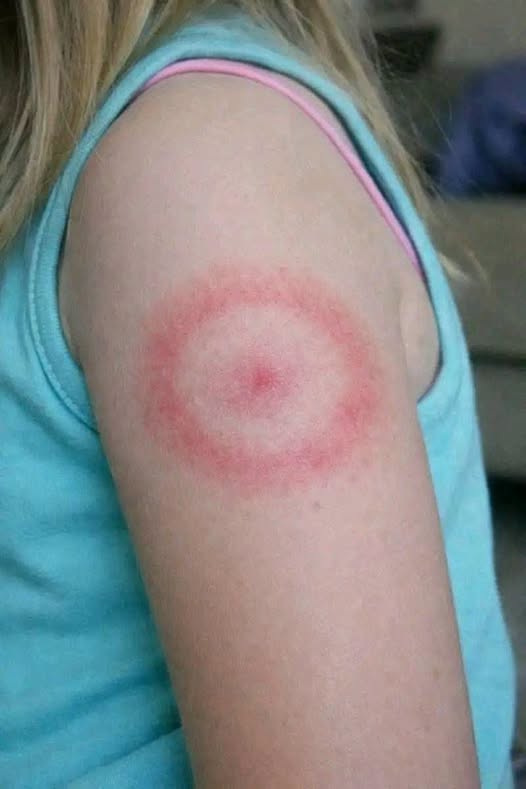
One morning, you notice a red, ring-shaped rash on your child’s skin. Your mind immediately races through countless possibilities. Could it be a simple insect bite? A skin irritation? Or something that needs prompt medical attention? For many parents, this uncertainty can be stressful, especially when dramatic headlines online suggest the worst.
Viral articles often describe ring-shaped rashes in highly emotional language, implying that every unusual mark could signal a serious illness. In reality, while some rashes deserve prompt medical evaluation, many have common and treatable causes. The appearance of a rash alone is usually not enough to determine a diagnosis.
Understanding what medical experts recommend can help parents respond thoughtfully, observe important changes, and know when professional care is needed.
What the Viral Article Claims
The article describes a parent discovering a large red ring on a child’s skin and discusses several possible explanations, including insect bites, fungal infections, and tick-borne illnesses.
It also recommends:
- Remaining calm.
- Taking photographs of the rash.
- Marking the edge of the redness to monitor whether it expands.
- Watching for additional symptoms.
- Seeking medical attention if concerning changes develop.
Unlike many sensational online stories, some of this practical advice aligns with common medical guidance. However, the article also uses dramatic language that may exaggerate fear and could leave readers believing that every ring-shaped rash signals a severe condition, which is not supported by medical evidence.
Many Different Conditions Can Cause a Ring-Shaped Rash
A circular or ring-shaped rash has many possible causes.
Some common examples include:
- Fungal skin infections (such as ringworm)
- Insect bites
- Allergic skin reactions
- Contact dermatitis
- Eczema
- Tick-related skin reactions in some regions
- Other inflammatory skin conditions
Because several conditions can appear similar, healthcare professionals consider the rash together with the child’s overall health, recent activities, medical history, and, when necessary, laboratory testing.
Ringworm Is Not Actually a Worm
One of the most common causes of a ring-shaped rash is ringworm, also called tinea corporis.
Despite its name, ringworm is not caused by a worm.
Instead, it is a superficial fungal infection affecting the outer layer of the skin.
Typical features may include:
- A circular shape
- Slightly raised border
- Gradual enlargement
- Mild itching
- Clearer skin toward the center
Most cases respond well to appropriate antifungal treatment recommended by a healthcare professional.
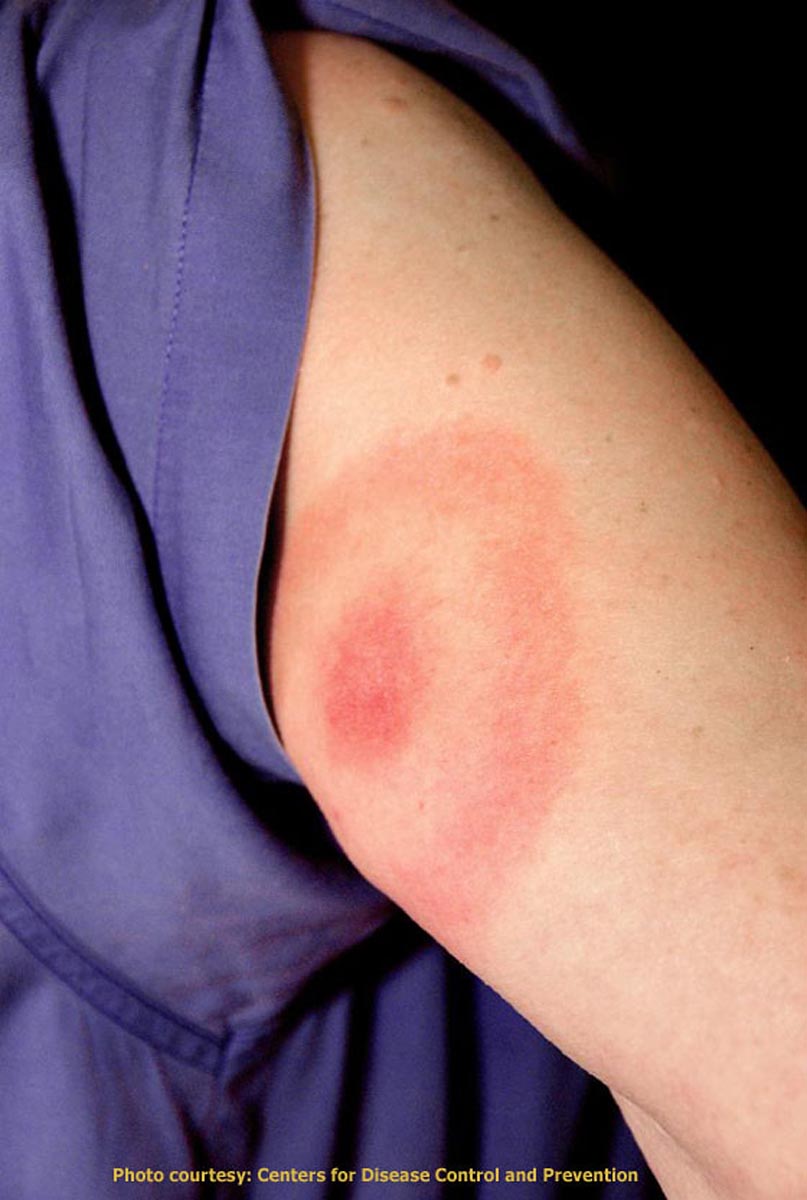
Tick-Related Rashes
In some parts of the world, certain tick bites can produce an expanding circular rash.
One well-known example is erythema migrans, which may occur after infection with the bacterium that causes Lyme disease.
However, several important points are often overlooked:
- Not every tick bite causes illness.
- Not every circular rash is related to ticks.
- Not every tick-related rash has the classic “bull’s-eye” appearance.
- Diagnosis depends on clinical evaluation and exposure history, not appearance alone.
Healthcare providers consider where the child lives or has traveled, possible tick exposure, and accompanying symptoms before determining whether additional testing or treatment is appropriate.
Why Taking Photos Can Be Helpful
The article recommends photographing the rash.
This advice is generally consistent with recommendations from many healthcare providers.
Clear photographs may help document:
- Size
- Shape
- Color
- Changes over time
These images can assist clinicians in understanding how the rash has evolved between visits.
Marking the Edge of the Rash
Some healthcare professionals may recommend gently marking the outer border of expanding redness in certain situations.
Doing so can help determine whether the affected area is:
- Stable
- Increasing in size
- Improving
However, this technique should never replace medical evaluation if the child develops concerning symptoms.
When Parents Should Contact a Healthcare Professional
Parents should consider contacting a healthcare provider if:
- The rash continues to expand.
- The child develops a fever.
- Significant pain develops.
- Swelling increases.
- The rash lasts several days without improvement.
- New symptoms appear.
- The cause is uncertain.
Healthcare professionals can determine whether additional examination or treatment is necessary.

When Immediate Medical Evaluation May Be Needed
Some symptoms warrant prompt medical attention.
Examples include:
- Difficulty breathing
- Rapidly spreading rash
- Significant swelling of the face or lips
- Severe weakness
- Confusion
- Persistent high fever
- Signs that the child appears seriously ill
These symptoms may indicate conditions requiring urgent assessment.
Avoid Self-Diagnosing from Internet Photos
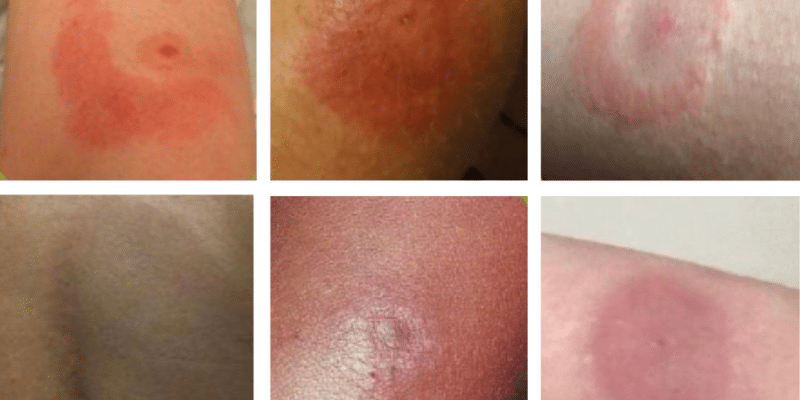
Many skin conditions resemble one another.
Even experienced clinicians sometimes consider several possible diagnoses before reaching a conclusion.
Internet images cannot account for:
- Medical history
- Physical examination
- Geographic location
- Recent travel
- Medication use
- Allergies
For this reason, online photographs should never be used as the sole basis for diagnosis.
The Role of Observation
Careful observation remains one of the most valuable tools available to parents.
Helpful information includes:
- When the rash first appeared
- Whether it is changing
- Recent outdoor activities
- New soaps or detergents
- Contact with animals
- Recent illnesses
- Any associated itching or discomfort
Sharing these details with a healthcare provider often contributes more to diagnosis than appearance alone.
Why Dramatic Headlines Can Increase Anxiety
Medical stories on social media frequently emphasize rare or frightening possibilities because dramatic headlines attract attention.
In reality, most childhood rashes are caused by common conditions that improve with appropriate care.
This does not mean parents should ignore unusual symptoms.
Instead, balanced decision-making involves combining careful observation with timely medical advice rather than assuming either the best or the worst.
Practical Tips for Parents
If your child develops an unexplained rash:
- Stay calm.
- Take a clear photograph.
- Note when it first appeared.
- Observe any changes.
- Avoid scratching the area.
- Follow advice from your healthcare provider.
- Seek prompt medical attention if concerning symptoms develop.
These simple steps can provide valuable information while helping reduce unnecessary worry.
Conclusion
A ring-shaped rash can understandably cause concern, but its appearance alone cannot determine the underlying cause. Conditions ranging from common fungal infections to allergic reactions and, less commonly, certain tick-related illnesses may produce similar-looking skin changes. Careful observation, good documentation, and professional medical evaluation remain the safest approach.
The viral article correctly encourages calm observation and documentation, but its dramatic framing may unintentionally increase anxiety by focusing heavily on worst-case possibilities. Most childhood rashes have far more common explanations, and healthcare professionals use a combination of medical history, physical examination, and, when necessary, diagnostic testing to determine the correct diagnosis.
Human curiosity naturally leads us to search for quick answers when something unexpected appears. By pairing that curiosity with evidence-based medical guidance, parents can make informed decisions that support both their child’s well-being and their own peace of mind.
Sources
American Academy of Pediatrics (AAP). Guidance on common childhood rashes.
Centers for Disease Control and Prevention (CDC). Information on tick bites, Lyme disease, and skin manifestations.
American Academy of Dermatology (AAD). Educational resources on ringworm and common skin conditions.
Mayo Clinic. Overview of childhood rashes and when to seek medical care.
National Health Service (NHS). Information on ringworm, insect bites, and skin rashes in children.
Merck Manual Consumer Version. Common pediatric skin disorders and evaluation.