Air travel is often so routine that passengers rarely think about the thousands of coordinated tasks required before an aircraft leaves the ground.
From fueling and baggage handling to maintenance checks and cabin preparation, every flight depends on a complex network of professionals working together behind the scenes.
On August 16, 2025, travelers preparing to board a Frontier Airlines flight from Charlotte Douglas International Airport to New York experienced an unexpected reminder of just how important those safety procedures are.
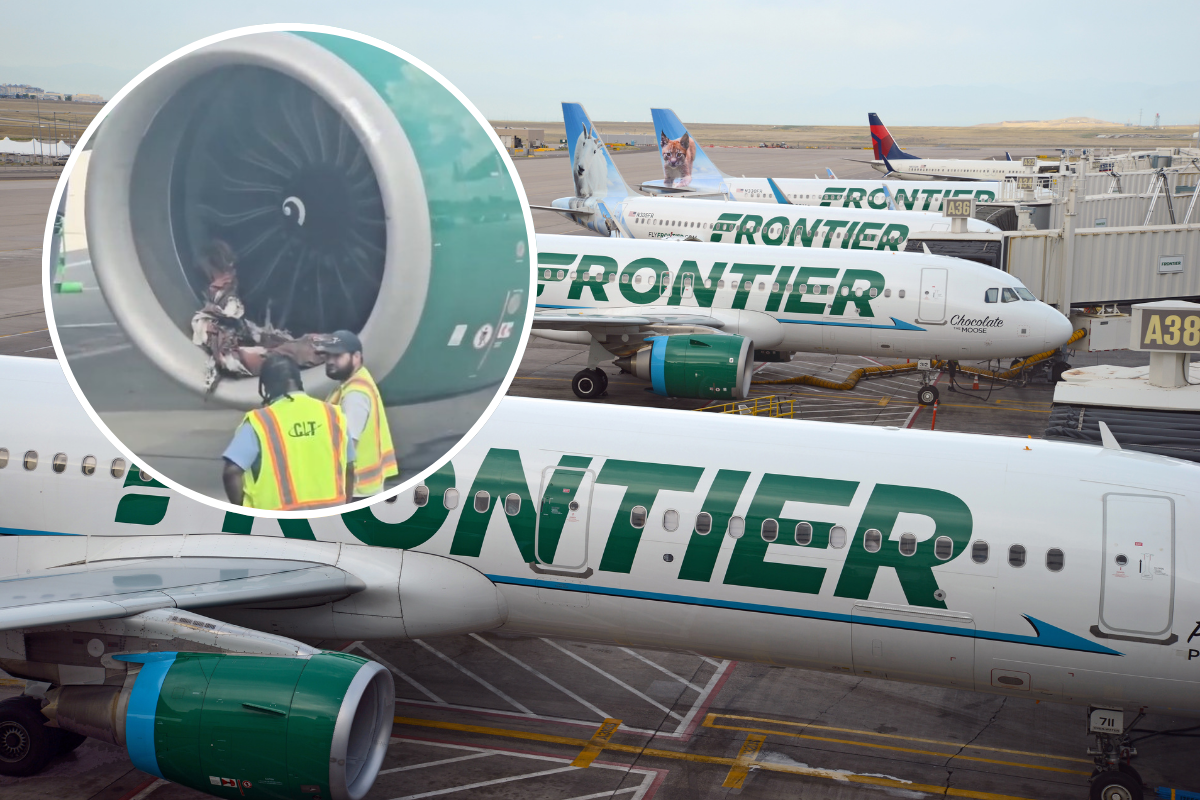
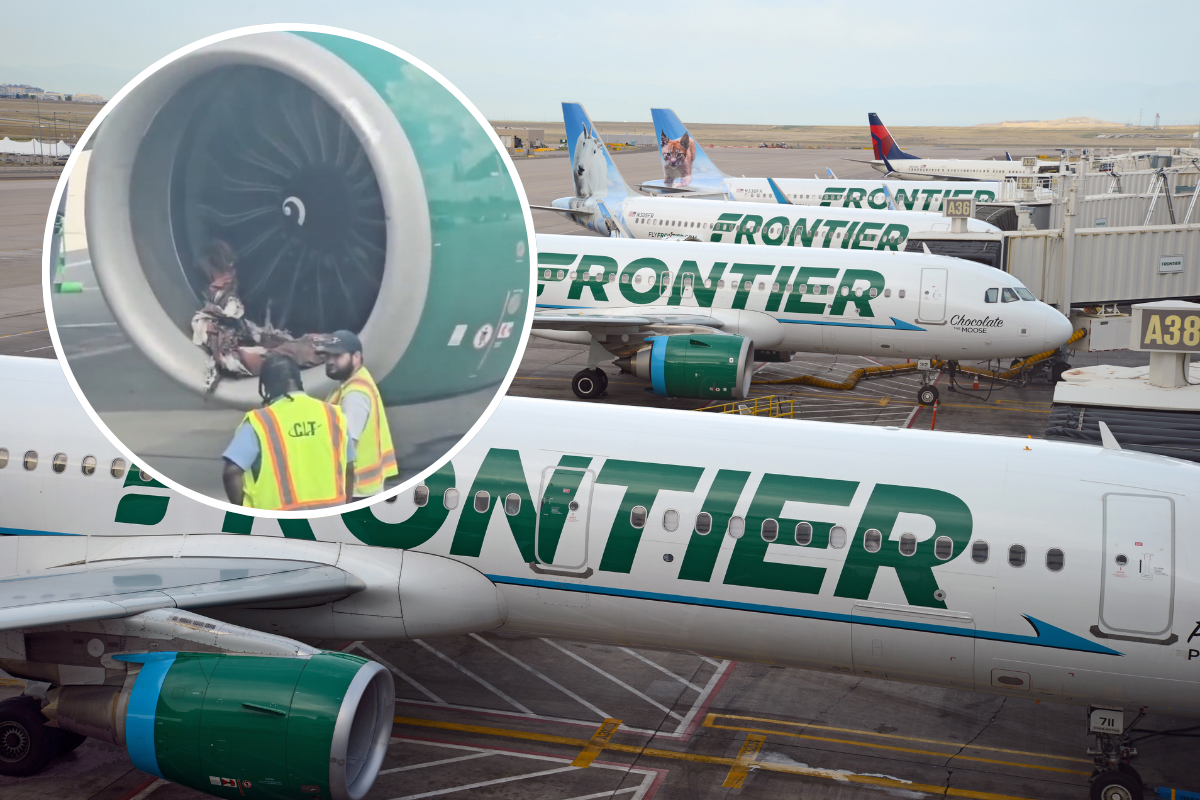
What was supposed to be a routine departure became a lengthy delay after a piece of ground support equipment was pulled into one of the aircraft’s engines during pre-departure operations.
Fortunately, no injuries were reported, and aviation safety protocols worked exactly as designed. While passengers faced a long wait before reaching their destination, the incident serves as an important example of why the aviation industry prioritizes safety above all else.
A Routine Day Takes an Unexpected Turn
The aircraft involved was a Frontier Airlines Airbus A320neo scheduled to operate Flight F93134 from Charlotte, North Carolina, to New York’s LaGuardia Airport.
Earlier in the day, the aircraft had arrived from Philadelphia and was undergoing normal turnaround procedures before beginning its next journey.
As ground crews prepared the aircraft for departure, an external air-conditioning hose was connected to the plane. These systems are commonly used at airports to maintain a comfortable cabin temperature while aircraft are parked at the gate.
During the preparation process, the hose reportedly moved into the vicinity of an operating engine and was subsequently drawn into the engine intake.
Within moments, the equipment was damaged, and concerns arose regarding possible engine contamination or internal wear.
Airport personnel immediately stopped operations and initiated safety procedures.
What happened next demonstrated the effectiveness of aviation’s layered safety systems.
Understanding Ground Support Equipment
Most passengers never see the extensive equipment used around aircraft before departure.
Ground support equipment plays a vital role in modern aviation operations.
Common examples include:
-
Air-conditioning units
-
Baggage loaders
-
Fuel trucks
-
Pushback tractors
-
Ground power units
-
Maintenance platforms
These systems allow aircraft to remain efficient while parked at the gate.
Air-conditioning hoses, in particular, help regulate cabin temperatures without requiring the aircraft to rely exclusively on onboard systems.
Although these tools are essential, they must be carefully coordinated around aircraft engines and other sensitive components.
Why Aircraft Engines Require Strict Safety Zones
Modern jet engines are engineering marvels capable of generating enormous amounts of thrust.
Even while operating at relatively low power settings, they create powerful airflow around the intake area.
This airflow can draw nearby objects toward the engine if proper safety distances are not maintained.
For this reason, airports and airlines enforce detailed safety procedures governing ground operations.
Personnel receive extensive training regarding:
-
Equipment positioning
-
Safe operating distances
-
Communication protocols
-
Aircraft movement procedures
-
Foreign object damage prevention
These measures exist because even seemingly harmless objects can cause issues if ingested into an engine.
What Is Foreign Object Damage?
One of the aviation industry’s most important maintenance concerns is foreign object damage, commonly referred to as FOD.
Foreign object damage occurs when an object enters or impacts a critical aircraft component.
Potential examples include:
-
Loose tools
-
Debris
-
Luggage items
-
Wildlife
-
Ground equipment
-
Building materials
Even small objects can require detailed inspections because aircraft systems operate under extremely precise engineering tolerances.
When the air-conditioning hose was pulled into the engine, maintenance personnel needed to determine whether any internal components had been affected.
As a result, the aircraft was immediately removed from service.

Why the Aircraft Was Grounded
Some travelers may wonder why an airline would delay a flight for hours rather than perform a quick inspection and continue operating.
The answer lies in aviation’s commitment to safety.
When there is any possibility of engine damage, technicians must conduct thorough evaluations before an aircraft returns to service.
These inspections may include:
-
Visual examinations
-
Internal component checks
-
Borescope inspections
-
Performance testing
-
Maintenance reviews
No airline can legally or responsibly operate an aircraft that has not been fully cleared by qualified maintenance professionals.
While delays are inconvenient, safety assessments are non-negotiable.
The Passenger Experience
For the passengers waiting to travel from Charlotte to New York, the delay was undoubtedly frustrating.
Travel plans often involve:
-
Business meetings
-
Family visits
-
Vacations
-
Connecting flights
-
Special events
Unexpected delays can disrupt carefully planned schedules.
In this case, Frontier Airlines worked to secure a replacement aircraft that could safely complete the journey.
The process involved coordinating aircraft availability, assigning flight crews, preparing the substitute aircraft, and ensuring all operational requirements were met.
Although the delay reportedly lasted nearly nine hours, passengers eventually continued their journey safely.
The Airbus A320neo: A Modern Aviation Workhorse
The aircraft involved in the incident belonged to the Airbus A320neo family, one of the world’s most popular commercial aircraft platforms.
Airlines across the globe rely on the A320neo for its efficiency, reliability, and passenger comfort.
Key features include:
-
Improved fuel efficiency
-
Reduced emissions
-
Lower operating costs
-
Advanced avionics
-
Enhanced cabin design
The aircraft involved had entered service in 2019 and was considered relatively young by commercial aviation standards.
Incidents involving ground equipment do not necessarily reflect problems with the aircraft itself. Instead, they highlight the importance of coordination during airport operations.
How Aviation Safety Systems Work
One reason commercial aviation remains among the safest forms of transportation is its multiple layers of protection.
When a problem occurs, numerous systems activate to prevent further risk.
These layers include:
Human Oversight
Pilots, maintenance personnel, dispatchers, and ground crews continuously monitor operations.
Regulatory Requirements
Government agencies establish strict standards governing aircraft maintenance and operational safety.
Inspection Procedures
Any suspected issue triggers detailed evaluations before an aircraft returns to service.
Reporting Systems
Incidents are documented, reviewed, and analyzed to improve future procedures.
Continuous Training
Aviation professionals receive ongoing education to maintain safety standards.
The Frontier incident demonstrated these systems working together effectively.
Lessons for the Aviation Industry
Every aviation event provides opportunities for learning and improvement.
Even incidents that result in no injuries can generate valuable insights regarding:
-
Ground handling procedures
-
Equipment positioning
-
Personnel training
-
Operational communication
-
Risk management
The aviation industry has long embraced a culture of continuous improvement.
Each event contributes to future safety enhancements and operational refinements.
This commitment helps maintain public confidence in air travel.
Why Delays Sometimes Protect Passengers
Many travelers naturally focus on departure times and arrival schedules.
However, aviation professionals view delays differently.
A delay caused by safety concerns is often evidence that the system is functioning properly.
Rather than overlooking potential issues, airlines and regulators insist that every concern be addressed before departure.
Passengers may experience temporary inconvenience, but these decisions significantly contribute to aviation’s strong safety record.
In many cases, the safest flight is the one that departs later rather than taking unnecessary risks.
Public Perception and Aviation Reality
Incidents involving aircraft often attract significant public attention.
Headlines may emphasize dramatic details, creating the impression that aviation events are more common than they actually are.
The reality is that commercial aviation operates millions of flights each year with remarkable reliability.
When unusual events occur, they stand out precisely because they are relatively uncommon.
The Frontier Airlines incident serves as an example of a situation where established safety procedures prevented a potentially larger problem from developing.
A Strong Example of Safety Culture
One of the most encouraging aspects of this event is how quickly personnel responded.
Ground crews recognized the issue.
Operations were halted immediately.
The aircraft was removed from service.
Maintenance inspections were initiated.
Passengers were reassigned to a replacement aircraft.
Each step reflected aviation’s longstanding principle that safety takes priority over schedules.
This culture has helped make modern air travel one of the safest transportation systems in history.

Conclusion
The Frontier Airlines engine incident at Charlotte Douglas International Airport on August 16, 2025, transformed what should have been a routine departure into a lengthy but necessary delay.
An air-conditioning hose was drawn into an aircraft engine during ground operations, prompting immediate safety measures and extensive inspections. Although passengers experienced significant inconvenience, the response demonstrated the effectiveness of aviation’s safety-first approach.
No injuries occurred, operational procedures were followed, and travelers ultimately continued their journey on a replacement aircraft.
More importantly, the event highlighted the countless safeguards built into modern aviation. From ground crews and maintenance technicians to airline operations teams and regulatory oversight, every layer exists to ensure that potential concerns are addressed before an aircraft leaves the ground.
For passengers, the story serves as a valuable reminder that while delays can be frustrating, they often reflect a system working exactly as intended. In aviation, safety is not merely a priority—it is the foundation upon which every flight is built.
Sources
Frontier Airlines
Federal Aviation Administration (FAA)
National Transportation Safety Board (NTSB)
Airbus
International Civil Aviation Organization (ICAO)
International Air Transport Association (IATA)
Charlotte Douglas International Airport
U.S. Department of Transportation