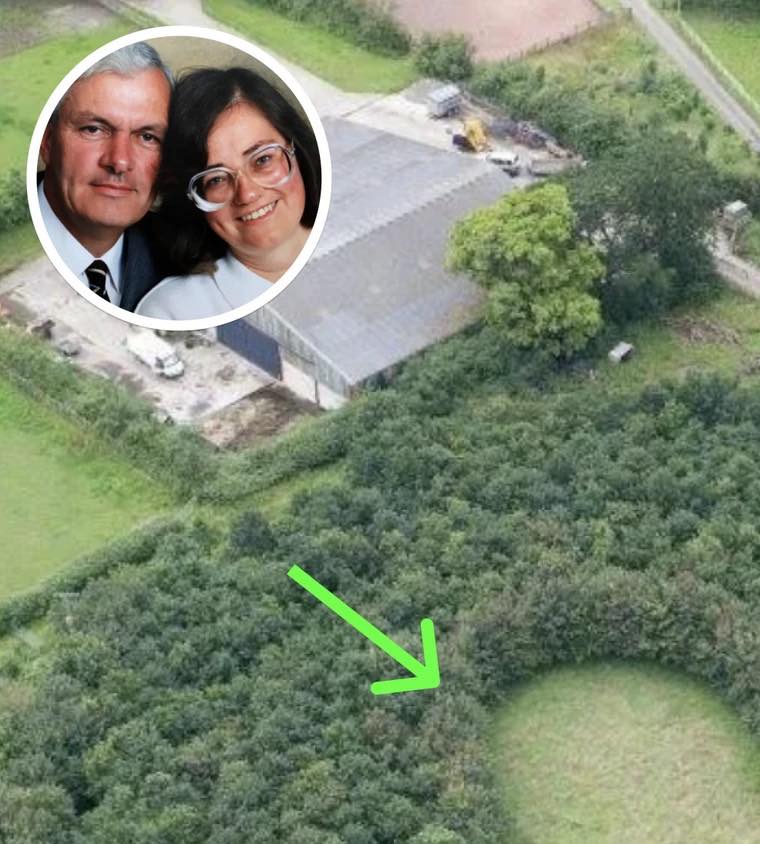
From the ground, it looked like an ordinary woodland stretching quietly across the English countryside. Oak trees swayed gently in the breeze, birds nested in the branches, and seasons passed without drawing much attention to the secluded landscape near Wickwar, Gloucestershire.
But from the sky, a breathtaking secret emerged.
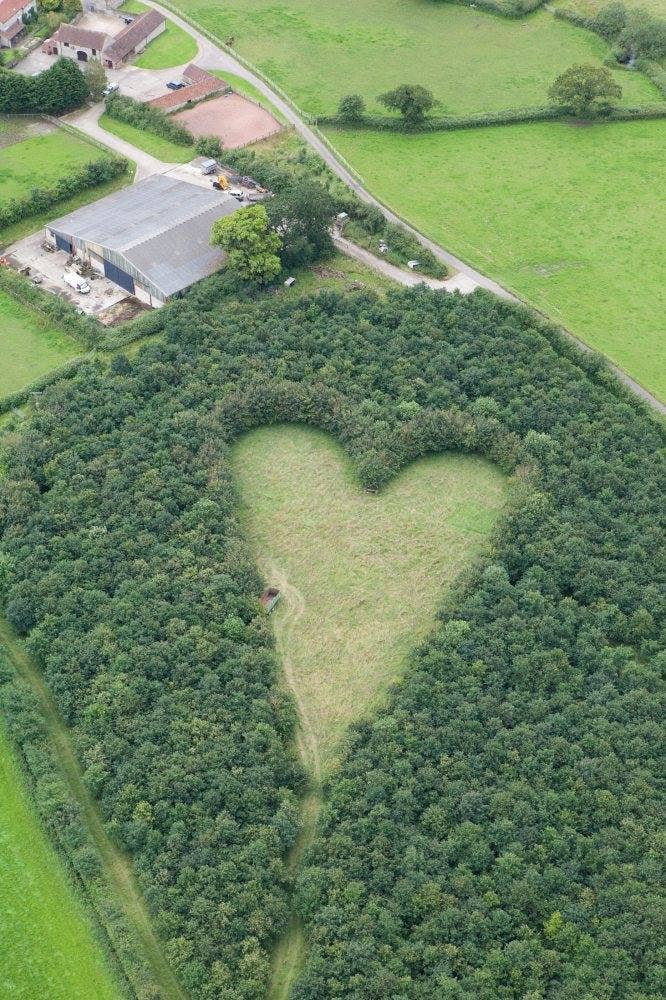
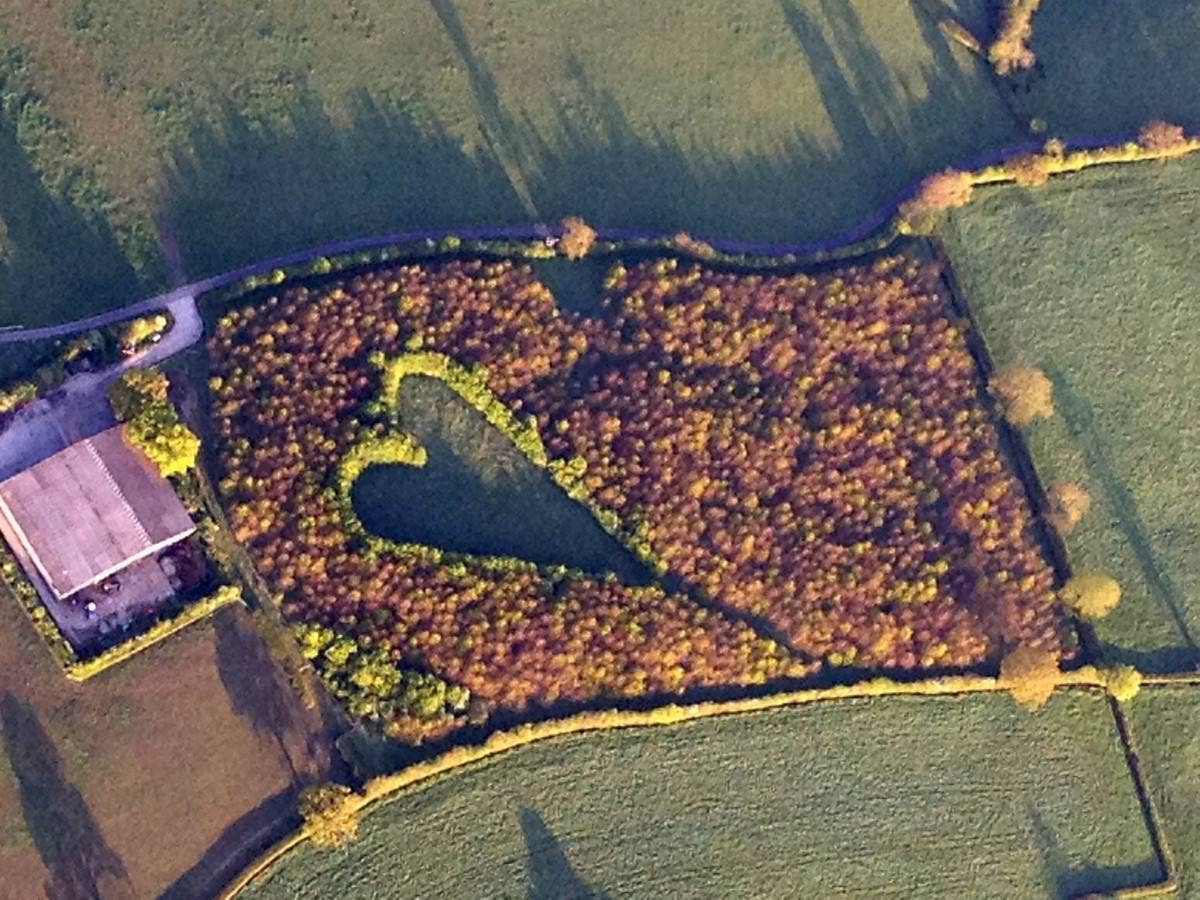
Tucked within thousands of carefully planted oak trees was a giant heart-shaped meadow, hidden from public view for years. The remarkable design was not created for tourism, publicity, or social media fame. It was a deeply personal tribute crafted by a grieving husband in memory of the woman he loved.
When aerial photographs of the forest surfaced years later, people around the world were moved by the quiet beauty of the gesture. The story of Howard and Janet Howes became more than a touching memorial. It sparked conversations about love, grief, healing, and humanity’s long tradition of expressing emotion through nature itself.
While the heart-shaped forest may appear almost magical at first glance, the story behind it also offers fascinating insight into psychology, symbolism, and the emotional connection humans have with landscapes.
Who Were Howard and Janet Howes?
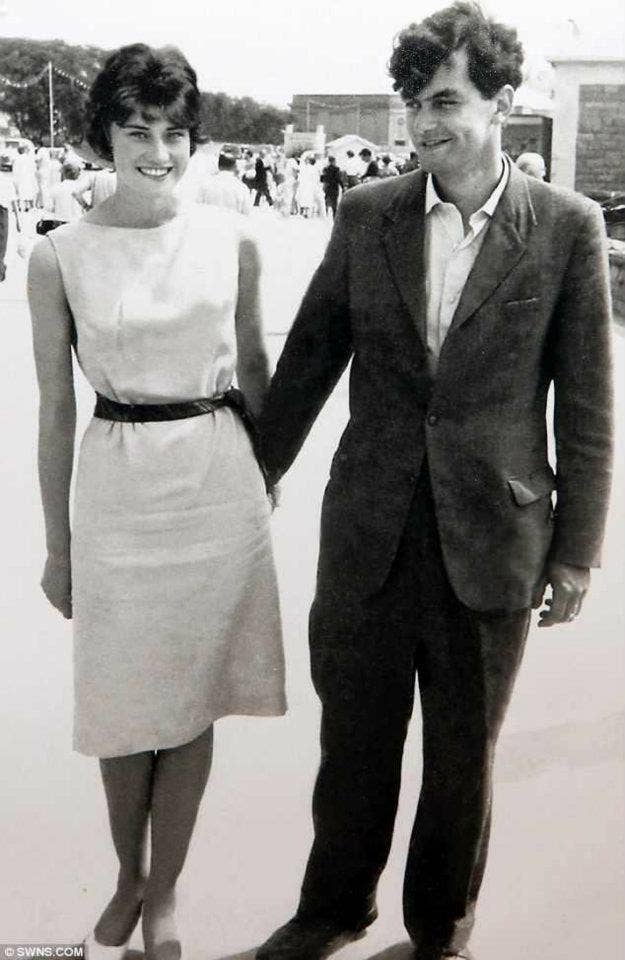
Howard Howes and his wife Janet Howes lived a quiet life on their farm in Gloucestershire, England. The couple married in 1962 and spent decades together building a life rooted in family, farming, and rural tradition.
After Janet passed away in 1995 due to heart-related illness, Howard searched for a meaningful way to honor her memory. Instead of building a monument or plaque, he turned to the land itself.
On a six-acre field beside his farmhouse, Howard planted thousands of oak saplings while intentionally leaving a giant heart-shaped clearing in the center. According to reports, the pointed end of the heart faces toward Janet’s childhood home, adding another deeply personal layer to the tribute.
For many years, few people knew the heart existed.
The design remained hidden within the forest until hot air balloon enthusiast Andy Collett flew overhead and noticed the shape from above. His photographs quickly captured public attention, transforming a private act of remembrance into an international symbol of enduring love.

Why the Story Resonated Around the World
Stories like this often spread rapidly because they touch on universal emotions. Nearly every culture throughout history has developed traditions to honor loved ones through art, architecture, gardens, or nature.
The hidden heart forest resonated with people for several reasons.
First, it represented patience and devotion. Trees grow slowly, meaning Howard created something intended to last for generations rather than moments.
Second, the tribute was private. In an age where many personal moments are shared publicly online, the quiet sincerity of the forest felt especially meaningful to audiences.
Finally, the imagery itself carried symbolic power. Hearts are universally associated with love and emotional connection. Combined with a living forest, the shape became a powerful visual metaphor for memory continuing to grow long after loss.
The Symbolism of Trees in Human Culture
Across civilizations, trees have often represented life, continuity, renewal, and spiritual connection.
Ancient cultures viewed forests as sacred spaces where people could reflect, heal, and reconnect with the natural world. In mythology and folklore, trees frequently symbolize endurance because they survive storms, changing seasons, and the passage of time.
In Celtic traditions, oak trees specifically symbolized strength and wisdom. In many Asian cultures, trees are associated with harmony and longevity. Even modern psychology recognizes that people often feel calmer and emotionally restored when surrounded by nature.
Howard’s decision to plant oak trees may not have been intended as a symbolic act in a scholarly sense, but many observers interpreted the forest through these cultural lenses.
The tribute became more than a physical landscape. It became a story about how memory can continue living through nature itself.
The Psychology of Memorial Landscapes
Experts in environmental psychology suggest that natural memorials can provide emotional comfort during periods of grief.
Unlike statues or buildings, living memorials evolve over time. Trees grow taller, flowers bloom seasonally, and landscapes change gradually year after year. This process can create a sense of continuity and ongoing connection.
Researchers have also found that spending time in natural settings may help reduce stress and support emotional well-being. Forest environments are often associated with reflection, calmness, and mindfulness.
Howard reportedly placed a bench overlooking the heart-shaped clearing where he could sit and think about Janet. That simple image resonated deeply with readers because it reflected a universal human experience: the desire to preserve memories in meaningful spaces.
Aerial Discovery and the Power of Perspective
One of the most fascinating aspects of the story is that the heart could only truly be seen from above.
This detail transformed the forest into something almost poetic. From the ground, the woodland appeared ordinary. Only with distance and perspective did the hidden design become visible.
Symbolically, many people interpreted this as a reminder that some acts of love are not immediately obvious. Meaning sometimes reveals itself gradually or from unexpected viewpoints.
The aerial discovery also highlights how photography and media can reshape personal stories into global inspiration. Without the balloon flight and photographs, the forest might have remained a local secret forever.
Instead, it became one of the internet’s most shared examples of quiet devotion.
Could Large-Scale Natural Tributes Become More Common?
In recent years, environmental memorials have grown increasingly popular around the world.
Families now plant memorial trees, create conservation gardens, and support reforestation projects in honor of loved ones. Some communities even establish entire memorial forests dedicated to remembrance and environmental preservation simultaneously.
This trend reflects changing attitudes toward legacy and sustainability. Many people are drawn to memorials that contribute positively to the environment while also carrying emotional significance.
Howard Howes’ forest may have unintentionally anticipated this movement years before it became widely discussed.
His tribute combined emotional storytelling with ecological impact in a way that feels surprisingly modern even decades later.
The Emotional Power of Hidden Gestures
Part of what makes the story unforgettable is the idea that the forest was never originally designed for public recognition.
The heart remained hidden for years because the act itself mattered more than outside attention.
Psychologists sometimes describe private acts of remembrance as especially meaningful because they emerge from intrinsic motivation rather than social reward. In simple terms, the gesture exists because the person genuinely feels compelled to express love or memory.
This authenticity is likely one reason the story continues resonating online years after it first gained attention.
Readers see not only a beautiful image but also a deeply human expression of devotion.
The Role of Nature in Healing
Nature has long played a role in emotional healing across cultures.
Modern studies suggest that spending time outdoors may help improve mood, reduce stress, and encourage reflection. Forest walks, gardening, and quiet natural spaces are often incorporated into wellness practices around the world.
The hidden heart forest reflects this relationship between emotional recovery and the natural environment.
Rather than building something permanent from stone or metal, Howard created a living space capable of changing and growing over time. That choice aligns closely with the way many people experience healing itself: gradual, imperfect, and deeply connected to time.
While grief never completely disappears, meaningful rituals and places can help people carry memories forward in healthier ways.
Why Stories Like This Continue to Inspire
In a fast-moving digital world dominated by conflict, controversy, and constant headlines, stories centered on kindness and emotional sincerity often stand out powerfully.
The hidden forest story reminds audiences that meaningful acts do not always require wealth, fame, or grand public gestures. Sometimes the quietest expressions of love become the most enduring.
It also reflects a broader human fascination with hidden beauty. Secret gardens, concealed messages, and symbolic landscapes have captivated people for centuries because they combine mystery with emotion.
The heart-shaped clearing hidden inside a forest feels almost timeless in that sense. It resembles something from folklore while remaining completely real.
A Reflection on Love, Memory, and Human Curiosity
At its core, the story of Howard Howes and his hidden heart forest is not only about grief. It is about the ways humans try to preserve connection long after major life changes reshape their world.
Some people write songs. Others paint portraits or keep photographs. Howard planted trees.
The resulting landscape became both deeply personal and universally relatable. It reminds us that memory often becomes woven into places, routines, and environments that quietly accompany us through life.
The discovery of the hidden heart also speaks to human curiosity itself. We are naturally drawn to uncovering hidden meanings and emotional stories concealed beneath ordinary surfaces. Sometimes those discoveries inspire fear or uncertainty, but other times they reveal extraordinary acts of compassion and devotion.
In the end, the forest stands not merely as a symbol of romance, but as a reflection of humanity’s enduring desire to leave love visible in the world around us.
Sources
American Psychological Association