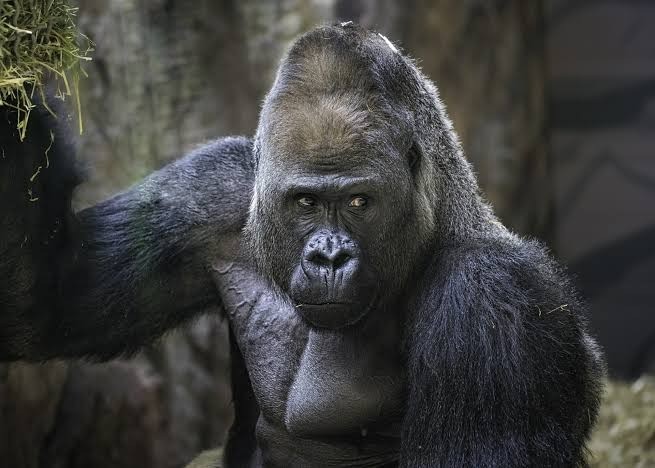
A visit to the zoo is usually a chance to observe wildlife from a safe distance. Families gather near viewing areas, visitors take photographs, and animals move around their habitats while people watch from behind protective barriers. But sometimes, an unexpected moment reminds everyone how quickly a peaceful visit can become dangerous.
In an account circulating online, a woman standing near a gorilla enclosure is described as having her hair seized by the animal through the metal bars. The woman reportedly bent forward and raised her hands toward her head as a uniformed employee moved closer to help. Nearby visitors reacted to the sudden encounter, and some appeared to continue recording.
The description leaves important questions unanswered. It does not establish where the incident occurred, how the woman was eventually freed, or whether she sustained injuries. Without independent confirmation, these details should not be treated as verified facts.
Even so, the scenario highlights an important lesson about wildlife safety: a barrier does not necessarily make every position beside an animal enclosure safe. Understanding how gorillas behave, why close contact can be dangerous, and what visitors should do around wildlife can help prevent similar situations.

What Happened Near the Gorilla Enclosure?
According to the online account, the encounter began when a woman approached a metal barrier separating visitors from a gorilla. The animal reportedly extended an arm through the bars and caught her hair, leaving her unable to pull away immediately.
A staff member was described as moving toward the woman to assist. Other visitors nearby reacted to the unexpected situation.
The account does not provide enough independently verified information to reconstruct the incident in full. It would therefore be misleading to invent a rescue sequence, identify the zoo, or claim that the woman suffered particular injuries.
What makes the description concerning is the proximity between the visitor and the animal. When someone stands within an animal’s physical reach, even a brief interaction can create an emergency.
A zoo enclosure is designed to separate people from wildlife, but its protective function depends on the facility’s design and visitors following the designated viewing rules. Standing too close to bars, reaching through an opening, or crossing a boundary can undermine that separation.
Why Can a Gorilla Reach Through Enclosure Bars?
Gorillas are powerful primates with long arms and strong hands. Depending on the design of an enclosure, an animal may be able to extend an arm through or around parts of a barrier.
This does not mean that gorillas routinely attempt to grab visitors. Rather, it illustrates why the distance between people and animals matters.
An animal might reach toward something within its surroundings for a variety of reasons, including curiosity, interaction with an object, or a response to movement. Without reliable information about a particular encounter, however, it is impossible to determine what motivated the gorilla in this account.
The Smithsonian’s National Zoo and Conservation Biology Institute explains that gorillas are among the animals for which professional caretakers use protected-contact methods. Physical barriers remain between the animals and staff during routine care because their size, strength, and natural behavior can create risks. Source: Smithsonian’s National Zoo
This approach is not based on assuming that every gorilla is aggressive. It recognizes that even a normally calm animal must be treated with appropriate caution.
Are Gorillas Naturally Aggressive Toward Humans?
Gorillas are often portrayed in popular media as intimidating animals, but their natural behavior is more complex than that stereotype suggests.
They are social primates that live in groups and display a range of behaviors, from feeding and resting to grooming, playing, and communicating with other members of their group. Like other wild animals, their reactions depend on their environment and the circumstances of an interaction.
The International Gorilla Conservation Programme notes that gorillas generally do not react aggressively to visitors who follow established viewing rules. Those rules help reduce disturbance, stress, and the risk of disease transmission between people and gorillas. Source: International Gorilla Conservation Programme
However, a lack of aggression should never be interpreted as an invitation to approach or touch a gorilla.
A visitor may not understand what an animal is responding to, and a gorilla’s strength can make an unintended interaction dangerous. Respecting the animal’s space is therefore essential, whether the encounter takes place in a zoo or in a protected natural habitat.

Why Hair and Loose Objects Can Create a Safety Risk
The account’s focus on the woman’s hair illustrates a practical issue around animal enclosures: anything that enters an animal’s reach can become involved in an unexpected interaction.
Long hair, dangling accessories, clothing, bags, and objects held near a barrier can all bring a visitor closer to an animal than intended. An animal may reach toward an object without understanding the consequences for the person holding or wearing it.
This is not unique to gorillas. Many animals explore their surroundings through movement, touch, or interaction with unfamiliar objects. Visitors should never assume that an animal understands human boundaries in the same way another person would.
The simplest precaution is to remain behind designated barriers and avoid leaning into an enclosure. Visitors should also follow any facility-specific instructions about loose belongings, photography, and viewing distances.
What Should Visitors Do Around Gorilla Enclosures?
A safe zoo visit depends on cooperation between the facility and its visitors. Enclosures, barriers, warning signs, and staff procedures are designed to reduce the possibility of dangerous contact, but visitors must also follow the rules.
1. Stay Behind the Designated Barriers
Never cross a fence, lean over a protective wall, or place your hands through enclosure bars. Even when an animal appears relaxed, it may be able to reach farther than a visitor expects.
If a viewing area is crowded, wait for space rather than pressing against the barrier to get a better photograph.
2. Keep Hair, Clothing, and Belongings Out of Reach
Avoid leaning toward animals with loose hair, dangling scarves, bags, or other items that could extend into their space.
Do not hold phones, food, toys, or other objects through gaps in an enclosure. Never attempt to touch an animal, even if it approaches the barrier.
3. Do Not Feed or Provoke Animals
Feeding wildlife can encourage unwanted interactions and may affect animal health and behavior. Shouting, banging on barriers, throwing objects, or trying to attract an animal’s attention can also disturb it.
Observe quietly and allow the animal to decide how it uses its habitat.
4. Supervise Children Carefully
Children may not recognize how far an animal can reach or understand why barriers must be respected. Adults should keep children close and explain that zoo animals are not pets, even when they appear playful or familiar.
5. Follow Instructions From Zoo Staff
If staff members ask visitors to move back, leave a viewing area, or stop an activity, follow their instructions immediately.
Facilities may temporarily restrict access to an enclosure for animal-care procedures, training, or safety reasons. These measures help protect both visitors and animals.
What If an Animal Grabs Someone Near an Enclosure?
An encounter involving physical contact with a large animal should be treated as an emergency rather than an opportunity to record a video.
Bystanders should alert zoo staff or security personnel immediately and follow their directions. They should not crowd around the incident, provoke the animal, or attempt a risky intervention that could place additional people in danger.
If someone is injured, trained responders should assess the situation and arrange appropriate medical assistance.
The precise response depends on the enclosure, the animal’s position, and the circumstances. It would be unsafe to recommend one physical maneuver for every situation, especially when a powerful animal is involved.
For this reason, zoo emergency procedures and trained staff are essential. Facilities that care for large primates use specific protocols to manage risks involving animals, employees, and visitors.
Why Zoo Enclosures Must Protect Both People and Animals
A well-designed enclosure has two important responsibilities: protecting visitors from dangerous contact and providing a suitable environment for the animal.
Barriers must account for an animal’s strength, reach, and behavior. They should also discourage visitors from feeding, touching, or disturbing the animal.
The European Association of Zoos and Aquaria’s best-practice guidance for western lowland gorillas emphasizes the importance of enclosure design that minimizes direct contact between gorillas and visitors. Physical separation also helps reduce the risk of disease transmission. Source: EAZA Best Practice Guidelines
Safety is not only about preventing an animal from escaping. It also involves preventing people from entering an animal’s reach and ensuring that staff can respond effectively if something goes wrong.
Visitors have a role in this process. Following signs and respecting barriers helps maintain a safer environment for everyone.
The Importance of Respecting Wildlife
Unexpected wildlife encounters often attract attention because they challenge the assumption that animals in managed environments are completely predictable.
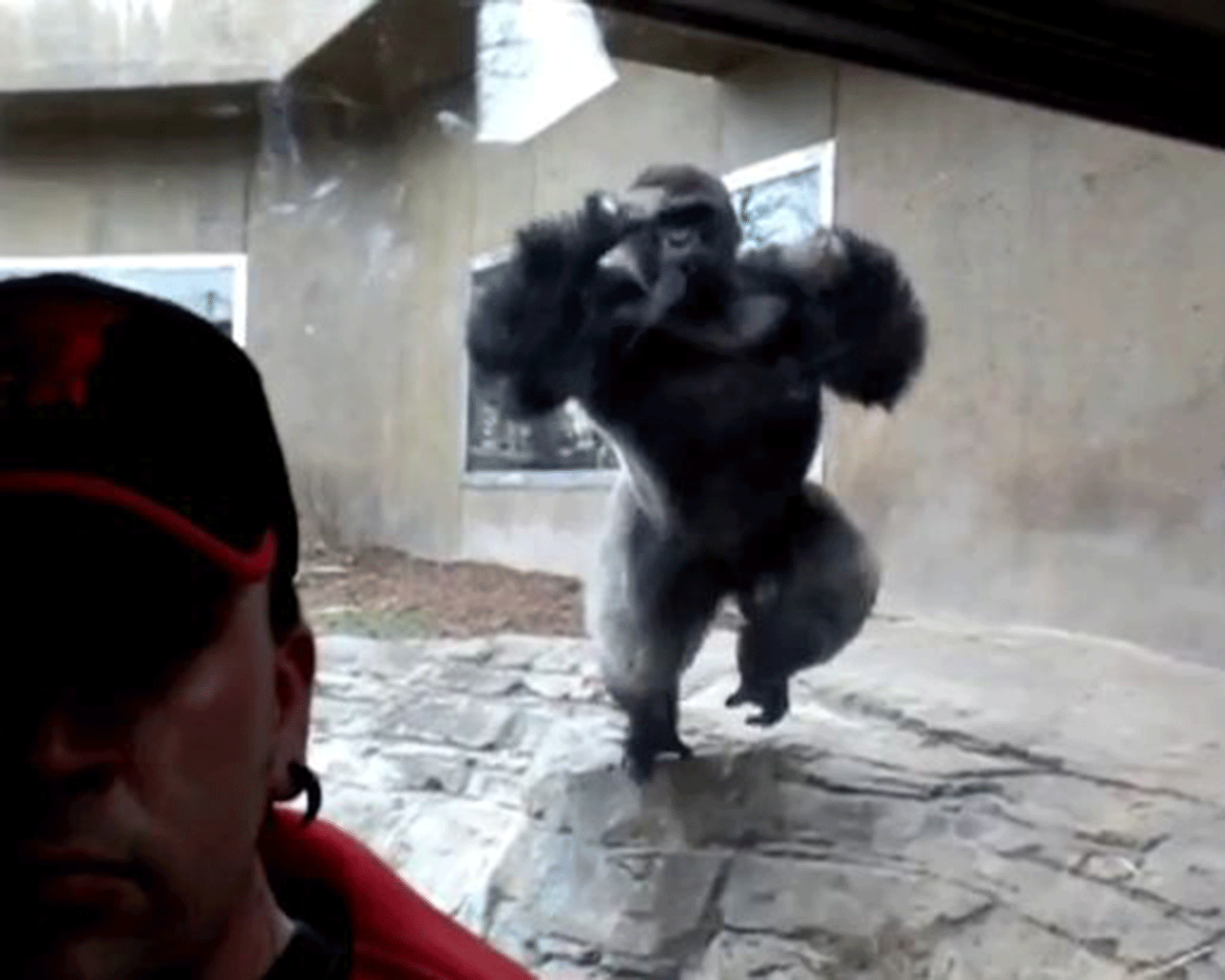
But gorillas are not performers, and their behavior should not be judged through a few seconds of footage or an incomplete online description. A short clip may show what happened immediately before contact without revealing the surrounding circumstances.
Responsible reporting should distinguish what is visible or documented from what remains unknown. It should also avoid portraying an animal as malicious when its motivation has not been established.
The same principle applies to visitors. A person may make an unsafe decision without realizing the potential consequences, which is why clear signs, education, and appropriate enclosure design matter.
The goal is not to make people afraid of wildlife. It is to help them appreciate animals while maintaining the distance and respect necessary for safe observation.
Conclusion: A Reminder to Keep a Safe Distance
The online account of a gorilla reportedly grabbing a woman’s hair through enclosure bars describes a startling encounter, but important details about the incident remain unconfirmed. Its ultimate outcome should not be assumed without reliable evidence.
The broader safety lesson is clear: even when a zoo provides protective barriers, visitors should never place themselves within an animal’s reach. Gorillas are intelligent and socially complex animals, but their strength and natural behavior demand respect.
Staying behind barriers, keeping loose belongings away from enclosures, avoiding attempts to touch or feed animals, and following staff instructions are simple precautions that can make a meaningful difference.
Wildlife observation is most rewarding when people can appreciate animals without disturbing them or putting themselves at risk. A safe distance protects visitors while allowing gorillas to remain the wild animals they are.
Sources
-
International Gorilla Conservation Programme — Gorilla Safety FAQs
-
European Association of Zoos and Aquaria — Western Lowland Gorilla Best Practice Guidelines