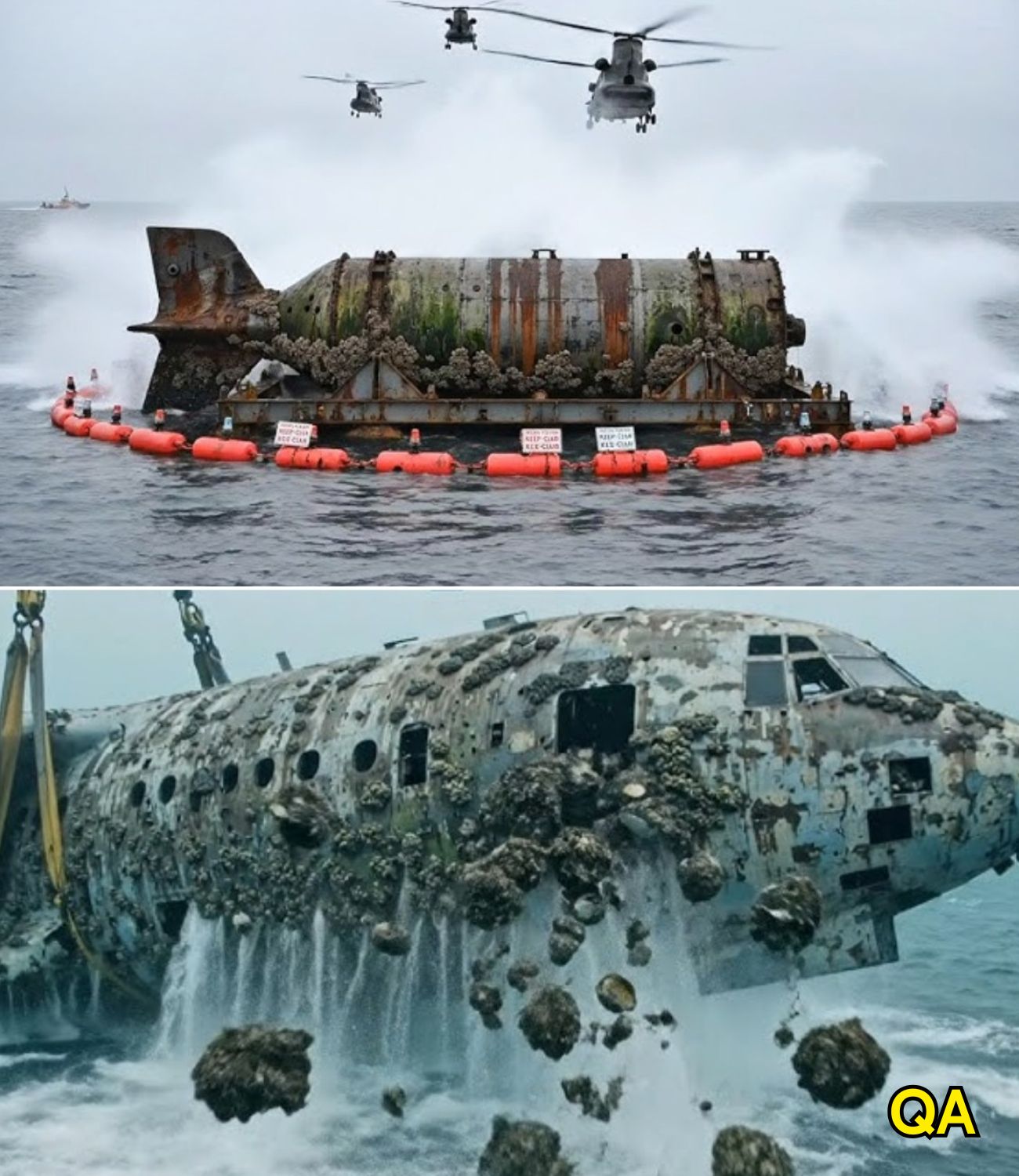
In the cold tension of the Cold War, the world lived under the constant shadow of nuclear weapons. But sometimes, the greatest dangers weren’t launched—they were lost. Hidden beneath waves, buried in silence, waiting.
One such moment happened in 1966, when the ocean nearly claimed one of the most dangerous secrets humanity had ever created.
This is the story of the bomb the ocean tried to bury—and how humanity fought to bring it back.
A Routine Mission Turns Catastrophic
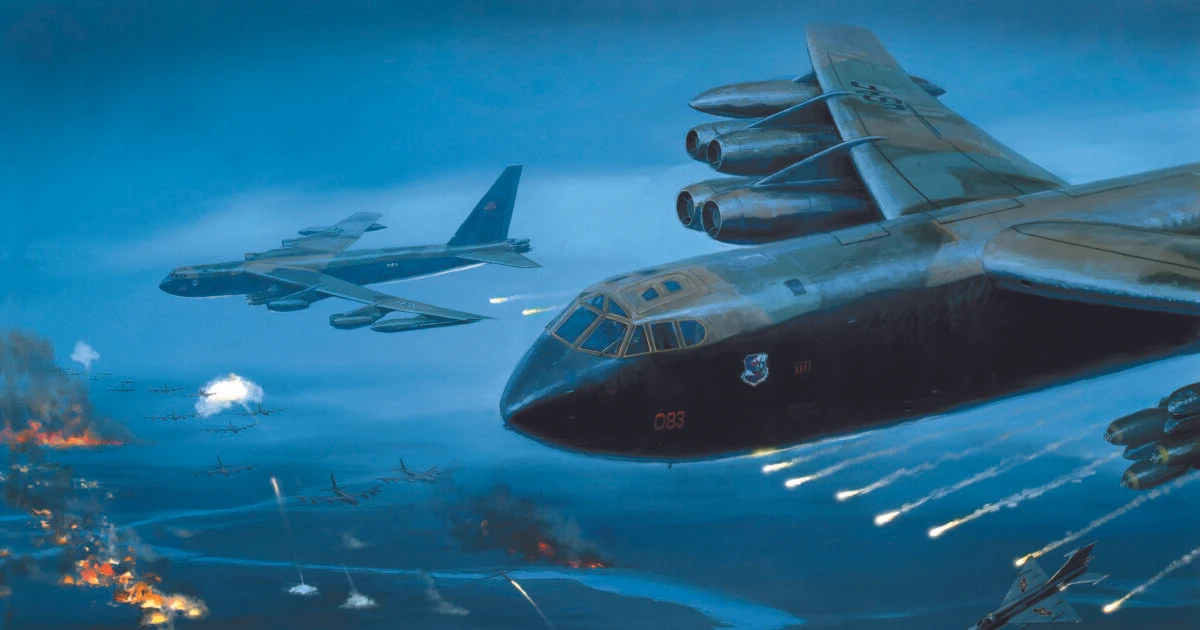
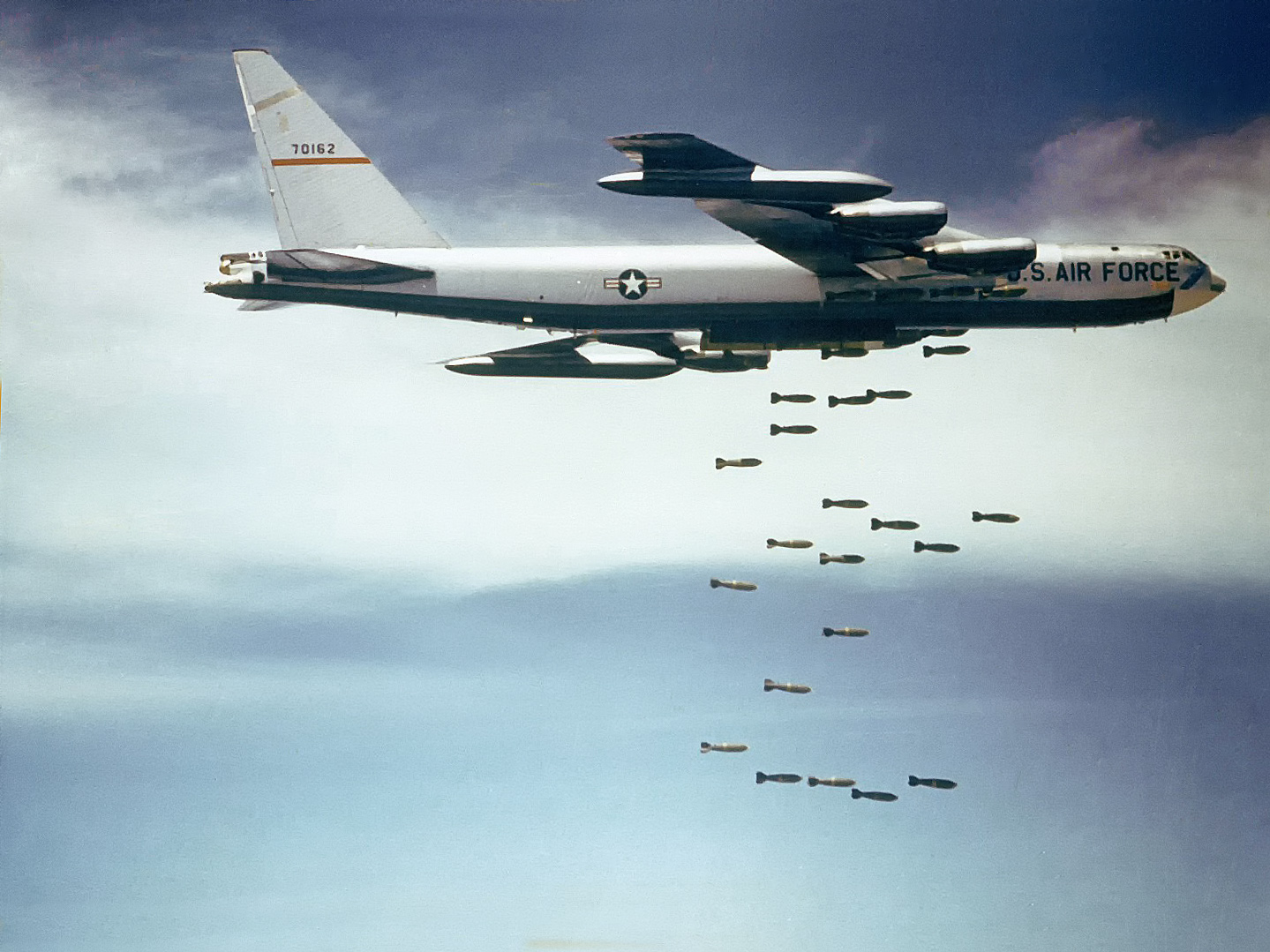
On January 17, 1966, a U.S. Air Force B-52 bomber was flying a routine airborne alert mission over southern Spain. These missions were part of a strategy designed to ensure nuclear readiness at all times during the Cold War.
The bomber carried four hydrogen bombs.
As part of its mission, the aircraft needed to refuel mid-air. A KC-135 tanker approached, and the two aircraft began the delicate process of aerial refueling—a maneuver requiring precision, timing, and perfect coordination.
But something went terribly wrong.
At approximately 31,000 feet above the Mediterranean coast near the small fishing village of Palomares, the two aircraft collided.
The explosion was immediate and catastrophic.
Both planes were destroyed in the sky. Debris rained down over land and sea. Seven crew members lost their lives.
But the true danger wasn’t just the crash.
It was what fell with it.
Four Nuclear Bombs Lost
The B-52 had been carrying four nuclear weapons—each capable of unimaginable destruction.
When the aircraft broke apart, all four bombs were released.
Here’s what happened next:
- Two bombs fell onto land and their conventional explosives detonated on impact. While there was no nuclear explosion, the blasts spread radioactive plutonium across the surrounding area.
- One bomb landed relatively intact on land, discovered without major damage.
- The fourth bomb vanished into the sea.
That missing bomb immediately became the center of one of the most intense search operations in history.
Because if it wasn’t found, it could remain hidden underwater indefinitely—leaking radioactive material, posing a long-term environmental threat, and becoming a geopolitical nightmare.
The Race Against Time Beneath the Ocean
The search for the missing bomb began almost immediately.
But this was no ordinary recovery mission.
The Mediterranean Sea, though relatively enclosed, hides vast depths and unpredictable terrain. The bomb had fallen somewhere offshore—but no one knew exactly where.
Initial searches relied on eyewitness accounts from local fishermen. One reported seeing a parachute drifting into the water—a crucial clue that narrowed the search zone.
Still, the ocean is unforgiving.
Weeks passed.
Ships scanned the seabed using sonar. Divers searched dangerous underwater terrain. Submersibles were deployed to explore depths far beyond human reach.
The pressure mounted daily.
This wasn’t just about recovering a lost weapon—it was about preventing a silent catastrophe.
Discovery at the Ocean Floor
After nearly three months of relentless searching, the missing bomb was finally located.
It lay at a depth of approximately 870 meters (2,850 feet) beneath the surface.
Resting silently on the ocean floor.
At that depth, recovery was extremely difficult. The crushing pressure, near-freezing temperatures, and limited visibility turned the operation into a technical nightmare.
The U.S. Navy deployed advanced deep-sea submersibles, including remotely operated equipment capable of grasping and lifting the bomb.
Even then, success was not guaranteed.
At one point, the bomb slipped during recovery attempts, nearly disappearing again into the abyss.
But persistence paid off.
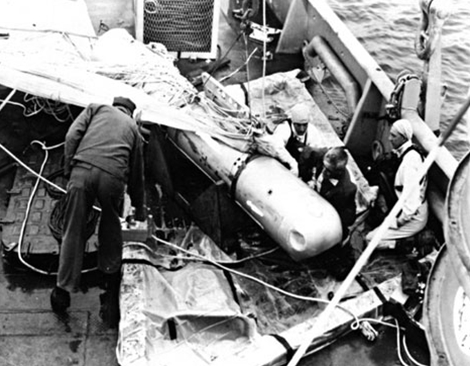
On April 7, 1966, after weeks of careful maneuvering, the bomb was finally brought to the surface.
Humanity had dragged it back from the depths.

The Hidden Danger Beneath the Waves
The Palomares incident is often remembered for its dramatic recovery mission—but the real story goes deeper.
The two bombs that detonated their conventional charges spread radioactive contamination across farmland and nearby areas. Thousands of tons of soil had to be removed and transported away for disposal.
Even today, traces of contamination remain a subject of environmental concern and monitoring.
But the bomb in the ocean posed a different kind of threat.
Had it not been recovered, it could have:
- Corroded over time
- Released radioactive material into marine ecosystems
- Contaminated fishing zones
- Remained undiscovered for decades
In a worst-case scenario, it could have become a long-term ecological disaster hidden beneath the surface.
A silent danger.
Why This Story Still Matters Today
The Palomares incident is not just a Cold War relic—it’s a reminder of how fragile control over powerful technology can be.
Several key lessons still resonate today:
1. Accidents Can Happen Anywhere
Even during routine operations, catastrophic failures are possible. Advanced systems don’t eliminate risk—they often shift it.
2. The Environment Pays the Price
Whether on land or at sea, accidents involving hazardous materials leave long-lasting scars.
3. Recovery Is Never Guaranteed
Finding the bomb required months of effort, cutting-edge technology, and a degree of luck. Without that, it might still be there today.
4. Hidden Threats Can Linger for Decades
Not all dangers are visible. Some lie buried—waiting, forgotten, but never truly gone.
The Ocean’s Role: Protector or Threat?
There’s something haunting about the idea that the ocean almost kept the bomb.
On one hand, the sea acted as a shield—preventing immediate human exposure.
On the other, it threatened to conceal a radioactive hazard indefinitely.
The ocean doesn’t judge. It doesn’t warn. It simply absorbs.
And sometimes, what it takes in, it never gives back.
A Story Between Reality and Fear
What makes the Palomares incident so powerful is how real it is.
This wasn’t fiction.
This wasn’t a hypothetical disaster.
It actually happened.
A nuclear weapon really did fall into the ocean.
And for weeks, no one knew where it was.
That uncertainty—more than anything—is what made the situation so dangerous.
Because the greatest threats are often the ones we cannot see.
Conclusion: The Bomb That Almost Stayed Lost
The story of the Palomares incident is a chilling reminder of how close the world has come to unseen disasters.
A mid-air collision.
Four nuclear bombs falling from the sky.
One disappearing into the ocean.
And a desperate race to find it before it was lost forever.
In the end, humanity succeeded.
But the outcome could have been very different.
If the search had failed…
If the bomb had remained buried…
If time had been allowed to take its toll…
The ocean might still be hiding it today.
And we might never have known.
Final Thought
“The Bomb the Ocean Tried to Bury — And Humanity Dragged Back” is more than a dramatic title.
It’s a real moment in history where the line between control and chaos nearly vanished beneath the waves.
And it serves as a quiet warning:
Some of the most dangerous things in the world don’t explode.
They disappear.