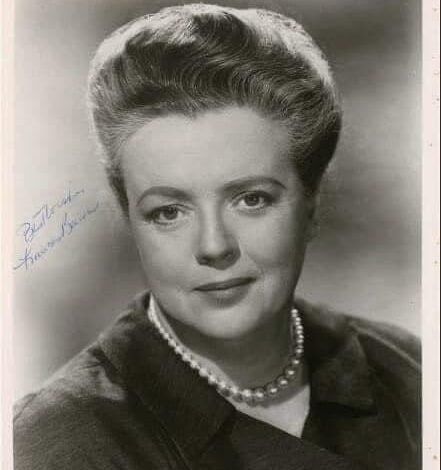
Frances Bavier and the Quiet Power of a Television Icon
The golden age of American television produced many memorable characters, but only a handful felt as though they belonged not just on the screen, but in the emotional fabric of everyday life. Among them, Aunt Bee stands apart. Calm, steady, and quietly authoritative, she was the figure who anchored the fictional town of Mayberry, offering reassurance in a rapidly changing world. Behind that familiar presence was Frances Bavier, an actress whose personal story was far richer and more complex than the gentle domestic role that made her famous.
To generations of viewers, Aunt Bee symbolized stability, care, and moral grounding. Yet Frances Bavier herself was not simply a television matron. She was a rigorously trained performer, shaped by classical theater, guided by discipline, and deeply committed to the seriousness of her craft. Her legacy is not only one of nostalgia, but of artistic integrity and quiet independence.
From Classical Training to Professional Discipline
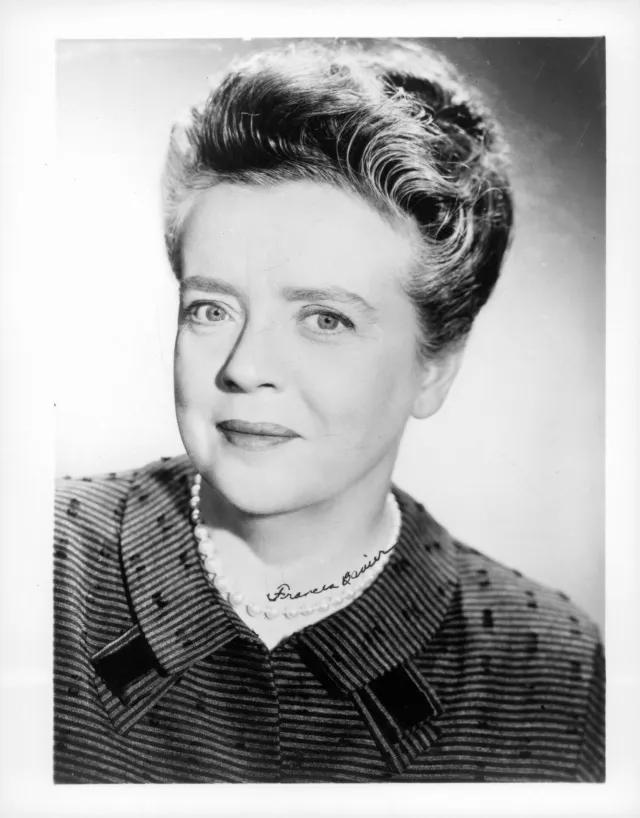
Long before she became a household name, Frances Bavier was immersed in the demanding world of stage performance. Born in 1902, she pursued formal acting education at the American Academy of Dramatic Arts, one of the most prestigious institutions of its kind. This training placed her firmly within the tradition of classical American theater, where precision, preparation, and respect for the written text were foundational values.
Early in her career, Bavier appeared in Broadway productions and worked alongside seasoned performers of the era. For her, acting was never casual or incidental. It was a profession that demanded discipline, emotional control, and technical mastery. This background would later shape how she approached television, even when the medium itself was still defining its identity.
Transitioning Into Film and Television
As the entertainment industry evolved, Frances Bavier moved from stage to screen, appearing in a range of film and television roles. These early appearances often cast her in supporting characters, allowing her to bring depth and credibility to otherwise modest parts.
When television began entering American homes on a massive scale, Bavier arrived with a level of seriousness that was uncommon in early sitcom culture. She treated the camera as she would a theater audience, believing that even light entertainment deserved thoughtful execution. This approach set her apart from many contemporaries and quietly prepared her for the role that would define her career.
Becoming Aunt Bee in Mayberry

Bavier’s casting as Beatrice “Aunt Bee” Taylor on The Andy Griffith Show marked a turning point. The show, set in the fictional town of Mayberry, was built around humor, warmth, and everyday moral lessons. Aunt Bee was not the loudest or most dynamic character, but she was the emotional center.
Rather than portraying Aunt Bee as a stereotype, Bavier infused the role with restraint and authenticity. She understood that the character’s power lay in consistency, not exaggeration. Her Aunt Bee was firm without being harsh, caring without being sentimental, and authoritative without dominance.
This grounding presence allowed the humor of the show to feel safe and human, contributing significantly to its enduring appeal.
The Emotional Architecture of a Sitcom
While the series is often remembered for its comedy, its emotional balance depended heavily on Aunt Bee’s presence. Bavier approached the role with dramatic awareness, ensuring that the domestic world of Mayberry felt real rather than artificial.
Her interactions with Andy, Barney, and the town’s residents carried subtle emotional cues that made relationships believable. Whether expressing concern, disappointment, or quiet approval, Bavier relied on nuance rather than overt performance.
This restraint helped the character transcend the era in which she was created, allowing modern audiences to connect with her long after the show ended.
Professional Tensions Behind the Scenes

Over the years, stories circulated about tension between Frances Bavier and her co-stars, particularly Andy Griffith. These accounts often framed her as overly serious or difficult, especially in contrast to the more relaxed and improvisational atmosphere embraced by others on set.
However, such characterizations overlook an important context. Bavier came from a theatrical tradition that valued structure, rehearsal, and respect for the script. Practical jokes, last-minute changes, and casual attitudes toward dialogue conflicted with her professional instincts.
Rather than reflecting bitterness, her seriousness reflected commitment. She believed that treating the work lightly risked diminishing its quality. In hindsight, her insistence on discipline helped maintain the show’s emotional credibility.
Working With a Young Ron Howard
One of the most enduring relationships on screen was between Aunt Bee and Opie, portrayed by a young Ron Howard. Their scenes captured a balance of guidance, affection, and gentle correction that resonated with audiences.
Bavier approached her scenes with Howard with particular care, understanding the responsibility of working opposite a child actor. Her experience allowed her to provide stability and consistency, both on camera and during production.
These moments contributed to the show’s reputation as family-centered and emotionally grounded, reinforcing Aunt Bee’s role as a moral anchor.
Leaving the Spotlight Behind
When The Andy Griffith Show and its related projects came to an end, Frances Bavier made a decision that surprised many in the entertainment world. Rather than pursuing continued visibility or returning to Hollywood roles, she chose withdrawal.
She relocated to Siler City, embracing a quiet life far removed from the industry that had made her famous. This move mirrored the values she had portrayed on screen: simplicity, independence, and personal boundaries.
Contrary to tabloid portrayals of isolation, those who lived near her described a woman who valued privacy and autonomy rather than attention.
Life Beyond Fame
In Siler City, Bavier lived modestly, sharing her home with her cats and maintaining limited public interaction. She was not interested in reliving past fame or engaging in nostalgic appearances. Her career, in her view, had been completed with intention.
This withdrawal was not a retreat born of bitterness, but a conscious decision to live authentically. She had given her energy to her craft and felt no obligation to remain visible once that chapter closed.
Her choice challenged common assumptions about celebrity, suggesting that fulfillment does not require constant recognition.
A Legacy Revealed After Death
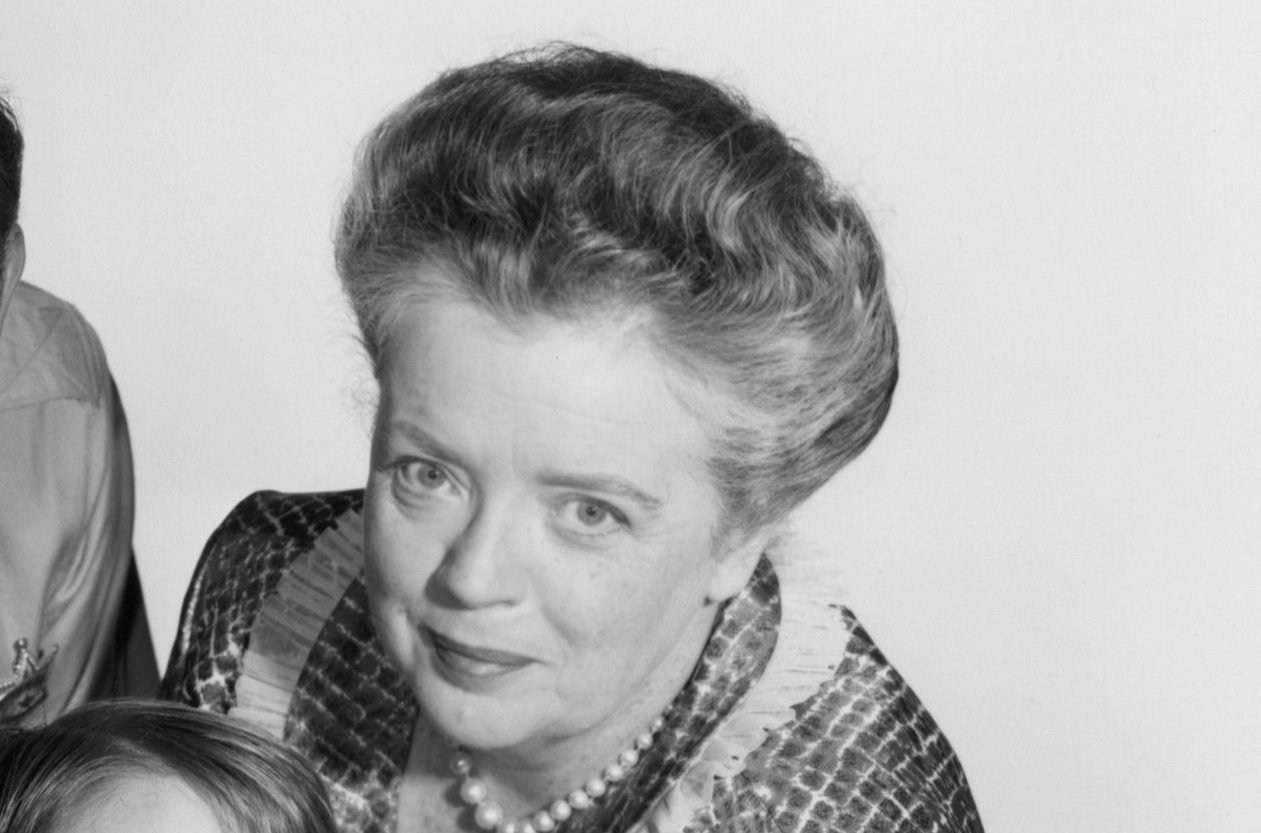
It was only after Frances Bavier’s passing in 1989 that another dimension of her character became widely known. The settlement of her estate revealed significant philanthropic contributions directed toward hospitals, public broadcasting, and community institutions.
These donations were made without public fanfare. She did not seek to attach her name to buildings or campaigns. Her giving reflected the same quiet intentionality that defined her acting and personal life.
In this way, Bavier extended her legacy beyond performance, contributing materially to public well-being.
Rethinking the Meaning of Success
Frances Bavier’s life invites a broader reconsideration of success in the entertainment industry. She achieved widespread recognition without chasing celebrity culture. She protected her privacy without apology. She upheld professional standards even when they were inconvenient.
Her story demonstrates that lasting impact does not always come from visibility, but from consistency and care.
In an industry often defined by ambition and self-promotion, Bavier’s path remains strikingly distinct.
Aunt Bee as Cultural Memory
To audiences today, Aunt Bee remains a symbol of reassurance. Her presence evokes a sense of order and kindness that feels increasingly rare. This enduring connection speaks to the depth Bavier brought to the role.
What might have been a one-dimensional character became a cultural touchstone because Bavier refused to treat it lightly. Her performance continues to offer comfort not through nostalgia alone, but through authenticity.
Professional Integrity as a Form of Quiet Resistance
Bavier’s insistence on seriousness in a comedic setting can be seen as a form of quiet resistance. She resisted shortcuts, resisted trivialization, and resisted the idea that popularity should outweigh craft.
In doing so, she preserved the dignity of her work and ensured that Aunt Bee would be remembered not as a caricature, but as a fully realized human presence.
A Life Lived on Her Own Terms
Frances Bavier’s legacy is not defined solely by Aunt Bee, nor by her withdrawal from fame. It is defined by coherence. Her values remained consistent across her training, her performances, her personal choices, and her philanthropy.
She demonstrated that it is possible to succeed without spectacle, to give without publicity, and to leave without regret.
Final Reflections on a Lasting Legacy
Today, Frances Bavier is remembered with affection, but her deeper contribution lies in the example she set. She showed that kindness can be grounded in strength, that professionalism can coexist with warmth, and that a quiet life can carry profound meaning.
Through her work, her choices, and her generosity, she left a legacy that continues to resonate. Not simply as Aunt Bee, but as an artist who understood that the truest impact often comes from taking one’s work—and one’s life—seriously.