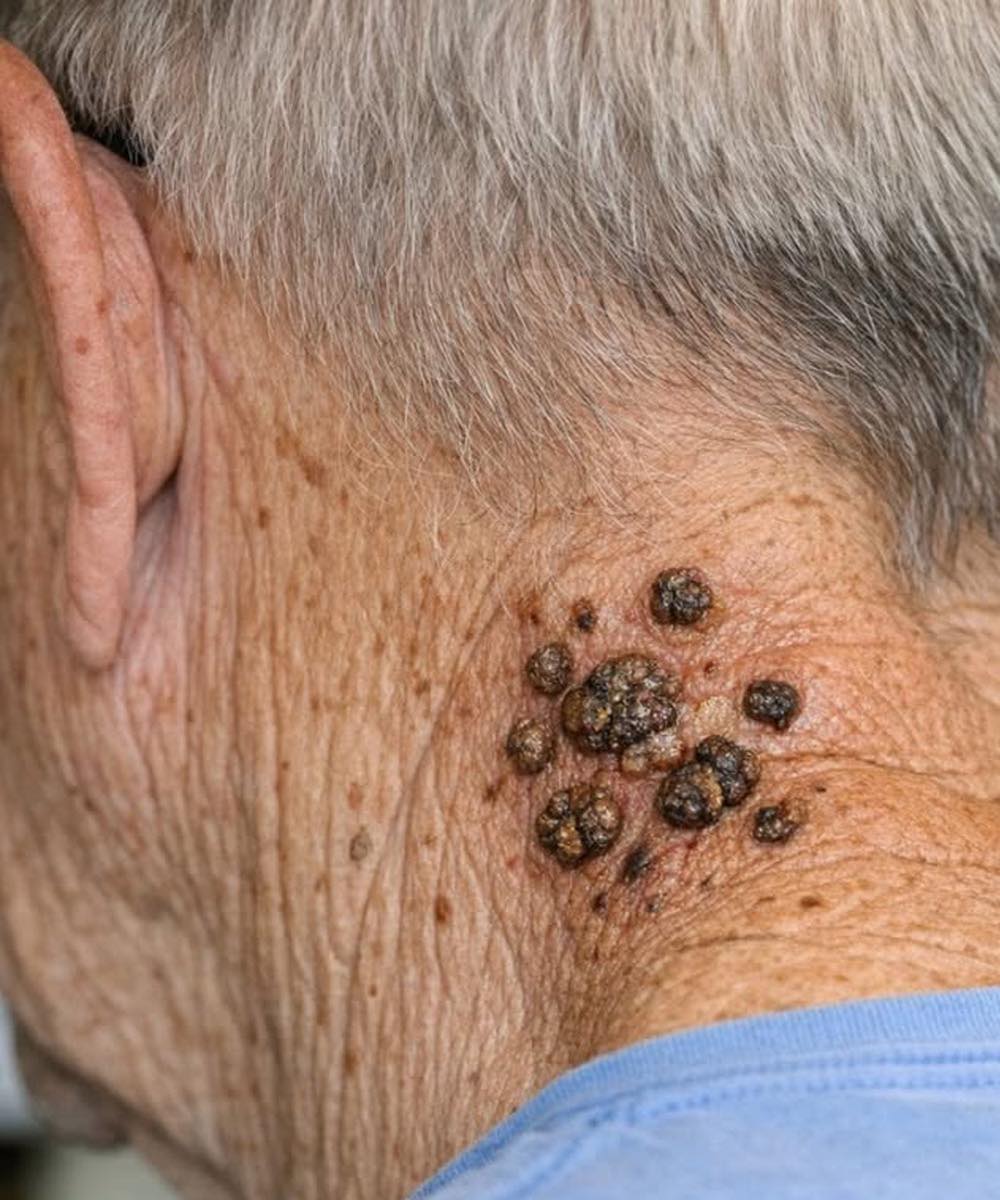
It can be worrying to notice dark, raised bumps on an older adult’s neck or back—especially if they itch or seem to appear suddenly. In many cases, these growths are seborrheic keratoses, one of the most common non-cancerous skin lesions seen in adults over 50.
According to the American Academy of Dermatology, seborrheic keratoses are benign skin growths that frequently develop with age and do not become skin cancer. While they can look unusual, they are typically harmless. Still, distinguishing them from more serious conditions is important.
This guide explains what seborrheic keratoses are, how to recognize them, how they differ from skin cancer, and when medical evaluation is recommended.
Understanding Seborrheic Keratosis
Seborrheic keratoses are very common skin growths that usually appear after middle age. The exact cause is not fully understood, but dermatologists believe they are linked to aging and genetics. They often run in families.
These growths may develop gradually or seem to appear quickly. They are not contagious and are not caused by poor hygiene.
Typical features include:
Brown, tan, or black coloration
A waxy, scaly, or slightly raised surface
A “stuck-on” appearance, as if sitting on top of the skin
Clear, well-defined borders
Sizes ranging from very small spots to over an inch wide
Common areas where they appear include the neck, chest, back, scalp, and face.

Many people describe them as looking like small drops of candle wax or a patch of textured skin resting on the surface.
Why They Itch
Seborrheic keratoses can sometimes itch, especially if irritated by clothing, friction, shaving, or dry skin.
Mild itching alone does not usually indicate a serious problem. However, persistent irritation can cause inflammation, redness, or discomfort. In rare cases, repeated scratching can lead to minor skin breakdown or infection.
Keeping the area moisturized and avoiding friction may reduce irritation, but medical advice should be sought if symptoms persist.
How They Differ From Skin Cancer
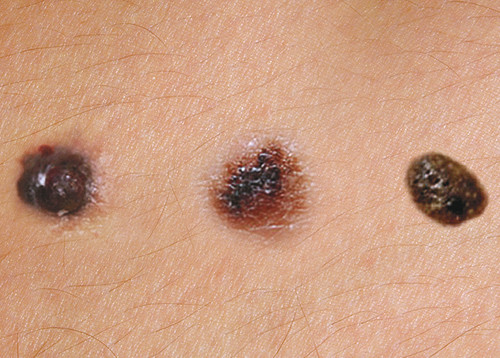
One of the most common concerns is whether a dark bump could be skin cancer. While seborrheic keratoses are benign, certain skin cancers—particularly melanoma—can sometimes resemble them.
According to the American Cancer Society, warning signs of melanoma are often summarized by the “ABCDE” rule:
A – Asymmetry
B – Border irregularity
C – Color variation
D – Diameter larger than 6 millimeters
E – Evolving (changing over time)
Seborrheic keratoses usually:
Have a consistent shape
Have even coloration
Have clearly defined borders
Remain stable in size and appearance
By contrast, skin cancers often change in size, shape, or color and may bleed without injury.
If any skin growth changes rapidly, bleeds without being scratched, becomes painful, or looks significantly different from other spots on the body, medical evaluation is essential.
The Role of Age

Seborrheic keratoses are especially common in adults over 50. Dermatologists often refer to them as part of the normal aging process of the skin.
Years of sun exposure may contribute, though they also appear on areas not heavily exposed to sunlight. Genetics also plays a role.
They occur in all skin tones, although they may appear more noticeable against lighter complexions.
How Doctors Diagnose Them
A dermatologist can usually identify seborrheic keratosis through visual examination alone.
In many cases, a tool called a dermatoscope—essentially a magnifying device with special lighting—is used to examine the structure of the lesion.
If there is any uncertainty, a small biopsy may be performed. A biopsy involves removing a tiny sample of tissue and sending it to a laboratory for analysis. This procedure is typically quick and performed in-office under local anesthesia.
Treatment Options
Seborrheic keratoses do not require treatment unless they cause discomfort, irritation, or cosmetic concern.
If removal is desired, dermatologists may recommend:
Cryotherapy – Freezing the lesion with liquid nitrogen
Curettage – Gently scraping it off after numbing the area
Electrosurgery – Using controlled heat to remove the growth
Laser treatment – In selected cases
These procedures are generally quick and performed in outpatient settings. Healing time varies depending on the method used and the size of the lesion.
What Not to Do
It is important not to attempt removal at home.
Avoid:
Cutting or shaving off the growth
Picking or scratching aggressively
Using over-the-counter wart removers not designed for this condition
Home removal attempts can cause bleeding, infection, scarring, or delayed diagnosis if the lesion is something more serious.
Professional evaluation ensures proper identification and safe management.
When to Seek Medical Advice
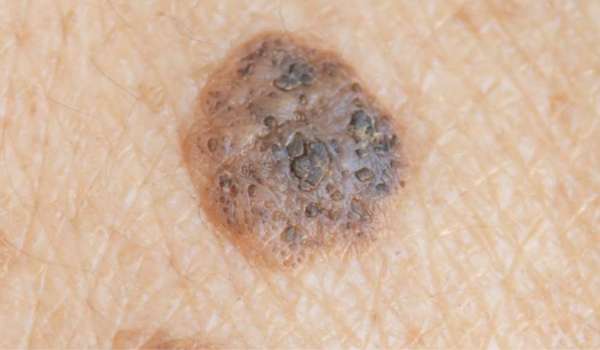
While most seborrheic keratoses are harmless, medical attention is recommended if:
The growth changes rapidly
It develops multiple colors
It bleeds without injury
It becomes painful
It looks significantly different from other spots
Additionally, if a person develops many new lesions suddenly, a doctor should evaluate the situation.
Dermatologists emphasize that when in doubt, it is always safer to have a professional assessment.
How to Talk to an Older Family Member
If you notice unusual bumps on a loved one’s skin, approach the conversation gently.
A simple statement such as, “These are probably harmless, but it might be good to have a doctor look at them,” can open dialogue without causing alarm.
Offering to accompany them to an appointment may ease hesitation. Bringing notes about when the bumps appeared or whether they have changed can help the physician assess the situation efficiently.
The Bottom Line
Dark, waxy, slightly raised bumps on the neck or torso of older adults are most often seborrheic keratoses—common, non-cancerous skin growths associated with aging.
However, because certain skin cancers can mimic benign lesions, professional evaluation is the safest approach if there is any uncertainty.
Early assessment provides reassurance in most cases and ensures prompt treatment if needed. Maintaining awareness, monitoring changes, and consulting qualified healthcare providers remain the best strategies for protecting skin health at any age.