For centuries, the image of Jesus Christ has varied across cultures, artworks, and traditions. From Renaissance paintings in Europe to icons in Africa and Asia, his appearance has often reflected the people who revere him.
But what if there were a historical document describing his physical features?
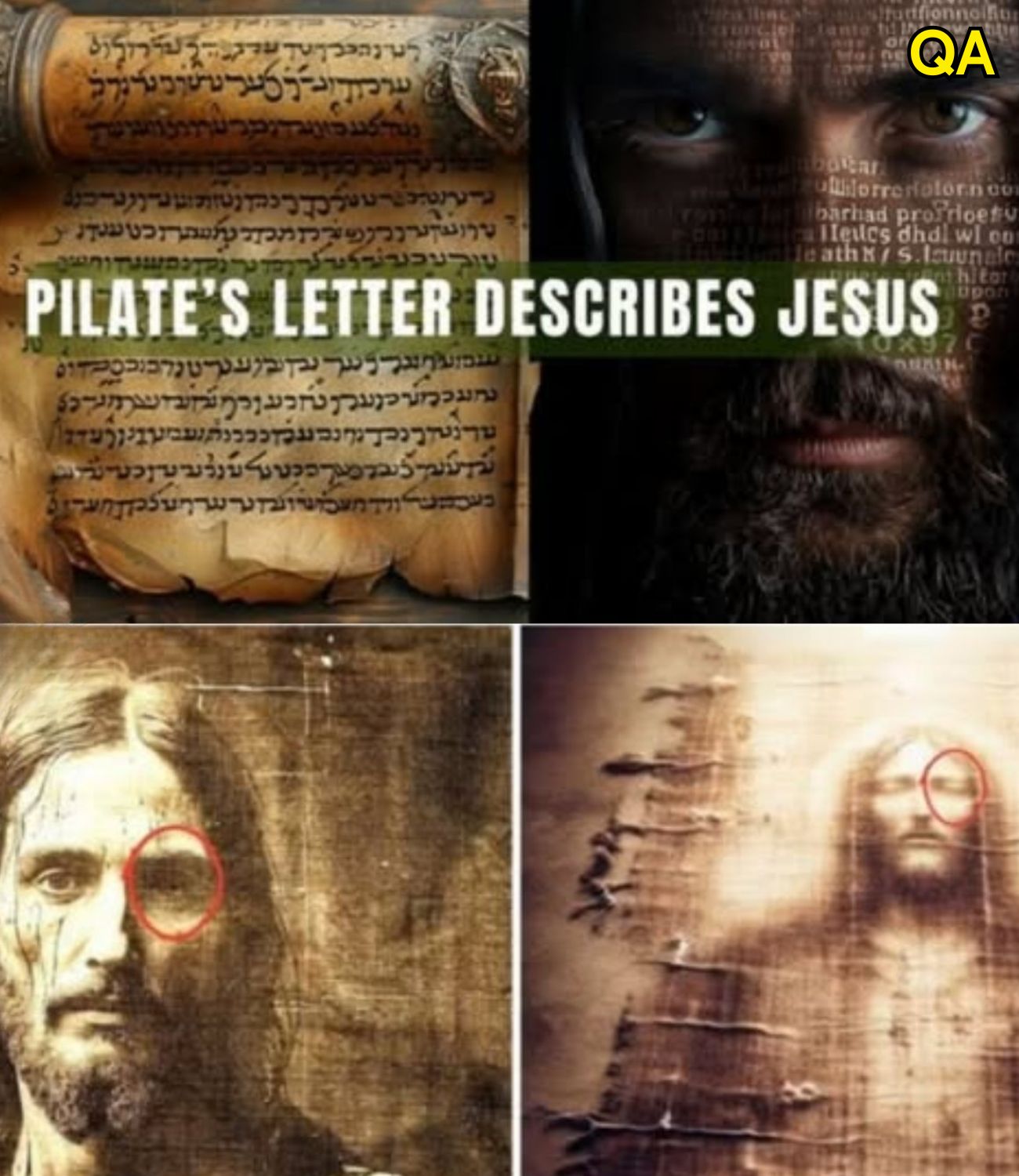
A text often referred to as the “Pilate Letter” has circulated widely in recent years, claiming to provide a detailed description of Jesus from Pontius Pilate, the Roman official associated with his trial. While the idea is intriguing, historians approach such claims with caution.
This article explores what the so-called Pilate Letter says, what scholars think about it, and what historical evidence actually suggests about Jesus’ appearance.

The Origin of the “Pilate Letter”
The document attributed to Pontius Pilate is not new. Variations of similar texts have appeared throughout history, often grouped with writings known as the Acts of Pilate—a collection of early Christian literature that exists outside the Bible.
However, most historians agree on one key point:
There is no reliable evidence that Pontius Pilate wrote a detailed physical description of Jesus.
Scholarly research indicates that these texts likely originated centuries after the events they describe. Linguistic patterns, writing style, and manuscript history suggest they were composed during the medieval period rather than in the first century.
What the Letter Claims
Despite doubts about its authenticity, the Pilate Letter continues to attract attention because of its vivid portrayal of Jesus.
According to commonly circulated versions, the text describes:
- A man of moderate height
- Hair parted in the middle, flowing to the shoulders
- A well-kept beard
- A calm yet authoritative expression
- Eyes conveying both compassion and strength
These details may sound familiar because they closely resemble traditional Western depictions of Jesus.
However, this raises an important question:
Are these descriptions historical—or influenced by later artistic traditions?

Why Historians Remain Skeptical
There are several reasons why scholars do not consider the Pilate Letter to be historically reliable.
1. Roman Records Were Highly Formal
As a Roman governor, Pontius Pilate would have produced official reports in a structured and administrative style.
Roman documents typically focused on:
- Legal matters
- Political decisions
- Military actions
They rarely included detailed physical descriptions, especially in poetic or emotional language.
2. Lack of Early Evidence
No known copies of the Pilate Letter exist from the first century. The earliest references appear much later, which weakens claims of authenticity.
In historical research, the closer a document is to the original event, the more reliable it tends to be. In this case, the gap of several centuries is significant.
3. Similar Texts Are Known to Be Apocryphal
The Pilate Letter is often associated with apocryphal writings—texts that are not included in the canonical Bible.
These writings were sometimes created to:
- Expand on biblical stories
- Provide additional details
- Inspire religious reflection
While meaningful in a cultural or spiritual sense, they are not considered primary historical sources.

What the Bible Says (and Doesn’t Say)
Interestingly, the canonical Gospels provide no physical description of Jesus.
They focus on:
- His teachings
- His actions
- His crucifixion and resurrection
But they never mention:
- Hair color
- Eye color
- Height or build
This absence may have been intentional. By not defining his appearance, the texts allow people from different cultures to relate to him more easily.
What Science and History Suggest
Although there is no confirmed description of Jesus, historians and scientists can make educated estimates based on historical context.
Geographic and Cultural Context
Jesus lived in the region of Judea during the first century. As a Jewish man of that time, he likely had features common to people of the Middle East.
Modern Forensic Reconstructions
Researchers using archaeological data and forensic techniques suggest that Jesus may have had:
- Medium to dark skin tone
- Short, dark, possibly curly hair
- A beard typical of Jewish men of the era
- A strong, weathered facial structure
These reconstructions differ from many traditional Western images but align more closely with historical and regional evidence.

Why the Debate Continues
The enduring interest in the Pilate Letter is not just about history—it reflects deeper human curiosity.
1. The Desire for Tangible Connection
People often want to visualize historical figures, especially someone as influential as Jesus Christ.
A detailed description creates a sense of immediacy and realism.
2. Cultural Representation
The image of Jesus has evolved across different societies:
- European art often depicts him with lighter features
- Ethiopian icons portray him with African characteristics
- Asian interpretations reflect local traditions
This diversity shows how religious imagery adapts to cultural identity.
3. The Power of Narrative
Stories that claim to reveal “hidden” or “lost” information tend to spread quickly—especially online.
Even when not historically verified, they capture attention because they offer something that feels new or revealing.
The Role of Critical Thinking
When encountering claims like the Pilate Letter, it is important to apply critical thinking:
- Check sources: Is the document supported by credible historians?
- Consider context: When was it written?
- Evaluate evidence: Are there original manuscripts or only later copies?
In this case, the consensus among scholars is clear:
The Pilate Letter is not considered a reliable historical document.
Does It Change Anything?
Even if a verified description of Jesus were discovered, it would likely have limited impact on core religious beliefs.
Christian teachings focus on:
- Moral principles
- Spiritual meaning
- The message of compassion and redemption
Physical appearance has never been central to doctrine.
A Broader Perspective
The discussion surrounding the Pilate Letter highlights an important distinction:
- History seeks evidence and verification
- Tradition shapes meaning and identity
Both play a role in how people understand the past, but they are not the same.
Conclusion
The idea that Pontius Pilate left behind a detailed description of Jesus Christ is fascinating—but not supported by historical evidence.
Most scholars agree that the so-called Pilate Letter is a later creation, likely written to enrich religious storytelling rather than document firsthand observation.
Still, the discussion it inspires remains valuable.
It encourages people to:
- Question assumptions
- Explore historical context
- Understand how culture shapes perception
In the end, the true significance of Jesus lies not in his physical appearance, but in the lasting impact of his teachings—an influence that continues to shape societies around the world.