Chapter 1: The Echo of Abandonment
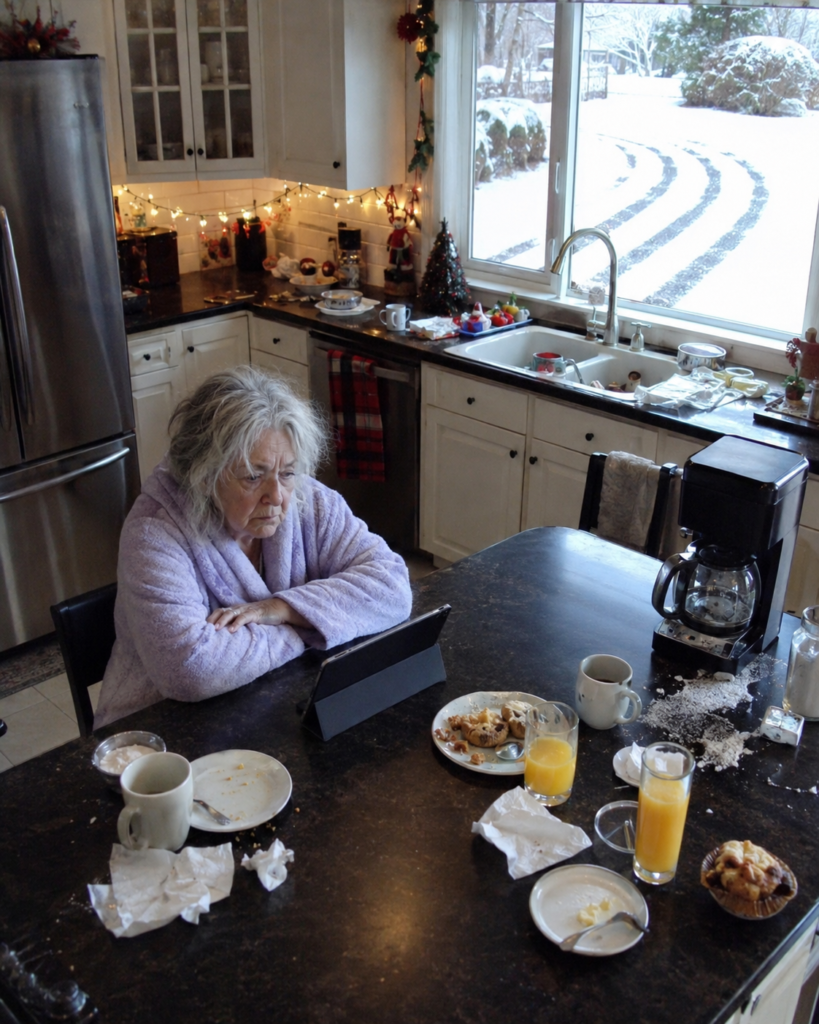
On Christmas morning, seventy-one-year-old Evelyn Mercer woke to a silence so complete it felt staged.
At her age, Evelyn knew the language of houses. She knew the soft hum of heat moving through old vents, the way hardwood floors ticked and settled before dawn, and the subtle difference between a home asleep and a home abandoned.
This was abandonment.
She sat up in the guest room she had surrendered to her daughter-in-law Megan’s parents three nights earlier and listened carefully. There were no little feet padding across the hallway, no pipes rattling from arguments over hot water, no muffled laughter from upstairs, and no television noise from the den where Megan’s cousins had fallen asleep watching late-night movies.
Nothing. Only a stillness so clean it seemed intentional.
Evelyn pulled on her robe, stepped into her slippers, and walked to the window. Outside, the world was blanketed in fresh, white snow. But the driveway had been carved open. The four massive SUVs that had been lined up side-by-side the night before were gone, leaving behind fresh, dark tire tracks leading away from the house in parallel lines.
She stood very still, one hand resting against the cold glass. Then she nodded once, confirming a quiet suspicion, and went downstairs.
The kitchen was left the way selfish people leave a place they do not respect. Half-finished coffee cups sat on the counters, cream cheese was left open, and crumbs covered the island. Someone had left a knife stuck in a stick of butter and two cereal bowls in the sink to harden into glue.
Yesterday, Evelyn had spent ten hours preparing for them. She had baked cinnamon rolls because Megan insisted the children needed a warm breakfast. She had packed travel snacks, coloring books, extra mittens, and prepared ginger tea for Megan’s mother, Judith.
Evelyn had remembered every detail because that was who she had been for years: the woman who noticed, prepared, absorbed, paid, and overlooked. A widow for twelve years, she had spent the last decade convincing herself that generosity was the same thing as being loved.
Her son Connor had moved back in three years earlier after a “temporary rough patch.” He and Megan were saving for a down payment on a house, or so they claimed. Evelyn had absorbed their living expenses without complaint, paying increased utilities, groceries for ten people during the holidays, school supplies, prescriptions, and Christmas gifts.
And when Megan floated the idea of a luxury Christmas trip to an Aspen snow lodge—something “special” her side of the family had never experienced—Evelyn had agreed to finance it.
It was far more than she should have spent. The lodge cost $18,500 for the week, not including transportation and private dining add-ons. Megan had framed it as a once-in-a-lifetime family memory, repeatedly emphasizing that “family matters most at Christmas.”
That word sat differently now.
As Evelyn reached for the kettle, a faint glow caught her eye. An old tablet lay on the kitchen island beside a lipstick-stained mug. It belonged to Megan. A new message notification flashed across the screen.
The group chat title read: Operation Ditch Grandma.
Evelyn picked up the tablet. Unlocked. No password.
She opened the chat. At the top was Megan’s message sent at 3:45 a.m.: We leave around 4 a.m. while she’s asleep. If she comes, she’ll ruin the vibe again.
Below it, a reply from one of Megan’s cousins: Whatever. As long as her card still works for the lodge, who cares?
And then came Connor’s response: A simple thumbs-up emoji.
Evelyn sat down at the kitchen table. Her heartbeat did not race, and her hands did not shake. What she felt was something colder and far more useful than tears: clarity.
They had not forgotten her. They had planned around her, relying entirely on her generosity while ensuring her humiliation. They assumed she would be too embarrassed to act once they were already on the road.
Evelyn walked to the dining room, opened her laptop, and logged into the Aspen lodge booking portal. As the primary account holder and sole payer, she pulled up the reservation confirmation.
A text box appeared requesting a reason for cancellation. She typed with the precision of a woman who had spent forty years balancing household accounts:
The arriving party is attempting to access the property under my name without my presence or authorization. I revoke all access immediately. Please cancel the reservation and all related services.
She clicked submit.
Chapter 2: The Cold Reality
Within sixty seconds, Evelyn’s phone rang. It was the lodge concierge, sounding confused. Evelyn clearly verified her identity, repeated her instructions, and strictly directed them to deny entry and cancel all dining packages.
When the call ended, Evelyn looked around her kitchen. She didn’t waste time on regret; she focused on restoration. She washed every cup, wiped every counter, and swept away every crumb. Stripping the room of their mess steadied her nerves.
Then, she packed a small carry-on bag: two warm sweaters, a wool coat, winter boots, and her late husband’s plaid scarf. On an impulse, she called a quiet bed-and-breakfast on the Maine coast where she and her husband had celebrated an anniversary decades ago. Miraculously, they had one room available.
Before leaving her home, she wrote a brief note and left it on the kitchen counter: The cleaning service arrives Tuesday. The house is locked.
By nine o’clock that morning, as Evelyn drove toward the coast, her phone began buzzing relentlessly.
The first messages were demands from Megan: We’re at the gate. The access code isn’t working. Call now. The front desk says you canceled.
Then came dramatic outrage: My parents are freezing in the car! How could you humiliate us like this?
Finally, Connor called, his tone laced with entitled anger: Mom, this isn’t funny. Megan is crying. You are embarrassing us in front of her whole family. Fix it right now.
Evelyn pulled over at a snowy rest stop in New Hampshire, holding a warm cup of tea, and read the messages. Not one person asked where she was. Not one asked if she was safe. They did not miss her; they missed her funding.
She opened the screenshot she had taken of Megan’s group chat, sent it directly into the family group message, and typed a single sentence beneath it:
Operation Ditch Grandma was a complete success. Good luck finding rooms.
Then she switched her phone off.
In Maine, the ocean air was sharp and invigorating. The inn was peaceful, featuring creaking wooden stairs, knitted throw blankets, and windows overlooking the winter sea. Evelyn walked along the coast, ate warm chowder by the fireplace, and slept deeply without listening for anyone else’s noise.
On her third morning by the coast, watching gulls soar over the frozen rocks, she made her next move. The canceled vacation was only the symptom; the real issue was the entitled dynamic waiting for her back home.
She opened her laptop and compiled three years of bank records: utility bills that had doubled after Connor’s family moved in, grocery transfers, school tuition receipts, vehicle repairs, and holiday expenses.
She then called an attorney named Miriam Lowe, a sharp legal mind recommended by her bank manager. Miriam listened carefully, reviewed the documentation, and said, “You have a clear paper trail, Mrs. Mercer. We can move forward immediately.”
Within forty-eight hours, Miriam drafted a formal notice to vacate, outlining legal occupancy terms, property maintenance expectations, and financial obligations.
When Evelyn returned home five days later, Connor’s SUV was parked crookedly in the driveway. Through the front window, she saw furious movement inside.
Megan opened the front door before Evelyn even reached for her keys.
“Where have you been?” Megan snapped, her voice trembling with rage. “Do you have any idea what you did to us in Aspen?”
Evelyn stepped inside, closed the door calmly, and unbuttoned her coat. “I was on vacation,” she replied softly.
Chapter 3: Setting the Boundaries
Connor came marching down the hallway. “Mom, enough! You owe Megan’s parents compensation for what happened. They had to pay exorbitant holiday rates for last-minute hotel rooms because of you!”
Evelyn looked at her son carefully. “Because of me?”
Connor flinched slightly, but Megan stepped forward aggressively. “Normal family members don’t strand people at a gate!”
“Normal family members don’t create group chats named Operation Ditch Grandma,” Evelyn answered steadily.
The room fell dead silent. Connor’s face washed pale with sudden shame. Megan’s expression hardened into fury.
“You went through my private tablet?” Megan demanded.
“You left it on my kitchen counter,” Evelyn replied. “Along with enough evidence to settle every doubt I had left about your motives.”
Connor rubbed his face with both hands. “Mom, it was just a joke. It got out of hand.”
“No,” Evelyn said firmly. “It was a calculated plan. And it worked exactly the way you intended, right up until I took control of my own finances.”
She pulled the folder from her coat and placed it on the kitchen island. Connor opened it slowly. At the very top was a formal legal notice to vacate. Below it was an itemized ledger documenting three years of financial support.
Megan snatched the paper and scanned it with widening eyes. “This is absurd! You can’t bill family for helping them!”
Evelyn met her gaze without flinching. “I was helping family. You were taking advantage of a widow.”
“We have children!” Megan fired back.
“Yes,” Evelyn said softly. “And that should have taught you gratitude, not entitlement.”
Connor looked up, his voice cracking. “You’re evicting us, Mom?”
“I am reclaiming my home,” Evelyn corrected. “You have thirty days to find alternative housing.”
“Where are we supposed to go?” Connor asked desperately.
The question no longer swayed her. “There are apartments, rental homes, and hotels available to responsible adults,” she said.
At that moment, a firm knock echoed from the front door. Evelyn opened it to welcome Miriam Lowe, accompanied by a process server and a licensed locksmith.
Miriam stepped inside, calm and professional. She formally served the notice to vacate, outlining the timeline and legal consequences for any property damage. Meanwhile, the locksmith immediately began rekeying the exterior door locks and updating the digital security keypads.
Megan attempted anger, tears, and accusations, but Miriam’s presence held the line firm. Connor stood in the middle of the kitchen, looking smaller by the minute as the reality of their situation settled in.
Chapter 4: The Sound of Freedom
For the next three weeks, the house operated in quiet tension. The grandchildren became quiet and polite around Evelyn, sensing the shift in authority. Megan spent hours making frantic phone calls behind closed bedroom doors, while Connor made awkward attempts to apologize.
One evening, Evelyn found Connor sitting alone in the kitchen.
“I should have stopped it, Mom,” he said quietly, staring at the countertop. “I didn’t think you’d actually see that message.”
Evelyn paused. “That reveals the core of the issue, Connor. You were fine with the cruelty, as long as you thought I wouldn’t confront it.”
He lowered his head, tears finally overflowing, but Evelyn did not rush to comfort him. She loved her son, but she refused to enable his disrespect any longer.
On moving day, a large rental truck parked in the driveway. The children gave Evelyn long, tight hugs before loading into the car. Megan marched straight to the vehicle without looking back. Connor hugged his mother briefly—a heavy, silent gesture of regret.
As the truck pulled away, leaving fresh tire tracks in the driveway once more, Evelyn stood by the window. This time, the quiet that filled the spacious house did not feel like abandonment. It felt like peace.
Over the following months, Evelyn reclaimed her living space. She repainted the upstairs bedrooms, turning one into a sunlit reading room and renting the other suite to a traveling nurse who kept immaculate habits.
She took weekend trips to the coast, joined a local community walking club, and reconnected with old friends. Laughter returned to her home, light and genuine, unburdened by financial obligation.
Six weeks after moving out, Connor sent his mother a long, handwritten letter. It was a sincere apology, acknowledging his passivity and selfishness. Evelyn replied thoughtfully, telling him that while she would always love him, future access to her life would be built on mutual respect and healthy boundaries, not obligation.
On the following Christmas morning, Evelyn woke to a quiet house once again.
Snow fell gently outside the window, dusting the maple trees in silver and white. She made a fresh pot of coffee, wrapped her husband’s plaid scarf around her shoulders, and sat by the window with a good book.
She had learned that family was not defined by people who felt entitled to your sacrifices. Real family consisted of those who respected your presence and never expected you to shrink so they could stay comfortable.
The house was quiet, warm, and entirely her own.