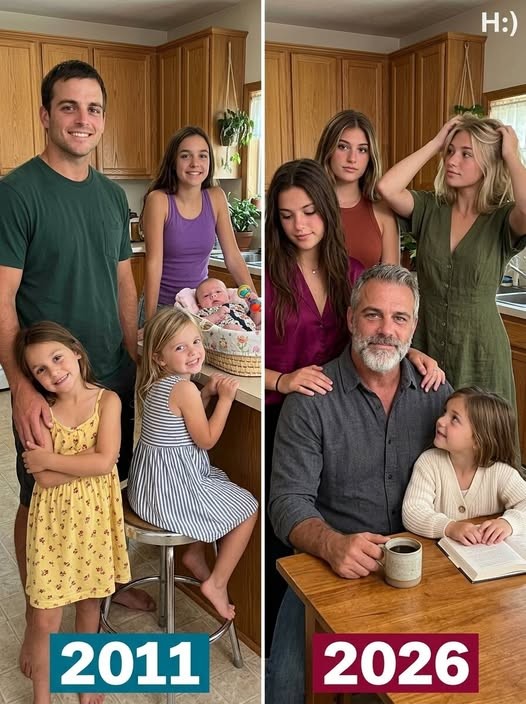
Fifteen Years Later: A Story of Family, Abandonment, and Reconciliation
The Beginning: A Family Divided
Fifteen years before the memorable wedding that would reunite them, Elena made a life-altering decision. She left behind her husband and their six daughters—including a nine-month-old infant—in search of a wealthier and seemingly more promising future with her employer, Julian. The immediate shock of Elena’s departure carved a void through the household, forever altering the trajectory of each family member.
Elena’s former husband, left to pick up the pieces, took on the overwhelming responsibility of solo parenthood. Managing double work shifts to provide for his daughters, he simultaneously shouldered the emotional labor of guiding them through their questions and confusion. Though deeply hurt by Elena’s abrupt absence, he hid his grief to shield his children as much as possible from the reality of her choice. He resolved to create a sense of normalcy and stability, determined to never let them feel unloved or unwanted.
The Struggles of Single Parenthood
Raising six children alone is an immense challenge under any circumstances. Over the years, the girls grew up watching their father juggle exhausting work schedules with daily parenting duties: preparing meals, attending school events, offering emotional support, and ensuring they never missed the small joys and milestones of childhood. His consistent presence became a reassuring constant in their lives.
Despite his best efforts, the absence of their mother left a painful mark. The daughters sometimes voiced their longing for Elena or asked difficult questions about her absence. Their father tactfully avoided damaging explanations, careful not to plant seeds of resentment. Instead, he provided hope and reassurance, while privately struggling with heartbreak and exhaustion himself. His personal notes and journal entries, which would later come to light, revealed the depth of his dedication and the silent sacrifice he made for the stability and happiness of his children.
A Wedding Invitation and the Prospect of Reconciliation
Years later, as time softened some memories yet left others unhealed, Chloe—the couple’s third eldest daughter—prepared for her wedding. In a surprising move, Elena reached out, expressing a desire to attend the event. Her request stirred mixed emotions among her daughters. Chloe agreed, seeing the wedding as a possible opportunity for healing, but she was determined not to allow her mother to rewrite the family’s narrative or diminish the hardships they had faced.
Family reunions after long periods of separation are always emotionally complex. For Chloe and her siblings, the presence of their mother at this pivotal life event brought hope for reconciliation but also uncertainty and pain. The wedding would ultimately serve as both a celebration and a reckoning, a day that would forever shape the family’s collective memory.
The Confrontation: Truths Emerge at the Reception
During the wedding reception, emotions ran high. Elena, perhaps overwhelmed by the occasion and her own unresolved guilt, publicly accused her former husband of deliberately keeping her away from their daughters. The charged atmosphere left the guests, as well as the family, visibly tense.
In response, Chloe calmly retrieved a folder she had prepared in advance. Inside were letters, childhood drawings, and pages from her father’s journals—artifacts of the family’s life after Elena’s departure. These documents served as a poignant record of years spent hoping for reconnection, and of the burdens shouldered by their father as he raised six children alone. Chloe’s gesture was not about retaliation; rather, it was an honest attempt to bring long-buried truths to light and to validate the experiences of those who had remained.
Examining the Evidence: Unraveling Misconceptions
As the documents were shared, Elena insisted she had often tried to rebuild ties with her daughters but claimed that their father had purposely obstructed her efforts. Chloe then presented further evidence showing that, for fifteen years, their father’s contact information had never changed. Their home address and phone number had remained exactly the same—clear proof that Elena could have reached out at any time if she had genuinely wished to reconnect.
This revelation impacted not only the daughters but also Julian, Elena’s partner since her departure, who had accepted her version of events. The facts presented challenged his understanding, lifting the veil on a reality that had previously been hidden beneath Elena’s narrative of helplessness and lost opportunity.
Elena’s former husband responded with calm honesty, acknowledging that, when the girls were younger, he had softened the harshest truths to spare them undue pain. He admitted his protective instinct—to shield six growing children from the knowledge that their mother had consciously chosen to leave them—guided his silence.
A Dance of Gratitude: Celebrating the Parent Who Stayed
In a deeply emotional moment, Chloe clasped her father’s hand and invited him onto the dance floor. Her five sisters soon joined, encircling the man who had sacrificed so much for them. The family’s collective embrace became a silent testament to their gratitude and to the steady, everyday acts of love that defined their upbringing.
This dance, witnessed by friends and relatives, transformed the wedding from a mere celebration of marital union into a tribute to enduring parental devotion. Instead of angry words or blame, the family chose to acknowledge and honor the resilience and care that had sustained them through years of adversity.
The significance of this moment extended beyond their immediate circle. It signaled to all present—and to those who would later hear the story—the powerful impact of steadfast love, and the ways in which everyday parental sacrifices can shape, support, and ultimately heal a wounded family.
Confronting the Past: A Call for Honesty and Responsibility
In the wake of the honest confrontation, Elena finally admitted that her post-abandonment life with Julian had not been what she envisioned. Overwhelmed by embarrassment, regret, and guilt, she described how these feelings grew into insurmountable barriers, making the prospect of returning to her family seem ever more impossible. She acknowledged that, rather than confronting her share of responsibility, she had come to believe that someone else had kept her away.
The daughters, especially Chloe, listened empathetically but stood firm. Chloe explained that forgiveness could not be automatic—instead, it would require honest dialogue, time, and consistent, meaningful actions. Her sisters agreed, emphasizing their refusal to harbor vengeance or resentment while also making clear that pretending the past had not happened was neither fair nor healing.
The family’s response was neither punitive nor vindictive, but a call for accountability and transparency—a necessary foundation for any hope of genuine reconciliation.
The Wedding’s End: Redefining Family Bonds
As the celebration drew to a close, Chloe shared one last dance with her father. Her sisters looked on, their faces a mixture of tears and smiles. What might have begun as a typical wedding had been transformed into a moment of recognition—not only of Chloe’s marriage but also of a father’s unwavering commitment. Together, the sisters silently honored their parent’s sacrifices and the extraordinary resilience that carried them through the darkest chapters of their lives.
Though Elena’s return reopened wounds, it also presented an opportunity for truth and the beginning of a slow process of healing. The possibility of forgiveness lingered on the horizon, contingent on honesty and mutual effort. Their father’s steadfast presence provided the daughters with something far more valuable than wealth or comfort: the lifelong assurance that they were, and always would be, deeply loved.
The Enduring Lessons of Unconditional Love
This family’s journey offers important lessons about love, parenting, and resilience. The experiences of Elena, her former husband, and their daughters echo broader themes found in families worldwide: the enduring scars of abandonment, the extraordinary strength required of single parents, and the critical importance of honesty and responsibility in mending broken relationships.
Social scientists and family therapists emphasize that parental abandonment can have profound long-term effects on children’s emotional well-being and self-esteem. At the same time, research indicates that the sustained presence and care of a dedicated parent can be a powerful protective factor, helping children overcome adversity and develop resilience.
This story, though deeply particular to one family, illustrates the universal importance of facing painful truths with compassion and the transformative potential of forgiveness—not as an automatic gift, but as a process requiring openness, accountability, and time. The father’s example demonstrates that love is most powerfully expressed not in grand gestures, but in the persistent, everyday acts that bind families together across the years.
Sources
Disclaimer: This content is intended for entertainment purposes only and is not based on real events.