
Phoebe Cates: Quiet Stardom and a Lasting Choice
Hollywood made Phoebe Cates a familiar face to audiences in the 1980s, particularly through her roles in Fast Times at Ridgemont High and Gremlins. Her screen presence, comic timing, and performances in films that became enduring pop-culture touchstones helped establish her as one of the era’s recognizable young actors. Yet Cates’ career also became notable for a different reason: after years of film work, she stepped away from regular acting and built a largely private life outside the entertainment industry.
Her path is often discussed as an example of a performer whose public recognition did not determine every part of her future. Cates has made occasional appearances connected to friends and past colleagues, but she has generally avoided the highly visible celebrity circuit. Instead, she has focused much of her later professional life on a New York retail business while raising a family with actor Kevin Kline.
For fans, that change has naturally prompted curiosity. However, the available public record suggests a more straightforward story than speculation sometimes implies: Cates had a successful period as an actor, married, became a parent, and chose to devote her time to family life and other work. Her lasting cultural visibility reflects the continued popularity of her films rather than an ongoing campaign for fame.
Phoebe Cates’ Early Career in Modeling and Film
Born in New York City in 1963, Phoebe Cates grew up in a family connected to entertainment and production. Her father, Joseph Cates, was a television producer and director, while her uncle, Gilbert Cates, also had a long career in television and live-event production. That background gave her familiarity with the industry, though her own early public career began in modeling.
Cates worked as a teenage model before moving into acting. Like many young performers of the period, she entered film at a time when youth-oriented comedies and coming-of-age stories were major parts of the studio landscape. Her early credits included Paradise in 1982, but her wider breakthrough came later that year with Fast Times at Ridgemont High.
The transition from modeling to acting was significant. Film acting requires a different set of skills: creating a character over multiple takes, responding to scene partners, working within an ensemble, and handling the technical demands of production. Cates soon became associated with films whose appeal rested on a combination of humor, teen experiences, and memorable supporting characters.
Fast Times at Ridgemont High and an Enduring Film Legacy
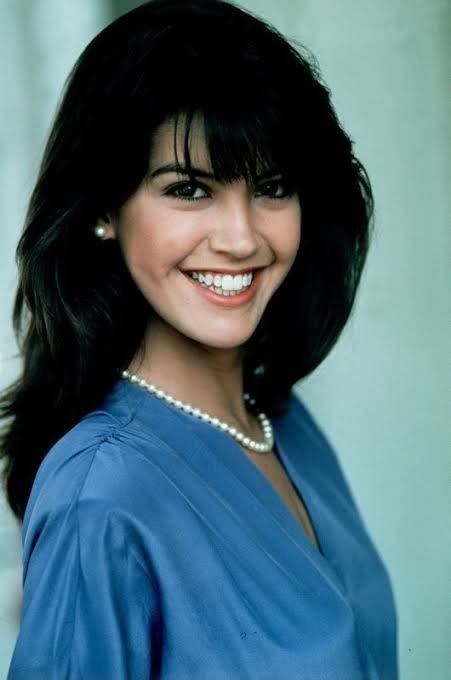
Released in 1982, Fast Times at Ridgemont High was directed by Amy Heckerling and adapted by Cameron Crowe from his book about American high-school life. The film featured an ensemble that included Sean Penn, Jennifer Jason Leigh, Judge Reinhold, Robert Romanus, Brian Backer, Forest Whitaker, Eric Stoltz, and Nicolas Cage in an early credited role.
Cates played Linda Barrett, an older, more confident student and friend of Jennifer Jason Leigh’s character, Stacy Hamilton. The role was relatively concise within a large ensemble, but it proved memorable. Over time, the movie developed a reputation as one of the defining American teen comedies of its decade, in part because it balanced broad humor with storylines about friendship, employment, school pressure, relationships, and the uncertainties of adolescence.
Today, Fast Times at Ridgemont High remains widely referenced in discussions of 1980s cinema. Its influence can be seen in later school-set comedies and in the continuing public interest in its cast, many of whom went on to long careers. Cates’ association with the film has made her a recurring subject of nostalgia coverage, especially when audiences revisit major releases from that period.
It is important, though, to view the movie in its historical context. Some aspects of 1980s teen filmmaking reflect attitudes and storytelling conventions that have changed over time. Modern discussions of the film often consider both its influence and the ways contemporary audiences interpret its themes differently. Cates’ performance remains part of that larger conversation about the era’s popular cinema.
Gremlins Expanded Phoebe Cates’ International Recognition
Cates reached an even broader audience in 1984 with Gremlins, the fantasy comedy-horror film directed by Joe Dante and produced by Steven Spielberg. The movie follows a young man who receives an unusual creature called a mogwai and must follow strict rules for its care. When those rules are broken, the situation develops into a chaotic story set during the Christmas season.
In Gremlins, Cates played Kate Beringer, a central character alongside Zach Galligan’s Billy Peltzer. The film blended comedy, fantasy, suspense, and practical creature effects in a way that made it distinctive for audiences. It was commercially successful and became one of the best-known films associated with 1980s popular entertainment.
The movie’s success also had a wider industry effect. Along with Indiana Jones and the Temple of Doom, released in the same year, Gremlins was part of the public debate that contributed to the Motion Picture Association’s introduction of the PG-13 rating in 1984. The new rating was designed to sit between PG and R, offering guidance for films that might be unsuitable for younger children without being restricted to adult audiences.
For Cates, Gremlins became a defining credit. She later reprised the role in the 1990 sequel, Gremlins 2: The New Batch. Although the sequel took a more satirical and self-aware approach, it has developed its own following. The continued visibility of both films through home media, television, streaming, and fan events has ensured that Cates’ work continues to reach new generations.
Other Film Roles During the 1980s and 1990s
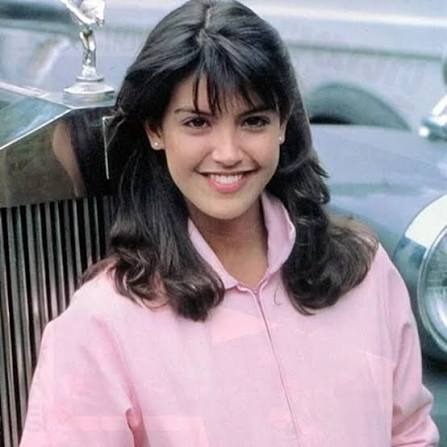
While Fast Times at Ridgemont High and Gremlins are her most frequently cited films, Cates worked in several other projects. Her credits include Private School (1983), Bright Lights, Big City (1988), Shag (1989), Heart of Dixie (1989), Drop Dead Fred (1991), and Princess Caraboo (1994).
These roles show the range of material available to her during that period, from comedy to drama and period storytelling. In Drop Dead Fred, she appeared with comedian Rik Mayall in a film that later gained a devoted audience despite a mixed initial critical response. In Princess Caraboo, she worked in an ensemble historical comedy featuring Jim Broadbent, Kevin Kline, John Lithgow, and Stephen Rea.
Her final major film appearance was in The Anniversary Party in 2001, directed by Jennifer Jason Leigh and Alan Cumming. The independent film included a large ensemble of actors and was notable in part because it reunited Cates with Leigh, her Fast Times at Ridgemont High co-star. Cates appeared in the project as a favor to Leigh, according to widely reported accounts of the film’s production.
Marriage to Kevin Kline and Family Life
Phoebe Cates married Kevin Kline in 1989. Kline, an acclaimed stage and screen actor, is known for films including A Fish Called Wanda, Dave, In & Out, and De-Lovely, as well as an extensive theater career. The couple has two children: son Owen Kline and daughter Greta Kline.
Owen Kline has worked as an actor and filmmaker. He appeared in Noah Baumbach’s The Squid and the Whale and later made his feature directorial debut with Funny Pages. Greta Kline is a musician who performs under the name Frankie Cosmos. Her work has been widely covered within independent music circles, and she has released multiple albums.
Cates and Kline have maintained an unusually private family profile for a couple with longstanding public careers. Their approach has not prevented occasional public interest, but it has limited the amount of personal detail available to the media. Respecting that boundary is especially important when discussing public figures whose family members did not necessarily choose the same level of exposure.
There is no single public statement that fully explains every professional decision Cates made after her acting career slowed. It is therefore more accurate to avoid presenting assumptions as fact. What is known is that her screen appearances became infrequent after the 1990s and that she developed a separate business career in New York.
Blue Tree: Phoebe Cates’ New York Retail Business
In 2005, Cates opened Blue Tree, a boutique on Madison Avenue in New York City. The store has been described as a carefully curated retail space offering gifts, jewelry, home items, books, accessories, and other distinctive products. Its identity is markedly different from a conventional celebrity-branded venture: the emphasis has been on eclectic merchandise and a personal retail sensibility rather than on Cates’ former film career.
Blue Tree has attracted attention from lifestyle publications and New York shoppers because of its varied inventory and neighborhood setting. The store’s existence also demonstrates that stepping away from acting did not mean withdrawing from professional life. Rather, Cates moved from one creative field into another, working in retail and product curation.
This kind of career shift is not unusual, even if it can appear surprising when it involves a recognizable actor. Entertainment careers can be demanding, project-based, and highly public. Some performers continue acting for decades; others pursue writing, directing, business, education, philanthropy, or private family life. Cates’ experience illustrates that public recognition and personal priorities do not always move in the same direction.
Why Phoebe Cates Still Matters to Film Fans
Phoebe Cates remains a subject of interest because the films associated with her have endured. Fast Times at Ridgemont High is frequently revisited as a landmark coming-of-age comedy, while Gremlins has become a seasonal favorite for many viewers and a major reference point in discussions of practical effects and 1980s studio filmmaking.
Her relatively brief filmography has also contributed to the sense of curiosity around her. In an era when celebrities are expected to remain constantly visible on social media, television, and promotional tours, Cates’ low-profile approach stands out. Yet absence from regular publicity should not be confused with mystery requiring explanation. A public career does not eliminate a person’s right to privacy, nor does it obligate an actor to remain in the industry indefinitely.
Her legacy is therefore best understood through her work and through the choices that are publicly documented. She was part of several influential films, built a family with Kevin Kline, and established a business beyond Hollywood. For audiences who remember her from the 1980s, that combination has made her career feel both familiar and distinctive.
A Lasting Choice Beyond Hollywood
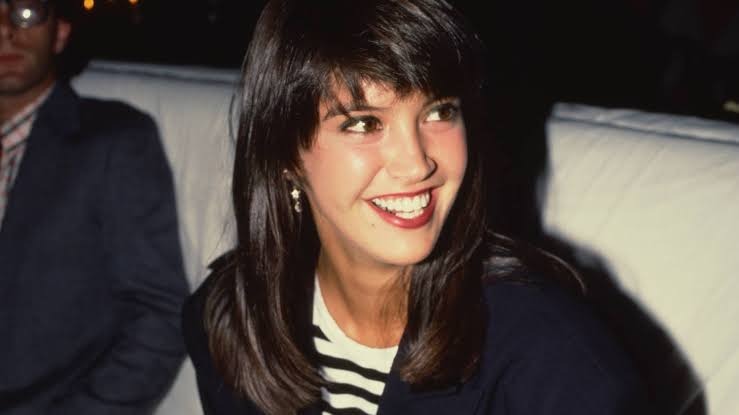
Phoebe Cates’ story is not simply about leaving fame behind. It is about having more than one professional chapter. Her roles in Fast Times at Ridgemont High and Gremlins secured a place in film history, while her later life has shown that creative identity can take forms beyond the screen.
Fans may continue to hope for another acting appearance, particularly as nostalgia for 1980s cinema remains strong. But Cates’ existing work has already maintained a durable connection with audiences. Her decision to keep much of her life private has not erased that legacy. Instead, it has made the public record clear in its essentials: a successful actor whose most famous films remain widely watched, a family life largely kept out of view, and a business career pursued on her own terms.
Sources
Disclaimer: This content is intended for entertainment purposes only and is not based on real events.