Doctor Humor: Exploring Classic Medical Anecdotes and Their Underlying Messages
Medical anecdotes and light-hearted stories about doctors and their patients have long been a part of popular culture. These narratives may seem simple on the surface, but often contain layers of insight about healthcare, communication, and common misconceptions that impact both the general public and professionals. In this article, we analyze several classic doctor-patient stories, offer context from medical experts, and uncover the deeper meanings and real-life lessons that can be drawn from each one.
Miscommunication and Its Consequences: The Appendix Anecdote
The first story captures the essence of miscommunication and the limits of assumptions in a medical setting:
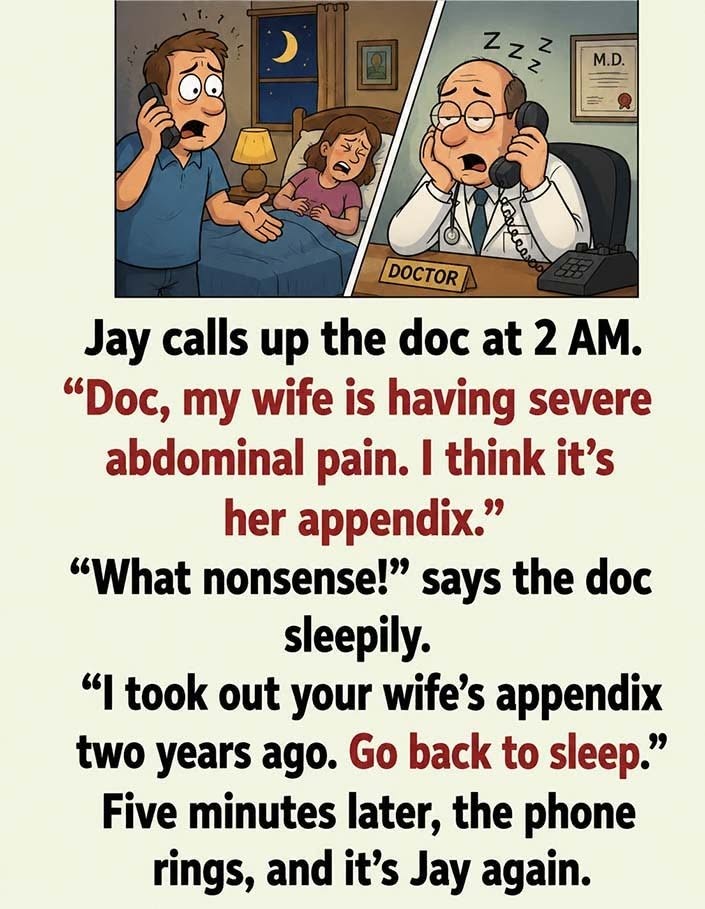
“Doc, my wife is having severe abdominal pain. I think it’s her appendix,” says the worried husband, Jay.
The doctor, perhaps groggy from having been woken, dismissively replies, “What nonsense! I took out your wife’s appendix two years ago. Go back to sleep.”
When Jay calls again, insisting it’s her appendix, the doctor exclaims, “Did you ever hear of anyone having a second appendix?”
Jay answers, “No… But I’m sure you must have heard of someone having a second wife..!!!!”
Medical Insights Behind the Anecdote
While this story employs humor to underscore communication challenges, it hints at a real issue: the risk of making assumptions in diagnosis. In rare cases, medical anomalies such as a duplicated appendix, known medically as duplex appendix, have been documented. However, more commonly, patients present with similar symptoms even after an appendectomy, sometimes due to other gastrointestinal issues. The story also highlights the importance for medical professionals to maintain clear, compassionate communication, even in stressful or inconvenient circumstances.
Furthermore, this joke touches on the emotional stakes for patients and their families when dealing with medical uncertainty. Health anxiety can lead families to seek repeated reassurance, which calls for empathy and a thorough approach from healthcare providers.
Expert View
Practicing physicians often note that managing patient expectations and anxiety is as crucial as clinical intervention. According to the Mayo Clinic, abdominal pain can have many causes, and a methodical approach to diagnosis, paired with attentive listening, makes a significant difference to patient outcomes.
The Risks of Misunderstanding Medical Instructions: The Ear Drops Story
In the next anecdote, a new mother brings her baby to a doctor for an earache. The prescription reads: “Put two drops in right ear every four hours,” written with an ‘R’ surrounded by a circle. However, due to a misunderstanding—both by the pharmacist typing the label and by the mother—the instructions are interpreted as “put two drops in rear every four hours.” The result? The mother applies ear drops to the baby’s behind, not improving the earache and understandably becoming concerned.
The Importance of Clear Communication
This story highlights a real-world issue known in the medical field as “medication errors,” which occur when instructions are misinterpreted. The Centers for Disease Control and Prevention (CDC) and the World Health Organization (WHO) have found that ambiguous abbreviations and unclear labeling are leading causes of such errors, sometimes with serious or even life-threatening outcomes. Both agencies have published guidelines for clear prescription writing and patient counseling to minimize these risks.
In practice, both healthcare providers and pharmacists are encouraged to use unambiguous language—fully writing out “right ear” instead of abbreviating—and to verify understanding with patients or caregivers before they leave with their medication.
What Can Patients Do?
Patients and caregivers are advised to always ask for clarification if they do not fully understand instructions. As the CDC stresses, there are no “silly questions” when it comes to health.
Solving Problems Creatively: Doctor Simon and the Walking Stick
The third anecdote introduces Dr. Simon, a reputable arthritis consultant in London. An elderly woman suffering from severe mobility issues enters his practice, barely able to walk upright. Fifteen minutes later, she exits, standing almost straight. Amused onlookers declare it a “miracle,” but the woman reveals, “He just gave me a longer walking stick.”
Understanding Patient’s Functional Needs
This story underscores the importance of practical solutions in medical care. While medical intervention is sometimes necessary, many chronic conditions—especially in elderly populations—can be substantially improved with adaptive devices and thoughtful accommodations. According to NHS guidelines, mobility aids like strategically sized walking sticks and canes can drastically enhance independence and safety for people with arthritis.
The narrative also highlights the vital skill of holistic assessment in healthcare: effective practitioners evaluate not only physical symptoms but also a patient’s lifestyle, environment, and tools, offering solutions that fit their needs.
Expert Commentary
Geriatricians and occupational therapists emphasize that empowering patients through education about assistive devices can significantly boost their self-confidence and overall quality of life.
Natural vs. Safe: Addressing Misconceptions about Herbal Remedies
The fourth story presents a discussion between two doctors and a patient with lung disease. The patient insists his smoking “herbal” substances cannot be harmful because it is natural. The doctors respond with examples of natural substances—apricot stones laden with cyanide, and a certain plant that is lethally toxic—demonstrating that “natural” does not equate to safe. The punchline is that the supposedly deadly plant is, humorously, a water lily, highlighting gaps in practical versus theoretical knowledge.
Herbalism and Public Perception
There is an ongoing public debate about the health risks and benefits of herbal medicines and “natural” products. The CDC notes that smoking any substance—including non-pharmaceutical herbs—produces by-products that can irritate or harm lung tissue. Furthermore, the WHO warns that even common plants and seeds (such as apricot stones) can be poisonous if consumed in excess, underlining that consumer education is essential.
This story gracefully addresses the misconception that all things “natural” are harmless—an idea that is debunked by scientific evidence.
Responsible Health Choices
Healthcare professionals recommend that patients consult trusted resources and speak with their doctors before trying alternative medicines or herbal remedies. Studies consistently show that informed decision-making leads to better health outcomes.
Access to Healthcare: Delays and Their Impact
The final story centers on Oliver, whose wife falls ill with the flu shortly after their children recover. Busy caring for his family, he calls his wife’s doctor only to hear that the earliest available appointment is three days away. Distressed, Oliver fears she could worsen significantly, to which the receptionist responds matter-of-factly, “If so, would you please call to cancel the appointment?”
The Realities of Scheduling Constraints
While humorous, this anecdote reflects genuine frustrations experienced by patients and families seeking timely care. Wait times for appointments are a well-documented challenge in the healthcare systems of many countries. For instance, studies in the UK from the NHS and survey data from the CDC show that appointment wait times can range from same-day to several days, impacting patient satisfaction and sometimes clinical outcomes.
Health authorities encourage the use of urgent care, telehealth, and nurse hotlines for advice as alternatives when primary care providers are unavailable. Education on when to seek immediate care—such as for chest pain, difficulty breathing, or persistent high fever—is crucial.
Empathy and Systemic Challenges
The importance of empathy in such interactions cannot be overstated. Experts highlight that receptionists and medical office staff are often frontline communicators, balancing compassion with limited resources. Developing clear communication and triage protocols can mitigate frustration and improve patient experiences.
Conclusion: What These Stories Teach Us
Through humor and light-hearted situations, these classic anecdotes reveal the complexities of medicine—miscommunications, practical solutions, misunderstandings about safety, and the systemic challenges of healthcare delivery. More importantly, they underscore the value of empathy, clarity, continuous education, and the human side of medical practice.
Patients are reminded to ask questions and seek clarity; healthcare providers are encouraged to prioritize clear communication and holistic care. Together, these small shifts significantly improve trust and safety in medicine. Whether through laughter or reflection, these stories persist not just in entertaining, but in subtly educating us all.
Sources
- Mayo Clinic
- Centers for Disease Control and Prevention (CDC)
- World Health Organization (WHO)
- NHS
- Reuters
- BBC News
- The Guardian
Disclaimer: This content is intended for entertainment purposes only and is not based on real events.