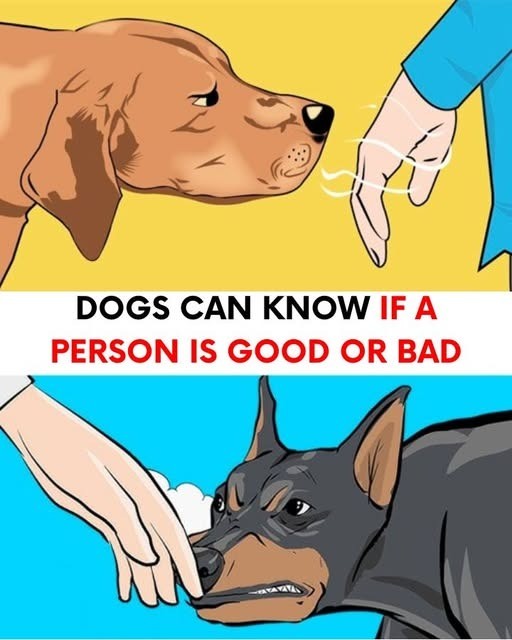
Dogs Can Tell When You’re Lying, Study Suggests
Many dog owners have experienced the moment when a pet appears to understand far more than expected. A dog may notice a change in routine, respond to a familiar tone of voice, or hesitate when a person points toward something that has previously led nowhere. These observations raise an interesting scientific question: can dogs judge whether a person is reliable?
Research from Japan suggests that dogs can learn from inconsistent human signals and may become less willing to follow gestures that have proven unhelpful. The findings do not mean dogs understand lies in the same moral or linguistic sense as people do. Instead, they indicate that dogs can assess whether a person’s communication is useful, predictable, and worth following.
This ability is important because dogs have lived alongside humans for thousands of years. During that long shared history, dogs developed unusual sensitivity to human social cues, including pointing, eye contact, posture, voice, and attention. Studies of canine behavior increasingly show that dogs are not simply responding to commands. They are also learning from patterns in human behavior.
What the Kyoto University Dog Study Found
A widely discussed study led by Akiko Takaoka at Kyoto University examined how dogs respond when a human’s pointing gesture becomes unreliable. The research was published in the journal Animal Cognition and focused on whether dogs would continue to trust a person after receiving misleading information.
The experiment used a well-established feature of dog behavior: most dogs readily follow human pointing. If a person points toward a container, dogs often interpret that gesture as meaningful and investigate the indicated location. This skill is one reason dogs are often considered especially attuned to people compared with many other animals.
In the study, dogs took part in a series of trials involving containers. At first, a person pointed toward a container that held a reward. The dog could find food there, reinforcing the idea that the gesture was useful. In a later trial, the person pointed toward an empty container. The dog followed the cue but found no reward.
When the person subsequently pointed toward a container with food again, the dogs were less likely to follow the gesture than they had been initially. The key finding was not that dogs had identified a human “liar” in the everyday sense. Rather, they appeared to have adjusted their behavior after learning that the person’s signals were inconsistent.
The study involved 34 dogs. Their responses showed that dogs can quickly reduce their reliance on a communicator whose gestures have not reliably predicted useful outcomes. This is a form of learning that may help animals make better decisions in changing social environments.
Do Dogs Really Know When Someone Is Lying?
It is tempting to describe the results by saying that dogs can tell when people are lying. That phrase is memorable, but it can oversimplify what the research actually demonstrates. Scientific studies do not show that dogs understand deception as a moral concept or that they can evaluate the truth of every statement a person makes.
Dogs do not need to understand language in the same way humans do to notice that a person’s behavior is unreliable. They can learn associations. If following a pointing hand repeatedly leads to an empty bowl, an inaccessible toy, or no meaningful result, a dog may stop treating that signal as valuable information.
This distinction matters. In animal cognition, researchers often study whether an animal can evaluate the reliability of a source of information. A dog may be asking, in effect, “Does this person’s cue usually help me?” That is different from asking, “Is this person intentionally being dishonest?”
Still, the ability to update expectations based on experience is significant. It suggests that dogs are active social learners. They do not automatically obey every gesture forever. They pay attention to outcomes, remember patterns, and change their responses when communication no longer appears dependable.
Why Predictability Matters to Dogs
Dogs generally benefit from predictable communication. Consistent cues can help them understand what is expected, especially during training, veterinary care, travel, or changes at home. Inconsistent signals can create confusion because a dog may not know which response will lead to a reward, safety, attention, or the end of an activity.
John Bradshaw, a dog behavior expert and author who was not involved in the Kyoto research, has emphasized the importance of predictability in human-dog relationships. Dogs are highly responsive to routines and repeated interactions. When people use conflicting gestures, rapidly changing rules, or unclear instructions, dogs may become hesitant or less responsive.
This does not mean that every confused dog is stressed or that one mistaken cue will permanently damage trust. Dogs are adaptable, and their reactions differ according to temperament, prior experience, breed, environment, and training history. However, repeated inconsistency can make communication less effective.
For owners, the practical lesson is straightforward: use clear and stable cues. If “come” is used sometimes as an invitation to play and other times as a signal that ends a fun outing, a dog may become less enthusiastic about returning. Rewarding desired behavior and using the same verbal and physical signals can make learning easier.
Dogs and Human Social Intelligence
Dogs occupy a special place in research on social intelligence because they have evolved in close contact with people. Domestic dogs can often follow human pointing better than wolves raised in less human-oriented settings, although the comparison is complex and depends heavily on upbringing, training, and experimental design.
Scientists are interested in whether domestication influenced dogs’ attention to people. Over generations, animals that could live successfully near humans may have benefited from noticing human movements, emotional expressions, and routines. Modern dogs are therefore shaped by both evolutionary history and individual experiences with people.
The Kyoto study added to this field by showing that dogs do not only follow human gestures; they can also evaluate whether those gestures remain useful. This is sometimes described as selective trust or reliability assessment. Similar abilities have been investigated in young children and other social animals.
Researchers have also studied how dogs respond to human emotional signals. Dogs may react to changes in facial expression, vocal tone, and body language, but such findings should be interpreted carefully. A dog’s response can be influenced by learned associations, context, scent, and the behavior of nearby people. Popular claims that dogs can always detect specific emotions or hidden intentions go beyond the available evidence.
Can Dogs Smell Fear or Detect Human Emotions?
The idea that dogs can “smell fear” is common in popular culture. Dogs have an exceptionally powerful sense of smell, and research indicates that they can detect changes in human body odor associated with emotional states. In controlled studies, odor samples linked with stress or fear have affected some dogs’ behavior and physiological responses.
However, detecting an odor connected with stress is not the same as knowing why a person is afraid or what they are thinking. Human emotions are complex, and body odor is only one part of the information dogs may receive. Dogs also observe movement, voice, facial expression, and the reactions of others around them.
It is more accurate to say that dogs can be sensitive to human emotional and behavioral cues than to claim they possess a flawless ability to read minds. Their strengths lie in attention, learning, sensory perception, and their long experience living with people.
How Children Learn to Judge Reliable Information
The original discussion of canine trust is often compared with research involving children. Developmental psychologists have examined when children begin to prefer information from people who have previously been accurate. One study led by Kimberly Vanderbilt at the University of California, San Diego found age-related differences in how preschool children used information from reliable and unreliable speakers.
Young children do not always reject advice from someone who has been inaccurate. As they grow, however, they become better able to track who has provided correct information and to use that history when deciding whom to trust. These findings are relevant because evaluating sources is a major part of social development.
Dogs and children should not be treated as equivalent in their reasoning or communication. Their cognitive abilities and life experiences differ greatly. Yet both areas of research highlight an important principle: individuals can learn not only from information itself, but also from the past reliability of the person providing it.
What This Research Means for Dog Training
The study offers useful guidance for humane, effective training. Dogs are more likely to respond well when their handlers communicate consistently and connect cues with clear outcomes. Positive reinforcement methods, including rewards for desired behavior, are supported by many veterinary and animal welfare organizations because they encourage learning without relying on fear or intimidation.
Owners can support clear communication by choosing one word for a behavior, pairing it with a consistent hand signal, and rewarding the dog soon after the correct response. Training sessions should be brief, age-appropriate, and adjusted to the individual dog’s health and comfort.
It is also helpful to avoid repeatedly calling a dog for something it dislikes, such as ending playtime or receiving an unwanted procedure, unless the dog is given positive experiences around that cue as well. Reliability does not mean every interaction must lead to a treat. It means the dog can learn what a signal generally predicts.
When a dog suddenly stops responding to familiar cues, the cause may not be a loss of trust. Hearing changes, pain, anxiety, distraction, aging, or an unfamiliar environment can affect behavior. A veterinarian can help rule out medical issues, while a qualified behavior professional can assist with persistent training or anxiety concerns.
The Bigger Picture: Dogs Learn From Experience
The evidence from canine cognition studies supports a thoughtful conclusion: dogs are capable of learning about the reliability of human behavior. They can recognize patterns, adjust their expectations, and become less likely to follow cues that have repeatedly failed to provide useful information.
That does not prove that dogs judge honesty exactly as humans do. But it does reinforce what many people see in everyday life: dogs are observant companions that pay close attention to the people around them. Their relationship with humans depends not only on affection, food, and routine, but also on communication that is understandable and dependable.
For science, these findings offer a window into the effects of domestication and the evolution of social behavior. For dog owners, they provide a practical reminder that consistency matters. A dog may not understand every word a person says, but it can learn whether a person’s actions are worth trusting.
Sources
- Animal Cognition: Dogs’ sensitivity to human communicative cues as a function of reliability
- Kyoto University: Research news on dogs and the reliability of human communication
- University of Bristol: John Bradshaw profile and canine behavior research
- UC Davis Health: Positive reinforcement and dog training
- ASPCA: Common dog behavior issues and training guidance
Disclaimer: This content is intended for entertainment purposes only and is not based on real events.