For generations, people heard a simple formula when talking about blood pressure: 100 plus your age equals a normal systolic blood pressure. The idea was easy to remember. If someone was 60, for example, a reading around 160 mmHg might have been considered acceptable under that old rule.
Today, that approach is no longer considered an appropriate way to define healthy blood pressure.
Modern medicine recognizes that blood pressure naturally changes throughout life, but age alone does not determine what should be considered normal. Instead, healthcare professionals look at actual measurements, repeated readings, overall health, and individual risk factors.
The change reflects something important about medical knowledge: what was once accepted because it seemed reasonable can be reconsidered when better research becomes available.
Where Did the “100 Plus Your Age” Rule Come From?

The idea that blood pressure should increase predictably with age developed during an era when doctors had far less information about cardiovascular health.
As people became older, their blood pressure often increased. Blood vessels also tend to become less flexible with age, which can contribute to higher systolic blood pressure.
It was therefore easy to assume that elevated blood pressure was simply an unavoidable part of getting older.
But there is an important distinction between something being common and something being healthy.
A measurement can become more frequent with age without being an ideal target. Modern research has helped doctors understand that persistently elevated blood pressure can contribute to cardiovascular problems even when a person feels perfectly well.
This is one reason the old formula gradually lost its usefulness.
What Is Considered Normal Blood Pressure Today?

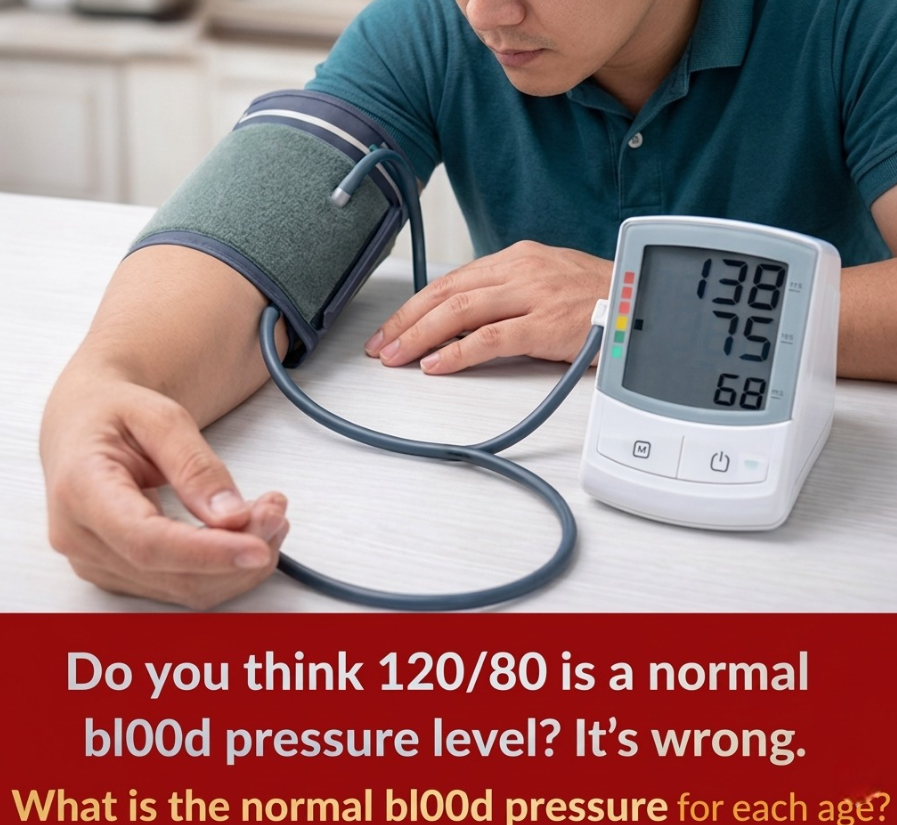
Blood pressure is generally written as two numbers.
The first number is systolic pressure, which measures pressure when the heart contracts.
The second is diastolic pressure, which measures pressure when the heart relaxes between beats.
According to the American Heart Association, normal blood pressure for adults is generally less than 120/80 mmHg.
The American College of Cardiology and American Heart Association guidelines classify blood pressure using categories rather than an age-based formula.
For example, readings can be broadly described as:
Normal: less than 120/80 mmHg
Elevated: systolic pressure from 120 to 129 mmHg with diastolic pressure below 80 mmHg
Stage 1 hypertension: systolic pressure from 130 to 139 mmHg or diastolic pressure from 80 to 89 mmHg
Stage 2 hypertension: systolic pressure of 140 mmHg or higher or diastolic pressure of 90 mmHg or higher
These categories are useful for understanding blood pressure, but a diagnosis should not normally be based on one isolated measurement. Blood pressure can temporarily change because of stress, physical activity, caffeine, illness, or even the circumstances surrounding the measurement.
Why Can Blood Pressure Increase With Age?
There is a scientific reason blood pressure can become higher as people get older.
Over time, arteries may become stiffer and less elastic. Changes in the structure and function of blood vessels can make it more difficult for them to accommodate the pressure generated by the heart.
Other factors can also contribute, including genetics, dietary patterns, physical activity, body weight, kidney function, sleep, medications, and other health conditions.
This means age can be one factor associated with blood pressure, but it is not a formula for determining what an individual’s blood pressure should be.
That distinction is important.
If a person’s systolic pressure gradually rises from 120 to 160 mmHg simply because they are getting older, that does not automatically mean the higher number is harmless or desirable.
The Problem With Accepting High Numbers as “Normal”
One of the concerns with the old age-based idea is that it could encourage people to accept increasingly high readings without discussing them with a healthcare professional.
High blood pressure often does not cause noticeable symptoms. A person can feel energetic and healthy while their blood pressure remains elevated.
Over many years, persistent hypertension can place additional stress on the cardiovascular system and is associated with increased risks involving the heart, brain, kidneys, and blood vessels.
This is why blood pressure monitoring has become such an important part of routine healthcare.
Rather than asking, “Is this number normal for my age?” a more useful question is, “What does this blood pressure pattern mean for my overall health?”
What Did the SPRINT Study Show?

One influential study that helped shape modern thinking about blood pressure treatment was the SPRINT trial, or Systolic Blood Pressure Intervention Trial.
Researchers studied adults at increased cardiovascular risk and compared different approaches to systolic blood pressure treatment.
The study found that targeting a systolic blood pressure below 120 mmHg, under the conditions of the trial, reduced certain cardiovascular outcomes compared with a higher treatment target.
Importantly, the study included many older adults. Its findings challenged the assumption that higher blood pressure should simply be accepted because someone is older.
However, the results should not be interpreted as meaning that every person should independently attempt to achieve a particular blood pressure number.
Blood pressure treatment is more complicated than following a single target.
Does That Mean Lower Blood Pressure Is Always Better?
Not necessarily.
This is where the modern approach becomes more individualized.
Lowering blood pressure can provide important benefits for people with hypertension, but healthcare professionals also consider potential problems associated with excessive lowering or overly aggressive treatment.
A person’s age, medications, kidney function, cardiovascular risk, history of dizziness or falls, and other medical circumstances can all influence treatment decisions.
The SPRINT findings were also obtained under specific research conditions and should not be translated into a universal rule for every individual.
In other words, modern medicine has moved away from one simplistic formula and toward personalized care.
Why One Blood Pressure Reading May Not Tell the Whole Story
Blood pressure is not a completely fixed number.
It can change throughout the day depending on what a person is doing and how they are feeling.
Exercise can temporarily raise blood pressure. Stress can influence readings. Caffeine and nicotine may also affect measurements. Even talking during a blood pressure check can influence the result.
For that reason, healthcare professionals often look at multiple measurements over time.
Proper measurement technique also matters. Sitting quietly for several minutes, keeping the arm supported, using an appropriately sized cuff, and avoiding conversation during the measurement can help produce a more reliable result.
Home monitoring can sometimes provide additional information because it allows readings to be collected under familiar conditions.
Why Regular Monitoring Matters
Because hypertension may not produce obvious symptoms, regular monitoring can reveal changes that a person would otherwise never notice.
This is particularly valuable because blood pressure trends can help healthcare professionals assess cardiovascular risk and determine whether lifestyle changes or treatment may be appropriate.
Someone who occasionally has a higher reading does not necessarily have chronic hypertension.
Likewise, someone who feels completely fine should not assume that everything is normal without appropriate monitoring.
The goal is not to become anxious about every individual number. It is to understand the broader pattern.
Lifestyle Still Plays an Important Role
Blood pressure management is not only about medication.
Healthy lifestyle habits can support cardiovascular health and may help maintain healthier blood pressure levels.
These habits can include regular physical activity, maintaining a healthy weight when appropriate, eating a balanced diet rich in vegetables and other minimally processed foods, moderating sodium intake, getting adequate sleep, and avoiding tobacco products.
For people who drink alcohol, moderation may also be important.
These measures are not substitutes for prescribed treatment when treatment is necessary. Instead, they can form part of a broader strategy for maintaining cardiovascular health.
What About Older Adults?
Older adults deserve particular attention because cardiovascular risk generally increases with age, while treatment decisions can become more complex.
The answer is not to ignore elevated blood pressure simply because someone is older.
At the same time, older adults may have other health considerations that influence how blood pressure should be managed.
A healthcare professional can consider the person’s overall condition rather than applying an age-plus-100 formula.
This represents a broader lesson in modern healthcare: age is useful information, but it should not be treated as the entire answer.
The Myth Has a Useful Historical Lesson
The “100 plus your age” idea is interesting because it demonstrates how medical beliefs can develop.
Doctors were not necessarily being careless when older formulas were used. They were working with the observations and evidence available at the time.
As research methods improved and larger studies became available, scientists gained a better understanding of the relationship between blood pressure and long-term cardiovascular health.
Medical recommendations therefore changed.
That does not mean everything from the past was wrong. It means scientific knowledge is designed to evolve.
A medical rule that sounds intuitive can eventually be replaced when stronger evidence provides a better explanation.
What Should You Remember?

The most important lesson is simple: there is no need to calculate a “normal” blood pressure by adding 100 to your age.
Modern blood pressure assessment uses established measurement categories and considers the individual rather than relying on a single age-based equation.
If you occasionally see an unusual reading, it may be worth repeating the measurement under proper conditions.
If your readings are repeatedly elevated, discussing them with a healthcare professional is a better approach than assuming the number is normal because of your age.
And if you already take blood pressure medication, changes to your treatment should be discussed with your healthcare professional rather than made independently.
Final Thoughts: When Medical Knowledge Changes
The history of blood pressure reminds us that science is a process rather than a collection of permanent answers.
For many years, it may have seemed logical that a person’s ideal blood pressure should rise steadily with age. Modern evidence has shown that the relationship is more complicated.
Today, healthcare focuses on measured blood pressure, long-term risk, individual circumstances, and the best available evidence.
Perhaps that is the most valuable lesson of all. Human curiosity encourages us to question familiar ideas, test them carefully, and replace simple assumptions with better explanations. The numbers on a blood pressure monitor may look ordinary, but behind them is a fascinating story of how medical knowledge continues to evolve.
Sources
American Heart Association. Blood Pressure Categories and understanding blood pressure.
American College of Cardiology/American Heart Association. 2017 Guideline for the Prevention, Detection, Evaluation, and Management of High Blood Pressure in Adults.
SPRINT Research Group. “A Randomized Trial of Intensive versus Standard Blood-Pressure Control.” New England Journal of Medicine, 2015.
National Heart, Lung, and Blood Institute. Information on high blood pressure, cardiovascular health, and blood pressure management.
Centers for Disease Control and Prevention. High Blood Pressure and related cardiovascular health information.