
There is a reason sweet potatoes have remained a favorite comfort food for generations.
They are naturally sweet, soft when cooked, easy to prepare, and versatile enough to appear in everything from simple family dinners to elaborate holiday dishes.
But their appeal goes beyond taste.
That familiar orange-colored vegetable contains a combination of fiber, vitamins, minerals, and plant compounds that can support several aspects of a healthy diet.
From supporting normal vision to helping maintain digestive health, sweet potatoes offer considerably more nutrition than their simple appearance might suggest.
Of course, no single food can transform your health on its own. The benefits of sweet potatoes are best understood as part of an overall balanced eating pattern.
So what exactly makes them such a nutritious choice?
Sweet Potatoes Are Rich in Important Nutrients

Sweet potatoes provide several nutrients that the body needs to function properly.
One medium sweet potato can provide a meaningful amount of vitamin A, particularly when the flesh is deep orange.
They also contain vitamin C, potassium, manganese, and dietary fiber.
The exact nutritional content varies depending on the size and variety of the sweet potato and how it is prepared.
Still, their combination of nutrients makes them a practical addition to many meals.
Unlike highly processed carbohydrate foods, a whole sweet potato also provides fiber and naturally occurring plant compounds alongside its carbohydrates.
That combination can make it more satisfying than many refined carbohydrate options.
The Orange Color Comes From Beta-Carotene

One of the easiest ways to recognize the nutritional character of an orange sweet potato is simply to look at its color.
That vibrant orange flesh comes largely from beta-carotene, a plant pigment belonging to the carotenoid family.
The human body can convert beta-carotene into vitamin A.
Vitamin A plays several important roles in the body, including supporting normal vision, immune function, and the maintenance of certain tissues.
This is one reason orange-colored vegetables are often associated with eye health.
However, eating more beta-carotene does not mean your eyesight will suddenly become sharper.
Rather, adequate vitamin A helps the visual system function normally, particularly in lower-light conditions.
For people who already consume enough vitamin A, simply eating more does not necessarily provide additional dramatic benefits.
Sweet Potatoes Can Support Normal Eye Health
Your eyes depend on several nutrients to function properly.
Vitamin A is particularly important because it contributes to the production of visual pigments involved in seeing in low-light environments.
A severe vitamin A deficiency can impair vision and cause serious health problems.
Fortunately, sweet potatoes can contribute to vitamin A intake through their beta-carotene content.
This doesn’t mean sweet potatoes are a treatment for eye disease.
Instead, they are one convenient food that can help provide a nutrient involved in maintaining normal vision.
Other orange and dark-green vegetables can provide carotenoids as well, so variety remains important.
Their Fiber Can Help Your Digestive System
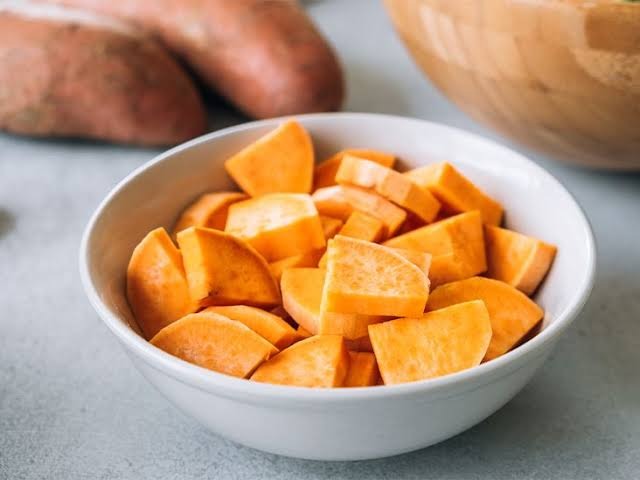
Another reason sweet potatoes deserve a place on the dinner table is their fiber content.
Dietary fiber passes through the digestive system without being completely broken down and can help support normal bowel function.
For people who don’t eat enough fiber, increasing fiber-rich foods may help promote more regular bowel movements.
Fiber also contributes to a healthy dietary pattern by providing food for certain microorganisms in the gut.
However, increasing fiber suddenly can sometimes cause bloating or digestive discomfort.
If your current diet is relatively low in fiber, gradually increasing your intake while drinking enough fluids can be a more comfortable approach.
Sweet Potatoes Can Contribute to a Healthy Gut
The relationship between food and gut health is more complicated than simply identifying one “best” food.
The digestive system interacts with a wide variety of nutrients and plant compounds.
Sweet potatoes can contribute fiber and other plant compounds to the diet, making them one useful part of a diverse eating pattern.
A diet that includes vegetables, fruits, whole grains, legumes, nuts, and seeds generally provides a broader range of fibers and plant compounds than relying heavily on a single food.
Think of sweet potatoes as one piece of the puzzle rather than the entire picture.
They Provide Potassium
Sweet potatoes also contain potassium, an essential mineral involved in several functions, including nerve signaling, muscle contraction, and fluid balance.
Potassium is particularly interesting when discussing cardiovascular health because adequate potassium intake can help counterbalance some of the effects of sodium in the diet.
A diet rich in potassium-containing foods is associated with maintaining healthy blood pressure in many people.
Sweet potatoes are therefore one convenient way to add potassium to a meal.
Other sources include beans, potatoes, bananas, leafy greens, yogurt, and several other fruits and vegetables.
People with certain kidney conditions may need to monitor potassium intake, however.
If you have been advised to follow a potassium-restricted diet, talk with your healthcare professional before significantly increasing high-potassium foods.
A Useful Source of Complex Carbohydrates
Sweet potatoes are also a source of carbohydrates.
Carbohydrates are one of the body’s primary sources of energy.
The body breaks down digestible carbohydrates into glucose, which can then be used by cells for fuel.
Because sweet potatoes are a whole food containing fiber, they can fit well into meals designed around longer-lasting sources of energy.
For example, pairing a baked sweet potato with a source of protein and healthy fat can create a more balanced meal.
You might combine it with grilled fish, beans, eggs, chicken, tofu, vegetables, or another protein-rich food.
The result is a meal that provides several different nutrients rather than relying on carbohydrates alone.
What About Blood Sugar?
Sweet potatoes are sometimes promoted online as a food that can “control blood sugar.”
That claim is too simplistic.
Sweet potatoes still contain carbohydrates, and they can raise blood glucose after eating.
However, the overall effect of a meal depends on several factors, including portion size, preparation method, fiber content, and what other foods are eaten alongside it.
For someone managing diabetes or blood sugar levels, sweet potatoes can potentially fit into a balanced eating pattern, but portion size and the overall meal still matter.
Boiled, baked, mashed, or fried preparations can also differ nutritionally.
There is no need to label sweet potatoes as either completely “good” or “bad” for blood sugar.
The more useful question is how they fit into the individual’s overall diet.
Their Antioxidants Add Another Layer of Nutrition
Sweet potatoes contain various plant compounds with antioxidant activity.
Antioxidants help protect cells from oxidative damage associated with normal biological processes.
Orange sweet potatoes are particularly rich in beta-carotene, while other varieties can contain different types of pigments and plant compounds.
Purple sweet potatoes, for example, contain anthocyanins, the pigments responsible for their deep purple color.
This is another reminder that variety can be valuable.
Different colored vegetables often contain different combinations of naturally occurring plant compounds.
Instead of searching for one “perfect” vegetable, including several colors throughout the week can help diversify your nutrient intake.
Could Sweet Potatoes Support the Immune System?
Sweet potatoes provide nutrients involved in normal immune function, including vitamin A and vitamin C.
Vitamin A contributes to the maintenance of physical barriers such as the skin and tissues lining parts of the body.
Vitamin C contributes to normal immune function and also acts as an antioxidant.
But it is important to keep the claim in perspective.
Eating sweet potatoes does not guarantee that you will avoid infections or illness.
The immune system is influenced by many factors, including overall nutrition, sleep, physical activity, age, stress, and underlying health conditions.
A nutritious diet supports the body’s normal functions; it does not make someone immune to disease.
What About Skin Health?
The nutrients found in sweet potatoes may also contribute indirectly to healthy skin.
Vitamin A is involved in maintaining epithelial tissues, while vitamin C is necessary for collagen formation.
Collagen is an important structural protein found throughout the body, including the skin.
Vitamin C also contributes to protection against oxidative stress.
That doesn’t mean eating sweet potatoes will automatically give someone clearer or younger-looking skin.
Skin appearance depends on many factors, including genetics, sun exposure, age, hydration, sleep, skincare habits, and overall nutrition.
Still, including nutrient-rich vegetables in your diet is one practical way to support the nutritional foundations of healthy skin.
The Way You Prepare Them Matters
A sweet potato can be extremely nutritious, but the final meal depends heavily on preparation.
A baked or roasted sweet potato is very different from sweet potato fries covered in added oil and salt.
Likewise, turning sweet potatoes into a dessert with large amounts of sugar can significantly change the nutritional profile of the meal.
This doesn’t mean you need to avoid richer preparations.
Food is also about enjoyment.
The goal is simply to recognize that the healthfulness of a meal depends on more than the ingredient itself.
Simple preparations such as baking, steaming, boiling, or roasting can allow the natural flavor of sweet potatoes to shine without requiring large amounts of added sugar or fat.
Sweet Potatoes Come in More Than One Color
When most people picture a sweet potato, they imagine orange flesh.
But sweet potatoes come in several varieties.
Some have white or cream-colored flesh.
Others have yellow or purple flesh.
Their nutritional profiles can differ depending on the variety.
Orange varieties tend to be especially notable for beta-carotene, while purple varieties contain anthocyanins.
This doesn’t mean one variety is universally better than another.
Instead, it highlights an important principle of nutrition: different foods provide different combinations of nutrients and plant compounds.
If you enjoy sweet potatoes, trying different varieties can make meals more interesting while broadening the range of foods you eat.
Are Sweet Potatoes Better Than Regular Potatoes?

This is another common nutrition debate, but there isn’t a simple winner.
Sweet potatoes and regular potatoes are both nutritious whole foods.
They provide carbohydrates, potassium, fiber, and other nutrients.
Sweet potatoes are particularly notable for beta-carotene, especially the orange varieties.
Regular potatoes can also provide useful nutrients, including vitamin C and potassium.
The nutritional differences become even more significant when preparation changes.
A baked potato and a deep-fried potato product are not nutritionally equivalent, just as a plain sweet potato and a heavily sweetened sweet potato dessert are different foods.
Rather than asking which vegetable is “healthier,” it is often more useful to include both as part of a varied diet.
How Much Should You Eat?
There is no universal amount of sweet potato that everyone should eat.
Your appropriate portion depends on your overall diet, energy needs, activity level, and health goals.
For many people, a moderate serving can work well as the carbohydrate portion of a meal.
You can pair it with protein, vegetables, and a source of healthy fat to create a balanced plate.
The key is variety.
Eating sweet potatoes every day is not necessary to receive their nutritional benefits.
Rotating them with other vegetables, whole grains, beans, and other carbohydrate sources can provide a broader range of nutrients.
A Few Things to Keep in Mind
Despite their nutritional benefits, sweet potatoes aren’t appropriate for every dietary situation in unlimited amounts.
They are still a carbohydrate-containing food, so portion size can matter for people managing blood glucose.
They also contain potassium, which may be important for people with certain kidney conditions.
Some people may experience digestive discomfort if they suddenly consume large amounts of fiber.
And preparation matters.
Adding large quantities of sugar, butter, cream, or oil can substantially increase the calories and saturated fat of the final dish.
The goal isn’t to make sweet potatoes complicated.
It is simply to enjoy them in a way that fits your individual nutritional needs.
The Bigger Picture of Healthy Eating
Perhaps the most important lesson from sweet potatoes has little to do with sweet potatoes themselves.
Healthy eating rarely comes down to finding one magical ingredient.
Instead, it is about building a pattern.
Vegetables.
Fruits.
Whole grains.
Beans and legumes.
Nuts and seeds.
Protein-rich foods.
Healthy sources of fat.
And enough variety to provide the nutrients your body needs.
Sweet potatoes fit comfortably into that picture.
They are affordable in many places, easy to cook, naturally flavorful, and packed with useful nutrients.
You don’t need to turn them into a miracle food.
Their real value is simpler.
They are a nutritious whole food that can make an ordinary meal both satisfying and flavorful.
A Simple Food With Plenty to Offer
The next time you cut open a bright orange sweet potato, it may be worth looking at it differently.
That color is a clue to the beta-carotene inside.
The soft texture comes with fiber and carbohydrates.
The minerals contribute to normal body functions.
And the plant compounds add another layer of nutritional value.
None of this means sweet potatoes can prevent disease or replace medical treatment.
But they don’t need to.
Sometimes the most useful foods are the ones that quietly provide several nutrients while fitting naturally into everyday meals.
Sweet potatoes are a good example.
Whether baked alongside dinner, roasted with vegetables, mashed as a side dish, or incorporated into a balanced meal, they can be a simple way to add more nutrient-rich plant food to your diet.
And perhaps that’s the best reason to keep them on the menu: not because they are a miracle, but because good nutrition is often built from ordinary foods eaten consistently, enjoyably, and in balance.
Sources
-
National Institutes of Health, Office of Dietary Supplements — Vitamin A: Information on vitamin A, beta-carotene, vision, immune function, and dietary sources.
-
National Institutes of Health, Office of Dietary Supplements — Vitamin C: Information on vitamin C, collagen formation, antioxidant activity, and immune function.
-
National Institutes of Health, Office of Dietary Supplements — Potassium: Information on potassium, fluid balance, nerve function, muscle function, and blood pressure.
-
Harvard T.H. Chan School of Public Health — The Nutrition Source: Educational resources on vegetables, carbohydrates, fiber, and healthy eating patterns.
-
U.S. Department of Agriculture — FoodData Central: Nutritional information for sweet potatoes and other foods.