Unhung Call & The Decision That Changed Everything
My father forgot to disconnect the phone call. That tiny mistake revealed the truth about my parents far clearer than two years of excuses ever had.
That afternoon, I was sitting in a downtown coffee shop with a cold cup of espresso beside my laptop. The place smelled richly of dark roast and cinnamon, while the air conditioner blew a chill straight onto the back of my neck. I remember those details clearly—when your life shifts unexpectedly, your mind clings to the smallest things.
My earbuds were still connected to the online call my father had interrupted earlier that morning. I thought the call was over. He thought so too. Then I heard him chuckle loudly.
“She’s naïve enough to let us stay here forever,” he said.
I sat completely still, staring at my laptop screen where a cancellation email from my biggest client had just landed.
“Once we get back from our trip,” he continued, “I’m changing the lock on that upstairs office. Turn it into my private lounge. She can just work at the kitchen table like everyone else.”
My mother gave a soft laugh—the kind she used in church hallways to make strangers think she was harmless.
“And if we can convince her to transfer the title to us for ‘estate management,’ then the house is basically ours,” she added. “She’ll never see it coming.”
In that exact moment, the desperate wish to be loved correctly died inside me.
Aunt Alice’s Legacy
My name is Skyler. I’m thirty years old and work as a user experience designer. Most of my workdays happen on a laptop from an upstairs office in a quiet suburban house.
It was a sturdy brick house set on three acres, featuring a long driveway, a wooden fence, and a lovely rose garden that my Aunt Alice had spent thirty years cultivating. When she passed away, she left everything to me. Not to my parents, not to the extended family, but to me alone.
She was the one who taught me how to prune roses, how to fix drywall, and most importantly, how to make decisions without asking permission from people who would only try to talk me out of them.
After she passed, I thought the house would be my safe haven. But then my parents showed up with heavy debts. They used terms like “bad luck” to describe losing their savings and credit through twenty years of poor choices.
“Just three months, sweetie,” my mother wept over the phone. “We’ll move out as soon as we figure things out.”
I believed her because I wanted to be a good daughter. That was my biggest mistake.
Boundary Overstepped
They moved into the master bedroom downstairs, claiming stairs hurt my father’s knees. They didn’t pay a dime in rent, utilities, or groceries. They freely used my streaming subscriptions, my household supplies, and eventually, my personal card.
The card was meant for emergencies—medical co-pays or auto repairs. Instead, they used it for high-end shopping, imported cigars, and hosting lavish back-porch gatherings.
They began telling neighbors it was “the family estate.” If I politely corrected them in public, my mother would look wounded, and my father would brush it off with a laugh: “Don’t mind Skyler, she works on computers all day and doesn’t understand real-world manners.”
In their eyes, my remote work was pretend work—until the income paid for their groceries. My office was redundant—until they needed the high-speed Wi-Fi upgraded. My clients were invisible—until a single interruption cost me a $45,000 contract.
That morning, I was on an important presentation call with a key client when my father barged into the office without knocking. I muted my microphone and whispered, “Dad, I’m working.”
He glanced at the screen and sneered, “She just clicks buttons for a living.”
An uncomfortable silence fell over the meeting. I stood up and tried to guide him out toward the hallway, but he shoved my arm aside forcefully. My hip hit the desk, and my chair rolled backward.
He smirked at the screen. “Looks like your little meeting is over.”
By 2:00 p.m., the cancellation email arrived. They phrased it politely, but the message was clear: they no longer trusted the environment I operated from.
The Harsh Truth
I drove to the coffee shop because I couldn’t breathe in that house anymore. And there, through the earbuds he thought were disconnected, I heard their entire plan: take over the house, convert my workspace into his lounge, and quietly strip my name off my own asset.
I didn’t cry. I didn’t drive home to start an argument. I saved the audio recording. I took screenshots of the cancellation email, the call logs, and the dark bruise forming on my arm where he had shoved me.
And then there was the garden.
The afternoon before, I had returned from a ten-hour shift to a strange smell in the air—fresh dirt, cut roots, and cheap synthetic turf under the sun. Aunt Alice’s rose garden was gone. In its place was a tiny mini-golf putting green. My father stood there holding a contractor’s receipt paid with my emergency card, proudly stating, “Now this looks like successful people live here.”
The yellow roses that survived decades of harsh weather hadn’t survived my father’s arrogance.
I called the attorney who had handled Aunt Alice’s estate. I skipped the emotional plea and stuck to the facts: “My name is the only one on the deed. My parents live here rent-free, have damaged the property, and are attempting to take the title. Can I sell the house?”
He asked me to come in immediately.
The Silent Execution
At the law office, after listening to the audio recording and reviewing the financial records I’d paid over two years, the attorney looked at me over his glasses.
“Skyler,” he said calmly, “you need to stop treating this as a family disagreement. This is a legal matter.”
For the next ten days, I became the dutiful daughter they expected. Quiet, helpful, and accommodating. I booked the luxury European trip my mother had been dropping hints about.
The morning of their flight, I saw them off at the airport. My mother waved with a satisfied smile, while my father patted my shoulder: “You’re finally acting like family.”
I smiled back. Smiling was much cheaper than warning them.
At 9:30 a.m. the following Tuesday, I arrived at the title office. Waiting there was a corporate investment firm willing to buy the property in cash and handle any occupancy issues through their own legal team and security contractors.
The final agreement was settled at $980,000.
I signed every page: Deed Transfer, Closing Disclosure, Wire Instructions. Every stroke of the pen felt less like revenge and more like room to breathe.
By 11:42 a.m., the wire transfer cleared. The house was no longer mine.
The New Chapter
I packed only what truly belonged to me: Aunt Alice’s recipe box, her pruning gloves, a framed photo of her, my work equipment, and my clothes. The firm’s security team changed the smart locks that afternoon.
I moved into a quiet apartment in Dallas. No cigar smoke under the door. No unexpected interruptions during work calls. Just peace.
The night my parents landed back from their trip, my doorbell camera app alerted me: Motion Detected.
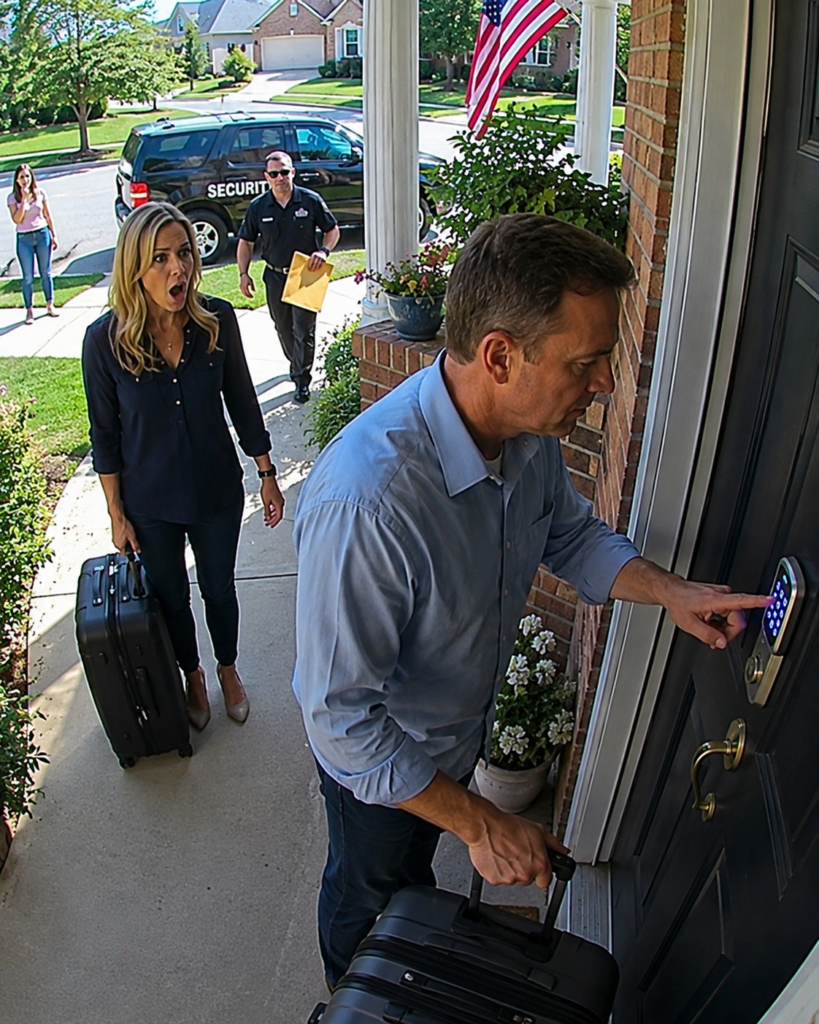
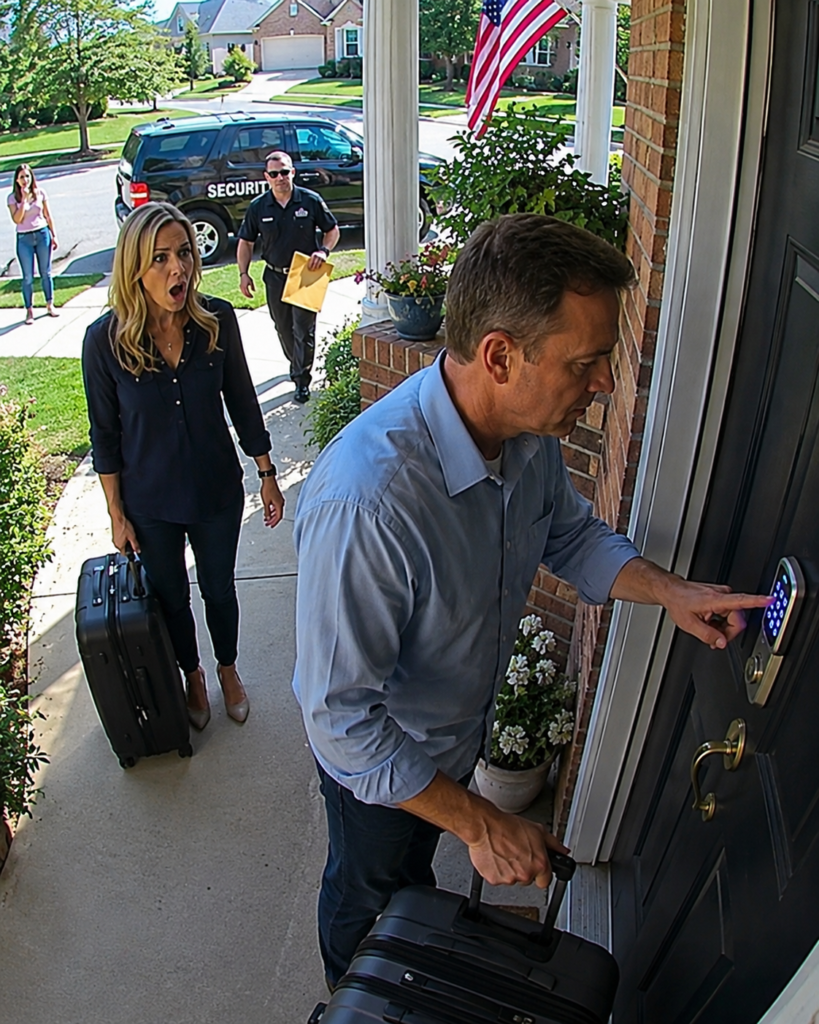
I watched the live feed. A cab pulled up, and my parents stepped out, sun-tanned and beaming. My father walked up to the front door and punched in the security code.
Red light flashed.
He tried again, punching harder.
Red light flashed.
Just then, a sleek black SUV pulled up behind them. A professional security officer stepped out, holding a document folder.
“Good evening,” the officer said calmly. “This property transferred ownership on Tuesday at 11:42 a.m. You are no longer authorized to enter.”
My father flared up. “This is my daughter’s house!”
The officer didn’t budge. “Not anymore, sir.”
My mother’s handbag slipped from her hands, scattering papers onto the porch. Right on top was a printed draft titled: ESTATE TRANSFER & TITLE APPLICATION. Their names were typed neatly below mine.
The officer handed them a copy of the recorded deed transfer showing the new corporate owner. My father stared at the camera in disbelief, his face twisting with frustration as he dialed my phone repeatedly.
I let it ring.
When a text message popped up saying, “You went too far. Your aunt would be ashamed,” I paused for a second.
Then I recalled Aunt Alice’s words from years ago: “A person who only shows up when they need something isn’t family, darling. They’re just bad weather. Shut the windows.”
I shut the windows.
I paid off my minor debts, put the remainder of the money into long-term savings, and set up a quiet workspace in my new apartment.
A week later, my mother sent a long message accusing me of ruining their plans and abandoning family. I replied with a single sentence:
“Family doesn’t plan to take away my home while I pay for your vacation.”
I didn’t send anything after that. Sometimes closure isn’t a long debate; sometimes closure is simply a lock that no longer accepts the old code.