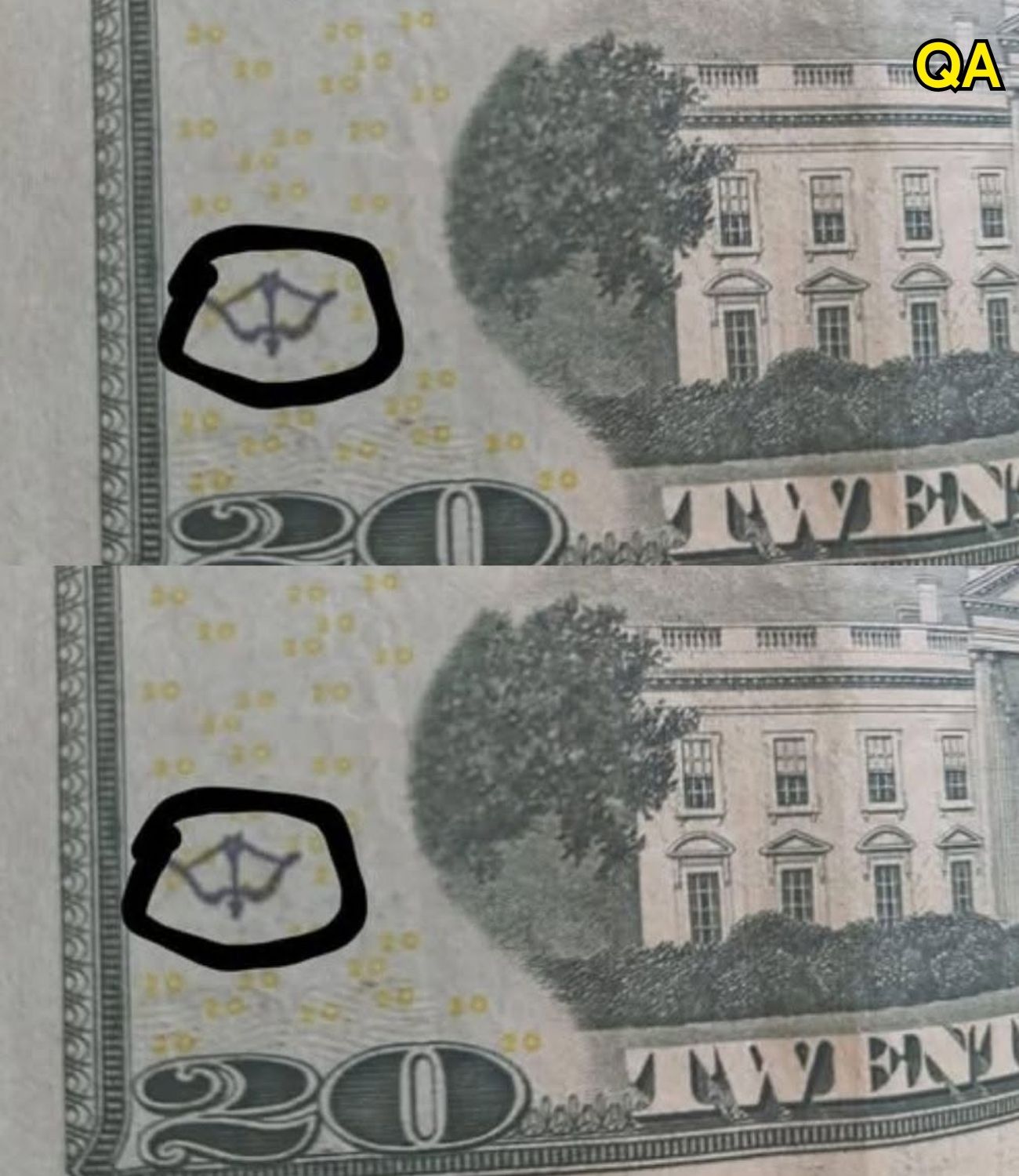
A Curious Discovery in Your Wallet
Imagine receiving change at a store and noticing a U.S. dollar bill covered with a small stamp, symbol, or unusual mark. At first glance, it might seem damaged or even counterfeit. Many people wonder whether such bills are still valid or why anyone would write or stamp on money in the first place.
In reality, many of these markings have a fascinating history connected to international trade and the global circulation of U.S. currency. Known as chop marks, these symbols have been used for centuries as a practical way to indicate that a coin or banknote has already been examined and accepted as genuine.
Although not issued by the U.S. government, these markings tell an interesting story about how money travels around the world.
What Are Chop Marks?
Chop marks are small stamps, symbols, or ink markings placed on currency by merchants, money changers, or financial businesses.
Their primary purpose is to show that someone has already inspected the bill and considered it authentic.
Rather than serving as decoration, these marks function as a form of informal verification, particularly in regions where U.S. dollars frequently circulate alongside local currencies.
Each mark represents one point in the bill’s journey through international commerce.
A Tradition That Dates Back Centuries
The practice of marking currency is much older than paper money.
Historically, merchants in parts of Asia traded with silver coins from many different countries. Since coins varied in purity and weight, traders carefully inspected each one before accepting it.
Once a coin passed inspection, the merchant would stamp it with a unique symbol.
This simple process offered several advantages:
- Reduced repeated inspections
- Increased confidence between traders
- Made future transactions faster
- Created a visible record of authenticity
Over time, some coins accumulated numerous chop marks, reflecting years of circulation through different trading centers.
From Silver Coins to Paper Currency
As paper banknotes gradually became more common than silver coins, the same concept continued.
The U.S. dollar became one of the world’s most widely recognized currencies, especially in international trade.
In countries where dollars circulate frequently, some money exchangers and merchants adopted the tradition of marking banknotes after examining them.
Although modern security features now help verify authenticity, the historical practice still exists in certain markets.
Why the U.S. Dollar Is Frequently Marked
Few currencies are used internationally as extensively as the U.S. dollar.
Around the world, it serves many purposes, including:
- International trade
- Tourism
- Savings
- Business transactions
- Currency exchange
Because so many people rely on U.S. dollars, verifying their authenticity has always been important.
Before portable counterfeit detectors became widely available, experienced currency handlers often depended on visual inspections and personal verification methods.
Applying a small stamp allowed others to know the bill had already been examined.
What Do the Symbols Mean?
There is no universal design for chop marks.
Different symbols may represent:
- Individual currency exchangers
- Local businesses
- Financial traders
- Merchant associations
- Personal identification stamps
Some marks appear as simple circles or squares.
Others resemble letters, geometric patterns, animals, or stylized characters.
Each reflects the organization or individual who applied it rather than any official government agency.
Are Chop-Marked Bills Genuine?
A chop mark alone does not determine whether a bill is genuine or counterfeit.
Many authentic U.S. banknotes have circulated internationally and acquired these markings during normal commercial use.
However, anyone uncertain about a bill’s authenticity should rely on official security features rather than the presence or absence of stamps.
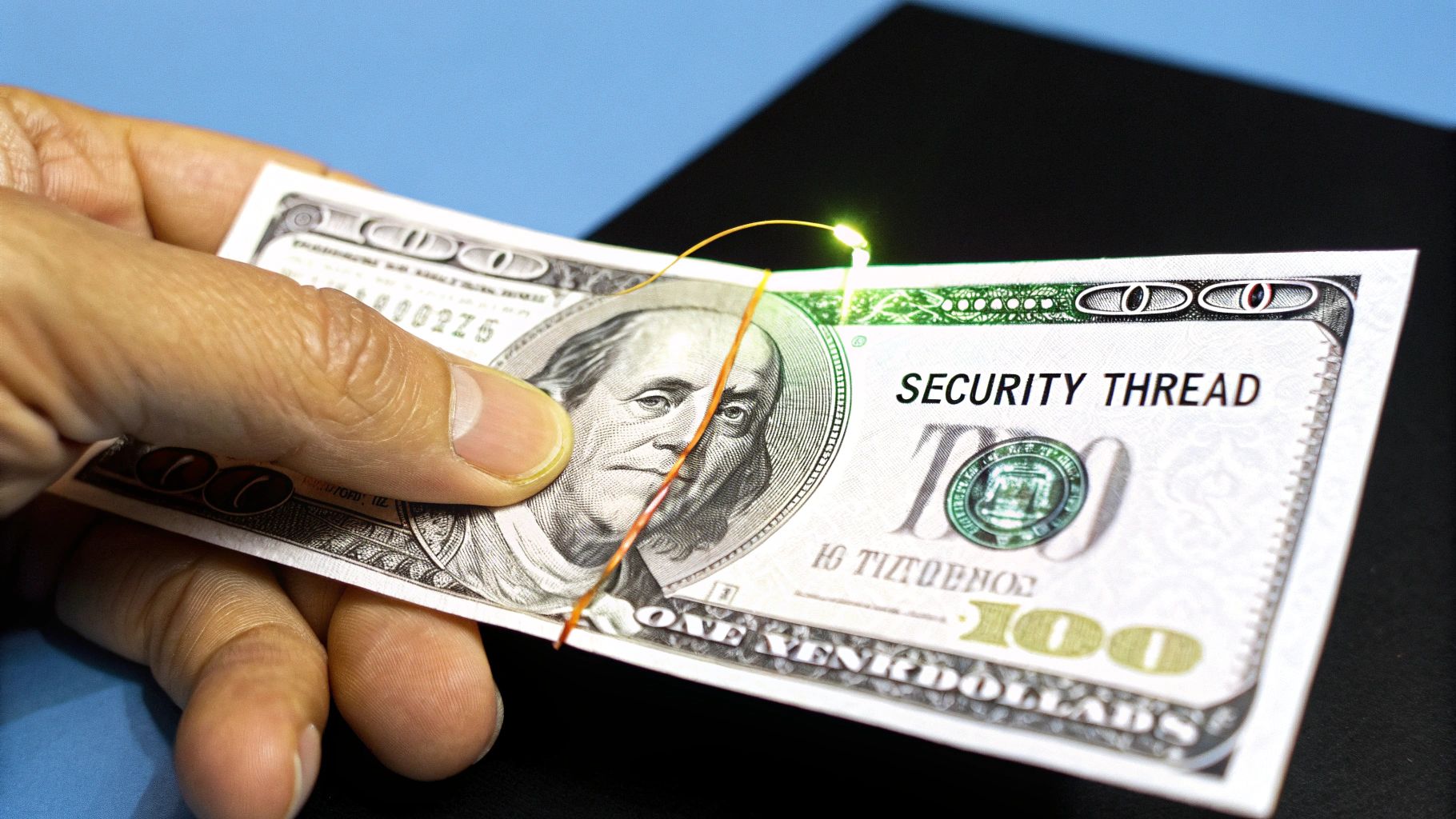
Modern U.S. currency includes several built-in protections designed to help verify authenticity.
Are Marked Bills Still Legal to Use?
In many situations, lightly marked bills remain acceptable for everyday transactions.
The U.S. Bureau of Engraving and Printing notes that ordinary wear does not automatically make currency unusable.
However, excessive writing, heavy stamping, or damage may occasionally cause problems with:
- Vending machines
- Self-checkout systems
- Currency-counting machines
- Some financial institutions
If a bill becomes significantly damaged, a bank may recommend exchanging it for a cleaner note.

Why Collectors Find Them Interesting
To collectors, chop-marked currency offers something unique.
Each bill reflects part of its international journey.
Rather than viewing the markings as imperfections, many collectors appreciate them as evidence that the note traveled through multiple countries, businesses, and financial systems.
In some cases, the combination of different stamps can provide clues about historical trade routes and commercial practices.
What Modern Technology Has Changed
Today’s financial institutions often rely on advanced tools to verify currency, including:
- Ultraviolet light detection
- Magnetic ink recognition
- Watermark inspection
- Security thread verification
- High-resolution scanners
Because of these technologies, informal verification methods such as chop marks are generally less common than they once were.
Nevertheless, the practice continues in certain regions where traditional methods remain familiar.
Every Dollar Has a Story
Money rarely stays in one place.
A single banknote may pass through countless hands during its lifetime, traveling across cities, countries, and even continents.
Some bills remain close to where they were printed.
Others journey through international airports, local markets, financial exchanges, and tourist destinations before eventually returning to the United States.
A small stamp or symbol may represent just one stop along that remarkable journey.
Final Thoughts
A marked U.S. dollar bill may initially appear unusual, but in many cases it reflects a fascinating tradition rooted in international commerce.
Chop marks have helped merchants and currency handlers verify money for centuries, beginning with silver coins and continuing into the era of modern banknotes.
Although today’s authentication technology has reduced reliance on these informal markings, they remain an interesting reminder of how widely the U.S. dollar circulates around the globe.
The next time you notice an unfamiliar symbol on a dollar bill, you may be holding more than currency—you may be holding a small piece of global trading history.