Why Do People Throw Sneakers Onto Power Lines? The Surprising Truth
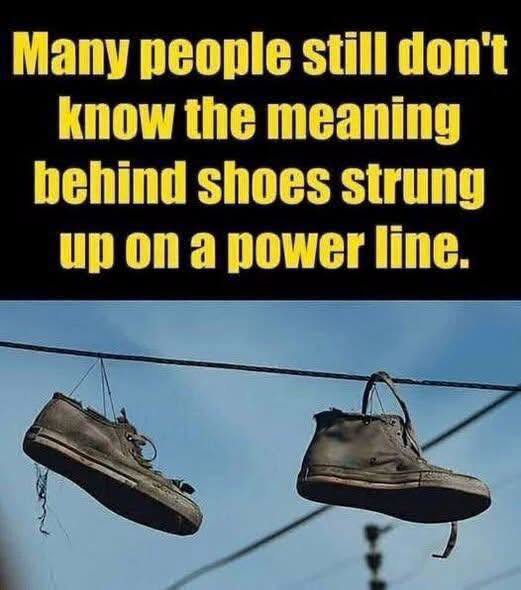
A pair of sneakers hanging above a street can make an otherwise ordinary block feel mysterious. For some people, shoes suspended from overhead wires suggest a prank or a childhood challenge. Others may associate them with neighborhood rumors, memorials, local celebrations, or urban legends. The reality is less dramatic and more complicated: there is no single, universal reason why people throw sneakers onto power lines.
This practice, often called “shoefiti,” has appeared in cities, suburbs, university areas, military communities, and small towns in many countries. Its meaning can vary between neighborhoods and even between individuals. While stories about hanging shoes are often repeated as fact, researchers, journalists, utility providers, and community observers generally agree that most interpretations are difficult to verify. What is clear is that throwing objects onto overhead lines can create genuine safety and maintenance concerns.
What Is Shoefiti?
Shoefiti is an informal term combining “shoes” and “graffiti.” It refers to shoes tied together by their laces and tossed so that they catch on a wire, tree branch, streetlight, or other elevated object. Sneakers are the most common item because their laces can be knotted together and thrown over a cable with relative ease.
The practice is visually noticeable. A dangling pair of shoes can remain in place for months or years, depending on weather, wire height, and whether a utility crew or property owner removes it. Because the shoes are so visible, they often become part of a street’s visual identity. Their unusual placement also encourages people to create explanations for them.
However, shoefiti should not be viewed as a reliable code with one agreed-upon meaning. The same image may represent a harmless joke in one place and a personal memory in another. In many cases, there may be no deeper message at all.
Why Do People Throw Sneakers Onto Overhead Wires?
People may throw shoes onto wires for a range of personal, social, and cultural reasons. The most common explanations tend to fall into several broad categories.
A Prank or Challenge
For many people, tossing sneakers over a wire is simply a prank. It can be an impulsive act, a dare among friends, or a way of leaving behind something unexpected. The challenge may involve trying to throw the shoes high enough for the laces to catch, which can make it appealing to teenagers or groups looking for a memorable activity.
This explanation is often the most likely when a single pair of worn-out shoes appears in a location without any known connection to a community event or personal memorial. Still, the act can cause problems even when it begins as a joke, especially if the shoes land on electrical infrastructure.
A Marker of a Life Event
In some communities, shoes have been thrown onto wires to mark a transition or milestone. Stories have linked the practice to finishing school, leaving a neighborhood, completing military service, moving away, or celebrating the end of a sports season. These traditions are not standardized, and they may be highly local.
A person who has outgrown a pair of athletic shoes may see tossing them away as a symbolic farewell. In that sense, the shoes become a visible sign that a chapter has ended. Like signing a yearbook or writing a message on a wall, the gesture can be a small attempt to leave a trace.
A Memorial or Personal Tribute
Sometimes shoes may be placed in public spaces to remember a person who has died. Memorial displays involving shoes have also been used around the world to draw attention to losses connected to social issues, public health, conflict, or road safety. In those cases, footwear can symbolize an absent person and the life they once lived.
It is important not to assume that every pair of shoes on a wire represents a memorial. Public memorials are usually accompanied by flowers, notes, photographs, names, or other signs of remembrance. Nevertheless, communities should approach the subject with sensitivity because a pair of shoes may hold private meaning for someone.
Art, Expression, and Local Culture
Street art and informal public expression can also play a role. Some people view shoefiti as a form of urban visual culture: an object transformed by its location. Shoes hanging in an unexpected place can invite conversation and make passersby pause. Artists and photographers have documented the phenomenon as part of the changing character of cities.
Unlike authorized public art, however, shoes thrown onto utility wires are not planned installations. They can interfere with infrastructure, create an untidy appearance, and impose removal costs on utility companies. Communities interested in public art generally benefit more from legal, safe, and collaborative projects.
Common Myths About Shoes on Power Lines
The most widely repeated claims about shoefiti are often presented with more certainty than the evidence supports. A pair of sneakers overhead may look like a secret signal, but appearances alone cannot establish why the shoes were placed there.
Myth: Hanging Shoes Always Indicate Criminal Activity
One persistent rumor claims that shoes on wires always identify areas connected to illegal activity. This claim has circulated in popular culture for decades, but it is not supported as a universal rule. Police departments and journalists have repeatedly noted that there is no dependable, nationwide code linking hanging sneakers to a specific type of crime.
Neighborhood concerns should be based on credible information from local authorities and community organizations, not on assumptions about an object hanging overhead. Treating every pair of shoes as evidence of wrongdoing can unfairly stigmatize streets and residents.
Myth: Every Pair Marks a Death
Another common belief is that every hanging shoe display commemorates someone who has died. While shoes can be part of a memorial, there is no evidence that this is the standard meaning in most locations. People who encounter shoes on a wire should avoid speculating about personal tragedies without confirmation from those directly involved.
Myth: Shoes Can Be Safely Removed by Anyone
This is one of the most dangerous misconceptions. Overhead lines may be energized, and it is not always possible to tell from the ground whether a wire carries electricity, communications services, or another utility. Attempting to remove shoes using poles, ladders, water, metal objects, or thrown items can put people at serious risk.
Electrical safety organizations consistently advise the public to stay away from downed or damaged wires and to contact the relevant utility provider when they see an issue. The same principle applies to objects tangled in overhead electrical equipment.
Are Shoes on Wires Dangerous?
Shoes themselves are usually not the main hazard. The risk comes from their location and from attempts to retrieve them. When shoes land on electrical distribution lines, transformers, or related equipment, they may contribute to outages, equipment damage, or hazardous conditions for utility workers and members of the public.
Utility networks often include multiple types of overhead cables. Some lower cables may be used for telecommunications, while higher lines may carry electricity. Visual identification from street level is unreliable. Even wires that appear inactive may be dangerous, and electricity can travel through unexpected pathways under certain conditions.
Weather can add to the problem. Rain, wind, ice, and tree movement may cause tangled objects to shift. If shoes fall into a roadway or onto private property, they can create additional nuisance issues. More importantly, a person using a ladder or long object near overhead lines can unintentionally come too close to energized equipment.
What to Do if You See Shoes on a Utility Line
If shoes are caught on a line that may be electrical, the safest response is to leave them alone. Do not climb a pole, use a ladder, throw additional objects, or try to pull the shoes down with a stick. Keep children and pets away from any visibly damaged or low-hanging cables.
Residents can report the issue to their local electricity provider or municipal service line. If a wire is down, sparking, damaged, or creating an immediate danger, people should keep their distance and contact emergency services or the utility’s emergency number. Local providers can assess the situation and dispatch trained workers if removal is necessary.
Why the Practice Continues
Despite warnings, shoefiti continues because it is easy to imitate and difficult to interpret. Seeing shoes overhead can inspire others to repeat the act. The image has also been reinforced by films, music, social media, and urban folklore. A single pair can become a recognizable visual landmark, encouraging people to attach their own stories to it.
The practice also reflects a broader human interest in leaving a mark on shared spaces. From carved initials to stickers and chalk messages, people often use public environments to express identity, belonging, humor, or memory. Hanging sneakers may be one version of that impulse, although it is not a safe or constructive one when utility lines are involved.
For young people in particular, the activity may seem harmless because it does not always produce an immediate consequence. Yet the absence of an obvious problem does not mean there is no risk. A shoe that lands on a communications cable may remain a nuisance, while another thrown only a few feet away could affect electrical equipment.
Community Responses to Shoefiti
Communities respond to hanging shoes in different ways. Some local governments and utility providers remove them during regular maintenance. Others prioritize removal only when an object affects electrical equipment, obstructs work, or presents a safety concern. The timing can depend on staffing, weather, access, and the type of line involved.
Neighborhood groups may also use the topic as an opportunity for practical safety education. Rather than repeating rumors, community leaders can explain how to report utility hazards and encourage young people to use safer outlets for expression. School art programs, recreation projects, sports events, and approved mural initiatives can provide alternatives that do not put people or infrastructure at risk.
Some cities have also developed public-art programs that allow residents to contribute creatively to their neighborhoods with permission and support. These projects can preserve the desire for visual expression while respecting safety rules, property rights, and the work of public utility crews.
The Real Meaning Depends on Context
The surprising truth about sneakers on power lines is that they do not have one fixed meaning. They may be evidence of a prank, a personal milestone, a local tradition, an artistic gesture, or an unexplained act that no one nearby can decode. The stories attached to them often reveal more about a community’s fears, memories, and imagination than about the shoes themselves.
It is reasonable to be curious when seeing sneakers hanging overhead. But it is best to separate curiosity from assumption. Avoid treating the shoes as proof of criminal activity or personal tragedy, and do not attempt to remove them yourself. When they are caught on or near electrical lines, reporting the issue to the appropriate utility company is the safest and most responsible choice.
Ultimately, shoefiti is a small but enduring example of urban folklore. A simple pair of sneakers can become a symbol because people give it meaning. The safest lesson is also the simplest: overhead utility infrastructure is not a place for shoes, games, or personal messages.
Sources
Disclaimer: This content is intended for entertainment purposes only and is not based on real events.