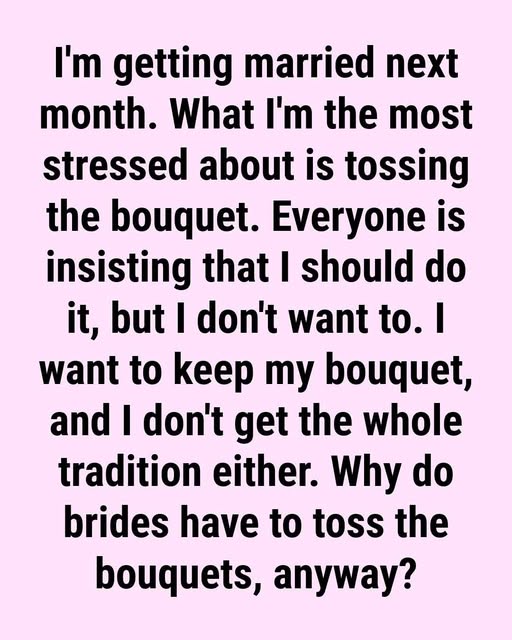
The bouquet toss has become a fun and lighthearted wedding tradition, but its origins are much older and more practical than many people realize.
Today, guests often see it as a playful moment when a bride throws her flowers into a crowd of friends. In earlier centuries, however, wedding celebrations could become far more chaotic. Many people believed that touching the bride—or obtaining a piece of her clothing—would bring good fortune, fertility, or prosperity. As a result, brides sometimes found themselves surrounded by guests eager to claim a lucky keepsake.

Why Brides Began Throwing Their Bouquets
According to historians of wedding customs, one reason the bouquet toss became popular was that it offered a distraction.
Instead of allowing guests to crowd around the bride, she could throw her bouquet into the gathering. While attention shifted toward the flowers, the newlyweds had a chance to leave the celebration more easily.
Whether every wedding followed this pattern is difficult to verify, but the story reflects a broader historical belief that items connected to the bride carried special luck.
The Groom and the Garter Toss
The groom also became part of this evolving tradition.
In many European wedding customs, the bride’s garter was considered another lucky token. Over time, the groom would remove and toss the garter to guests, creating a companion tradition to the bouquet toss.
Together, these rituals helped transform what may once have been an unruly scramble into a more organized and celebratory moment.
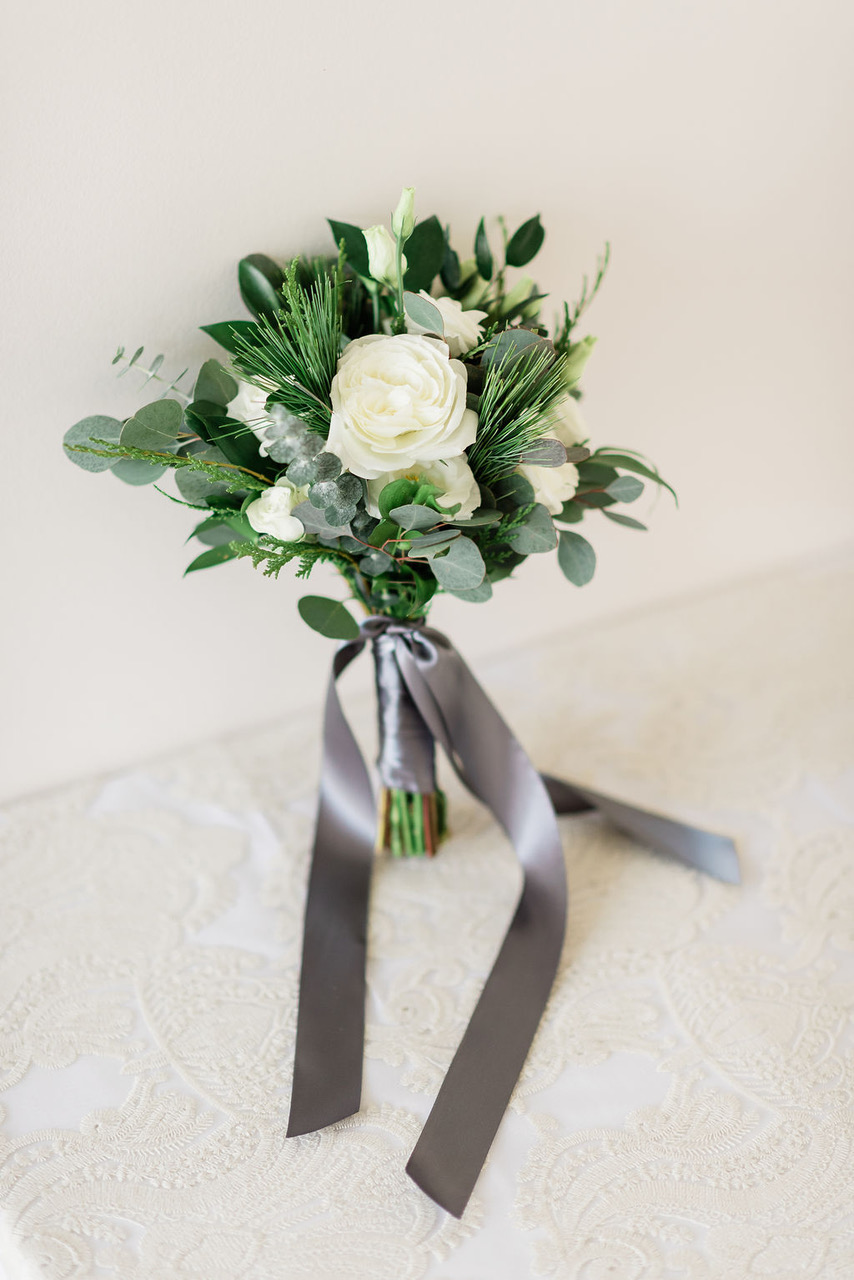
How the Meaning Changed Over Time
As centuries passed, the original beliefs gradually faded.
By the nineteenth and twentieth centuries, the bouquet toss had become less about obtaining luck from the bride’s clothing and more about symbolism.
The person who caught the bouquet was often said to be the next to marry. Whether taken seriously or not, the tradition became associated with:
-
Love
-
Romance
-
Happiness
-
Good fortune
-
Future marriage
In many weddings, it evolved into a playful prediction rather than a deeply held superstition.
Modern Weddings and Personal Choice
Today, couples often adapt wedding traditions to fit their own style and values.
Some still enjoy the classic bouquet toss because it adds energy and interaction to the reception. Others choose alternatives such as:
-
Giving the bouquet to a family member or close friend
-
Presenting flowers to a long-married couple
-
Donating the bouquet after the ceremony
-
Skipping the toss entirely
The garter toss has become even less common, with many couples deciding that it no longer fits the atmosphere they want for their celebration.
A Tradition That Continues to Evolve
Wedding customs rarely remain unchanged. The bouquet toss is a good example of how a practical solution can gradually become a symbolic ritual.
What may have begun as a way for brides to avoid an enthusiastic crowd eventually transformed into a lighthearted celebration of love and new beginnings.
Whether a couple chooses to include it, modify it, or leave it out altogether, the tradition remains an interesting reminder that many familiar wedding practices have histories far more surprising than they first appear.
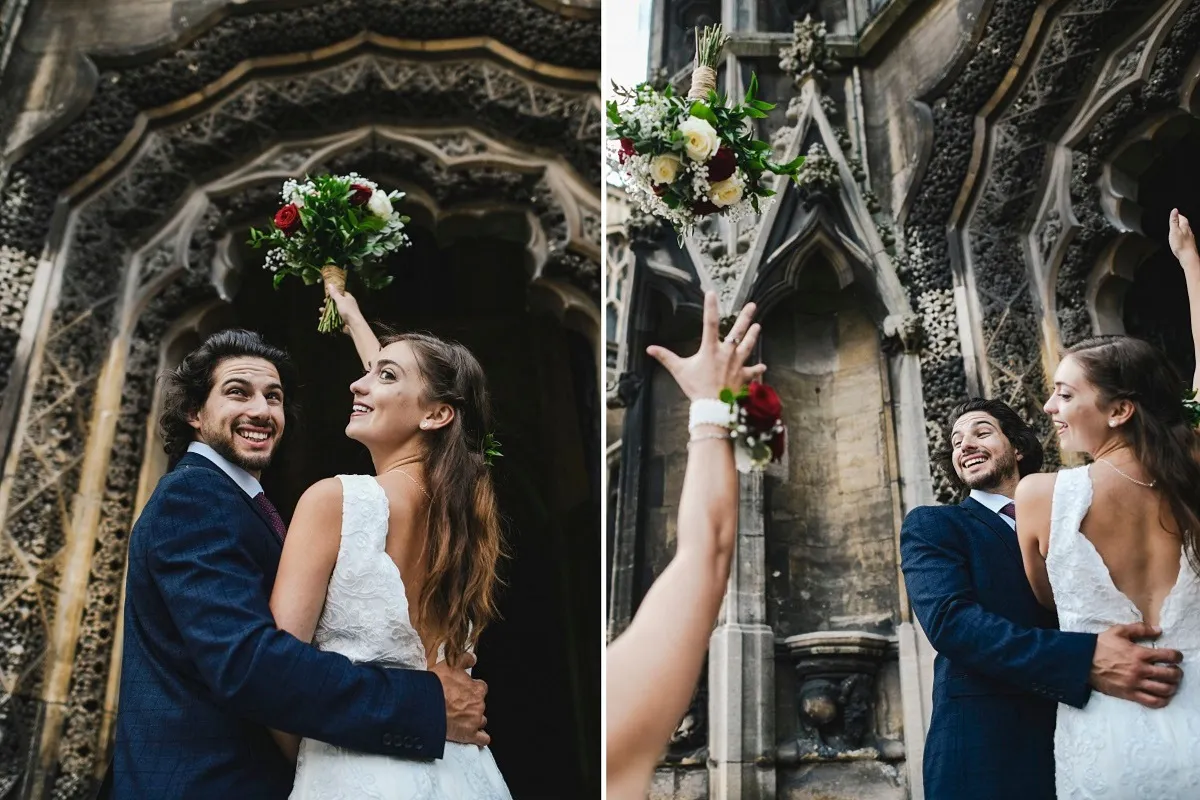
The Lasting Appeal of Wedding Traditions
One reason customs like the bouquet toss endure is that they connect modern celebrations with generations of weddings that came before.
Even when the original meaning has changed, the ritual still creates a shared moment among family and friends. For some guests, it is simply entertaining; for others, it represents continuity, community, and the joy of celebrating a new marriage.
Human curiosity often leads us to ask why certain traditions exist. Looking into the history of the bouquet toss reveals how practical concerns, cultural beliefs, and evolving social customs can combine to create the wedding rituals we recognize today.
Sources
-
Encyclopaedia Britannica – Wedding customs and traditions.
-
The Knot – History of the bouquet toss.
-
Martha Stewart Weddings – Origins of wedding bouquet traditions.
-
Smithsonian Magazine – Historical wedding customs.
-
Oxford Reference – Marriage and ceremonial traditions.
Today, most guests view the bouquet toss as a playful moment rather than a serious prediction of future marriage. Yet the tradition remains a fascinating reminder of how wedding customs can evolve over time.
What began as a practical strategy to protect the bride and help the newlyweds leave the celebration peacefully gradually became one of the most recognizable wedding rituals in Western culture.
From practical escape to wedding tradition
Why guests once rushed toward the bride
In medieval and early modern Europe, weddings were often surrounded by strong beliefs about luck and fertility. Many guests thought that obtaining something connected to the bride could bring blessings such as:
-
Good fortune
-
Fertility
-
Prosperity
-
Success in marriage
Unfortunately for brides, this sometimes led to enthusiastic crowds trying to touch the bride or take a small piece of her clothing as a keepsake.
The bouquet as a clever distraction
To avoid being surrounded by guests, brides began throwing their bouquets into the crowd. The flowers became a substitute for the bride herself.
While guests focused on catching the bouquet, the newlyweds could leave the reception more easily. What started as a practical solution gradually became a ritual expected at many weddings.
The groom’s garter toss
A similar belief developed around the bride’s garter. The groom would toss it to the remaining guests, and the person who caught it was thought to receive a measure of good luck.
Together, the bouquet and garter toss transformed an unruly scramble into a more organized and celebratory event.
How the meaning changed
|
Earlier meaning |
Modern meaning |
|---|---|
|
A way for the bride to avoid being crowded |
A playful wedding tradition |
|
A source of luck and fertility |
A symbol of love and happiness |
|
A practical escape strategy |
A fun moment during the reception |
|
A token believed to bring blessings |
A lighthearted prediction about future marriage |
Modern weddings
Today, couples often personalize the tradition. Some choose a traditional bouquet toss, while others:
-
Toss a smaller bouquet
-
Give the bouquet to a special guest
-
Invite all guests to participate
-
Skip the toss entirely
-
Replace it with another symbolic activity
Wedding customs continue to evolve, reflecting changing values and personal preferences.
A tradition with a surprising history
The bouquet toss may seem like a simple game, but its roots reveal a very different world. What is now a cheerful photo opportunity began as a practical way for brides to protect their dresses and make a graceful exit from their wedding celebrations.
Over centuries, the custom lost its original purpose and gained a new one: celebrating love, community, and the hope of future happiness. That transformation is part of what makes wedding traditions so fascinating—many of them carry stories that are far older and more surprising than they first appear.