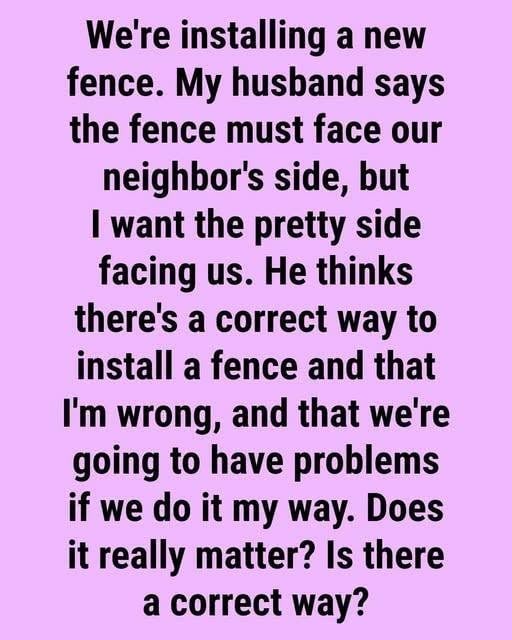
Which Side of a Fence Should Face Your Neighbor? Here’s What Homeowners Should Know
A new fence can improve privacy, define a garden, protect pets, and make an outdoor space feel more complete. Yet one seemingly small question can create unexpected tension between neighbors: which side of the fence should face the neighboring property?
In many communities, homeowners are expected to place the finished, more attractive side of a fence toward their neighbor or toward the public street. This is often called the “good side,” while the side showing rails, posts, or structural supports is sometimes called the “back” or “unfinished” side. However, that expectation is not a universal legal rule. Fence requirements can vary significantly by city, county, homeowners’ association, property type, and the fence design itself.
Before purchasing materials or arranging installation, homeowners should understand the practical, legal, and neighborly issues involved. A fence is a long-term addition to a property, and a thoughtful approach can help prevent disagreements over appearance, maintenance, boundaries, and cost.
The Common Rule: Face the Finished Side Outward
The most widely followed convention is simple: the finished side of a fence should face outward, toward neighbors and public-facing areas. In a typical wood privacy fence, this means the smooth boards or pickets face the adjacent property, while the horizontal rails and posts face the fence owner’s yard.
This approach is commonly viewed as a matter of courtesy. A neighbor does not have to look at exposed supports, and a street-facing fence presents a cleaner appearance for the wider community. Many builders install fences this way by default, especially in residential neighborhoods where homes are close together.
Some local ordinances and homeowners’ associations specifically require the finished side to face neighboring lots, roads, sidewalks, or common areas. These rules are often intended to support neighborhood appearance standards. In planned communities, an architectural review committee may also regulate fence height, color, materials, location, and the direction of the finished side.
However, homeowners should not assume that a general custom automatically applies in every place. A municipality may regulate fence height but say nothing about which side faces outward. Another locality may require a finished appearance on both sides. The only dependable answer comes from checking the rules that apply to the particular property.
Why Fence Direction Matters to Neighbors
The direction of fence panels can affect more than visual preferences. A fence may change sightlines, shade parts of a garden, influence access for maintenance, and alter the overall feel of a shared boundary. Even when a fence is installed entirely on one owner’s land, it can have a noticeable effect on the neighboring household.
For some people, exposed rails can make a yard feel less polished or less private. Others may be concerned that horizontal rails create footholds for children or animals. Homeowners may also worry about whether the fence could affect property values, although the impact of a fence on value depends on many factors, including its quality, condition, style, local market, and whether buyers value privacy.
A respectful conversation before construction can often prevent misunderstandings. Sharing a sketch, explaining the proposed materials, and discussing the likely installation schedule gives neighbors a chance to raise practical concerns early. This does not mean a homeowner must obtain permission for every fence installed on their own property, but early communication is often helpful.
Check Local Fence Ordinances Before Building
Local government rules are the first place to look. Cities, towns, and counties often publish fence regulations through planning, zoning, building, or code-enforcement departments. These regulations may address maximum height, setback requirements, permitted materials, visibility near driveways and intersections, and whether a permit is needed.
Height limits are especially common. In many residential areas, backyard fences may be permitted at a greater height than fences in front yards. Corner lots can have additional restrictions because fences must not obstruct visibility for drivers, cyclists, or pedestrians. Properties located near waterways, historic districts, utility easements, or environmentally protected areas may also face special requirements.
Rules about the “good side” are less consistent. Some jurisdictions expressly require the finished side to face outward. Others only require that a fence be maintained in safe condition. If the regulations do not address fence direction, homeowners may have greater flexibility, but they should still review other applicable requirements.
It is wise to obtain written confirmation when possible. A phone call can be useful, but a planning department webpage, email response, permit record, or copy of the ordinance provides a clearer reference if questions arise later. If a contractor is installing the fence, homeowners should still independently verify the rules rather than assuming the contractor has addressed every local requirement.
Homeowners’ Associations May Have Stricter Standards
For homes within a homeowners’ association, condominium community, or planned development, association rules may be as important as municipal law. Covenants, conditions, and restrictions, often called CC&Rs, can set detailed design standards that go beyond local building codes.
An association may require a particular fence style, such as a board-on-board wood fence, vinyl privacy fence, ornamental metal fence, or open picket design. It may limit colors, prohibit certain materials, require approval before construction, or specify which side must face neighboring property. Some associations require fences to match existing community fencing to maintain a consistent appearance.
Installing a fence without required approval can lead to fines or a demand to alter or remove the structure. For that reason, homeowners should submit plans before work begins when approval is required. Plans may need to show the proposed location, dimensions, materials, color, gate placement, and relationship to property lines.
Confirm the Property Line Before Installing a Fence
The most important fence question may not be which side faces the neighbor, but where the fence is located. A fence built even slightly over a property boundary can create an expensive and difficult dispute. Old fences, hedges, landscaping features, and informal agreements between previous owners do not always mark the legal boundary accurately.
Homeowners should review their property survey, deed documents, and plat map if available. A survey prepared by a licensed professional is generally the most reliable way to identify boundary lines. In some cases, visible survey markers may exist, but homeowners should avoid moving them or relying on uncertain markers without professional advice.
Building a fence a short distance inside one’s own property line may reduce the risk of accidentally encroaching on a neighbor’s land. However, this choice can create a narrow strip of land between the fence and the boundary that still needs maintenance. It can also raise questions about access, weeds, and responsibility for repairs. The best solution depends on the site and local rules.
Utility easements are another critical consideration. Easements may allow utility companies or public authorities access to part of a property for power lines, drainage systems, telecommunications equipment, or other infrastructure. A fence in an easement may be permitted in some locations, but it could need to be removed or opened if access is required. Homeowners should check for easements before construction.
Talk to Your Neighbor Before the Work Begins
A conversation with a neighbor is not merely a social gesture; it can be a practical step in managing a shared boundary. Letting a neighbor know about the plan may help identify concerns about access, gardens, pets, drainage, or existing structures. It also gives both households time to discuss whether they want to share the cost of a boundary fence.
When a fence sits directly on the property line, state and local laws may affect ownership and maintenance responsibilities. The rules differ by jurisdiction. In some places, adjoining landowners may have obligations related to a division fence, while in others, the person who installs a fence on their land generally bears responsibility for it. A clear written agreement can be valuable when neighbors jointly fund a fence.
A basic agreement can identify the fence location, style, materials, contractor, estimated cost, payment schedule, future maintenance expectations, and what happens if either property is sold. Homeowners considering a shared project may wish to obtain local legal advice, particularly when significant costs or boundary questions are involved.
Choose a Fence Design That Looks Good on Both Sides
Modern fence options can reduce concerns about who receives the finished side. “Good neighbor” fence designs are constructed to look similar from both properties. Board-on-board fencing, alternating-panel designs, shadowbox fences, and certain vinyl or composite systems can offer a more balanced appearance than a conventional single-sided privacy fence.
A shadowbox fence, for example, typically uses alternating vertical boards on opposite sides of the rails. This design allows both neighbors to see a finished pattern while still creating partial privacy. It can also allow air movement, which may be useful in windy areas. The level of privacy varies by board spacing and viewing angle.
Vinyl, aluminum, steel, and composite fences may be designed with finished surfaces on both sides. These materials can offer durability and lower maintenance in some settings, although cost, climate, installation requirements, and local design rules should be considered. Wood remains a popular choice because it can be customized and repaired, but it usually requires periodic sealing, staining, painting, or other maintenance.
Choosing a double-sided design may cost more initially, but it can reduce friction between neighbors and improve the fence’s appearance from multiple viewpoints. It may be particularly useful when the fence borders several properties or is highly visible from a street or shared open space.
Consider Maintenance, Drainage, and Long-Term Responsibility
A fence should be planned as a long-term structure rather than a one-day project. Wood can warp, rot, or loosen over time, especially where soil remains damp or drainage is poor. Metal can corrode in certain environments, while vinyl may become damaged by severe impacts or extreme weather. Routine inspections can help homeowners identify leaning posts, loose panels, damaged gates, and vegetation that traps moisture against the fence.
Drainage deserves special attention. A fence should not unintentionally redirect water onto a neighboring property. Changes to grading, retaining walls, or landscaping around a fence can affect how rainfall flows. Local authorities may have rules addressing drainage and stormwater management, especially for larger projects.
Homeowners should also plan for access to both sides of the fence. If the structural side faces their own yard, repairs may be easier to perform without entering a neighbor’s property. But if vegetation grows on the outward-facing side or the fence is installed close to the boundary, maintenance may still require coordination. Respecting a neighbor’s property and requesting permission before entering is an important part of avoiding disputes.
What to Do if You Disagree About a Fence
Fence disagreements are often easier to resolve through calm discussion than through escalation. If a neighbor objects to a planned fence, ask for specific concerns and compare the proposal with local rules, surveys, and association requirements. A disagreement about appearance may be resolved through a different fence style, color, height, or placement.
If there is uncertainty about the boundary, a professional survey is usually more useful than relying on assumptions or old landscaping. If the dispute concerns local code, contacting the relevant planning or code-enforcement office can clarify whether permits or inspections are required.
Mediation may be an option when neighbors cannot reach an agreement. Community mediation programs can help people discuss practical solutions without immediately turning to formal legal action. For complex boundary, easement, or damage claims, homeowners may need advice from a qualified real estate attorney in their jurisdiction.
Key Takeaway for Homeowners
In most neighborhoods, the courteous and commonly expected choice is to face the finished side of a fence toward the neighbor and toward public areas. But the right answer depends on more than tradition. Local ordinances, homeowners’ association rules, property boundaries, easements, fence design, and the relationship between neighbors all matter.
The best preparation is straightforward: verify the boundary, review local and association rules, contact utility-location services where required, choose durable materials, and discuss the project with neighbors before installation starts. A well-planned fence can provide privacy and security while helping preserve a respectful relationship across the property line.
Sources
Disclaimer: This content is intended for entertainment purposes only and is not based on real events.