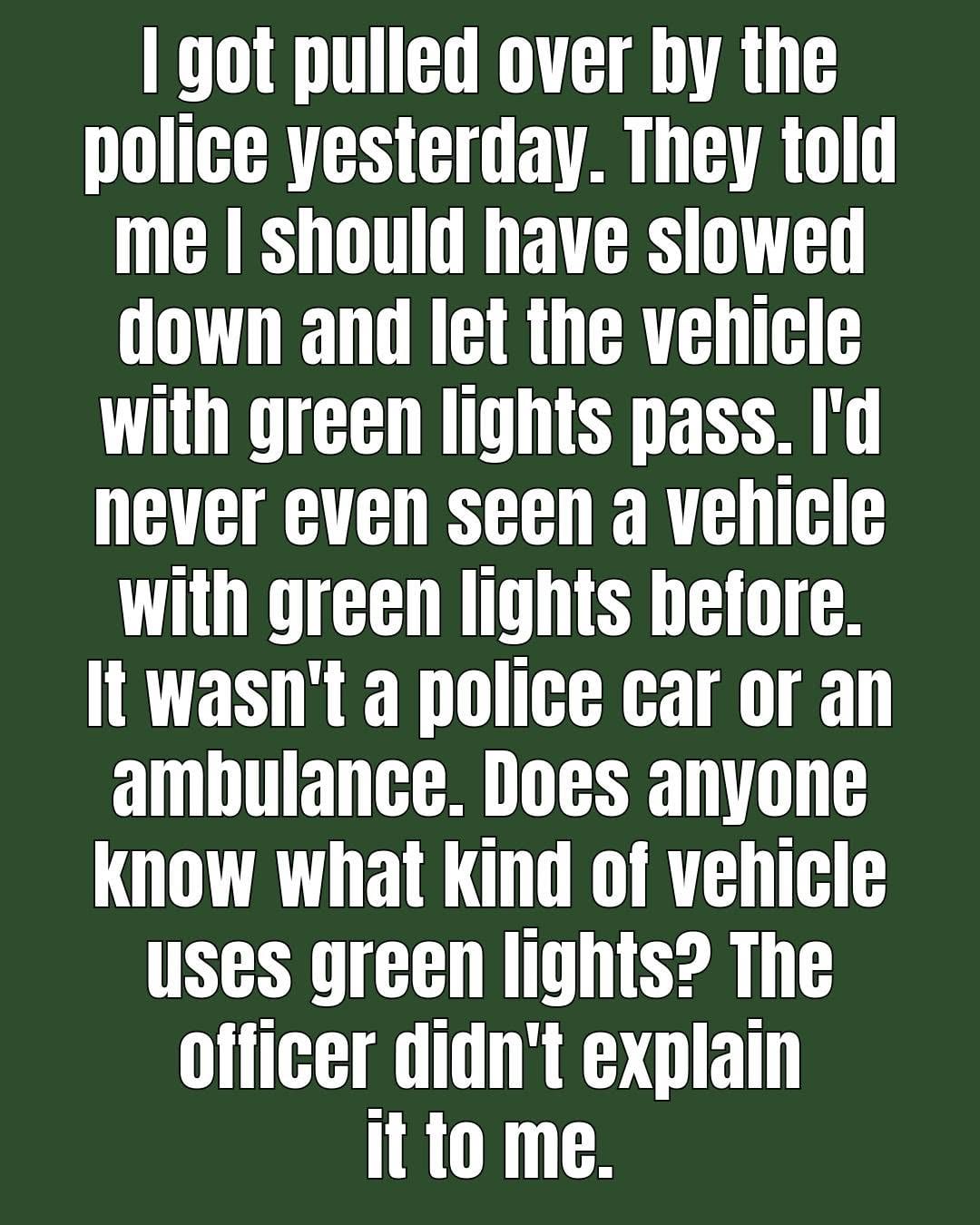
A Small Green Light That Sparks Big Questions
Most drivers are familiar with the flashing blue, red, or amber lights used by emergency and service vehicles. But every so often, someone notices something different—a green light glowing from inside or on top of a passing vehicle.
The sight often raises immediate questions.
Is it an emergency vehicle? Does it have special road privileges? Should other drivers react differently?
The answer depends on where you live. Green vehicle lights do have legitimate uses in some regions, but their meaning is not universal. Different countries, states, and provinces have adopted different rules, making the green light one of the most misunderstood signals on today’s roads.
Understanding what it may represent can help drivers respond calmly and appropriately while appreciating the important services these vehicles often provide.
Green Lights Are Not the Same Everywhere
Unlike red or blue emergency lights, green lights do not have a single worldwide meaning.
Traffic laws vary considerably between jurisdictions. In one region, a green light may identify a volunteer emergency responder. Elsewhere, it may be associated with medical transportation or another authorized service. In many places, green lights are not used at all.
Because of these differences, drivers should never assume the same interpretation applies everywhere.
Instead, it is helpful to understand the most common situations in which green lights are legally used.
Medical Transportation in Some Areas
One common use of green vehicle lights is to identify authorized medical transport vehicles.
These vehicles often assist individuals who require regular medical appointments but do not need traditional emergency ambulance services.
Passengers may include:
People receiving scheduled treatments such as dialysis.
Older adults attending medical appointments.
Individuals managing long-term health conditions.
Patients traveling between healthcare facilities.
Unlike ambulances responding to urgent emergencies, these transportation services usually operate without sirens and travel at normal traffic speeds.
The green light simply helps identify the vehicle in jurisdictions where this practice is officially recognized.
Volunteer Emergency Responders
In several regions, green lights are also associated with volunteer emergency personnel.
Volunteer firefighters, emergency medical responders, or rescue volunteers may display authorized green lights while traveling to their local station or responding to an official call.
These lights generally indicate that the driver is participating in emergency services, although they do not automatically grant the same legal driving privileges as fully marked emergency vehicles using flashing red or blue lights.
Specific rules vary depending on local laws.
Why Communities Use Green Lights
The purpose of green lights is often identification rather than urgency.
They allow other motorists to recognize that the vehicle may be supporting an important community service.
This recognition can encourage courtesy and awareness without creating unnecessary alarm.
For example, a volunteer responder traveling to assist during a community emergency may benefit from smoother traffic flow, even though other drivers are not always legally required to yield.
Similarly, medical transportation vehicles may carry passengers whose appointments are essential to ongoing healthcare.
Do Drivers Have to Pull Over?
This is one of the most common questions.
The answer depends entirely on local traffic regulations.
Unlike traditional emergency vehicles displaying authorized red and blue lights with sirens, green-light vehicles often do not possess automatic right-of-way privileges.
Drivers should always follow the traffic laws in their own jurisdiction.
In general, safe driving practices remain the priority:
Stay attentive.
Obey traffic signals.
Avoid sudden maneuvers.
Allow extra space when appropriate.
Never create unsafe situations while attempting to be courteous.
Courtesy Can Make a Difference
Although legal requirements differ, many drivers choose to extend courtesy when they recognize a vehicle performing an important public service.
Simple actions such as maintaining safe spacing, avoiding unnecessary delays, and driving predictably can help everyone on the road.
Professional drivers often emphasize that calm, consistent behavior contributes more to road safety than abrupt reactions.
Courtesy benefits all motorists—not just those operating specialized vehicles.
Why Unauthorized Use Is Prohibited
Because green lights may indicate authorized public service, many jurisdictions regulate who may display them.
Using specialized vehicle lighting without approval can create confusion for other drivers and interfere with legitimate operations.
For this reason, traffic authorities in areas where green lights are officially recognized often restrict their use to approved organizations or qualified volunteers.
Drivers interested in adding decorative vehicle lighting should always review applicable local regulations before making modifications.
Road Safety Depends on Awareness
Whether a vehicle displays green, amber, blue, or no special lighting at all, awareness remains one of the most valuable driving skills.
Defensive driving experts encourage motorists to:
Scan the road ahead.
Watch mirrors regularly.
Avoid distractions.
Leave sufficient following distance.
Expect changing traffic conditions.
These habits improve safety regardless of the type of vehicle nearby.
Technology Is Changing Emergency Transportation
Modern transportation systems continue to evolve.
Many emergency services now use GPS navigation, digital dispatch systems, vehicle tracking, and traffic management technologies to improve response times.
Medical transportation providers also rely on scheduling software and communication systems to coordinate patient travel more efficiently.
While these technological advances receive much attention, small visual identifiers—such as authorized vehicle lighting—continue to play an important supporting role in helping road users recognize specialized services.
Why the Meaning Isn’t Always Obvious
One reason green lights generate so much curiosity is that they are relatively uncommon.
Most people regularly encounter police vehicles, fire engines, and ambulances.
Far fewer have experience with volunteer responder vehicles or specialized medical transportation.
As a result, spotting a green light often prompts people to search for explanations online.
The growing interest reflects a broader desire among drivers to better understand the road environment and become more informed motorists.
A Reminder to Check Local Traffic Laws
Because vehicle lighting regulations vary widely, official transportation agencies remain the most reliable source of information.
Drivers who move between states, provinces, or countries may notice different standards for emergency lighting, warning signals, and right-of-way rules.
Taking a few minutes to review local driving regulations helps reduce confusion and promotes safer roads for everyone.
Final Thoughts
Green lights on vehicles may seem unusual, but in certain regions they serve an important purpose by identifying authorized medical transportation providers or volunteer emergency responders.
Their exact meaning depends on local laws, and they should not automatically be interpreted the same way everywhere. The most effective response is always to remain attentive, drive predictably, and follow the traffic regulations that apply in your area.
Ultimately, road safety is built on awareness, patience, and respect for others. Whether we recognize a familiar emergency vehicle or encounter an uncommon green light for the first time, curiosity encourages us to learn, while consideration helps create a safer journey for everyone.
Sources
National Highway Traffic Safety Administration (NHTSA)
American Association of Motor Vehicle Administrators (AAMVA)
National Volunteer Fire Council (NVFC)
Official state and provincial motor vehicle agencies for local emergency lighting regulations