
There’s something magical about discovering an object from another era.
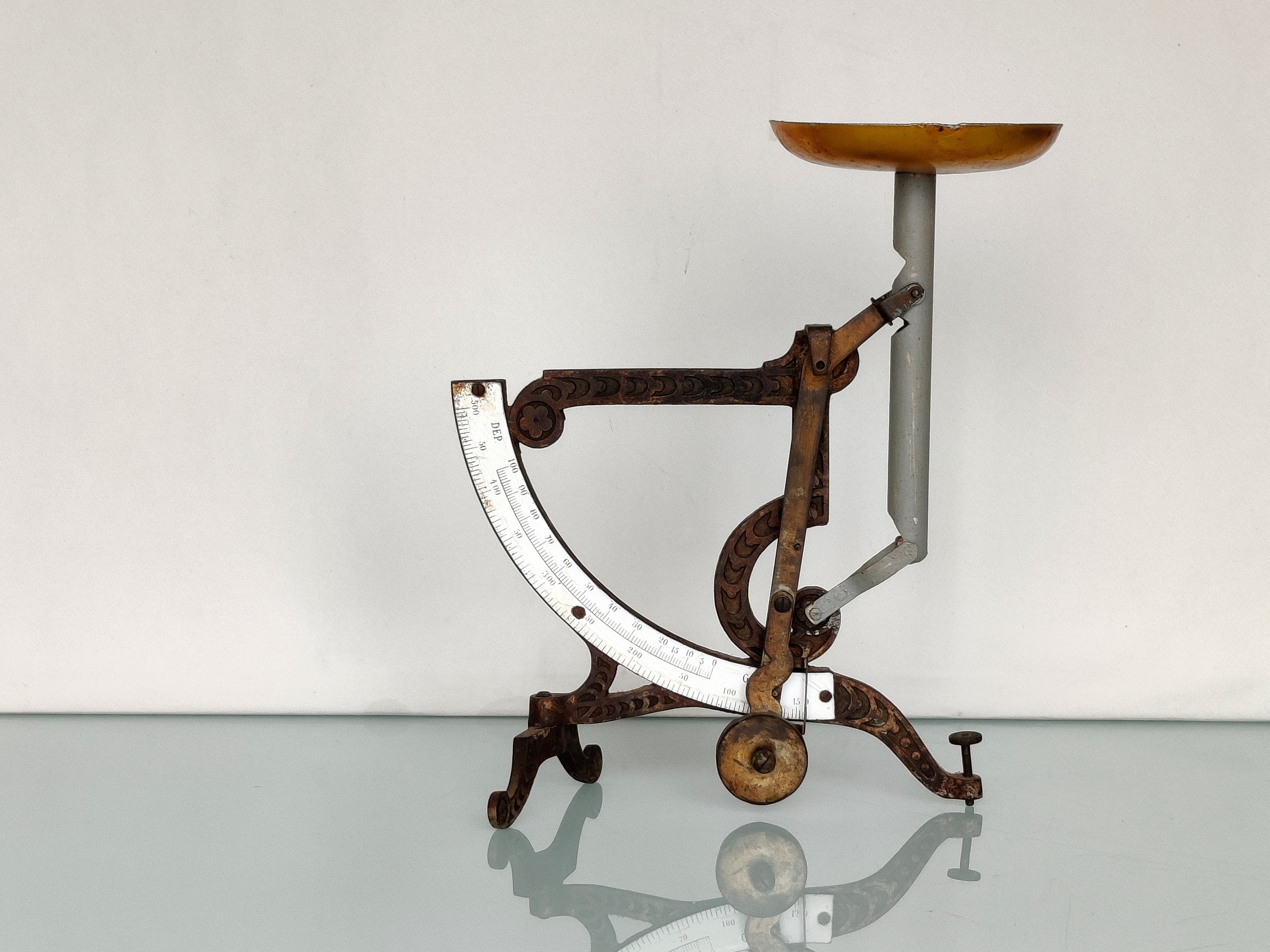
Imagine walking through an antique market on a quiet Saturday morning. Among shelves filled with old clocks, handwritten postcards, and weathered books, a small brass-and-iron instrument catches your eye. It features a delicate tray, a balanced arm, and intricate craftsmanship that hints at a purpose long forgotten.
At first glance, it almost looks like a piece of art. But this elegant object once played an important role in everyday life.
It is a vintage postal scale—a simple yet ingenious tool that helped people weigh letters and parcels before sending them through the mail. Long before digital postage meters and online shipping labels, these mechanical scales ensured that every envelope carried the correct postage.
Today, vintage postal scales are admired not only for their practicality but also for their timeless craftsmanship and the glimpse they offer into a slower, more thoughtful era.
What Is a Vintage Postal Scale?
A vintage postal scale is a small mechanical weighing device designed specifically for letters, postcards, and lightweight packages.
Before electronic scales became common, both households and businesses relied on these instruments to determine the weight of outgoing mail. By knowing the exact weight, people could calculate how many stamps were needed before visiting the post office.
Although designs varied between manufacturers and countries, most postal scales shared several distinctive features:
- A sturdy cast-iron or brass base
- A weighing platform or tray for mail
- A balanced lever arm
- Sliding or fixed counterweights
- Clearly marked weight measurements
Everything operated without electricity or batteries, relying entirely on carefully engineered mechanical balance.
A Tool from the Golden Age of Letter Writing
During the late nineteenth and early twentieth centuries, handwritten correspondence was one of the primary ways people stayed connected.
Families exchanged letters across long distances.
Businesses mailed invoices, contracts, and catalogs.
Friends shared holiday greetings and personal news.
Since postage rates depended on weight, having a reliable scale at home or in the office saved both time and money.
Instead of guessing how many stamps were needed, users simply placed a letter on the scale and read its weight.
The process was quick, accurate, and satisfying.
How Did Postal Scales Work?
Despite their elegant appearance, vintage postal scales are surprisingly simple.
When a letter is placed on the weighing tray, gravity causes the arm to shift. Counterweights balance the movement until equilibrium is reached.
The user then reads the corresponding weight from calibrated markings on the scale.
Different models used slightly different mechanisms, including:
Balance Beam Designs
These use a pivoting arm and adjustable weights to determine mass.
Spring-Based Models
Some scales use calibrated springs that compress under weight.
Lever Systems
More advanced versions multiply force through carefully designed levers for greater accuracy.
Regardless of design, the principle remains the same: balancing weight using mechanical physics.
Beautiful Craftsmanship That Has Lasted Generations
One reason collectors admire vintage postal scales is their exceptional build quality.
Unlike many modern household items made primarily from plastic, these scales were built with durability in mind.
Common materials included:
- Solid brass
- Cast iron
- Steel components
- Hardwood bases
- Glass-covered measurement dials on later models
Many still function accurately even after decades of use.
Their polished metal surfaces, decorative engraving, and precision engineering reflect an era when everyday tools were made to last.
Why Every Home Once Needed One
Today, most people rarely think about the weight of a letter.
But before automated postage systems, mailing even a simple envelope required careful preparation.
A postal scale helped people:
- Avoid paying too little postage
- Prevent unnecessary extra stamps
- Prepare mail before visiting the post office
- Weigh small parcels at home
- Save time during busy mailing seasons
For businesses sending dozens or even hundreds of letters each week, the scale quickly became an indispensable office tool.
Different Styles Around the World
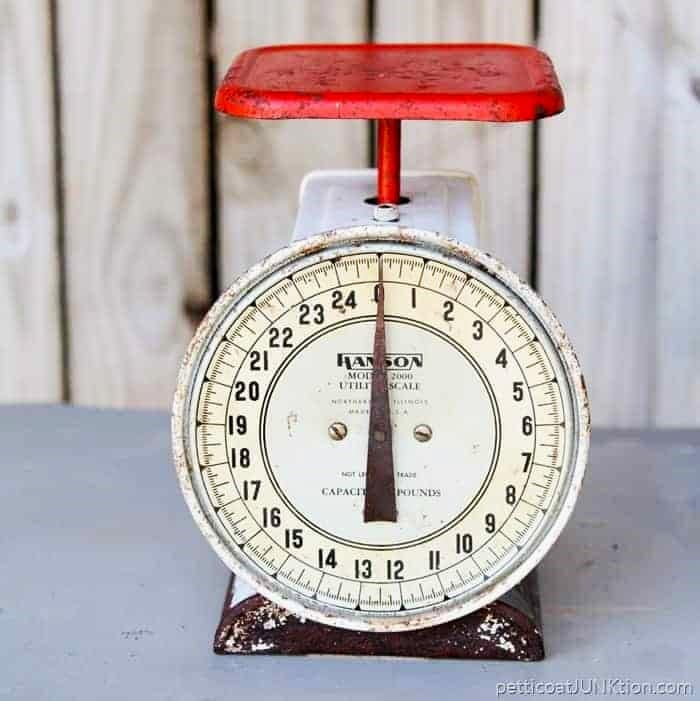
Postal systems evolved differently across countries, leading manufacturers to produce a wide variety of scale designs.
Some featured elegant Victorian ornamentation.
Others embraced the clean lines of Art Deco styling.
Certain European models displayed measurements in grams, while American versions often used ounces.
Collectors enjoy identifying scales based on:
- Country of manufacture
- Manufacturer’s name
- Patent numbers
- Material quality
- Decorative details
- Weight capacity
Each tells a small story about postal history and industrial design.
More Than Just a Mailing Tool
Today, vintage postal scales have found new life beyond the post office.
Many people use them as decorative pieces in:
Home Offices
Their classic appearance complements bookshelves and writing desks.
Libraries
They pair beautifully with antique books and vintage stationery.
Farmhouse Kitchens
Some owners display them alongside old measuring tools and collectibles.
Antique Collections
Collectors appreciate both their beauty and historical significance.
Even when no longer used for weighing mail, they remain conversation starters.
Why Collectors Love Vintage Postal Scales
Antique enthusiasts often search for original postal scales because they combine history, craftsmanship, and functionality.
Their appeal comes from several factors:
- Mechanical precision
- Attractive metalwork
- Historical importance
- Long-lasting construction
- Wide variety of designs
- Strong decorative value
Rare models produced by well-known manufacturers can also become valuable collector’s items, particularly if they remain in good working condition with original markings.
Caring for an Antique Postal Scale
If you’re fortunate enough to own one, gentle care helps preserve both its appearance and historical value.
Experts generally recommend:
- Dusting regularly with a soft cloth
- Avoiding harsh cleaning chemicals
- Keeping it in a dry environment
- Preventing rust by controlling humidity
- Preserving original finishes whenever possible
Collectors usually advise against heavy polishing, as the natural patina often contributes to both authenticity and value.

Why These Little Scales Still Fascinate Us
Vintage postal scales represent far more than a method of weighing mail.
They remind us of an era when communication required patience, intention, and care.
Every handwritten letter carried someone’s thoughts across cities, countries, or even oceans. Before it began that journey, it often rested on one of these small mechanical scales.
In today’s world of instant messages and digital communication, these antique instruments offer a tangible connection to the past. They celebrate craftsmanship, precision, and the simple beauty of well-made everyday objects.
Whether displayed on a shelf, used as part of a historical collection, or simply admired for their elegant engineering, vintage postal scales continue to inspire curiosity—and remind us that sometimes the smallest objects carry the richest stories.
Sources
- Smithsonian National Postal Museum
- United States Postal Service (USPS) historical archives
- National Postal Museum Collections
- The British Postal Museum & Archive
- Antique Trader – Guides to Collectible Postal Scales and Office Equipment