These Photos Appear to Show an Angel Over Ikaria. What Do We Actually Know?
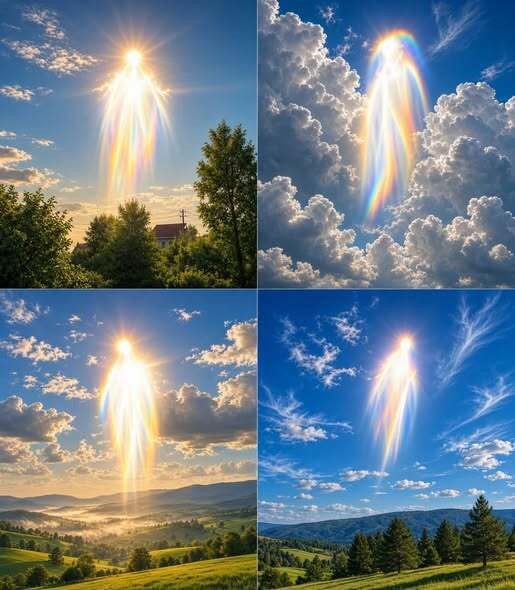
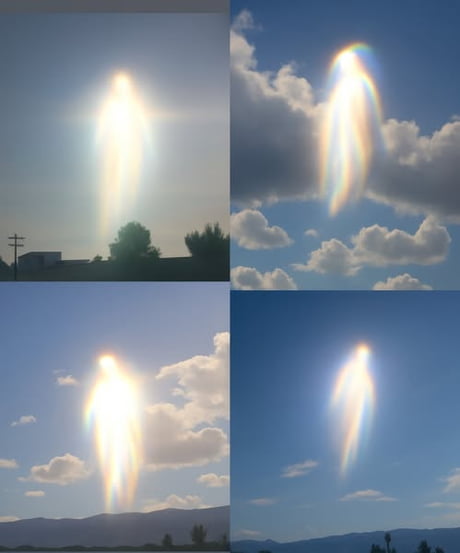
Images said to show a glowing, rainbow-colored figure in the sky over the Greek island of Ikaria attracted attention online in July 2024. In the circulating pictures, a bright shape appears against a cloudy sky, with bands of yellow, orange, blue, and violet extending beneath it. Many viewers interpreted the form as an angel, while others questioned whether it could be a natural atmospheric display, a camera effect, a digitally edited photograph, or an image generated with artificial intelligence.
The images are striking, but the available public evidence does not establish where, when, or how they were created. Although online captions linked the scene to Ikaria, an island in Greece’s eastern Aegean Sea, a widely verifiable original file, named photographer, confirmed time of capture, and independent witness recordings have not been established from the information available in the draft account.
This distinction is important. A photograph can genuinely look like a familiar figure without proving that the figure existed as a physical object in the sky. Human perception, atmospheric optics, camera processing, editing tools, and AI image generation can all contribute to unusual visual results. A careful assessment therefore begins by separating what the images show from what can be confirmed about their origin.
Why the Ikaria Sky Images Look Like an Angel
The angel-like interpretation is understandable. The brightest area near the top of the formation can resemble a head or halo, while the colored vertical bands below it can suggest a body, wings, robes, or flowing light. Clouds surrounding the luminous feature add to an appearance that many people associate with traditional religious artwork.
For centuries, painters and religious artists have used clouds, rays of sunlight, halos, and bright skies to represent divine or spiritual presence. Those familiar visual conventions can shape how people interpret ambiguous scenes. When a bright form appears surrounded by clouds, viewers may connect it with angels or other meaningful figures before considering more ordinary explanations.
Psychology offers a well-known explanation for this tendency: pareidolia. Pareidolia is the human tendency to recognize familiar objects, faces, animals, or figures in vague patterns. It can occur when people see faces in rock formations, animals in clouds, or recognizable shapes in shadows. The effect is common and does not mean that a viewer is being irrational. Rather, the brain is highly efficient at detecting patterns, particularly human-like forms.
In the Ikaria images, pareidolia may help explain why some people immediately see an angel while others see only colored light and clouds. However, it cannot determine whether the underlying image is authentic, altered, or generated digitally. The perceived shape and the image’s technical origin are separate questions.
Could a Natural Atmospheric Phenomenon Explain the Colors?
Earth’s atmosphere can create dramatic displays of light under particular conditions. Sunlight interacts with water droplets, ice crystals, haze, and cloud particles, producing halos, pillars, iridescent colors, rays, and other optical effects. These phenomena are well documented by meteorological agencies and atmospheric scientists, although identifying a specific effect from a single unverified image is difficult.
Sun Pillars and Vertical Light Columns
A possible comparison is a sun pillar, a vertical shaft of light that may appear to extend above or below the Sun. According to meteorological explanations, sun pillars are generally produced when sunlight reflects from flat, plate-shaped ice crystals suspended in the atmosphere. These crystals are often associated with high, thin clouds, although conditions closer to the ground can also contribute in cold environments.
A sun pillar can look like a luminous column, especially when viewed near sunrise or sunset. Depending on the surrounding clouds, camera exposure, and the Sun’s position, it may appear unusually bright or elongated. Still, the visual resemblance alone is not enough to conclude that the Ikaria image depicts a sun pillar. Investigators would need the original image, a known time, weather data, and a confirmed viewing direction to test that explanation properly.
Cloud Iridescence and Rainbow-Like Colors
Another natural possibility is cloud iridescence. This effect can produce delicate pastel colors, including pink, green, blue, yellow, and violet, near the Sun or along cloud edges. It occurs when sunlight is diffracted by small, similarly sized water droplets or ice particles in clouds.
Cloud iridescence does not usually form a neat, full rainbow. Instead, it often appears as irregular patches, bands, or shimmering color along thin clouds. Against a dark cloud background, these colors can look especially vivid in a photograph. A strongly processed image may make them appear more saturated than they would look to the naked eye.
Because the viral images include several colors, cloud iridescence is a relevant comparison. But it remains only a possible explanation, not a confirmed identification. The shape, location, weather conditions, and camera settings would all matter.
Crepuscular Rays and Bright Gaps in Clouds
Sunlight passing through breaks in clouds can also create distinct beams known as crepuscular rays. These rays are commonly called “sunbeams” and can appear to fan outward from the Sun. Their dramatic appearance results from the contrast between illuminated and shaded portions of the sky.
In a still photograph, several overlapping rays and colored cloud features may seem to form one coherent object. If a viewer is already primed by a caption claiming that an angel appeared in the sky, the light patterns may be interpreted as a human-like figure. That does not rule out a natural event, but it demonstrates why captions can influence perception.
Why a Single Online Image Is Difficult to Verify
Verification of unusual photographs requires more than visual inspection. A shared image may have been resized, compressed, cropped, filtered, or reposted many times before reaching a large audience. Each step can remove useful technical information and make the original appearance harder to reconstruct.
Social media platforms commonly reduce image quality to save storage and improve loading speed. Compression can soften cloud textures, create color artifacts, and blur the boundaries between bright objects and darker skies. Screenshots may further remove metadata and alter the image dimensions. As a result, even a genuine photograph can look strange after repeated sharing.
Image captions present another challenge. A statement that an image was taken over Ikaria is not proof of location. Captions are often repeated without a source, and a location can become attached to a photograph through reposting even if the original uploader did not provide verifiable details. The popularity of a claim does not make it independently confirmed.
For the Ikaria images, the key unanswered questions include: Who took the photographs? When were they captured? Where was the photographer standing? Were other people able to record the same feature? Is an original file available? Until those questions are answered with reliable evidence, the claim that the formation appeared over Ikaria should be treated as unverified.
How Cameras and Editing Can Change the Appearance of the Sky
Photographs do not always reproduce a scene exactly as the human eye saw it. Modern phone cameras and digital cameras automatically adjust exposure, contrast, sharpness, color balance, and high-dynamic-range settings. These processes can be useful, but they may also make bright skies and cloud formations look more intense.
When a camera points toward a bright light source, such as the Sun behind clouds, it can produce lens flare, glare, reflections, blooming, or colored streaks. Lens flare occurs when light scatters inside the camera lens and reaches the sensor in unintended ways. Depending on the lens design and angle, the result can include glowing circles, lines, colored patches, or unusual bright shapes.
Exposure also matters. If the brightest part of an image is overexposed, detail can disappear and merge into a large white or glowing form. Increasing saturation or contrast after the image is captured can make nearby colors seem more dramatic. Editing apps allow users to change these settings quickly, sometimes without leaving obvious signs in a lower-quality online copy.
None of this proves that the Ikaria image was edited. It simply means that a visual assessment alone cannot reliably distinguish a rare atmospheric effect from a photograph enhanced through conventional image processing. Comparing the earliest available file with later reposts would be a more useful starting point.
Could Artificial Intelligence Have Produced the Angel-Like Image?
AI image generators are capable of creating highly detailed scenes of clouds, sunsets, religious imagery, and unusual lighting. A prompt describing a glowing angel-shaped form with rainbow colors above a Greek island could produce an image similar in theme to the photos shared online. This makes AI generation a legitimate possibility in any investigation of viral images.
However, it is important not to make unsupported claims. An image that looks unusual is not automatically AI-generated. Authentic photographs can contain odd textures, unexpected reflections, and confusing light patterns. Conversely, AI-generated images can look convincing, particularly when viewed at small sizes on social media.
Some analysts look for inconsistent shadows, implausible reflections, distorted details, repeating cloud textures, or irregular edges. These clues can be useful, but they are not definitive on their own. Compression, editing, and low resolution can create similar artifacts. Reliable image analysis works best when technical findings are paired with source tracing, metadata review, and independently confirmed context.
Newer content-authenticity standards, including systems that record the history of an image file, may eventually make verification easier when photographers and platforms adopt them widely. But such systems are not yet universal, and many circulating images have no preserved provenance data.
What Evidence Would Confirm the Ikaria Claim?
A stronger investigation would begin by tracing the image to its earliest known upload. Reverse-image searches can sometimes reveal earlier versions, alternative captions, or posts that identify the photographer. The oldest public post is not necessarily the original source, but it may offer useful leads.
An original file would be especially valuable. Depending on how it was saved and shared, it might contain metadata known as EXIF data. This can include information about the camera model, lens, date, time, and sometimes geographic coordinates. Metadata should not be treated as conclusive by itself because it can be removed or altered, but it can support other evidence.
Verified location evidence would also help. Recognizable landmarks, coastlines, buildings, or terrain could establish whether the image was actually taken on Ikaria. If the time and place were known, researchers could compare the Sun’s position with the direction of the apparent light formation and review local cloud and weather observations.
Independent recordings would provide the most persuasive evidence. For example, videos or photographs taken by different people from separate locations at approximately the same time could show whether a real atmospheric feature was visible above the island. Their different viewing angles could help distinguish a distant sky phenomenon from a camera-specific reflection or digitally added object.
Professional image forensic analysis may also identify signs of compositing, extensive editing, or synthetic generation. Yet forensic findings should be interpreted cautiously and alongside the image’s documented history. The strongest conclusion would come from several lines of evidence that agree with one another.
Respecting Personal Meaning While Maintaining Evidence Standards
People may experience an image like this as spiritually meaningful, beautiful, or comforting. Such personal reactions are valid matters of individual belief and interpretation. At the same time, a factual claim that a particular supernatural figure appeared over a specific location requires evidence that can be independently assessed.
This approach does not dismiss wonder. Natural atmospheric displays can be visually extraordinary, and photographs can inspire reflection regardless of their origin. But responsible reporting should clearly separate observation from assumption. What can be said with confidence is that images portraying an angel-like, multicolored formation circulated online and prompted widespread discussion.
What cannot currently be confirmed from the available information is whether the scene occurred over Ikaria, whether it represented a specific atmospheric phenomenon, or whether the image was modified or digitally generated. Those remain open questions.
Conclusion: The Origin of the Ikaria Angel Images Remains Unresolved
The viral pictures linked to Ikaria show a luminous shape that many viewers interpret as an angel. That interpretation is influenced by familiar religious imagery and by pareidolia, the normal human tendency to find recognizable forms in uncertain patterns. Natural phenomena such as cloud iridescence, sun pillars, and crepuscular rays can produce colorful or dramatic effects in the sky, while camera processing, image editing, and AI tools can also create or enhance striking visuals.
At present, there is not enough verified information to determine which explanation applies to these particular images. A traceable original file, identified photographer, confirmed location, weather context, and independent recordings would be needed to make a reliable assessment. Until such evidence emerges, the most accurate description is that the images are unverified viral photographs associated online with Ikaria, Greece.
Sources
- UK Met Office: Optical effects in the atmosphere
- U.S. National Weather Service: Sky and weather observation resources
- NOAA: Weather and atmosphere educational resources
- Encyclopaedia Britannica: Pareidolia
- Content Authenticity Initiative: Content provenance and authenticity standards
- Reuters Fact Check
Disclaimer: This content is intended for entertainment purposes only and is not based on real events.