My Son Mowed Our Elderly Neighbor’s Yard for Four Years — Then a Sealed Envelope Changed Everything
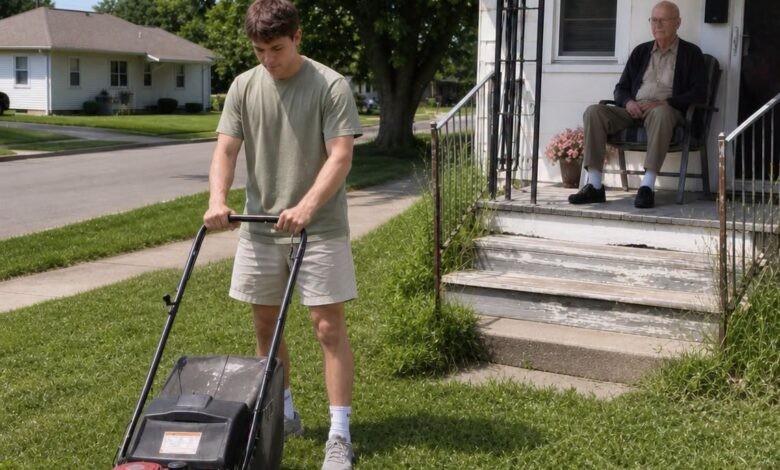
My teenage son, Noah, mowed our elderly neighbor’s lawn every Saturday for four years without ever asking for a penny.
He started when he was twelve.
By the time he was sixteen, the sound of his old lawn mower had become part of our neighborhood’s Saturday morning routine.
I never expected anything in return for him.
Neither did Noah.
So when we attended Mr. Vance’s funeral and a lawyer walked directly toward my son carrying a sealed envelope, I had no idea what was inside.
The lawyer stopped in front of Noah.
“Are you Noah?”
My son nodded.
The man held out the envelope.
“Mr. Vance left very specific instructions for you.”
Noah looked at me.
I looked at the envelope.
Neither of us knew what to say.
But to understand why that moment meant so much, I have to go back to the summer when Noah first noticed the old man across the street.
The Neighbor Everyone Passed By
I had raised Noah by myself for as long as I could remember.
His father left before Noah was born, and although there were difficult days, I never wanted my son to believe that being raised by one parent meant he was missing something.
We didn’t have much.
Our house was small.
Our car was old.
I worked long hours, and Noah learned early that we had to be careful with money.
But he was never embarrassed by our situation.
If anything, he seemed to understand that having less sometimes made you notice more.
That was how he noticed Mr. Vance.
Mr. Vance lived directly across the street.
He was an older man who kept mostly to himself.
His wife had passed away several years earlier, and his children lived in different states. Occasionally, I saw him sitting on his porch in the evening, reading a newspaper or simply watching the neighborhood.
His yard, however, was becoming increasingly difficult for him to maintain.
The grass grew high.
Leaves collected along the fence.
The flower beds that had once looked carefully maintained slowly became overgrown.
One Saturday morning, Noah stood at our window watching Mr. Vance struggle with an old lawn mower.
“Mom,” he said, “I think his mower is broken.”
I looked outside.
Mr. Vance had stopped trying.
He was standing beside the machine, looking frustrated.
Noah disappeared into our garage.
A few minutes later, he came back with our mower.
“Where are you going?” I asked.
“Across the street.”
The First Saturday
Noah walked over and introduced himself.
I watched from our front porch.
Mr. Vance seemed surprised when Noah offered to mow the lawn for him.
After a few minutes, he smiled and stepped aside.
Noah spent nearly two hours cleaning up the yard.
When he finished, Mr. Vance tried to give him some money.
Noah refused.
I remember him saying, “It’s okay. You don’t have to pay me.”
Mr. Vance asked why he was doing it.
Noah simply shrugged.
“Because you shouldn’t have to do it alone.”
That sentence stayed with me.
That evening, I asked Noah whether he really intended to keep helping.
He looked confused by the question.
“Why wouldn’t I?”
So the following Saturday, he went back.
And the Saturday after that.
Before long, it became a routine.
Four Years of Saturdays
For four years, Noah crossed the street almost every Saturday morning.
Sometimes he mowed the lawn.
Sometimes he collected leaves.
Sometimes he pulled weeds or helped carry bags from Mr. Vance’s car.
During winter, he occasionally shoveled the walkway.
There were no grand gestures.
No one took photographs.
No one posted about it online.
It was simply something Noah did.
Over time, the two of them became friends.
At first, their conversations were short.
Mr. Vance would ask about school.
Noah would tell him about his classes.
Eventually, they began talking about everything from old movies to music.
Mr. Vance had lived in the neighborhood for more than forty years and seemed to know a story about nearly every house on the street.
Noah loved listening.
Sometimes he would come home later than expected because he had stayed on the porch talking.
I never complained.
I knew those conversations meant something to him.
The Secret Friendship
There was something unusual about their friendship.
Noah never described Mr. Vance as an elderly man who needed help.
He described him as his friend.
That distinction mattered.
One afternoon, I asked Noah why he spent so much time with him.
He thought for a moment.
Then he said, “Because he listens to me.”
I smiled.
“Don’t I listen to you?”
“You do,” he said. “But you have to.”
Then he laughed.
I laughed too.
But I understood what he meant.
Sometimes people outside our immediate family see parts of us differently.
Mr. Vance treated Noah like someone whose opinions mattered.
And Noah gave Mr. Vance something equally valuable: company.
The Last Summer
By the time Noah turned sixteen, Mr. Vance’s health had begun to decline.
He couldn’t spend as much time outside.
Noah still took care of the yard.
One Saturday, after finishing the lawn, Noah sat beside him on the porch.
They talked for almost an hour.
When Noah came home, he seemed unusually quiet.
I asked if something was wrong.
He shook his head.
“He just told me he doesn’t think he’ll be here forever.”
I didn’t know how to respond.
Neither did Noah.
We both knew that Mr. Vance was getting older.
But knowing something intellectually is different from being ready for it emotionally.
After that day, Noah visited him more often.
Not just on Saturdays.
Sometimes he would stop by after school.
Sometimes he brought groceries.
Sometimes they simply sat on the porch.
The Phone Call
A few months later, I received a phone call from a neighbor.
Mr. Vance had passed away peacefully.
I immediately looked at Noah.
He didn’t say anything.
He just sat down.
For the first time since I had known him, my son looked completely lost.
We attended the funeral together.
There were people I had never seen before.
Family members.
Old friends.
Former coworkers.
Neighbors.
Everyone seemed to have a story about Mr. Vance.
Noah stayed quiet throughout the service.
Afterward, we stood outside while people gathered in small groups.
Then a man in a dark suit approached us.
“Are you Noah?”
My son nodded.
The man introduced himself as Mr. Vance’s attorney.
Then he reached into his briefcase.
And pulled out a sealed envelope.
“He Left This for You”
The lawyer handed the envelope to Noah.
“He specifically asked me to give this to you after the funeral.”
Noah stared at it.
“Why me?”
The lawyer smiled gently.
“I think you should read it.”
We went home.
Noah waited until we were sitting at the kitchen table before opening it.
Inside was a handwritten letter.
The handwriting was shaky, but the words were clear.
Mr. Vance had written about the first Saturday Noah came across the street.
He remembered Noah refusing payment.
He remembered the conversations.
He remembered every season.
And then he wrote something that made Noah stop reading.
“You probably think you were mowing my lawn all these years.”
“I want you to know that you were doing much more than that.”
“You gave me reasons to look forward to Saturdays.”
Noah wiped his eyes.
I reached across the table and held his hand.
The Unexpected Gift
The letter continued.
Mr. Vance explained that he had watched Noah grow from a quiet twelve-year-old into a thoughtful young man.
He said he was proud of the person Noah had become.
But the envelope contained more than a letter.
There was also a small key.
Noah looked at me.
“What is this?”
The lawyer had included a note explaining it.
Mr. Vance had left Noah something very simple.
A wooden toolbox that had belonged to him.
Inside were his old gardening tools, carefully cleaned and arranged.
There was also a small notebook filled with notes about plants, lawn care and gardening.
On the first page, Mr. Vance had written:
“Keep helping people. You already know how.”
There was no enormous inheritance.
No extravagant surprise.
No life-changing fortune.
Just a box of tools and a message.
And somehow, that made the gift feel even more meaningful.
The Meaning Behind the Envelope
Noah kept the toolbox.
For several days, he barely touched it.
Then one Saturday morning, he carried it into our garage.
He looked at the lawn mower.
Then he looked across the street.
Mr. Vance’s house was quiet.
The yard needed attention.
Noah started the mower.
He crossed the street.
And he began working.
I watched him from our porch.
He wasn’t doing it because someone had asked him to.
He wasn’t expecting a letter.
He wasn’t expecting a gift.
He was simply continuing something that had become meaningful.
A Different Kind of Inheritance
Years later, Noah still has Mr. Vance’s toolbox.
The tools are worn now.
Some have been repaired.
The notebook has become one of Noah’s most treasured possessions.
But the most important thing Noah inherited wasn’t inside the box.
It was the lesson behind it.
He learned that kindness doesn’t always have to be dramatic.
Sometimes it is a lawn mowed on a Saturday morning.
Sometimes it is sitting on a porch and listening to someone’s stories.
Sometimes it is noticing the person everyone else has stopped noticing.
And sometimes, you never know how much a small act means to someone until years later.
What I Learned Watching My Son
As Noah’s mother, I had always worried about teaching him the right things.
I wanted him to work hard.
I wanted him to be responsible.
I wanted him to be independent.
But Mr. Vance taught him something I could never put into a lesson plan.
He taught him that people need one another.
Noah had thought he was helping an elderly neighbor with his yard.
In reality, the friendship had helped both of them.
Mr. Vance had given Noah stories, patience and perspective.
Noah had given Mr. Vance companionship and the feeling that someone still cared enough to knock on his door.
Neither of them had expected anything in return.
And perhaps that was what made their friendship so special.
The Lawn Across the Street
Today, the house across the street has a new owner.
The old porch is still there.
The garden has changed.
But whenever I see Noah mowing a lawn for someone who needs a little help, I think of Mr. Vance.
Noah doesn’t talk about the envelope very often.
But he still has it.
The letter is folded carefully inside the wooden toolbox.
And whenever someone asks him why he helps people, he usually gives the same simple answer:
“Because someone helped me once.”
Maybe that’s the real legacy Mr. Vance left behind.
Not money.
Not property.
Not a grand inheritance.
Just a lesson that traveled from one person to another.
Conclusion: The Things We Leave Behind
We often think a person’s legacy has to be something enormous.
A successful career.
A large inheritance.
A famous achievement.
But sometimes the most meaningful legacy is much quieter.
It can be a friendship.
A kind word.
A Saturday spent helping someone who needs it.
Mr. Vance never knew exactly how much his friendship would influence Noah.
And Noah never knew how much those four years meant to Mr. Vance until he opened that sealed envelope.
The story reminds me that kindness has a way of continuing long after the moment itself has passed.
A teenager mowed a neighbor’s lawn because he thought an older man needed help.
The older man remembered every Saturday.
And years later, one simple envelope showed my son that his kindness had mattered all along.
Sometimes, the smallest things we do become the memories people carry with them for the rest of their lives.