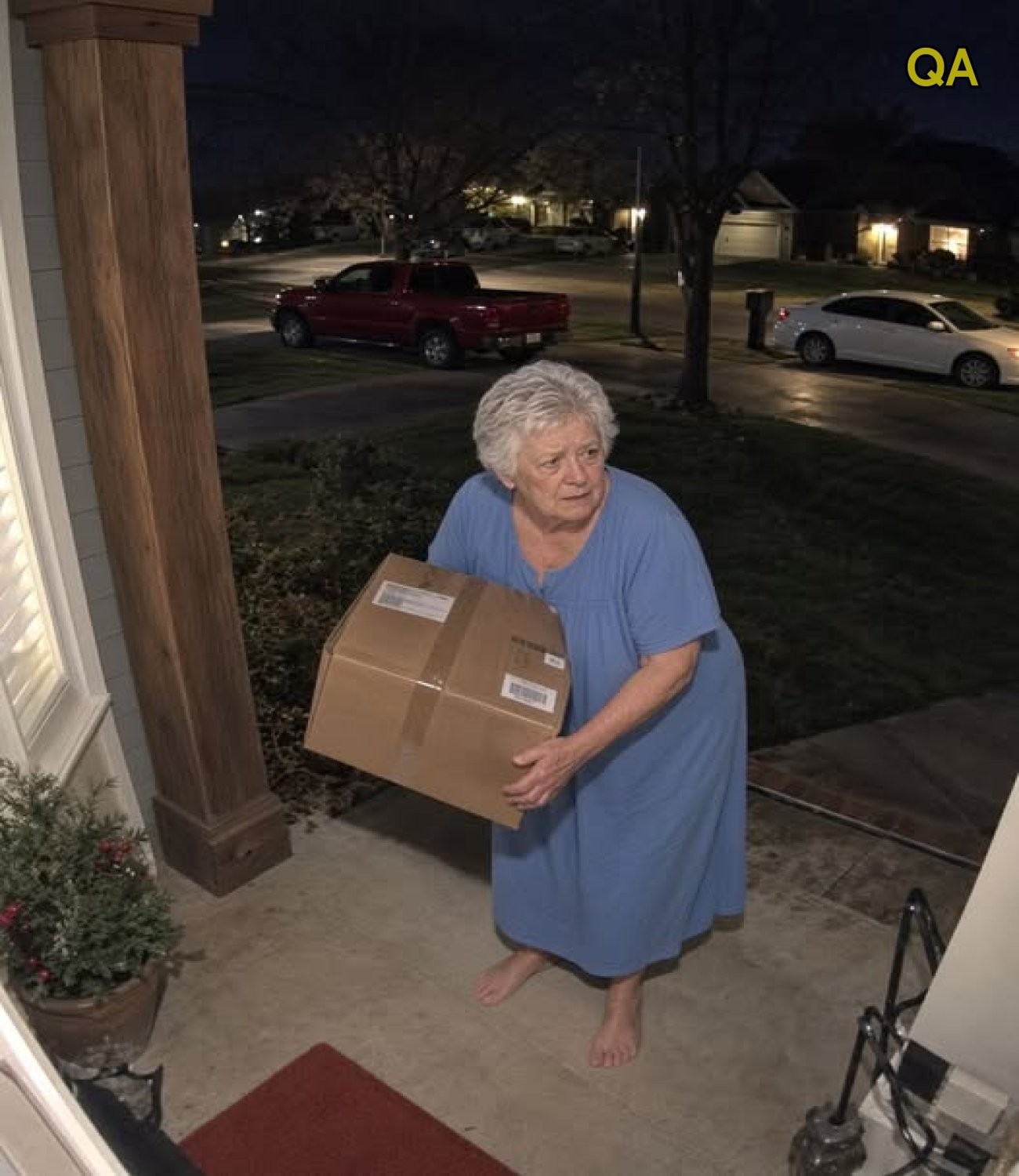
For months, packages had been disappearing from doorsteps around the neighborhood. Some contained ordinary purchases, while others held birthday presents, personal belongings, and items that could never be replaced simply by ordering them again. At first, the missing deliveries seemed like isolated incidents. Few residents suspected that the problem might be connected to someone living just a few houses away.
Everything changed when an elderly woman and her companion, Jordan, made a startling discovery at Sharon’s detached garage. Inside, hundreds of packages had been stacked almost to the rafters.
What initially appeared to be an unusual collection of deliveries soon became something far more concerning. Through a gap in the fence, they watched a man arrive in a white cargo van and begin loading boxes while Sharon checked items against a clipboard.
Then the narrator recognized a gift box that belonged to her.
The discovery transformed a frustrating mystery into a possible theft investigation. Even more troubling, Jordan spotted another package addressed to Mrs. Alvarez, an elderly neighbor who lived several streets away.
The two observers now had reason to believe that the missing deliveries were not simply the result of mistakes by a shipping company. But what they did next would be just as important as what they had discovered.
Hundreds of Packages and a Pattern of Suspicious Activity
A single missing delivery can have several explanations. A courier might leave it at the wrong address, a tracking system might update prematurely, or someone could accidentally take a package belonging to another household.
However, a garage filled with hundreds of labeled boxes presents a very different situation.
According to the account, the packages appeared to belong to residents across several nearby neighborhoods. Their presence in one location, combined with the repeated loading of boxes into a cargo van, raised serious questions about how they had been collected and why they were being moved.
The narrator’s recognition of her own gift provided an especially personal connection to the discovery. What had previously been an inconvenience now appeared linked to a larger pattern of missing property.
Mrs. Alvarez’s package added another important detail. It suggested that the problem could affect residents who might have difficulty monitoring deliveries or challenging unexplained losses.
Still, the observers needed to be careful. A suspicious scene alone would not establish who owned each package, how it had arrived at the garage, or whether everyone involved understood what was happening.
The safest course was to report the observations and allow investigators to examine the evidence.
Why Staying Calm Was the Most Important Decision
When people discover what appears to be a crime happening nearby, the temptation to intervene can be strong. They may want to confront the suspected individuals, follow a vehicle, or attempt to recover their belongings immediately.
In this story, the narrator and Jordan chose a different approach.
Jordan called 911 while the narrator used the tracking device hidden in her package to follow its changing location. Rather than chasing the van themselves, they relayed the information to the dispatcher.
That decision helped keep the situation focused on communication rather than confrontation.
Following a suspicious vehicle can expose an observer to unnecessary danger. The driver may notice the pursuit, react unpredictably, or attempt to evade whoever is following them. A confrontation could also complicate an investigation or put bystanders at risk.
By remaining at a safe distance and providing information to emergency services, the pair avoided taking direct action against the suspected thieves.
Their response illustrates a useful principle for anyone who believes they have witnessed a crime: observe only when it is safe, preserve relevant information, and contact the appropriate authorities rather than attempting to make an arrest yourself.
How Package Tracking Helped Investigators
The tracking device became another potential source of information.
According to the account, the narrator watched the device’s location change as the van traveled toward a self-storage facility near the highway. She relayed those updates to the dispatcher, giving authorities information that could help them locate the vehicle.
Twelve minutes after the call, two patrol cars reportedly stopped the van.
Tracking technology can be useful in recovering certain stolen belongings, but its capabilities vary. Some devices provide frequent location updates, while others rely on nearby phones, wireless networks, or periodic signals. Accuracy can also be affected by buildings, signal availability, and environmental conditions.
A location record is therefore most useful when considered alongside other evidence, such as package labels, delivery records, surveillance footage, and witness observations.
In this account, the tracking information reportedly helped officers locate the van. The decisive questions about ownership and criminal responsibility would still need to be established through the investigation.
The incident also highlights the value of keeping delivery notifications and order records. When a package disappears, accurate documentation can help distinguish a delivery error from a possible theft.
The Storage Unit Discovery
The investigation reportedly led officers to a storage unit where they discovered nearly six hundred stolen packages associated with four neighborhoods.
The scale of the alleged collection changed the apparent nature of the case. Instead of a dispute over one missing gift, investigators were now dealing with a large quantity of property that reportedly belonged to many different households.
According to the story, the driver was Sharon’s nephew. Investigators later learned that Sharon had allegedly been accepting deliveries for more than a year, while her nephew resold the contents online.
The account further alleges that Sharon returned packages only after recipients complained. If accurate, this would help explain why some residents might initially have believed their missing deliveries were simply shipping mistakes.
However, the details of an investigation should be distinguished from a final legal determination. The discovery of property, witness accounts, tracking information, and video recordings can all contribute to a case, but the precise charges and responsibility of each person must be established through the applicable legal process.
Even with that distinction, the reported discovery demonstrates why patterns matter. When numerous unexplained incidents share a location, vehicle, or method, investigators may be able to connect them in ways that would not be possible by examining each missing package separately.
Doorbell Cameras and the Importance of Reliable Evidence
Later that evening, officers reportedly confronted Sharon at her home. She maintained that the packages had been delivered to her by mistake, but a detective presented doorbell footage and the tracking device’s location history.
According to the account, the evidence contradicted her explanation, and both Sharon and her nephew were charged in connection with the alleged theft operation.
The story underscores the growing role of home security cameras in documenting activity around residential properties.
Doorbell cameras can record the time a delivery arrives, the location where a courier leaves it, and whether someone subsequently removes it. When a dispute arises, these recordings may help clarify what happened.
Nevertheless, cameras have limitations. Video may not clearly show a person’s face, the recorded time may be inaccurate, or the footage may not establish what happened outside the camera’s field of view. Recordings should therefore be preserved in their original form whenever possible and shared with investigators through appropriate channels.
Tracking information has similar limitations. It may indicate where a device traveled, but it does not necessarily establish who possessed the package at every moment.
When several independent sources of evidence support the same account, investigators have more information to examine. The goal is not to make assumptions from one recording or one location update, but to build a clearer picture of the events.
Why Package Theft Can Affect More Than a Household Budget
The missing deliveries in this story were not simply interchangeable cardboard boxes. Some contained items with personal or sentimental value.
The narrator had been waiting for her granddaughter’s birthday present. Mrs. Alvarez was expecting the return of her late husband’s watch, which had been sent away for repairs.
For these families, the loss involved more than the replacement cost of an item. A delayed gift can disrupt a meaningful celebration, while a family heirloom may carry memories that no financial reimbursement can restore.
This is one reason package theft can be particularly distressing. Recipients often have no immediate way of knowing whether a delivery was misplaced, taken by mistake, stolen, or left somewhere unexpected.
Uncertainty can make the experience more frustrating, especially when several deliveries disappear over time.
The situation can be more difficult for older residents, people with mobility limitations, and households where someone cannot regularly check the front door. Yet age alone does not determine whether a person can protect their property or participate in a neighborhood response.
The more useful lesson is that clear reporting procedures, reliable records, and mutual assistance can help residents respond to missing deliveries without placing the burden entirely on the individual household.
The Emotional Relief of Recovering Stolen Belongings
During the following month, police reportedly returned recovered belongings to families throughout the town.
Mrs. Alvarez received her late husband’s watch, and the narrator finally recovered the birthday present intended for her granddaughter. Although the gift arrived later than expected, its return brought relief after the uncertainty surrounding the discovery.
The recovery process also illustrated the practical challenges of dealing with a large collection of property. Investigators may need to sort packages, identify recipients, verify ownership, and coordinate returns.
Clear labels, purchase confirmations, receipts, and delivery notifications can help with this process. Residents who discover missing packages should retain relevant records rather than deleting notifications or discarding documentation prematurely.
For sentimental items, photographs or descriptions may also help establish ownership when conventional receipts are unavailable.
Not every missing package will be recovered, and the outcome of any real investigation depends on the available evidence. Nevertheless, the return of these belongings represents the human side of a case involving many individual households.
How a Neighborhood Package-Watch Program Can Help
Following the investigation, the neighborhood association reportedly established a package-watch program and asked the narrator to lead it.
At eighty-two, she became an active participant in helping residents protect their deliveries and look out for one another.
A neighborhood program does not need to involve surveillance of every passing vehicle or suspicion toward unfamiliar visitors. Its purpose can be much simpler: helping residents notice delivery problems, share useful information, and report concerns appropriately.
A practical package-watch initiative might include the following measures:
-
Delivery notifications: Encourage residents to enable shipping alerts and check tracking updates when possible.
-
Secure drop-off arrangements: Use suitable parcel boxes, delivery lockers, or agreed-upon delivery locations where available.
-
Trusted neighbors: With permission, arrange for a neighbor to collect a package when the recipient is away.
-
Clear records: Keep order confirmations, delivery photographs, and relevant tracking details until deliveries are accounted for.
-
Responsible reporting: Report suspected theft to the relevant delivery company and police when appropriate, providing factual observations rather than unverified accusations.
-
Respect for privacy: Avoid publishing personal addresses, tracking details, or footage of neighbors online without a legitimate reason.
These measures can help a community respond to suspicious activity without encouraging confrontation or treating every unfamiliar person as a potential offender.
A coordinated approach is particularly valuable when several residents report similar problems. Shared information may reveal a pattern that would otherwise remain difficult to recognize.
Practical Steps to Protect Your Own Deliveries
The story also offers several lessons for households that want to reduce the risk of missing packages.
First, choose delivery arrangements that fit your circumstances. If you are frequently away from home, a secure parcel locker or a delivery location with controlled access may be more suitable than leaving packages unattended on a porch.
Second, enable delivery notifications and check the confirmation when a package is marked as delivered. If the parcel cannot be found, inspect the designated delivery area and check whether someone in your household or a trusted neighbor collected it.
Third, contact the seller or delivery company promptly if the package remains missing. Keep a record of the tracking number, delivery confirmation, communications, and any relevant security footage.
If you have evidence suggesting theft, report the incident to local authorities. Do not attempt to confront a suspected thief or follow a vehicle into an unfamiliar location.
Finally, remember that tracking devices and cameras are useful tools, not guarantees of recovery. The best protection usually combines sensible delivery arrangements, accurate records, and a safe reporting process.
Conclusion: A Community Becomes Stronger When Neighbors Look Out for One Another
The discovery behind Sharon’s garage began with a few missing packages and a suspicious scene. According to the account, it ultimately led to the recovery of hundreds of deliveries, the return of treasured belongings, and the creation of a neighborhood package-watch program.
The narrator and Jordan played an important role by recognizing a possible pattern, communicating their observations, and allowing authorities to respond. Their decision not to pursue the van themselves helped keep the situation focused on evidence and safety.
Perhaps the most meaningful part of the story is what happened after the investigation. The recovered watch and birthday present represented more than returned property. They reminded residents that everyday deliveries can carry personal histories, family memories, and expectations that matter deeply to the people waiting for them.
A package may look ordinary from the outside, but its contents can mean a great deal to someone.
The experience also offers a broader lesson: communities do not need to rely on confrontation or suspicion to protect themselves. Accurate information, sensible precautions, cooperation, and respect for the proper investigative process can make a meaningful difference.
When neighbors communicate responsibly and look out for one another, even a troubling discovery can become an opportunity to build a safer and more connected community.
Editorial note: This article presents the events as described in the supplied account. The identities, investigation, charges, and recovery figures have not been independently verified. Charges are allegations and should not be treated as proof of guilt without an established legal outcome.
Sources and Further Reading
-
United States Postal Inspection Service — Mail Theft
-
United States Postal Inspection Service — Report a Crime
-
Federal Trade Commission — What to Do if Your Online Order Never Arrives
-
National Neighborhood Watch — National Neighborhood Watch Program
These resources offer general information about reporting suspected mail theft, responding to missing deliveries, and organizing community crime-prevention efforts.