
Pyrex has earned a place in millions of kitchens thanks to its versatility and convenience. A single dish can be used for mixing ingredients, baking casseroles, storing leftovers, and reheating meals, making it an all-in-one solution for busy households. Although Pyrex is known for its durability, it is still made of glass, and understanding its limitations can help prevent accidents and extend its lifespan.
Why Pyrex Is So Popular
For decades, home cooks have relied on Pyrex because it performs well in a variety of kitchen tasks. From preparing family dinners to storing food for later, its ability to move between different stages of cooking makes it a practical choice. Many Pyrex dishes are also designed to withstand normal oven temperatures, making them ideal for baking and roasting.
However, durability should not be confused with indestructibility. Like any glass cookware, Pyrex requires proper handling to remain safe and reliable.
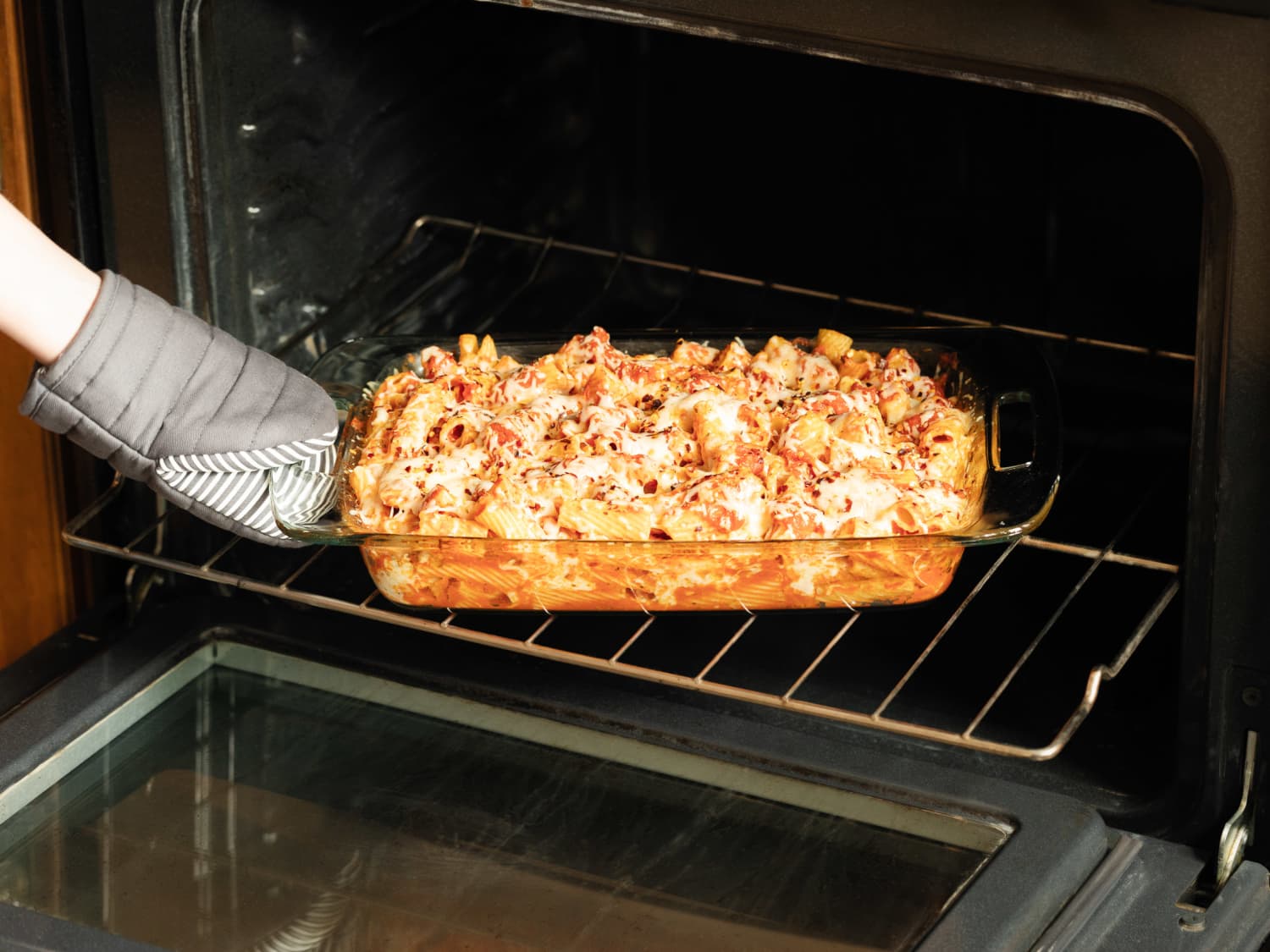
Understanding Thermal Shock
The greatest risk to Pyrex is a phenomenon known as thermal shock. This occurs when glass experiences a rapid and significant change in temperature, causing different parts of the material to expand or contract at different rates.
For example, placing a refrigerator-cold Pyrex dish directly into a preheated 425°F (220°C) oven can create uneven stress throughout the glass. In some situations, this stress may cause the dish to crack or, in rare cases, shatter.
Although Pyrex is engineered to handle everyday cooking conditions, avoiding sudden temperature changes is the best way to protect your cookware.
Is It Safe to Put Cold Pyrex in a Hot Oven?
A Pyrex dish that has just come out of the refrigerator should not be transferred immediately into a very hot oven. Instead, allow the dish to sit at room temperature for a short period before baking.
Another practical option is to place the cold dish into a cool oven and allow both the cookware and the oven to heat gradually together. This reduces the temperature difference and helps minimize stress on the glass.
Taking a few extra minutes before baking can significantly lower the risk of thermal shock.
Moving Pyrex From the Freezer to the Oven
Transferring a frozen Pyrex dish directly into a hot oven presents an even greater temperature difference.
Whether your cookware is made from traditional borosilicate glass or the tempered soda-lime glass used in many modern Pyrex products, no glass is completely resistant to sudden temperature extremes.
Whenever possible, frozen meals should be thawed in the refrigerator before baking. If immediate cooking is necessary, consider transferring the food to another oven-safe baking pan designed for frozen-to-oven use.
Other Situations to Avoid
Thermal shock is not limited to moving cookware between the refrigerator and oven. Several common kitchen habits can also place unnecessary stress on glass bakeware.
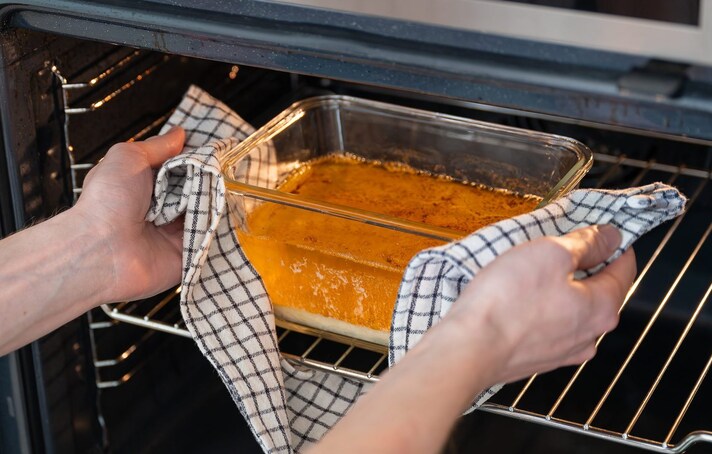
Avoid setting a hot Pyrex dish on a cold countertop, metal sink, or wet surface immediately after removing it from the oven. Likewise, pouring cold water or other chilled liquids into a hot dish can create sudden temperature differences that may weaken the glass.
Using dry potholders or placing hot dishes on wooden cutting boards, cooling racks, or dry towels can help reduce these risks.
:strip_exif():no_upscale():format(webp):quality(65)/1571059501913/Pyrex.png)
Tips for Using Pyrex Safely
Following a few simple practices can help keep your Pyrex cookware in excellent condition for many years.
Allow refrigerated dishes to warm slightly before baking.
Avoid placing frozen Pyrex directly into a hot oven.
Never expose hot glass to cold liquids or wet surfaces.
Inspect dishes regularly for chips, cracks, or deep scratches, as damaged cookware may be more vulnerable to breaking.
Always follow the manufacturer’s care and usage instructions for your specific Pyrex product.
How Long Can Pyrex Last?
With proper care, Pyrex can remain a dependable part of your kitchen for decades. Many families continue using glass bakeware that has been passed down through generations because it has been handled carefully and maintained properly.
Treating Pyrex as durable glass rather than an unbreakable material is the best way to maximize both its performance and longevity.
Conclusion
Pyrex remains one of the most trusted types of glass bakeware because it combines convenience, versatility, and durability. While it is designed for everyday cooking, it performs best when protected from sudden temperature changes that can cause thermal shock. By allowing cold dishes to warm gradually, avoiding freezer-to-oven transfers, and handling hot cookware with care, you can continue using your Pyrex safely for baking, cooking, food storage, and reheating for many years. Small precautions today can help preserve your cookware and make every meal preparation safer.
Sources
-
Pyrex Official Care and Use Guidelines
-
U.S. Consumer Product Safety Commission (CPSC)
-
Corning Museum of Glass
-
American Chemical Society (ACS)