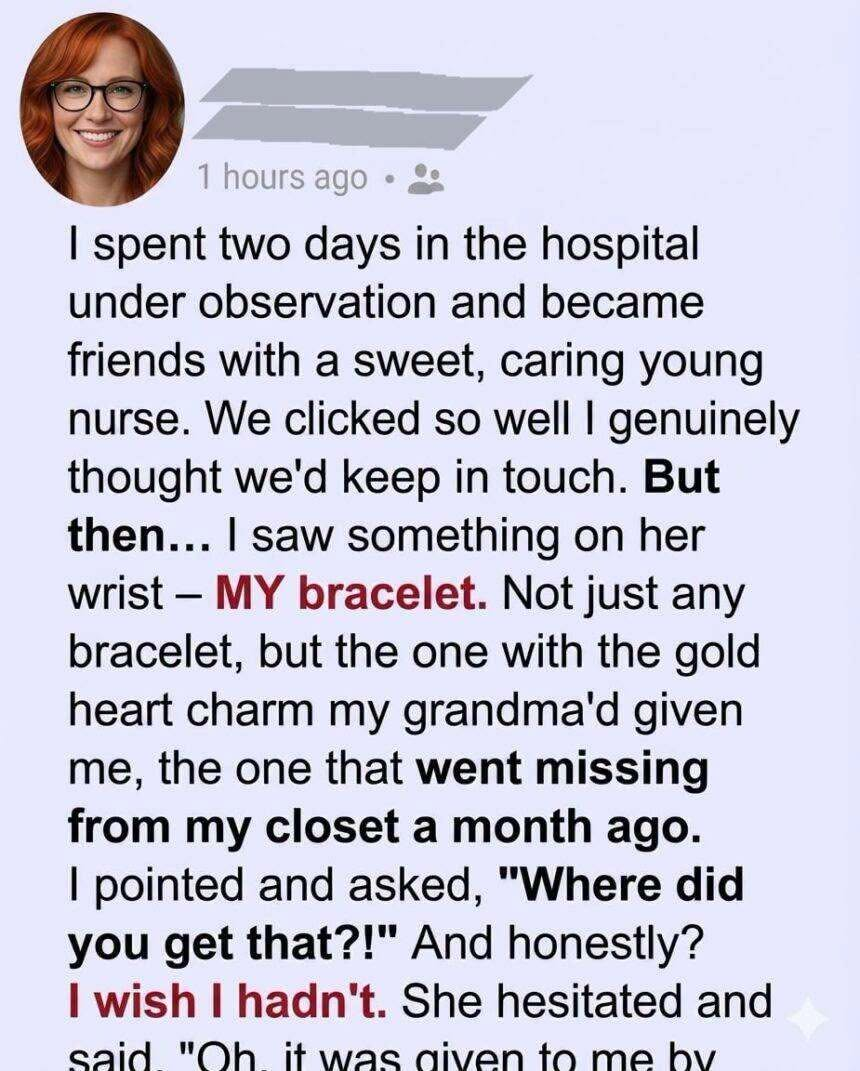
I Noticed My Nurse Wearing Something Very Familiar
Seeing an item that appears familiar in a hospital setting can be unsettling, especially during a period of illness, recovery, or emotional stress. Personal belongings often carry deep meaning: a bracelet may be an heirloom, a wedding ring may represent a relationship, and a photograph may connect a patient to family history. When someone believes an item may be missing or recognizes something that resembles it, the most constructive response is to avoid assumptions, preserve available information, and use the hospital’s established reporting process.
The account suggested by this title involves a patient who recognizes a bracelet and begins to question how it came into another person’s possession. However, an observation alone cannot establish theft, misconduct, or any other explanation. Many jewelry designs are similar, gifts can have complicated histories, and memories may be affected by stress, medication, fatigue, or the unfamiliarity of a clinical environment. A careful, evidence-based approach protects patients, families, and healthcare workers while helping hospitals investigate legitimate concerns fairly.
Why Personal Belongings Can Become a Major Source of Stress in Hospitals
Hospital admission often involves a rapid transition from home to a highly structured care environment. Patients may arrive unexpectedly, be transferred between departments, undergo tests, or need urgent treatment. During these transitions, items such as jewelry, wallets, phones, glasses, dentures, hearing aids, documents, and sentimental keepsakes can be misplaced or stored without the patient fully understanding where they went.
Healthcare organizations generally encourage patients to leave valuables at home when possible. This is not because hospitals dismiss the emotional importance of personal items; rather, valuables can be difficult to track when a patient moves between emergency care, imaging, surgery, intensive care, rehabilitation, or another facility. When belongings are necessary, hospitals may document them, secure them in a designated location, or ask a family member or trusted contact to take them home.
For patients who are worried about an item, the first question should be practical: when and where was it last seen? A clear timeline can be more useful than an immediate accusation. If a bracelet was worn at home but not seen after a transfer, for example, staff may be able to check admission inventories, patient-property records, laundry procedures, security storage, room-cleaning logs, and transfer documentation.
Recognizing an Item Is Not the Same as Proving Ownership
Jewelry and other personal objects can look distinctive while still resembling commonly sold designs. A bracelet with an engraving may offer stronger identifying evidence, but an investigation still requires careful verification. Useful information can include photographs of the item, purchase records, insurance documentation, repair receipts, descriptions of unusual markings, serial numbers, or family photographs showing the owner wearing it.
In a situation involving an engraved object, the wording and placement of the engraving may matter. A clear photograph taken before the item was lost can be especially helpful. Family members may also be able to confirm whether the item has identifiable features, such as a custom clasp, a date, an inscription, or a repair mark. These details allow a hospital security office or local law-enforcement agency, where appropriate, to assess a report without relying solely on memory or appearance.
It is equally important to recognize that a person wearing a similar item may have acquired it legitimately. They may own a comparable piece, have received it as a gift, or have purchased it second-hand without knowing its history. Fair reporting means describing what was observed and what evidence exists, rather than stating conclusions that have not been verified.
How Patients Can Raise Concerns Respectfully and Effectively
A patient who notices a potentially missing belonging should begin by speaking to the charge nurse, unit manager, patient advocate, or hospital patient-relations office. These teams can explain the facility’s process for lost-property reports and help document the concern. If the patient feels uncomfortable speaking directly with a member of the care team, a trusted family member or authorized representative may be able to assist.
When making a report, patients should focus on specific facts. A useful report may include:
- A detailed description of the item, including color, size, material, engraving, and distinguishing marks.
- The date and approximate time the item was last seen.
- Locations where the patient was treated or transferred.
- Names or roles of people present, if known.
- Photographs, receipts, insurance records, or other documentation of ownership.
- A neutral description of what prompted the concern.
Patients should avoid confronting another person in a manner that could disrupt care or create an unsafe situation. Hospitals are responsible for maintaining a respectful workplace and protecting the dignity of both patients and staff. A report can be serious without becoming hostile. Asking for an investigation is appropriate; publicly accusing someone before facts are established can cause harm and may make a difficult situation more complicated.
The Role of Patient Advocates and Hospital Administration
Many hospitals have patient-relations departments, ombuds services, or patient advocates who help address concerns about communication, care experiences, billing, privacy, and personal property. The exact title varies by institution, but the purpose is similar: to give patients and families a point of contact when they need support navigating a concern.
A patient advocate may help clarify what happened during admission, identify the appropriate manager, request a review of property records, and explain what information the hospital can share. In some cases, the hospital may conduct an internal inquiry involving security, risk management, nursing leadership, or other departments. The process should be confidential and should not interfere with necessary medical care.
If a patient believes the concern has not been addressed, they can ask for the next step in the facility’s complaint process. In the United States, patients may also contact relevant state licensing agencies or health departments depending on the nature of the issue. For complaints involving privacy or health-information rights, the U.S. Department of Health and Human Services Office for Civil Rights provides information about filing a complaint.
Protecting Privacy While Seeking Answers
Concerns involving healthcare workers can quickly involve sensitive personal information. A patient may want to know details about an employee, but hospitals are generally limited in what they can disclose about personnel matters. Likewise, staff members have privacy rights during any workplace review. A hospital may confirm that a concern has been received and investigated without sharing confidential employment information.
This can feel frustrating for a patient or family member seeking closure. Still, confidentiality helps ensure that an investigation is fair and that personal information is handled responsibly. The best course is to ask the hospital what it can share, request written confirmation that the report was logged, and keep copies of any documents or correspondence related to the missing item.
Practical Steps to Prevent Lost Valuables During Care
Preparation can reduce the risk of confusion around personal property. Before a planned hospital visit, patients should consider leaving jewelry, cash, important documents, and other valuables at home. If an item must be brought to the hospital, a family member may be able to keep it until discharge. Patients can also ask whether the facility has a safe or documented storage process.
Creating a simple inventory is another helpful step. A written list or phone photograph of items brought to the hospital can make later questions easier to resolve. Patients who wear medical-alert jewelry, glasses, hearing aids, dentures, or mobility aids should tell staff that these items are present and ask how they will be handled during procedures or transfers.
Family members can play an important role by checking whether the patient has essential belongings after a room change or discharge. They should also understand that medical needs take priority during emergencies. It may take time for staff to locate property records or search secure storage areas, particularly in large hospitals with many departments.
Communication, Trust, and Fairness in Healthcare Settings
Trust is essential to effective healthcare. Patients need to feel safe enough to ask questions, share symptoms, and raise concerns. At the same time, healthcare professionals deserve a workplace where concerns are evaluated through evidence and established procedures. A balanced approach supports both goals.
When an item seems familiar, emotions may understandably run high. A meaningful family possession can represent loss, memory, identity, or a connection to someone who has died. A calm reporting process does not minimize those emotions. Instead, it gives patients the best chance of receiving a clear response while reducing the possibility of misunderstanding.
Hospitals can strengthen trust by clearly explaining their policies for valuables, providing accessible complaint channels, documenting patient property when needed, and communicating respectfully throughout the review process. Patients and families can support that process by keeping records, sharing evidence, and allowing investigators to examine the facts before reaching conclusions.
What to Do if a Concern Remains Unresolved
If a valuable item cannot be found, patients should request a written summary of the hospital’s response and retain copies of their own documentation. Depending on the circumstances and local law, an individual may choose to report a missing item to law enforcement or seek advice from an insurance provider. These steps should be based on the available evidence and the guidance of appropriate authorities.
For many people, the most important outcome is not only the recovery of an item but also the reassurance that their concern was heard. Respectful communication, clear records, and an impartial review can help create that reassurance. In healthcare, where people are often at their most vulnerable, thoughtful procedures for handling personal belongings are an important part of patient-centered care.
Sources
- Centers for Medicare & Medicaid Services: Hospital Conditions of Participation
- U.S. Department of Health and Human Services: Filing a HIPAA Complaint
- The Joint Commission: Speak Up Patient Safety Resources
- Agency for Healthcare Research and Quality: Communication in Healthcare
- Mayo Clinic: Understanding Patient Advocacy
Disclaimer: This content is intended for entertainment purposes only and is not based on real events.