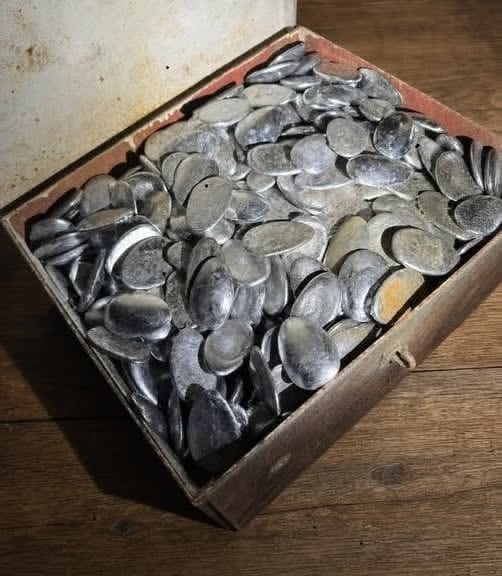
An old cast-iron object found in an attic can appear unremarkable at first glance. In this case, the reported item was described as spoon-shaped and associated with a specialized form of historic casting equipment. That description connects a small household discovery with a much broader story: the practical skills once used by families to maintain tools and prepare essential supplies close to home.
Although the object has been described as a bullet mold, the available account does not include a photograph, a manufacturer’s stamp, measurements, a place of origin, or a clear explanation of its moving parts. Those missing details matter. They mean the identification cannot be independently confirmed from the description alone, and they also limit what can responsibly be said about its age, ownership, rarity, or former use.
Still, the reported find offers a useful opportunity to examine the history of domestic craftsmanship. Before standardized, factory-made goods were easily available in every community, households often repaired, adapted, and sometimes produced practical items themselves. In rural areas especially, equipment connected to hunting, fishing, farming, transport, and household maintenance could be part of everyday work rather than a specialized hobby.
The object’s historical value may therefore lie less in a claim about one family’s past and more in what it suggests about a wider tradition of self-reliance. A modest iron tool can preserve evidence of knowledge that was once ordinary: knowing which tool suited a particular task, how to maintain it, and how to fit it into a household’s routines.
A Spoon-Shaped Object With a Reported Specialized Purpose
The spoon-like form is central to the object’s appeal. Modern viewers may naturally compare it to kitchenware, but older tools frequently used familiar shapes for very different purposes. Handles, shallow bowls, hinges, and cavities were practical design features found across many forms of metalworking equipment. Without a close inspection, an object can be mistaken for something more familiar—or assigned a purpose based only on a general resemblance.
Historic casting tools were made in many forms. Some were compact hand tools, while others were more elaborate devices intended for repeated work. Materials also varied. Iron, brass, steel, and other durable metals were commonly used for equipment that needed to withstand regular handling. A cast-iron object could be associated with many household, agricultural, industrial, or recreational activities, so material alone does not settle identification.
If the attic item is indeed related to casting, it may reflect a time when people used specialized implements to create or maintain supplies needed for outdoor work. Hunting and fishing were significant sources of food, income, and recreation in many regions, and they depended on equipment that had to be acquired, repaired, or replaced. Yet a general connection to such activities does not prove exactly what this individual object made.
Careful language is especially important when describing older artifacts. Calling an item “possibly associated with historic casting” may be more accurate than presenting an unverified identification as certain. Museum curators, historical societies, and professional appraisers typically look for physical evidence, including maker’s marks, construction methods, dimensions, hinge arrangements, cavities, wear patterns, and comparisons with documented examples.
Homemade Supplies and Everyday Self-Sufficiency
In the nineteenth and early twentieth centuries, household self-sufficiency was often a practical necessity rather than an idealized lifestyle choice. Distance from stores, limited cash income, inconsistent transportation, and seasonal work could all encourage people to make repairs and prepare supplies themselves. Families did not necessarily produce everything they needed, but many households relied on a blend of purchased goods, locally made items, reused materials, and hand-me-down tools.
For people living near rivers, lakes, forests, farms, or frontier settlements, hunting and fishing could supplement food supplies. These activities required planning and suitable equipment. In some communities, knowledge about maintaining gear moved through families, neighbors, tradespeople, and local stores. The skill was not limited to one social group; it could be part of the practical knowledge shared across a community.
This wider setting helps explain why a small tool can carry historical interest. It represents more than a piece of metal. It may point to systems of work that joined household labor, local resources, seasonal food gathering, and repair culture. Objects like this can remind modern audiences that many necessities were once supported by skills now less visible in daily life.
At the same time, historical self-sufficiency should not be romanticized. Producing or maintaining supplies required time, suitable materials, and learned experience. It could also involve health and safety concerns that are better understood today. Lead, for example, is a toxic substance, and public-health authorities stress that there is no known safe level of lead exposure. Historic objects associated with lead should therefore be handled cautiously and kept away from children.
Why Accurate Identification Matters for Antique Tools
An attic discovery often arrives without the context that makes an object easy to understand. The tool may have been separated from related equipment decades earlier. Its box, instructions, packaging, or associated accessories may have been discarded. Family members who knew its purpose may no longer be available to explain it. As a result, even a genuine historic item can become difficult to identify with certainty.
The difference between identifying a category of object and documenting a particular example is important. A historian may be able to say that a tool resembles a known type of casting implement. That does not establish who owned it, when it was purchased, how often it was used, or whether it served its originally intended purpose. Those claims require evidence connected directly to the individual item.
Attic storage also does not reliably date an object. An item may have been placed there shortly after it was made, inherited years later, or stored long after it stopped being useful. Likewise, surface rust or wear does not automatically indicate great age. Condition reflects many factors, including storage conditions, cleaning, handling, and the quality of the original metal.
For a responsible assessment, owners can document an artifact before cleaning or altering it. Clear photographs of all sides, close images of marks or numbers, measurements, and notes about where it was found can be useful. Local historical societies, museum staff, and reputable antique-tool specialists may be able to compare it with catalogues or documented collections. This type of research protects both the object and the accuracy of its story.
Hunting, Fishing, and the History of Practical Equipment
Hunting and fishing have long been connected to foodways, local economies, and cultural traditions in many parts of the world. Their historical importance varied by region and period. For some families, they provided a supplement to farm produce or wages; for others, they were primarily recreational pursuits. In either context, equipment mattered, and access to that equipment shaped what people could do.
Tools associated with fishing weights, tackle repair, or other forms of metalwork belong to this broader history of resourcefulness. They can show how people adapted available materials to recurring needs. Such objects also reflect changing patterns of trade. As manufacturing expanded and distribution networks improved, ready-made products became more widely available. Older home-based practices did not vanish overnight, but factory production changed what households could conveniently buy.
The transition toward mass-produced goods was uneven. Urban consumers often had easier access to commercial stores than people living in remote areas. Regional industries, railways, mail-order catalogues, and later automobile travel all helped move products more widely. By the twentieth century, many standardized supplies that had once required local skill or personal maintenance could be purchased more readily.
An attic find may sit at the intersection of these changes. It can recall an era in which household tools were retained because they remained useful, even as new commercial options became available. It may also have been preserved simply because older generations were reluctant to discard durable objects. In this sense, the tool is part of a larger material history: the long shift from repair, reuse, and local making toward greater dependence on manufactured consumer goods.
Traditional Craftsmanship Included Knowledge, Not Just Tools
A specialized tool is only useful when its owner understands its purpose. This is one reason old objects can become mysterious. The physical item may survive, but the knowledge that once made it familiar can disappear. A handle, hinge, cavity, or unusual contour may have been immediately recognizable to a past user but ambiguous to someone who encounters it generations later.
Traditional craftsmanship was often learned through observation and repetition. People gained experience by working alongside relatives, neighbors, shopkeepers, or tradespeople. Much of that knowledge was informal. It may never have been written down in manuals, catalogues, or family records. When the activity ended, the tool could remain while the explanation for it faded.
This is why artifact research benefits from more than visual comparison. Oral history can be valuable when it is available, particularly if relatives remember a workshop, a fishing practice, a hunting camp, or a particular family member who maintained equipment. Census records, property documents, old photographs, local newspapers, and store catalogues can sometimes add context. Even then, researchers should distinguish between documented facts and family tradition.
The strongest historical interpretations are often modest ones. It is reasonable to say that an object may reflect a period of practical household craftsmanship when supported by its design and comparable examples. It is less responsible to invent a detailed personal narrative without evidence. Uncertainty is not a weakness in historical research; it is an honest acknowledgment of what survives and what does not.
From Working Tool to Collectible Artifact
Many old tools eventually become collectibles because they offer a tangible link to past work. Collectors may value their design, mechanical ingenuity, manufacturer history, regional associations, or evidence of long use. Museums and historical organizations also preserve ordinary working objects because they help interpret the daily lives of people who may not appear prominently in written records.
However, old does not automatically mean rare, and unusual does not automatically mean valuable. Monetary value depends on authentication, condition, manufacturer, completeness, demand, provenance, and market conditions. The account of this cast-iron find provides no appraisal or evidence of scarcity, so no financial conclusion should be drawn from its reported description.
Historical value can exist independently of price. An ordinary item may be important to a family because it belonged to a relative, was made locally, or reflects a vanished way of life. It may also be useful to researchers as an example of a tool type that helps explain domestic labor, regional industries, or patterns of consumption.
If owners choose to preserve an object, they should avoid aggressive cleaning that could remove marks, original surfaces, or evidence of use. For potentially lead-contaminated artifacts, sensible precautions include washing hands after handling, storing the object securely, and seeking advice from a qualified conservator or local museum before undertaking restoration. Public-health guidance is particularly important in homes with children or pregnant people.
An Attic Find That Still Raises Questions
The reported cast-iron object remains interesting precisely because important questions are unresolved. Its spoon-like appearance and suggested connection to historic casting offer a plausible starting point, but the individual item’s complete story has not been established. There is no confirmed maker, date, owner, or record of what it was used to produce.
Those limitations should not diminish the discovery. Instead, they frame it as an invitation to investigate carefully. Old tools can reveal how previous generations approached practical needs with available materials, local knowledge, and durable equipment. They can also remind us that everyday work leaves traces in objects even when written records are absent.
Ultimately, the attic find’s most meaningful connection is to a broad history of household resourcefulness. Whether it proves to be a casting tool or another specialized implement, it demonstrates why context matters. A small piece of iron may contain clues about craftsmanship, changing consumer habits, and the skills that once helped households meet ordinary needs.
Sources
Disclaimer: This content is intended for entertainment purposes only and is not based on real events.