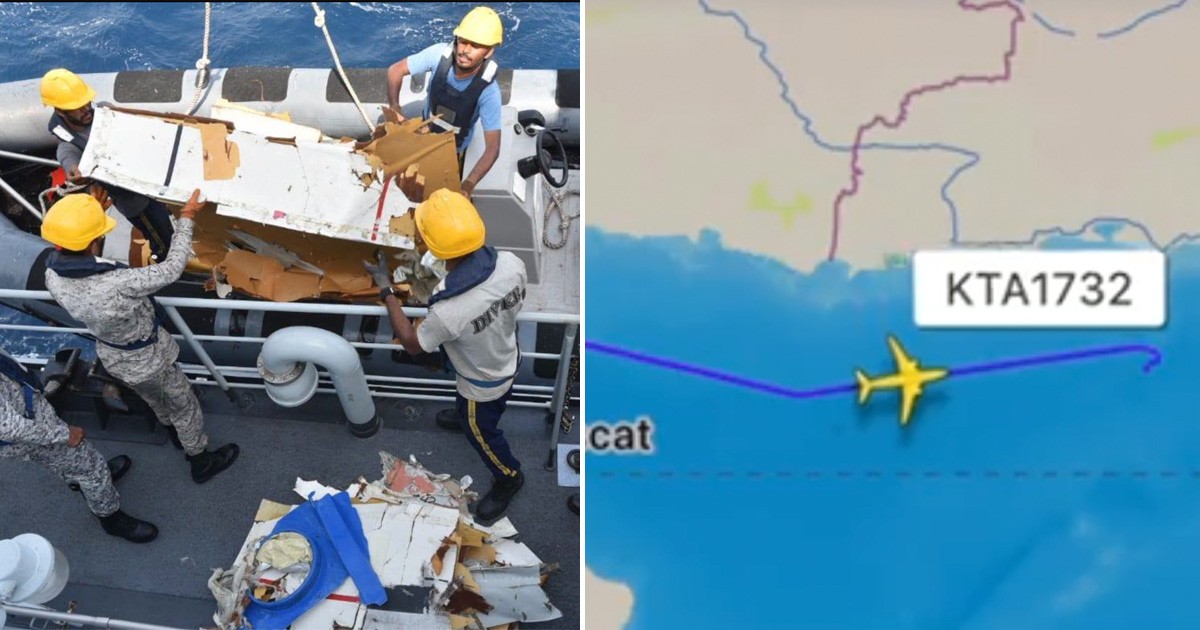
A routine cargo flight from the United Arab Emirates to Pakistan turned into a major aviation mystery after a K2 Airways Boeing 737 lost contact with air traffic controllers and disappeared from radar over the Arabian Sea.
The aircraft, which was carrying five crew members, had been traveling from Sharjah toward Karachi when the crew reportedly reported a problem with the aircraft’s navigation system.
What happened next remains unclear.
Flight-tracking data appeared to show the aircraft changing altitude before a sudden descent. Search teams later located sections of the aircraft in the sea, while officials continued efforts to determine exactly what happened during the flight’s final minutes.
The incident has raised questions about the aircraft’s final movements, the reported technical issue, and what may have caused the sudden loss of altitude.
K2 Airways Flight Loses Contact With Air Traffic Control

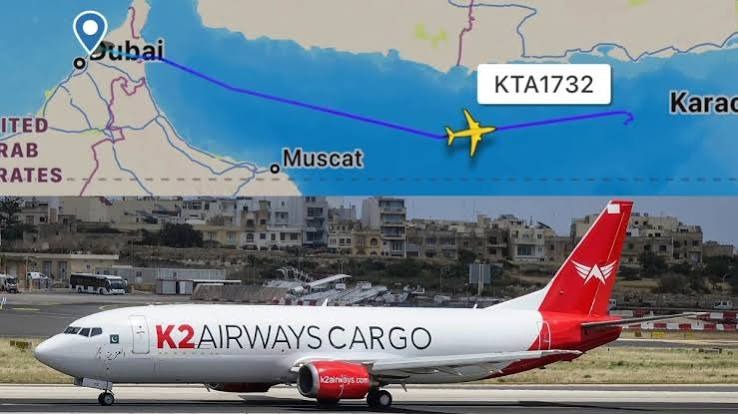
According to information released by Pakistan’s Airports Authority, the Boeing 737-400 had departed from Sharjah in the United Arab Emirates and was traveling toward Karachi.
The aircraft was operating as a cargo flight with five people aboard.
During the journey, the crew reported a problem involving the aircraft’s navigation system.
Pakistan’s Airports Authority said the flight had reported a “Navigational system issue” and was guided by Karachi Area Control Center.
The problem was reported shortly before the aircraft disappeared from radar.
K2 Airways later confirmed that its Boeing 737-400, registered as AP-BOI, had lost contact with air traffic control at approximately 9:21 p.m. Pakistan time.
The airline said search-and-rescue operations had been launched and that it was cooperating with the relevant aviation and government authorities.
The five crew members aboard the aircraft were identified as:
-
Mohammad Rizwan Idrees, pilot in command
-
Faisal Mehmood, first officer
-
Muhammad Toufique Khan, load master
-
Arif Siddiqui, engineer
-
Mohammad Hamid, engineer
At the time of the initial reports, the crew members remained missing.
Search Teams Find Wreckage in the Arabian Sea
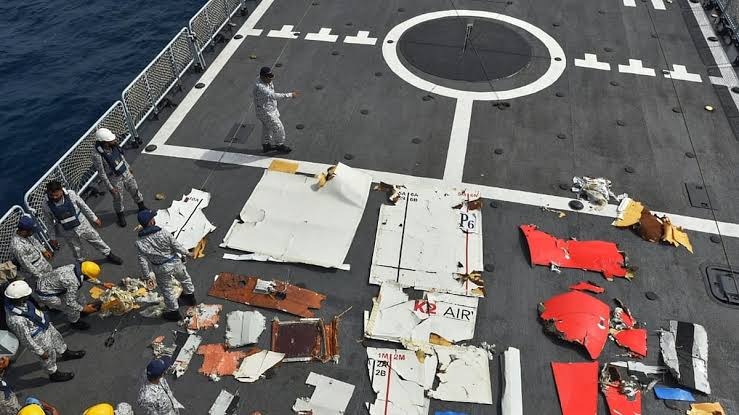
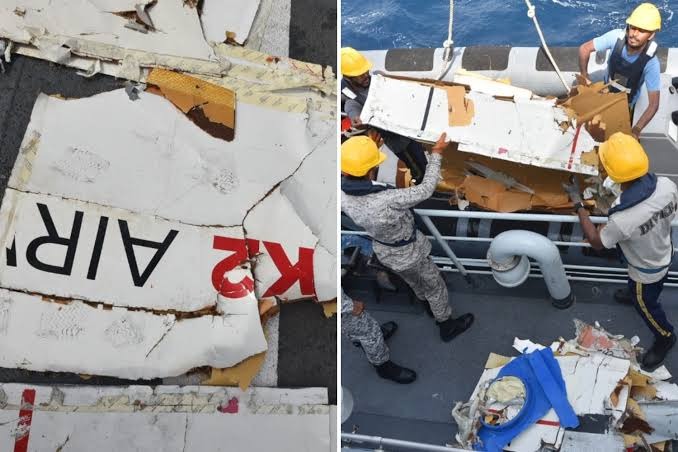
Once contact with the aircraft was lost, authorities began searching an area south of Pakistan’s coastline.
After approximately 12 hours of search operations, wreckage was reportedly discovered around 53 nautical miles south of Ormara.
Large sections of the aircraft were recovered from the water.
However, officials indicated that the main wreckage had not yet been located.
The discovery provided investigators with important evidence, but it did not immediately answer the central question: why did the aircraft lose altitude so rapidly after reporting a navigation problem?
Finding wreckage at sea can be especially challenging for investigators because debris may be spread over a large area by currents, weather and the aircraft’s movement before impact.
Until investigators recover and examine the main wreckage, flight data and other evidence, many aspects of the incident remain uncertain.
What Flight-Tracking Data Appears to Show
One of the most closely watched aspects of the incident has been the aircraft’s final recorded flight path.
Early ADS-B tracking information shared by FlightRadar24 appeared to show several changes in altitude before the aircraft disappeared.
According to reports, the aircraft initially descended before regaining altitude.
It then appeared to experience another, much more significant descent.
A playback of the available tracking data appeared to show the aircraft’s final recorded movements before contact was lost.
Such data can provide investigators and aviation observers with valuable clues.
However, flight-tracking information alone cannot establish why an aircraft changed altitude or what was happening inside the cockpit.
Altitude changes can result from many different circumstances, including instructions from air traffic control, weather, technical problems, operational decisions or other factors.
That is why aviation experts generally caution against drawing conclusions from a flight-tracking graphic before investigators have access to more comprehensive information.
Experts Warn Against Jumping to Conclusions
The unusual flight path naturally attracted attention from aviation enthusiasts and members of the public.
However, experts stressed that the available information was still limited.
Aerospace safety consultant Anthony Brickhouse told The Guardian that unusual flight-tracking information can attract attention, but warned that it was too early to determine what the movements meant without additional evidence.
That distinction is important.
An aircraft’s recorded position and altitude can show investigators what happened externally, but it does not necessarily explain the mechanical, operational or human factors behind those changes.
Investigators may eventually need to examine several different sources of evidence, including flight-data recordings, maintenance records, air traffic control communications, weather conditions and recovered aircraft components.
The Navigation System Problem
The reported navigation issue has become one of the key details surrounding the incident.
Modern commercial aircraft rely on multiple systems to determine their position and navigate safely.
A problem with one navigation system does not automatically mean an aircraft is in immediate danger. Commercial aircraft are designed with multiple systems and procedures intended to help crews deal with individual equipment failures.
The significance of the reported issue therefore cannot be determined without knowing exactly which system was affected and whether other systems remained available.
It is also possible that the navigation problem was unrelated to the subsequent loss of altitude.
That is something investigators would need to establish rather than assume.
Aviation accidents are rarely explained by one piece of information alone. Investigators typically examine a chain of events and determine how different factors may have interacted.
Why the Sudden Descent Has Raised Questions
The apparent rapid loss of altitude has attracted particular attention because aircraft are normally capable of maintaining controlled flight even after many individual system failures.
In an emergency, pilots may change altitude for a variety of reasons.
They may descend because of a technical problem, weather conditions, cabin issues, communication problems or a need to reach a safer altitude.
The aircraft’s final movements therefore cannot be interpreted without knowing what instructions the crew received, what systems were functioning and what decisions were being made in the cockpit.
Aviation expert Imran Aslam reportedly questioned why the aircraft appeared to descend so abruptly rather than maintaining a more gradual flight path.
But even that observation does not establish the cause.
A sudden change in altitude can have numerous possible explanations, and investigators will need physical and electronic evidence before determining which explanation fits the available facts.
What Investigators Will Look For
Once an aircraft accident occurs, investigators generally work through several categories of evidence.
One of the most important is flight data.
If recoverable flight-recording equipment is available, investigators can examine information about altitude, speed, heading, engine performance and other aircraft parameters.
Cockpit voice recordings, when available, can also provide information about conversations between crew members and communications with air traffic control.
Maintenance records can reveal whether the aircraft had previously experienced technical issues.
Investigators may also examine the aircraft’s history, recent inspections and any repairs or modifications.
Weather conditions are another important factor.
Wind, visibility, thunderstorms and other atmospheric conditions can influence an aircraft’s operation.
Finally, recovered wreckage can provide physical evidence about what happened.
Damage patterns, component failures and the condition of important systems can help investigators reconstruct the aircraft’s final moments.
Who Were the Five Crew Members?
The K2 Airways flight was reportedly operated by five crew members.
The flight crew included pilot in command Mohammad Rizwan Idrees and first officer Faisal Mehmood.
Three additional crew members were listed: load master Muhammad Toufique Khan and engineers Arif Siddiqui and Mohammad Hamid.
Their names were released as search operations continued.
At the time of the reports, authorities had not confirmed the fate of the five people aboard.
The incident therefore became not only an aviation investigation but also a deeply personal tragedy for the families, friends and colleagues waiting for information.
K2 Airways said it continued to hope for the safety of its crew members while search operations were underway.
The Boeing 737-400 Behind the Flight
The aircraft involved was identified as a Boeing 737-400.
The 737-400 belongs to the earlier generation of Boeing’s highly successful 737 family.
The type has been operated around the world by passenger and cargo carriers.
Many older passenger aircraft have also been converted for freight operations after being retired from commercial passenger service.
Aviation safety, however, cannot be judged simply by the age of an individual aircraft.
Aircraft are subject to maintenance programs, inspections and regulatory requirements throughout their operational lives.
For investigators, the more important questions will be the specific aircraft’s maintenance history, operating condition and the circumstances surrounding the reported navigation problem.
Why FlightRadar Data Can Be Misleading
The flight-tracking information circulating online provides an intriguing visual representation of the aircraft’s final movements.
But it is important to understand what such data can and cannot show.
ADS-B information is primarily designed to transmit an aircraft’s position and other flight information.
It does not provide investigators with a direct view into the cockpit.
It cannot reveal exactly what the pilots were experiencing or why they made a particular decision.
Tracking data can also contain gaps, inaccuracies or unusual readings, particularly when an aircraft is flying over remote areas or when signals are interrupted.
For that reason, a dramatic-looking flight path should be treated as preliminary evidence rather than a definitive reconstruction.
Investigators will ultimately rely on multiple independent sources before reaching conclusions.
What Could Have Happened?
At this stage, it would be premature to identify a specific cause.
The reported navigation problem is one known factor, but its relationship to the subsequent loss of altitude remains unclear.
Several broad possibilities could eventually be considered by investigators, including an equipment malfunction, a combination of technical problems, an operational issue, weather-related factors or another circumstance that has not yet been identified.
There is also the possibility that the initial navigation problem and the aircraft’s later descent were separate events.
Without access to the aircraft’s complete data and physical evidence, any specific explanation would remain speculation.
That is why aviation investigations can take considerable time.
Investigators are not simply looking for a single answer. They are attempting to reconstruct a sequence of events and determine why the aircraft behaved as it did.
The Importance of the Main Wreckage
The recovery of additional wreckage could be critical to understanding the incident.
Aircraft components may contain evidence about the condition of engines, flight-control systems, navigation equipment and other important systems.
If flight recorders are recovered, they could provide investigators with an even clearer picture of what occurred.
The location of the main wreckage may also help investigators determine the aircraft’s trajectory immediately before the accident.
Until more evidence is recovered, however, the available information remains incomplete.
A Tragic Reminder of the Importance of Aviation Investigation
The disappearance of the K2 Airways Boeing 737 has drawn considerable attention because of the unusual circumstances surrounding the flight.
The aircraft reportedly experienced a navigation problem, changed altitude and then lost contact with air traffic control.
Search teams subsequently found wreckage in the Arabian Sea.
Yet many of the most important questions remain unanswered.
What exactly happened inside the aircraft?
Was the navigation problem connected to the loss of altitude?
Why did the aircraft descend so rapidly?
And could additional evidence reveal a completely different sequence of events?
Those questions can only be answered through a careful investigation.
For now, the most responsible approach is to distinguish between confirmed information and preliminary tracking data.
The available evidence shows that the aircraft encountered difficulties before contact was lost and that wreckage was later found at sea. It does not, by itself, establish the precise cause of the accident.
As investigators examine the aircraft, its records and the available flight data, more information may eventually emerge.
For the families and colleagues of the five crew members, however, the most important issue remains far more personal than the technical questions surrounding the flight.
They are waiting for answers about the people who were aboard.
And until investigators complete their work, the final chapter of K2 Airways’ ill-fated flight remains unwritten.