A Split-Second Decision That Visitors Never Forgot
A routine family visit to the zoo became an unforgettable moment when one visitor made a decision that few people would have considered.
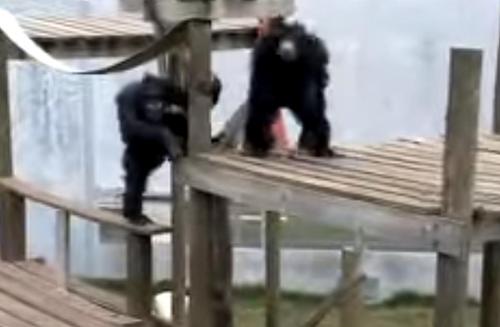
During a trip to the Detroit Zoo, truck driver Rick Swope and his family were watching the chimpanzee exhibit like dozens of other guests. Children gathered near the viewing area, parents snapped photos, and the chimpanzees explored their habitat.
Then, in an instant, the atmosphere changed.
One of the chimpanzees found itself in serious difficulty after ending up in the exhibit’s moat. As visitors watched the situation unfold, Swope reacted without hesitation, choosing to help despite the obvious risks.
More than three decades later, his actions continue to be remembered as an extraordinary example of courage and compassion.
An Unexpected Incident at the Chimpanzee Exhibit
According to reports from the time, two chimpanzees were interacting energetically near the water surrounding the enclosure.
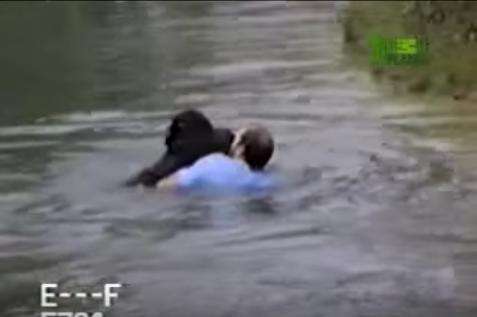
One of them, a younger chimpanzee named Jo-Jo, attempted to move away from the other animal. During the commotion, Jo-Jo slipped into the moat that surrounded the exhibit.
Although chimpanzees are exceptionally strong climbers and spend much of their time in trees, they are not naturally adapted to swimming. Once in deep water, the young chimp struggled to stay above the surface.
Visitors quickly realized the animal appeared unable to return to land on its own.
A Visitor Steps Forward
Among those watching was Rick Swope, a truck driver visiting the zoo with his wife and children.
Witnesses later recalled that many people hoped zoo staff would be able to resolve the situation. However, as the incident continued, Swope believed immediate action was necessary.
Despite being warned about the danger of entering the enclosure, he climbed over the protective barrier and entered the moat.
It was a decision that placed him in significant personal danger. Adult chimpanzees are incredibly powerful animals, and entering their habitat is generally considered extremely hazardous.
Nevertheless, Swope focused entirely on reaching Jo-Jo.
Pulling Jo-Jo to Safety
After entering the water, Swope carefully made his way toward the struggling chimpanzee.
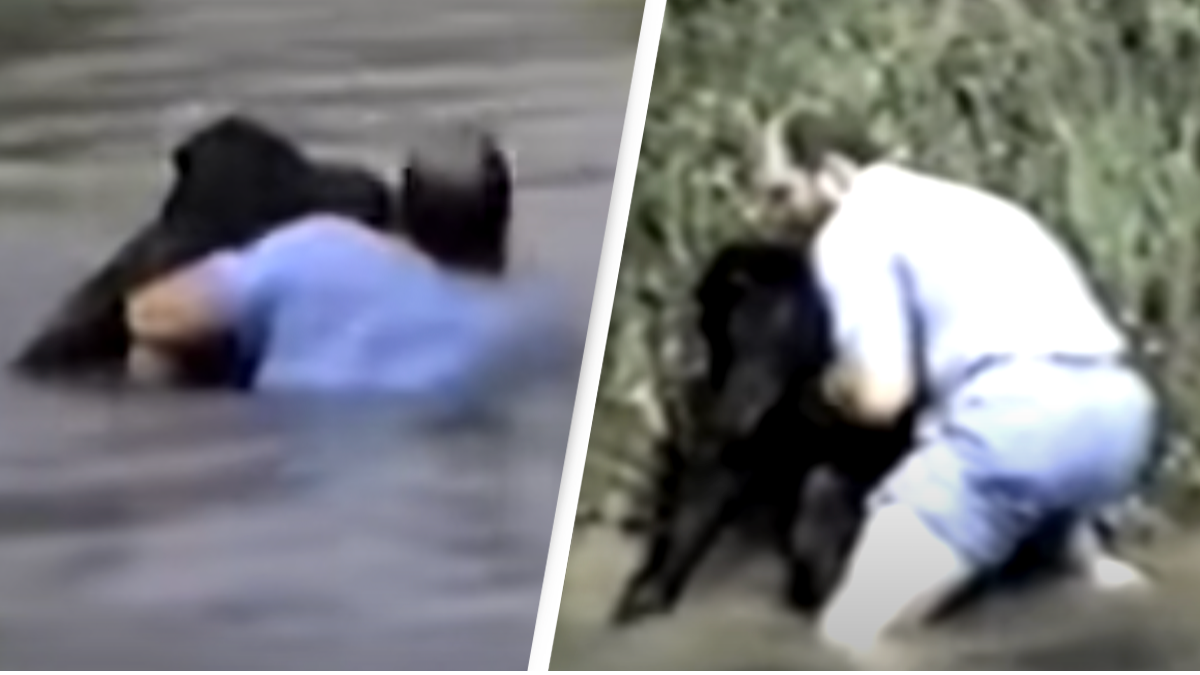
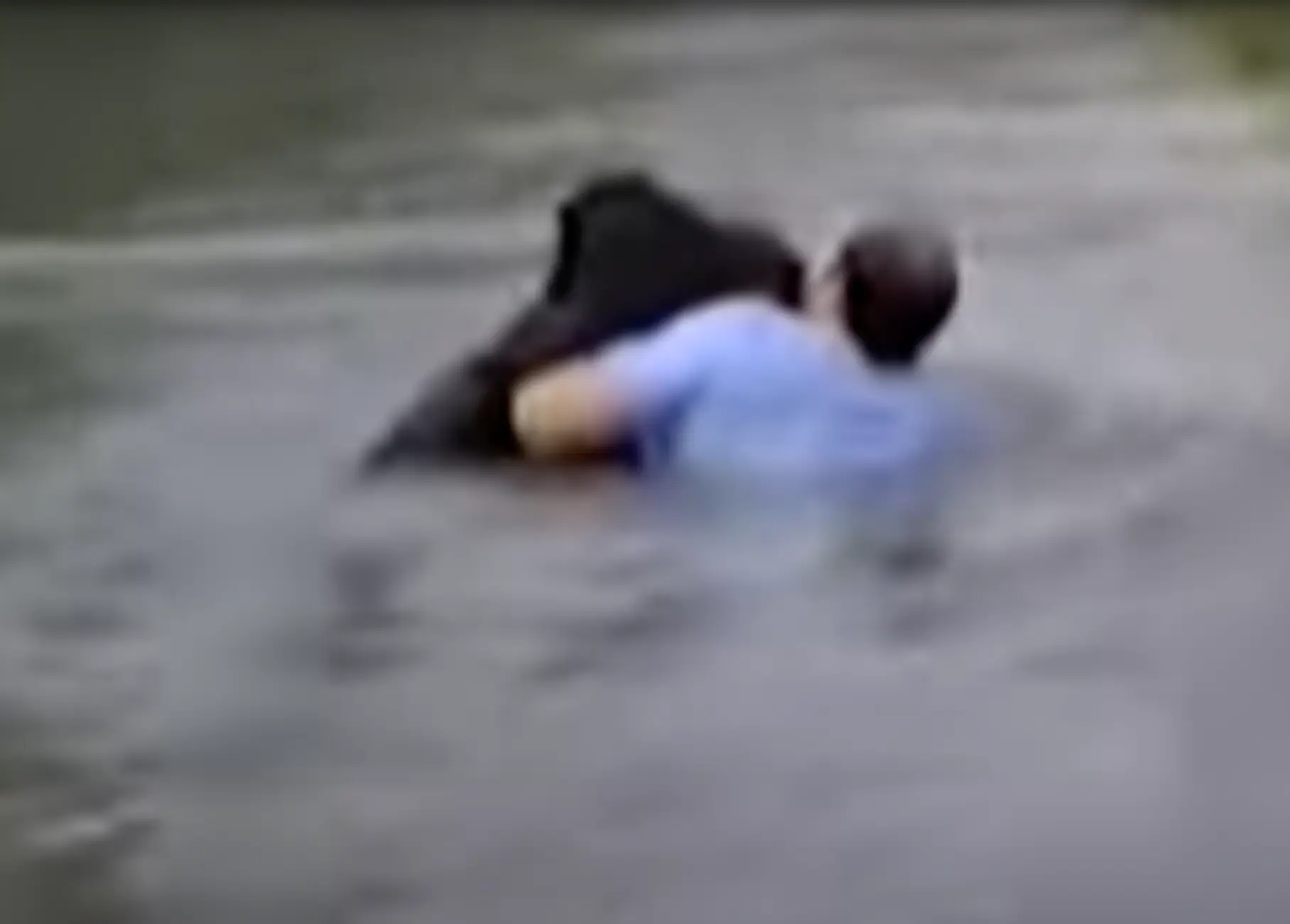
Using one arm to support himself while keeping the other around Jo-Jo, he slowly guided the animal toward the edge of the moat.
The rescue required both strength and balance as he worked to avoid losing his footing while supporting the frightened chimpanzee.
Eventually, he reached the side, allowing Jo-Jo to climb out safely.
The rescue lasted only a short time, but for those watching, it felt much longer.
A Tense Moment Before Leaving
The rescue was not completely over once Jo-Jo reached land.
As Swope prepared to leave the enclosure, another chimpanzee reportedly approached from nearby.
Fortunately, Swope was able to exit the exhibit without injury.
Neither he nor the rescued chimpanzee was seriously harmed during the incident.
Zoo Officials Respond
The rescue quickly attracted national attention.
Detroit Zoo officials acknowledged the extraordinary risks involved in Swope’s decision while also expressing appreciation that both the visitor and the animal escaped without serious injury.
According to contemporary newspaper reports, zoo director William Conway described Swope as a modest individual who seemed uncomfortable with the public attention his actions received.
Rather than portraying himself as a hero, Swope reportedly said he simply reacted to the situation unfolding in front of him.
Why Zoo Moats Exist
Many older zoo exhibits used water-filled moats instead of visible fencing to separate visitors from animals.
The design allowed guests to enjoy a more natural view while still maintaining a physical barrier.
Modern zoo design has gradually evolved, with many facilities introducing habitats that improve both animal welfare and safety while reducing situations where animals might accidentally enter deep water.
Today’s zoological parks also employ trained animal care teams and emergency response procedures designed to address unexpected situations as safely as possible.
Why the Story Still Resonates
Stories like Rick Swope’s continue to attract attention because they highlight the strong connection many people feel toward animals.
While wildlife experts consistently advise against entering animal enclosures due to the significant risks involved, this particular incident is remembered because it involved an extraordinary set of circumstances and ended without further harm.
For many readers, the story represents quick thinking, compassion, and a willingness to help another living creature during an unexpected emergency.
It also serves as a reminder of the importance of professional safety protocols in zoos, where trained staff are responsible for protecting both animals and visitors whenever emergencies arise.
A Lasting Example of Compassion
Decades after the rescue, Rick Swope’s actions are still discussed as one of the most remarkable moments in Detroit Zoo history.
Although few people would ever face a similar situation, his story continues to inspire conversations about empathy, courage, and the instinct to help when another life appears to be in danger.
Sometimes the moments people remember most are not carefully planned acts of heroism but ordinary individuals making difficult decisions in extraordinary circumstances.
Sources
-
Chicago Tribune archives
-
Detroit Zoo historical reports
-
Association of Zoos & Aquariums (AZA)