Fake Rotten Teeth: One Woman’s Club Tactic Sparks Global Conversation on Nightlife Safety and Gender Dynamics
Nightlife is often associated with enjoyment and relaxation, yet for many women, a night out can be marked by unwanted advances and the necessity to navigate uncomfortable interactions. Increasingly, women are turning to unconventional methods—sometimes playful, other times simply pragmatic—to ensure their right to personal boundaries is respected in public spaces such as clubs and bars. One such case, recently highlighted by a viral social media video, features a Vietnamese SFX makeup artist whose creative but unorthodox solution has ignited a much broader debate about safety, gender norms, and expectations in club culture.
An Unusual Solution to a Common Problem
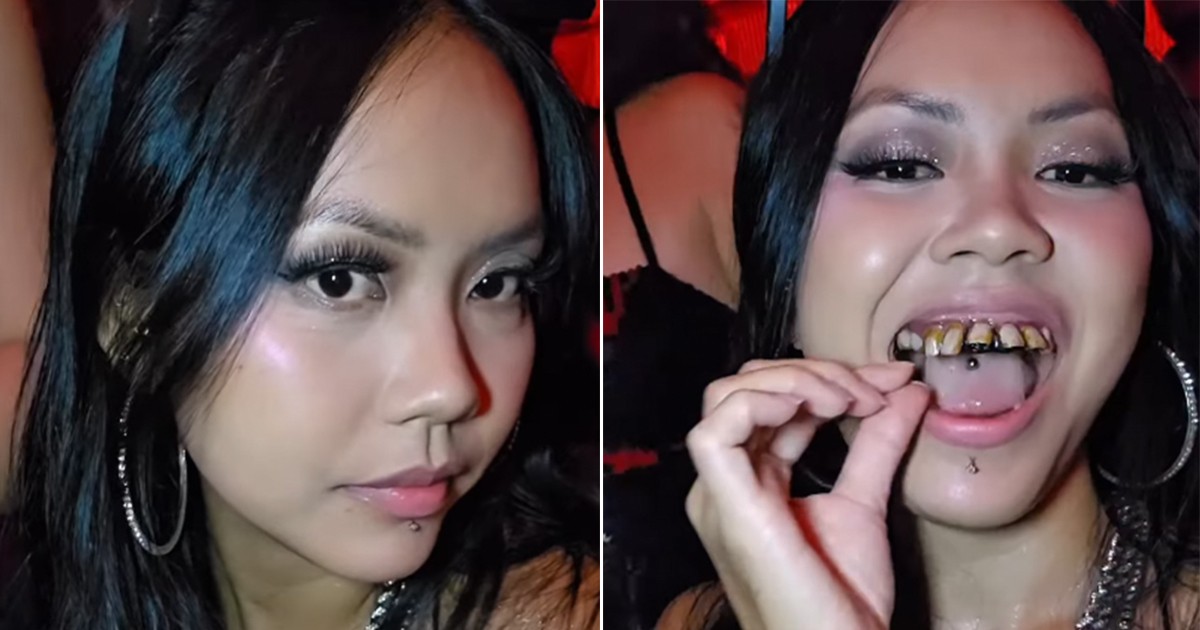
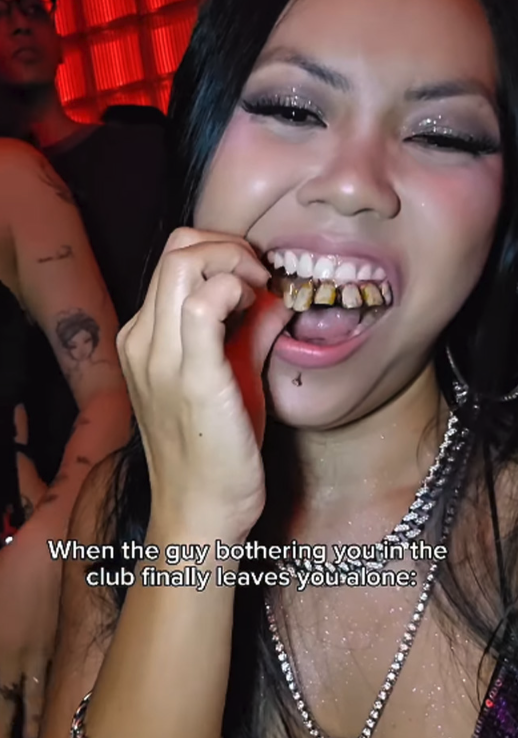
My Linh, a special effects (SFX) makeup artist and online content creator from Vietnam, became the center of media attention after orchestrating a unique strategy: wearing fake rotten teeth on a night out. Linh’s goal was straightforward but pointed—alter her appearance enough to dissuade men from making persistent, unwanted advances. According to her social media post, she was tired of repeatedly having to explain her lack of interest and wanted to experiment with a solution that would shift the dynamic without requiring constant verbal rebuttals.
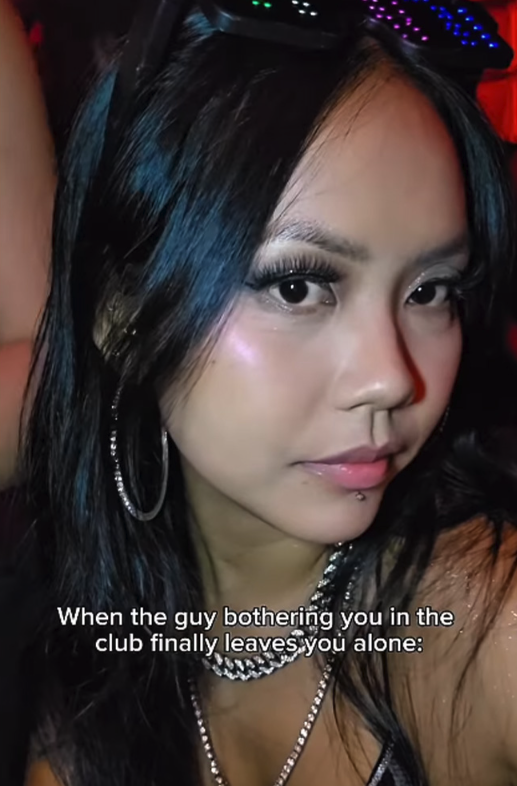
Linh crafted a set of prosthetic teeth that transformed her smile into one that was noticeably crooked, enlarged, and visually jarring. Documenting her experiment, she filmed herself during her club visit, capturing the reactions of those around her. The resulting video, captioned, “When the guy bothering you in the club finally leaves you alone,” uses humor to highlight a situation many women face: being approached by strangers whose persistence can quickly turn a fun outing into an exercise in boundary setting.
Viral Impact and Online Reactions
The post quickly went viral, drawing millions of views and a swath of comments across Instagram, TikTok, and news platforms. Responses were sharply divided. Some viewers found the approach amusing and lauded the ingenuity behind Linh’s creative self-defense. Others, however, found the need for such tactics disheartening, spotlighting an enduring issue in public spaces worldwide.

One commenter wrote, “Female defense strategies are getting more and more creative.” Another responded, “It’s awful that a person has to do something like that to try to keep men away because they don’t respect anyone, sorry diva, but at least you were creative.” Many echoed the sentiment that women should not have to alter their appearance or behavior in order to avoid harassment. As one particularly poignant remark put it, “Women deserve to have fun in public without feeling watched or bothered.”
This comment thread, echoing across international social media, underscores the complexity of club culture: humor and practicality can coexist with exasperation and sadness. The viral success of Linh’s video is as much about the cleverness of her makeup skills as it is a reflection on the societal pressures women continue to face.
The Broader Context of Women’s Safety in Nightlife
Linh’s story is not unique. Women employ a variety of strategies to avoid unwanted attention, including sticking close to friends, pretending to be in a relationship, or even wearing decoy wedding rings. Some women fabricate conversations about their fictional partners, alter their body language to seem less approachable, or adopt what they call “resting unfriendly face” as camouflage. Linh’s approach stands out for its creativity, but it fits into a larger pattern of women using nonverbal cues, props, and ruses for safety and comfort.
Studies and surveys repeatedly emphasize this dynamic. Data from the Nighttime Foundation, for example, found that 74% of women explicitly worry about their safety during nights out in the UK’s night-time economy. Such statistics highlight a persistent issue: despite significant social progress, women continue to face risks in public venues, from harassment to physical safety concerns. The creative responses—ranging from fake teeth to subtle hand gestures signaling distress—are not so much solutions as adaptations to an environment that often fails to protect their right to personal space.
Expert Insights on Nightlife Safety and Gender Relations
Sociologists and gender studies scholars often point to the ways night-time settings amplify underlying societal dynamics. According to Dr. Fiona Vera-Gray, an academic focused on gender violence and safety, women’s strategies for avoiding unwanted attention are layered forms of self-preservation. “From the earliest stages of adolescence, girls and young women are taught—and often internalize—the necessity of assessing risk, coordinating with friends, and deploying subtle tactics to stay safe,” Vera-Gray has written.
These tactics can be both empowering and burdensome. While creative, they place the responsibility for avoiding harassment on potential victims rather than on those committing the unwanted attention. “The innovation shown by women is impressive, but the underlying expectation that they must invent ways to avoid intrusion is problematic,” says Professor Laura Bates, founder of the Everyday Sexism Project. She advocates for a shift in club management and public policy that focuses not only on encouraging reporting but on proactively setting community standards and training staff to intervene.
How Clubs and Bars Are Responding
Nightlife venues have begun to acknowledge these issues and adapt accordingly. Many clubs now train staff to identify signs of discomfort and offer help proactively. Initiatives like the UK’s “Ask for Angela” campaign provide patrons with discreet means of signaling that they need assistance—a coded request that can be made at the bar to staff, who are then trained to help the customer leave safely or intervene as needed.
Yet, as Linh’s viral experience illustrates, these measures are not universal, and there remain significant gaps. Some campaigns are better publicized than others, and clubgoers’ awareness of their rights and options can vary widely depending on location and local culture. Greater attention to training, signage, and club layout can improve women’s sense of safety and encourage reporting of unacceptable behavior.
Technology, Social Media, and Shifting Expectations
Social media plays a dual role in this conversation. On one hand, it amplifies stories like Linh’s, spreading awareness and fostering solidarity among women in different cultures. On the other, comment threads can inadvertently normalize or trivialize the issue if not met with critical discussion. Experts note that the visibility of such personal stories can encourage collective action—from club patrons demanding better policies to nightlife industries adopting more rigorous standards for customer safety.
Apps aimed at supporting party-goers—offering ways to check in with friends, share real-time locations, or discreetly signal for help—are also emerging as digital tools for protection. Nevertheless, technology is not a substitute for respectful behavior and comprehensive policy change.
The Global and Societal Reaction
Linh’s unusual tactic resonated with women not only in Vietnam but around the world, as evidenced by comments from Europe, North America, and other regions. In many cultures, discussions about gendered behavior in nightlife settings are ongoing, and women’s stories often spark policy reviews, activism, and broader media attention. International surveys consistently show similar outcomes: a high proportion of women feel compelled to change their behavior or appearance to ensure safety in public social spaces.
This incident serves as a catalyst for international dialogue, drawing attention to persistent challenges while also highlighting the resilience and creativity with which women respond to them. At the same time, Linh’s story has generated calls for root-cause solutions—redefining social norms, ensuring comprehensive bystander intervention training, and designing nightlife environments that are genuinely inclusive and safe for all.
Looking Ahead: Toward Cultural Shift and Shared Responsibility
Linh’s viral post has turned a personal experiment into a touchpoint for public debate about the expectations placed on women in clubs and bars. While her fake teeth may have started as a joke, they underscore a serious conversation: Why should anyone feel compelled to disguise themselves, invent elaborate excuses, or alter their appearance simply to exercise the basic right to personal comfort on a night out?
Progress on this front requires joint effort—individual strategies remain vital, but meaningful change lies in shifting responsibilities away from potential targets and toward fostering environments defined by respect, understanding, and community action. The ongoing dialogue raises awareness and, hopefully, signals further cultural evolution in the years ahead.
Sources
Disclaimer: This content is intended for entertainment purposes only and is not based on real events.