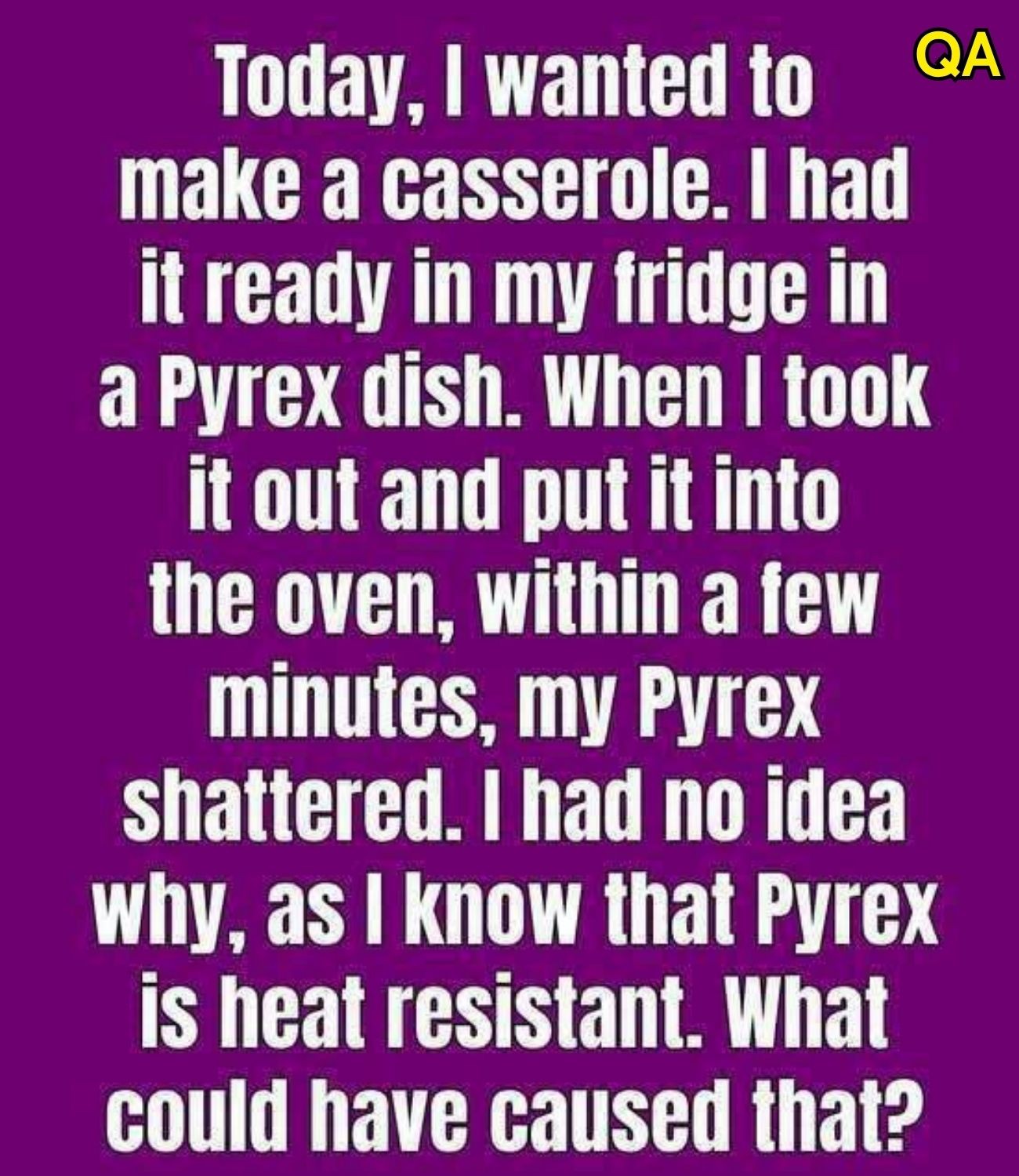
You put your casserole together, stored it in the refrigerator, and felt confident that dinner was ready to go. When it was time to bake, you took the Pyrex dish straight from the fridge and placed it in the oven.
A few minutes later, you heard a loud crack.
The Pyrex had shattered.
But isn’t Pyrex designed to withstand high temperatures?
Yes, it is designed for oven use, but heat-resistant glass can still break under certain conditions. In many cases, the problem isn’t simply the oven temperature. Instead, the glass may have experienced thermal shock, which occurs when different parts of the glass change temperature too quickly.
Understanding why this happens can help you avoid a similar surprise the next time you prepare a casserole.
Why Can Pyrex Shatter in the Oven?
The most common explanation is thermal shock.
Glass expands when heated and contracts when cooled. Normally, this happens gradually enough that the material can handle the change. But when one part of a glass dish becomes hot much faster than another part, different areas can expand at different rates.
That creates internal stress.
If the stress becomes greater than the glass can tolerate, the dish can crack or shatter.
This is why a Pyrex dish can be suitable for baking at a high temperature and still be vulnerable when exposed to a sudden temperature change.

The Refrigerator-to-Oven Problem
In the situation described above, the casserole was already in the refrigerator before it went into the oven.
That detail is important.
A refrigerated glass dish may be significantly colder than the surrounding room. When that cold dish is suddenly placed inside a hot oven, the outer portions of the glass can begin heating rapidly while other areas remain relatively cold.
The result can be uneven expansion.
For example, imagine a glass casserole dish that has been sitting in a refrigerator and is then placed into a preheated oven. The surface exposed directly to the hot air begins warming quickly, while the thicker bottom and areas surrounded by a cold casserole may remain cooler.
That difference can create stress throughout the dish.
This is one reason putting a very cold glass baking dish directly into a hot oven can be risky, depending on the particular cookware and the manufacturer’s instructions.
Heat Resistant Does Not Mean Impossible to Break
One common misunderstanding is that “oven safe” or “heat resistant” means glass cookware cannot break from heat.
That’s not quite how it works.
Heat-resistant cookware is engineered to tolerate certain temperature conditions, but there are still limits.
The key distinction is between high-temperature resistance and resistance to sudden temperature changes.
A dish may tolerate the temperature of a hot oven when heated appropriately. That doesn’t necessarily mean it can safely handle every possible transition between extreme temperatures.
This is why the manufacturer’s care and use instructions are important.
Small Scratches Can Make a Difference
Thermal shock isn’t the only possible explanation.
Glass cookware can also become weakened by scratches, chips, or small imperfections.
A dish may appear perfectly normal while having accumulated tiny areas of damage from everyday use. For example, repeatedly stacking cookware, hitting the edge against a sink, or using abrasive cleaning materials can potentially create scratches.
These imperfections can act as weak points when the glass experiences stress.
If a Pyrex dish has visible chips, cracks, deep scratches, or other damage, it’s best not to continue using it for cooking.
Moisture and Cold Surfaces Can Also Create Temperature Differences
Another factor people sometimes overlook is the surface underneath the dish.
If a glass baking dish is wet or sitting on a very cold surface, the temperature of the glass may not be uniform.
Similarly, putting a hot glass dish onto a cold or wet countertop after baking can create another sudden temperature change.
The safest approach is to use a dry, heat-resistant surface designed to support hot cookware.
Could the Oven Temperature Have Been Too High?
Possibly, but a high oven temperature isn’t necessarily the primary explanation.
If a dish is rated for the temperature you’re using and is handled according to the manufacturer’s instructions, the temperature alone may not explain the break.
However, it’s important to remember that different generations and types of glass cookware can have different specifications.
Some products are designed for oven use but have specific restrictions regarding preheating, temperature changes, stovetop use, broilers, or other heat sources.
Always check the instructions for the exact dish rather than assuming every piece of glass cookware has identical properties.

What Should You Do If Pyrex Breaks in the Oven?
If a glass baking dish shatters while your food is cooking, safety should come first.
Don’t immediately reach into the oven to remove the broken pieces.
Turn the oven off and allow everything to cool sufficiently before attempting cleanup, following appropriate safety precautions.
Most importantly, don’t eat food that may have been exposed to shattered glass.
Even if the larger pieces are removed, tiny fragments can be difficult to see. It’s generally safer to discard food that may contain glass contamination.
When cleaning the oven, carefully check the surrounding areas for fragments. Small pieces may travel farther than expected when glass breaks.
How to Prevent Pyrex From Shattering
A few simple habits can reduce the risk of thermal shock.
Avoid Extreme Temperature Changes
The biggest precaution is to avoid exposing glass cookware to sudden, extreme temperature changes.
If your specific cookware instructions don’t permit refrigerator-to-oven use, don’t place the cold dish directly into a preheated oven.
Instead, follow the manufacturer’s recommended procedure.
Inspect Glass Cookware Regularly
Before using a glass baking dish, check it for:
- Chips
- Cracks
- Deep scratches
- Damaged edges
- Other visible imperfections
If you find significant damage, replace the dish.
Don’t Use Glass Cookware on the Stovetop Unless Specifically Designed for It
An oven-safe glass baking dish isn’t automatically suitable for direct heat from a stovetop burner.
Direct heat can create highly concentrated temperature differences that put significant stress on glass.
Use cookware specifically designed for stovetop cooking when preparing food directly over a burner.
Use a Proper Trivet for Hot Dishes
After removing a glass baking dish from the oven, place it on a dry, heat-resistant trivet or other suitable surface.
Avoid placing hot glass directly on a cold countertop, wet surface, or other surface that could create a sudden temperature difference.
Follow the Manufacturer’s Instructions
Perhaps the most important recommendation is also the simplest: check the care instructions that came with your particular Pyrex product.
The name “Pyrex” alone doesn’t tell you every detail about how a specific piece should be handled. Product instructions can provide information about oven use, temperature limits, refrigeration, preheating, and other precautions.
Why Did My Pyrex Shatter After Only a Few Minutes?
If your Pyrex dish was refrigerated and then placed directly into a hot oven, thermal shock is a strong possibility.
The dish may have experienced a rapid temperature transition. As different areas of the glass heated at different rates, internal stresses developed.
If the dish also had an unnoticed scratch, chip, or other weakness, that could have made it more vulnerable.
The fact that it shattered after only a few minutes doesn’t necessarily mean the oven temperature suddenly became excessive. Thermal stress can develop relatively quickly when there is a large temperature difference.
Is It Safe to Use Pyrex in the Oven?
Pyrex and other oven-safe glass cookware can be useful for baking, but safe use depends on following the instructions for the specific product.
The important lesson is that oven-safe doesn’t mean immune to breakage.
Think of glass cookware as something that can tolerate heat under the conditions it was designed for, rather than something that can withstand unlimited temperature changes.
Final Thoughts
Having a Pyrex dish suddenly shatter can be frightening, especially when you believed you were using it exactly as intended.
The good news is that there’s usually a logical explanation.
In a situation where a refrigerated glass casserole dish is placed into a hot oven and breaks shortly afterward, thermal shock is one of the first things to consider. Uneven heating, previous scratches or damage, moisture, and improper handling can also contribute.
The safest habit is to avoid unnecessary temperature extremes, inspect your cookware regularly, use appropriate heat-resistant surfaces, and follow the manufacturer’s instructions for your particular glass dish.
After all, a few extra minutes of preparation are much better than discovering that your dinner has turned into a cleanup project.