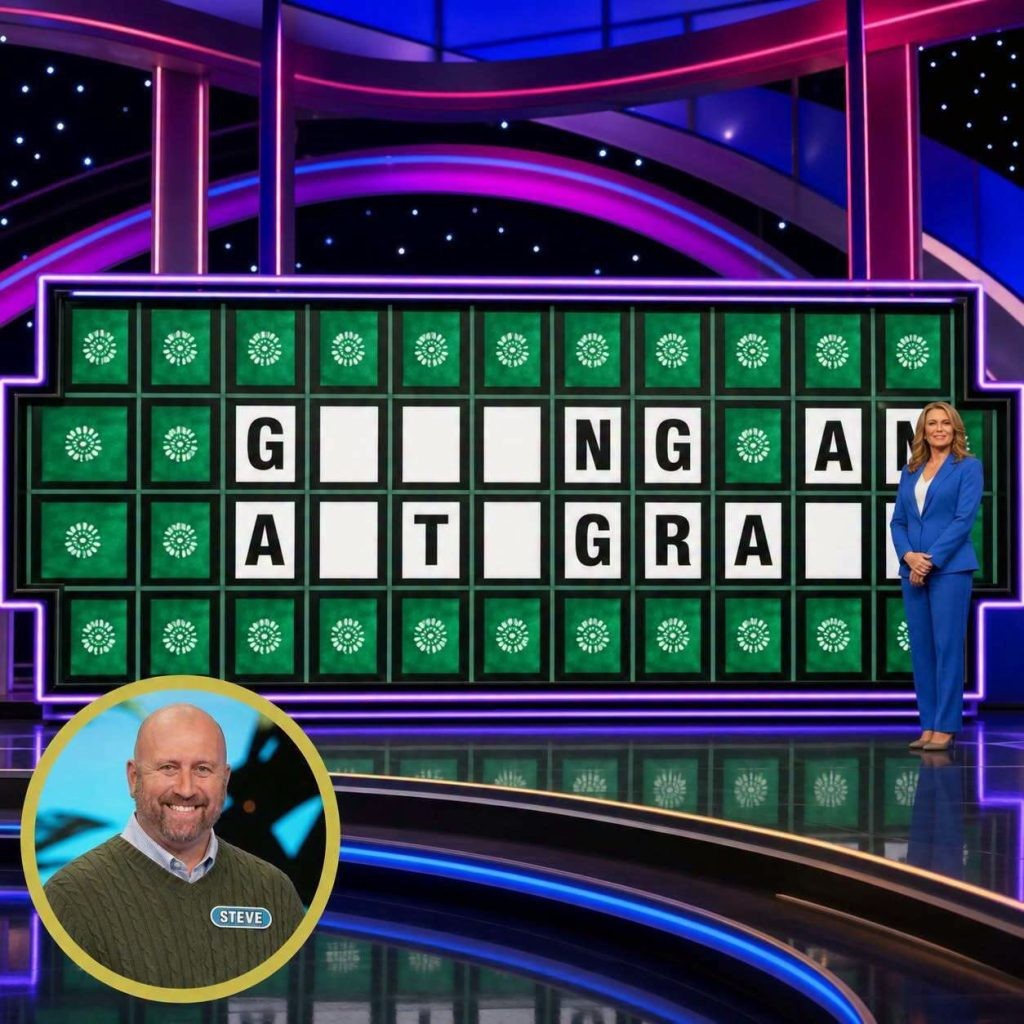
Wheel of Fortune Bonus Round Win Sparks Debate Over Pronunciation
Celebration Turns Controversial: Knapp’s Historic Victory
The latest episode of Wheel of Fortune delivered a moment brimming with excitement and emotional intensity. As the Bonus Round reached its thrilling conclusion, confetti rained down, joyous cheers echoed across the studio, and a dazzling red Nissan Z Sport was revealed as the show’s grand prize. Contestant Knapp, a longtime fan, found himself at the center of a celebration he had dreamed about for years. However, the jubilant atmosphere quickly gave way to debate as questions arose regarding the clarity of Knapp’s winning answer.
Background: The Importance of Wheel of Fortune’s Bonus Round
Wheel of Fortune has been a staple of American television since its debut in 1975. Hosted by Pat Sajak for decades, and co-hosted by Vanna White, the show is renowned for its unique puzzles and captivating prize rounds. The Bonus Round marks the climax of each episode, where contestants attempt to solve a final puzzle under intense pressure with significant rewards at stake.
The rules are strict; contestants are required to clearly state their answers, with accuracy playing a vital role in determining the outcome. Over the years, rulings around pronunciation and clarity have occasionally sparked debate, making this segment both the most rewarding and the most contentious.
Knapp’s Emotional Journey to the Stage
For Knapp, the opportunity to appear on Wheel of Fortune was the realization of a lifelong aspiration. He had spent years watching the show with his family, imagining the possibility of taking his place alongside the iconic hosts. The episode became a personal milestone, symbolizing not just his competitive success, but the culmination of cherished family memories.
As Ryan Seacrest—newly appointed as host following Pat Sajak’s retirement—announced the winnings, Knapp stood on stage, overwhelmed by the significance of the moment. Friends and family joined him, hugging and celebrating as Vanna White revealed the coveted red Nissan Z Sport. The atmosphere was electric, blending pride and nostalgia with the thrill of victory.
The Pronunciation Controversy: A Closer Look
Immediately following the reveal, viewers began sharing clips from the Bonus Round online, analyzing whether Knapp had pronounced the winning phrase clearly enough to comply with the show’s official guidelines. Some fans believed his pronunciation was crisp and unmistakable, while others argued that certain syllables were omitted or slurred, citing the show’s long-standing policy on spoken answers.
This is not the first time Wheel of Fortune has faced scrutiny over pronunciation. In past episodes, contestants have seen their answers disqualified over slight deviations in enunciation, leading to passionate discussions about fairness and consistency. The issue is compounded by the high stakes of the Bonus Round—mispronunciation can mean the difference between life-changing prizes and disappointment.
Expert Views and Show Guidelines
According to official Wheel of Fortune rules, contestants must “say the entire phrase in a clear manner, pronouncing each word exactly.” Judges rely on these established guidelines to ensure fairness and maintain the integrity of the competition. Television and linguistics experts often emphasize that such standards are necessary to avoid ambiguity, especially in a live broadcast format.
In interviews, former contestants and game show analysts have pointed out that nerves, excitement, and timing can all impact pronunciation. While some believe the rules should allow for minor missteps, others argue for strict adherence to prevent disputes and maintain uniformity across episodes.
Media outlets like BBC and Reuters have reported on similar controversies, detailing the show’s efforts to balance entertainment value with procedural rigor. Game show historian Dr. Charles Paris notes, “Wheel of Fortune’s reputation rests on impartiality; every contestant, regardless of background, must be treated to the same standard.”
The Show’s Response and Final Decision
Faced with a surge of online commentary and viewer questions, producers of Wheel of Fortune reviewed the footage and stood by their decision. Knapp was allowed to keep his winnings and prizes, which totaled $65,800 in cash, a luxurious vacation to Punta Cana, and the striking Nissan Z Sport. The show confirmed that, in their judgment, the answer satisfied their criteria, putting an immediate end to any lingering doubts.
This response echoes previous instances where the show has addressed similar debates. By upholding the win, the producers reinforce their commitment to transparency while also acknowledging the importance of context—recognizing the impact of pressure on contestants and the complexity of spoken language under timed conditions.
Fan Reactions and Social Media Discourse
The decision did little to quell online discourse, as fans continued dissecting the Bonus Round moment on platforms such as Twitter, Reddit, and Facebook. Threads documented frame-by-frame analyses of Knapp’s speech, with passionate arguments on both sides. “It sounded clear to me, no reason for the drama!” wrote one viewer, while another countered, “Rules are rules—if it’s not perfect, it can’t count.”
Social media has become a powerful tool in amplifying game show controversies. Audiences today expect rapid transparency and detailed explanation from producers, a far cry from the era when broadcast television rarely acknowledged public complaints. The proliferation of digital forums enables real-time feedback and scrutiny, bringing greater accountability to popular television programs.
International Perspectives: How Other Shows Handle Pronunciation
Globally, television game shows approach spoken answers with similar caution. British programs such as Countdown and Mastermind impose rigorous standards for clarity and correctness. In Japan, quiz formats demand exact linguistic repetitions, with hosts instructing contestants to repeat answers until understood. In France and Germany, adjudication often involves multiple judges, ensuring impartiality and uniformity.
Experts believe these policies reflect broader societal attitudes towards competition, fairness, and the role of language in public events. Cross-cultural differences sometimes manifest in audience expectations, but the underlying principle remains consistent—clear communication is essential for ensuring legitimate outcomes.
The Significance of Knapp’s Win
Despite the controversy, Knapp’s triumph stands as one of the most memorable moments in recent Wheel of Fortune history. The combination of personal achievement, dramatic celebration, and heightened scrutiny has elevated the episode’s profile among fans and commentators. While prizes and public acclaim are important, the fulfillment of a childhood dream remains the heart of the story.
Game shows have long served as vehicles for ordinary individuals to showcase skill, perseverance, and luck. For Knapp, the victory extends beyond material rewards—a testament to years of dedication, family support, and the exhilaration of competing on a national stage.
Reflecting on Game Show Ethics and Community Standards
The debate surrounding Knapp’s Bonus Round answer highlights broader questions about game show ethics, rule enforcement, and audience engagement. Should producers allow flexibility for nervous contestants? Or should strict compliance remain the norm to prevent future disputes? As entertainment evolves, so too does the relationship between content creators, participants, and the audience.
Legal and television experts such as Professor Linda Howe from UCLA emphasize the importance of written guidelines, ensuring consistency and reducing ambiguity. “The challenge is balancing empathy for contestants with the need for fairness. Transparency, timely communication, and listening to viewer feedback can help build trust and sustain the show’s reputation,” she states.
In response to recurring controversies, some shows have introduced additional training for contestants, clarifying expectations prior to taping. Others have revisited judging panels, introducing independent oversight for contentious decisions.
Looking Ahead: Will Rule Changes Follow?
The aftermath of Knapp’s win and ensuing debate may prompt Wheel of Fortune producers to review their procedures. Although no formal announcement has been made, past controversies have led to updates in contestant instruction and review processes. Such revisions are typically motivated by lessons learned during high-profile moments, ensuring the show adapts while preserving its iconic format.
Viewers and industry commentators alike expect ongoing vigilance, anticipating both stricter enforcement and enhanced clarity. The episode has set a precedent for sustained engagement, with fans likely to continue monitoring pronunciation rulings in future rounds.
Conclusion: A Memorable Episode with Lasting Impact
Knapp’s Bonus Round win encapsulates everything that makes Wheel of Fortune an enduring television phenomenon: suspense, celebration, personal milestones, and, at times, passionate debate. While the controversy over pronunciation added complexity, the foundation of the episode was joy and fulfillment. For fans, producers, and participants alike, the moment is a reminder of the power of shared experience—and the importance of clear, fair standards for all.
As discussions continue and future episodes unfold, both the contestant’s story and the show’s legacy remain secure. In the world of game shows, memorable moments often echo far beyond the stage, continuing to inspire and engage audiences for years to come.
Sources
Disclaimer: This content is intended for entertainment purposes only and is not based on real events.