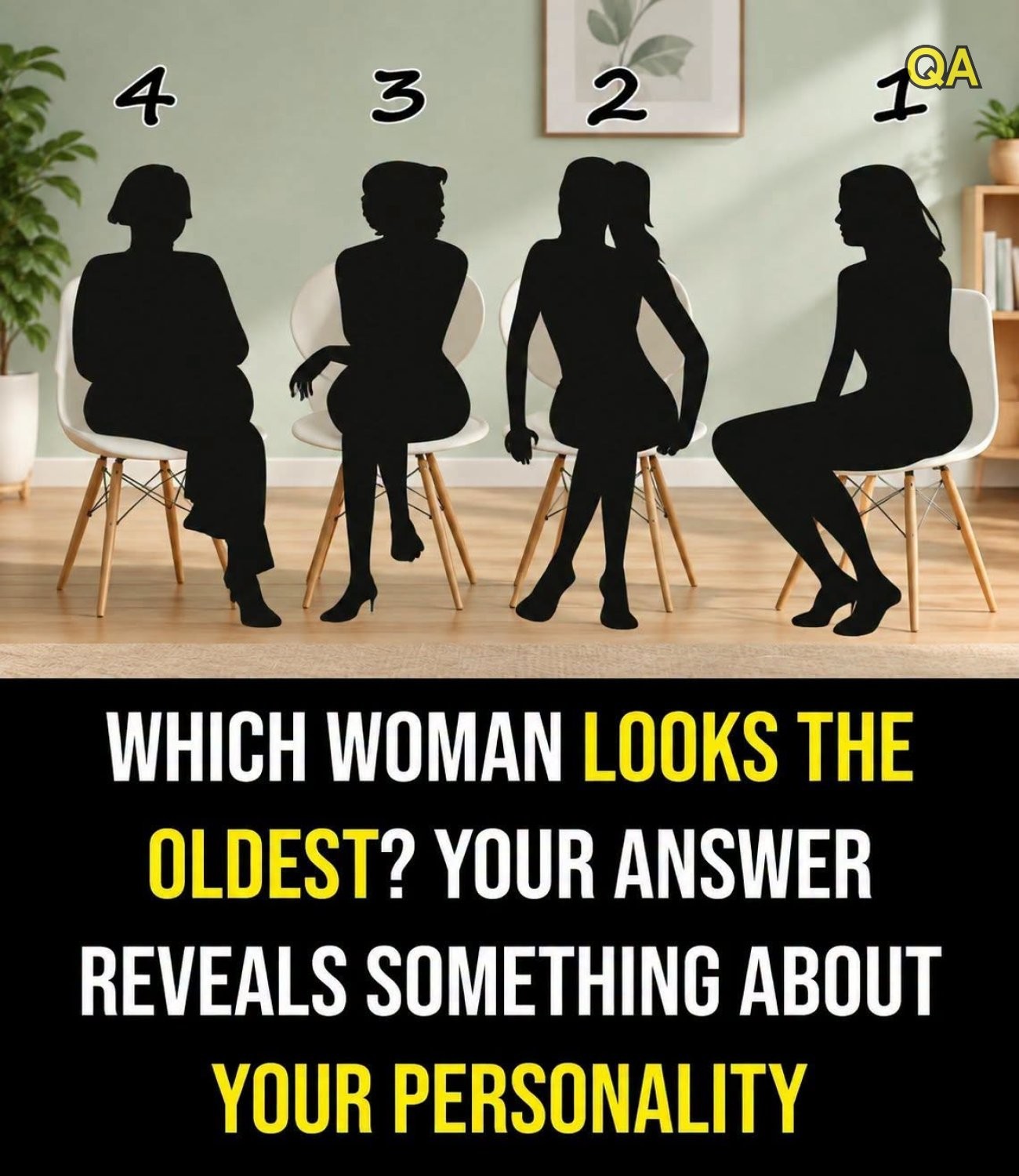
Choosing a face from a group of images can feel like a simple visual exercise. Someone may ask which person appears oldest, most confident, calmest, friendliest, or most serious, and the answer often arrives almost immediately. That quick response can be intriguing because it may seem to reveal a hidden preference or a deeper aspect of personality.
However, it is important to interpret these moments carefully. A single image choice cannot provide a reliable psychological profile, diagnose personality traits, or explain someone’s relationships and life experiences. Human perception is complex, highly contextual, and influenced by many factors that change from one moment to another.
What a first glance can reveal is something more limited but still interesting: the visual cues that captured attention at that specific time. These cues may include expression, hairstyle, posture, clothing, apparent age, familiarity, lighting, cultural expectations, or an observer’s current mood. Understanding how these rapid judgments work offers a more useful and evidence-based perspective than treating an image-selection activity as a personality test.
Why First Impressions Happen So Quickly
People are naturally quick to form impressions from faces. In everyday life, this ability can help individuals navigate social situations, identify emotions, and decide where to direct their attention. Research in psychology has found that people can make judgments about attributes such as trustworthiness, competence, and friendliness after very brief exposure to a face. These impressions can feel immediate and convincing.
Speed, though, is not the same as accuracy. A person’s face may communicate a momentary expression, but it cannot fully communicate their character, motivations, values, health, intelligence, or personal history. An expression that appears reserved may reflect concentration, discomfort in front of a camera, fatigue, or simply the instant when a photograph was taken. Similarly, a broad smile may make someone seem approachable without telling viewers how that person behaves in other settings.
First impressions are best understood as fast mental shortcuts. The brain processes a large amount of visual information in a short time and uses patterns learned through experience to make an initial interpretation. This process is efficient, but it is also vulnerable to bias, incomplete information, and assumptions.
What People Tend to Notice in Faces
When viewers compare photographs, they may focus on different details. Some pay attention first to facial lines, hair color, skin texture, or posture when estimating age. Others are drawn to emotional signals, including a relaxed expression, furrowed brow, direct gaze, or smile. These differences do not necessarily indicate fixed personality types. They may simply reflect what feels most visually noticeable to each observer.
Age perception itself is not a precise science when based on photographs. Lighting, image quality, makeup, hairstyle, facial expression, camera angle, and styling can all affect how old someone appears. Social expectations also matter. People may associate certain clothing, hairstyles, or expressions with adulthood, authority, youth, or experience, even though these associations do not reliably reflect a person’s actual age.
In addition, viewers often rely on comparison. A face may appear older or younger depending on the faces placed beside it. This is known broadly as a contextual effect: the surrounding information influences how people interpret what they see. The same image shown in a different group could produce a different answer.
Can a Visual Choice Reveal Personality?
Online image quizzes often suggest that the first person, object, or color someone chooses can uncover hidden qualities. They may connect a selection to confidence, empathy, independence, logic, ambition, emotional sensitivity, or relationship preferences. Such descriptions can be entertaining, especially when they feel personally relevant. Yet they should not be treated as scientifically validated assessments.
Reliable personality assessment requires far more than one spontaneous choice. Researchers who study personality typically use carefully designed questionnaires, repeated measures, statistical analysis, and large comparison groups. Even established assessments have limitations and must be interpreted in context. A photograph-based prompt, without validated scoring methods or evidence of reliability, cannot accurately determine who a person is.
A common reason broad quiz results can feel convincing is that people naturally recognize parts of themselves in flexible, generally positive descriptions. For example, many people can identify with being both practical and emotional, independent but appreciative of support, or determined while sometimes uncertain. A statement may feel meaningful because it is broadly applicable, not because it was uniquely revealed by an image choice.
This does not mean that every reaction to an image is meaningless. It means the reaction should be framed honestly. If a calm expression catches someone’s attention, it may prompt reflection on what calmness represents to them. Perhaps they appreciate steadiness in stressful situations, have recently been seeking reassurance, or simply liked the composition of the photograph. Those possibilities are worth considering, but none is a conclusion that can be proven from one answer.
The Role of Mood, Experience, and Culture
Perception does not happen in a vacuum. A viewer’s mood can shape what stands out. Someone who is tired may notice signs of fatigue in others. Someone preparing for an important decision may be especially alert to expressions that appear confident or cautious. Recent events, personal memories, and immediate surroundings can all guide attention in subtle ways.
Life experience also influences interpretation. A person who has spent time in caring roles may be more attentive to possible signs of discomfort or sadness. A manager may focus on posture and apparent confidence. An artist may notice visual balance, color, and composition before expression. These patterns can reflect learned habits of attention rather than stable traits that define an entire personality.
Cultural context matters as well. Facial expressions and body language are interpreted through social norms. A direct gaze may be viewed as confidence in one setting and as impolite or confrontational in another. Expectations about age, attractiveness, authority, and emotional expression vary between communities and across generations. For this reason, conclusions based on appearance should be made cautiously and with awareness of cultural differences.
Why Appearance-Based Assumptions Need Caution
Making quick judgments is normal, but treating them as facts can lead to unfair assumptions. People are often judged on visible characteristics that do not reflect their abilities or personality. Age, facial features, grooming, disability, gender expression, clothing, and ethnicity can all trigger stereotypes. These shortcuts can affect social interactions, hiring decisions, educational settings, and everyday opportunities.
A more thoughtful approach is to distinguish between an impression and evidence. It is reasonable to notice that a photograph gives an impression of seriousness, warmth, or confidence. It is not reasonable to assume that the image proves someone is trustworthy, emotionally distant, intelligent, kind, or capable. Meaningful understanding comes through conversation, behavior over time, and attention to the person’s own words and experiences.
This distinction is especially valuable online, where photographs are frequently curated, edited, or taken out of context. A single image captures one moment, not a complete individual. Digital platforms encourage rapid scrolling and rapid judgment, making it even more important to pause before drawing conclusions.
A Better Way to Use Personality Quizzes and Visual Prompts
Visual quizzes can still be enjoyable when they are approached as light reflection rather than psychological measurement. Instead of asking, “What does my choice prove about me?” it may be more helpful to ask open-ended questions:
- What feature did I notice first?
- What made that feature stand out to me today?
- Did I make an assumption based on expression, styling, or age?
- Would I choose differently if the images were presented in another order?
- What information would I need before forming a fair opinion of this person?
These questions encourage curiosity without overstating what an image can reveal. They can also help people become more aware of their own habits of attention and the assumptions that may arise automatically.
If someone wants a more meaningful understanding of personality, evidence-based approaches are more appropriate. Reflection on recurring behavior, conversations with trusted people, professional counseling when needed, and validated psychological tools administered responsibly can offer more useful insight. Personality is shaped by a combination of traits, experiences, environment, relationships, and choices. It cannot be reduced to one image or one moment of visual preference.
What Experts Say About First Impressions
Psychological research broadly supports two ideas that may seem contradictory but can both be true: people form first impressions very quickly, and those impressions are often incomplete or inaccurate. Faces provide social information, and humans are highly responsive to it. At the same time, confidence in an impression does not guarantee that the impression is correct.
Researchers also note that people may agree with each other about certain facial impressions, such as whether a face appears friendly or dominant. Agreement does not establish that the perceived quality reflects the person’s actual character. It may instead show that viewers share cultural expectations about particular expressions and facial configurations.
The practical lesson is not to ignore intuition entirely. Initial reactions can be useful signals to examine, particularly when they encourage someone to seek more information. The key is to avoid turning an initial reaction into a final verdict. Curiosity is more reliable than certainty when interpreting another person’s appearance.
The One You Chose Is Only a Starting Point
The face that first catches your attention may tell you something about what stood out in that moment. It might reflect a visual preference, a familiar expression, a current concern, or a personal association. That can be interesting and can even inspire self-reflection.
But it does not define you, and it does not define the person in the image. A single selection is not a scientific personality test, an age assessment, or a measure of emotional insight. People are more complex than a photograph, and meaningful self-knowledge requires more than a split-second choice.
The most valuable takeaway is simple: notice your first impression, then leave room for more information. By doing so, people can enjoy visual prompts while remaining thoughtful, fair, and grounded in what evidence can actually support.
Sources
Disclaimer: This content is intended for entertainment purposes only and is not based on real events.