The Fascinating Life of Chimney Swifts and Their Conservation
Chimney Swifts: An Introduction to Their Remarkable Flight
As the evening sky grows dim and the sun sets behind rooftops and trees, the movements of birds become a captivating spectacle for both amateur and seasoned birdwatchers. Among the many species that populate our towns and cities, Chimney Swifts (Chaetura pelagica) stand out with their energetic, swirling flight and persistent audible chirps. Their presence signals the onset of warm summer nights as they soar through the air, filling urban and rural environments alike with the sound of wings and unceasing activity.
Unique Behaviors: Always in Motion
The Chimney Swift is often described as a “cigar-shaped bird with wings like scissors,” and this vivid characterization speaks to its distinctive silhouette and flight style. Unlike most birds, Chimney Swifts rarely come to rest on branches or power lines. Rather, they spend almost their entire lives airborne, even sleep and mate while clinging vertically to rough surfaces. Their biology is intricately adapted for a life on the wing: their feet and claws are ideally suited for grasping onto vertical surfaces, making it possible for them to cling to the interiors of hollow trees, caves, and manmade structures.
Feeding is another marvel of their behavior. Chimney Swifts are aerial insectivores, catching their food—primarily flying insects—mid-flight. This constant motion not only ensures their sustenance but also makes them vital contributors to local ecosystems as natural pest controllers.
Historical Nesting Habits and Adaptation to Human Landscapes
Historically, Chimney Swifts sought out natural habitats such as hollow trees, rock crevices, caves, and cliffs to nest and roost. The interior surfaces of these structures offered the darkness, shelter, and rough texture necessary for the birds to cling onto while they rest and raise their young. As North America’s forests were cleared and natural sites diminished to make way for urban and suburban developments, swifts began shifting their behavior and nesting preferences.
Brick chimneys found on homes, schools, and factories became their new preferred nesting sites during the 19th and 20th centuries. These chimneys provided a perfect substitute for tree hollows, offering the same vertical space and texture to support their unique style of roosting and nesting. The birds’ remarkable flexibility allowed them to thrive in changing environments, and their adaptability became a symbol of coexistence between wildlife and human infrastructure.
Modern Challenges: Loss of Nesting Sites
In recent decades, however, the relationship between Chimney Swifts and chimneys has become threatened. As building codes have changed and concerns about energy efficiency, pollution, and fire safety have increased, many older chimneys have been capped or removed entirely. New construction replaces traditional chimneys with smooth metal flues or no chimneys at all. This widespread alteration in urban environments has led to a significant decrease in suitable roosting and nesting sites for the birds.
The impact can be seen in declining local swift populations. Without safe havens to nest and raise their young, the birds are forced to leave areas where they were once common. Conservation scientists and bird enthusiasts have documented this trend across North America, noting that the survival of the species is increasingly tied to human decisions and urban planning.
Conservation Solutions: Swift Towers and Community Action
To address this urgent challenge, conservation organizations, researchers, and concerned citizens have taken action to protect Chimney Swifts and ensure their continued presence in our communities. One innovative solution has been the construction of “swift towers.”
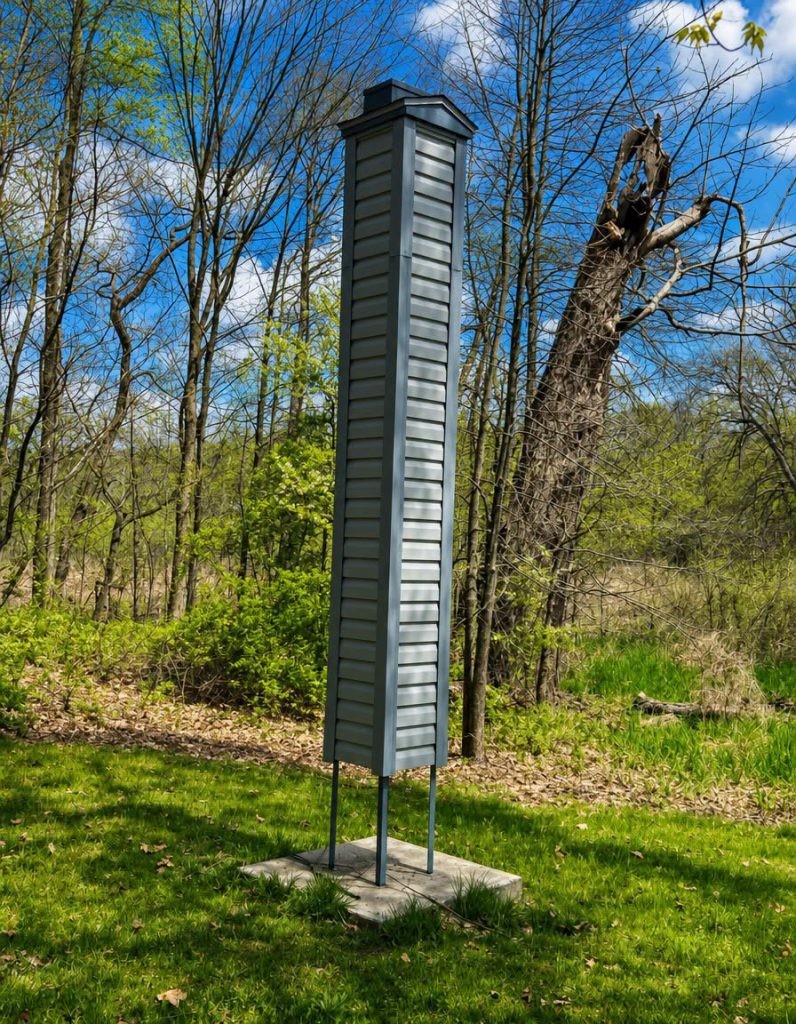
Swift towers are tall, narrow structures specifically designed to mimic the interior space of a chimney, providing Chimney Swifts with an alternative to traditional roosting sites. While these towers may appear unremarkable from the outside, their interiors are carefully engineered: walls are rough enough for swifts to cling and climb, and the structure is dark and sheltered to replicate their natural or historic preferences.
Swifts use their specialized claws to adhere to these surfaces and build nests made from small twigs collected on the wing and glued together using their saliva. The resulting nest is sturdy enough to support eggs and nestlings. Even a single swift tower in a neighborhood, park, or schoolyard can support multiple breeding pairs, helping to sustain local populations and maintain the fascinating gatherings seen at dusk.
The Ecological Role of Chimney Swifts
Chimney Swifts offer more than just visual and audible delight; their ecological contribution is significant. Each bird can consume thousands of flying insects daily, including mosquitoes, flies, beetles, and moths. This natural pest control benefits humans by reducing insect-borne disease risks and lessening the need for chemical pesticides.
Within ecosystems, Chimney Swifts provide a link in the food chain, serving as prey for larger birds such as hawks and owls, and acting as competitors with other aerial insectivores. Their presence in both urban and rural areas is a reminder of nature’s resilience and its interdependence with human environments.
Observing Chimney Swifts: Community Engagement
Chimney Swifts have become a favorite subject for birdwatchers and conservation groups. Their evening flight displays, characterized by spiraling, darting movements and a high-pitched communal chirping, attract crowds to parks and open spaces. Many communities organize “Swift Nights” where people gather to witness the birds congregating above chimneys or swift towers before they drop suddenly into their roosts as the daylight fades.
Personal involvement in their conservation has become increasingly popular. Schools, local governments, and nature clubs often collaborate to build swift towers and educate the public about the birds’ unique lifeways. Such initiatives foster appreciation for biodiversity and connect people of all ages with the natural world.
Expert Perspectives on Chimney Swift Conservation
Biologists, urban ecologists, and conservationists emphasize the importance of maintaining habitats for Chimney Swifts. Dr. John Richardson, an ornithologist at the Cornell Lab of Ornithology, highlights that “Their adaptability is remarkable, but it comes with limits. Continued loss of nesting sites could push local populations below sustainable levels.” Similarly, the Audubon Society urges property owners to preserve existing brick chimneys when possible and to participate in the construction and maintenance of swift towers.
Environmental groups advocate for including swift-friendly policies in urban planning, such as leaving certain chimneys uncapped and dedicating green spaces to wildlife support. Preservation efforts benefit both the birds and broader ecosystems, making conservation a shared responsibility.
Global and Societal Responses
The plight and conservation of Chimney Swifts has inspired international cooperation as well. Migratory bird treaties and wildlife protection laws recognize the importance of safeguarding habitats across national boundaries, given that Chimney Swifts migrate from North America to South America for the winter. Protecting swift populations is thus a matter of global biodiversity and ecological balance.
Societies increasingly view urban nature as integral to sustainability. The swift is an example of how wildlife adapts, but also how human actions and perceptions shape the fate of species in our shared world. Conservation successes with swift towers and community outreach serve as models for other threatened species.
The Future: Keeping the Evening Skies Alive
Chimney Swifts have earned their place as symbols of resilience, adaptation, and the connection between urban life and nature. Their graceful movements and communal flight patterns enliven summer evenings and remind us of the intricate web of life that surrounds us. Through targeted conservation strategies, community involvement, and scientific understanding, it is possible to ensure that these birds continue to circle above towns and cities for generations to come.
Even a simple structure—a single swift tower—can make a profound difference. By supporting local populations, we help maintain ecological balance, foster appreciation for wildlife, and enjoy the living spectacle of birds in flight as darkness settles in. Each effort, whether preserving a chimney or building a tower, serves as a small but meaningful conservation action.
Sources
- Audubon Society
- BBC
- Reuters
- Cornell Lab of Ornithology
- National Geographic
- U.S. Fish and Wildlife Service
Disclaimer: This content is intended for entertainment purposes only and is not based on real events.