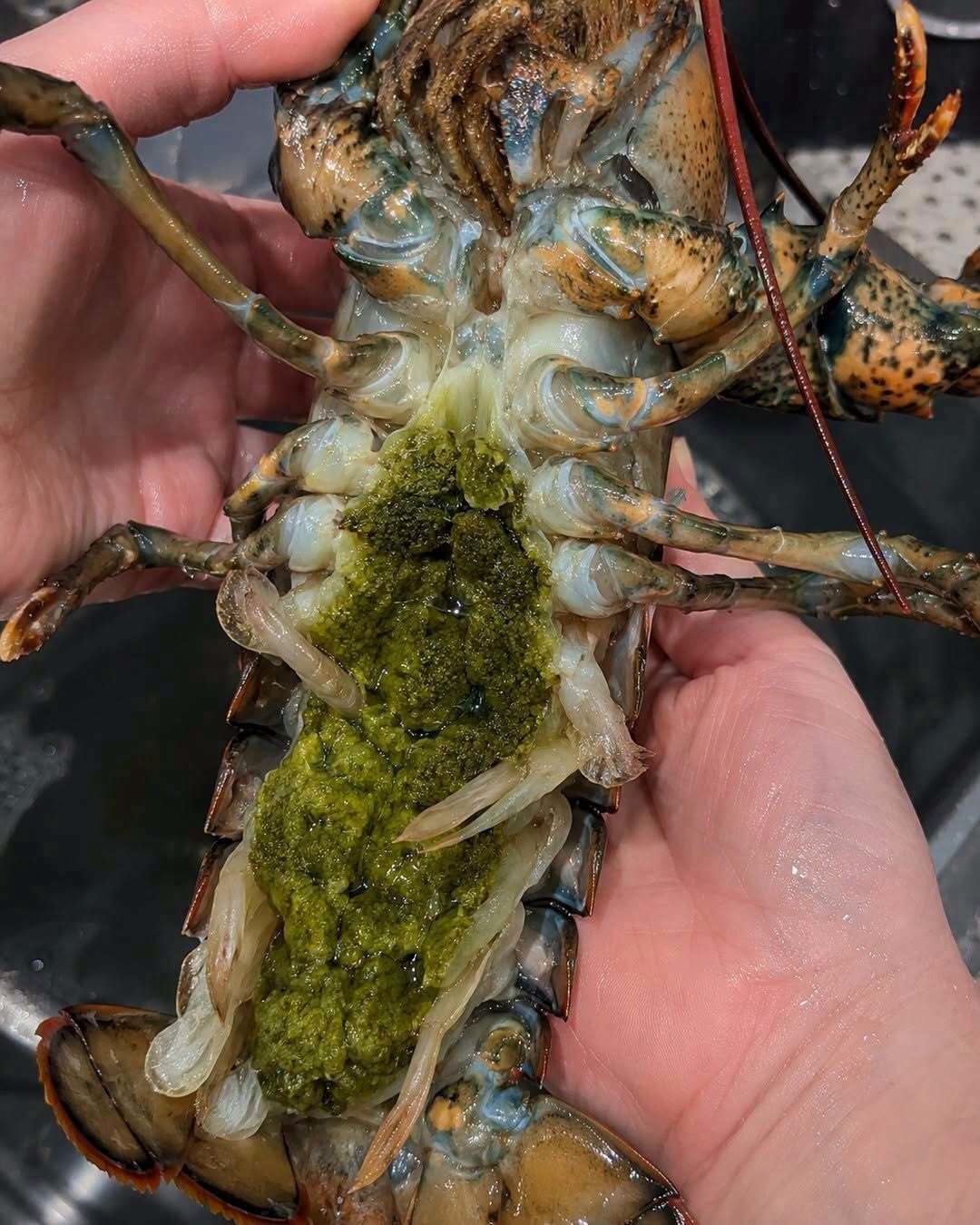
For many seafood lovers, opening a freshly cooked lobster is part of the dining experience. But if you’ve ever spotted a bright green substance inside the body cavity, you may have paused and wondered what it was.
Is it part of the lobster? Is it safe to eat? Or should it be removed before serving?
The answer lies in a unique organ called tomalley. While it has long been considered a delicacy by some, it has also become the subject of food safety discussions. Understanding what tomalley is—and what health authorities say about it—can help you make an informed choice the next time lobster is on the menu.
What Is Tomalley?
The green substance found inside a cooked lobster is known as tomalley.
Tomalley is the lobster’s digestive gland, performing functions similar to those of the liver and pancreas in other animals. It plays several important roles, including:
- Producing digestive enzymes
- Breaking down food
- Storing nutrients
- Filtering substances absorbed from the lobster’s environment
Its green color comes from natural pigments and the contents of the digestive system. Depending on the lobster’s diet and the season, the shade can range from light green to deep olive.
Tomalley is completely separate from the lobster’s meat and is located within the body cavity.

Why Do Some People Eat It?
For generations, many seafood enthusiasts have considered tomalley a culinary delicacy.
Its smooth, creamy consistency and concentrated seafood flavor make it popular in certain traditional recipes. Some cooks use small amounts to:
- Spread on toasted bread
- Blend into seafood sauces
- Mix into lobster bisque
- Enhance shellfish pasta dishes
- Add richness to seafood butter
Fans of tomalley often describe its taste as intensely savory, rich, and slightly mineral, offering a stronger flavor than the lobster meat itself.
However, taste preferences vary widely. Some diners enjoy its bold character, while others prefer to remove it before eating.
Why Do Food Safety Experts Discuss Tomalley?
Although tomalley is a natural part of the lobster, food safety agencies advise some caution regarding its consumption.
Because tomalley functions as the lobster’s digestive gland, it can accumulate certain naturally occurring environmental contaminants that may be present in ocean waters.
For this reason, several public health authorities recommend limiting or avoiding consumption of tomalley, particularly in areas where marine contaminants have been detected.
It’s important to note that this guidance does not apply to the lobster meat itself. The muscle meat found in the claws, tail, and legs is generally considered safe to eat when properly cooked and handled.

Does Cooking Remove These Contaminants?
A common misconception is that cooking eliminates everything that may be present in food.
While proper cooking destroys many harmful bacteria and parasites, it does not necessarily remove certain environmental contaminants that can accumulate in an animal’s organs.
Because tomalley acts as a filtering and storage organ, cooking does not eliminate substances that may already be present there.
This is one reason why some food safety organizations recommend avoiding regular consumption of tomalley.
What About the Red Material Inside a Female Lobster?
People sometimes notice another colorful substance inside cooked lobster.
The bright red material is known as coral, which consists of the lobster’s eggs (roe). Unlike tomalley, coral serves a reproductive function rather than a digestive one.
In many culinary traditions, lobster roe is also considered a delicacy and is used in sauces, seafood spreads, and specialty dishes.
As with all seafood products, consumers should follow local food safety recommendations regarding preparation and consumption.
Is the Green Color Ever a Sign That Something Is Wrong?
Not necessarily.
The presence of green tomalley is completely normal in healthy lobsters.
Color variations can occur naturally depending on factors such as:
- Diet
- Age
- Season
- Habitat
- Individual differences
A healthy cooked lobster may contain green tomalley without indicating spoilage.
However, as with any seafood, lobster should never be eaten if it develops an unpleasant odor, unusual texture, or other signs of spoilage after cooking or storage.
Tips for Enjoying Lobster Safely
To make the most of your seafood meal, food safety experts generally recommend the following:
- Purchase lobster from reputable seafood suppliers.
- Keep lobster properly refrigerated before cooking.
- Cook lobster thoroughly according to food safety guidelines.
- Refrigerate leftovers promptly.
- Follow local public health recommendations regarding tomalley consumption.
- When in doubt, enjoy the lobster meat while choosing whether or not to eat the tomalley based on current health guidance and personal preference.
Why Lobsters Continue to Fascinate Scientists
Lobsters are remarkable marine animals that have adapted to life on the ocean floor over millions of years.
Their bodies contain specialized organs that allow them to digest a wide variety of foods, regenerate lost limbs over time, and survive in changing marine environments.
Studying lobster anatomy helps researchers better understand marine biology, ocean ecosystems, and the health of coastal waters.
Even a small organ like the tomalley offers insight into how these animals process nutrients and interact with their environment.
Conclusion
The green substance inside a lobster, known as tomalley, is a natural digestive gland that plays an essential role in the animal’s biology. For many people, it has long been regarded as a flavorful delicacy, while others choose not to eat it because of food safety recommendations concerning environmental contaminants.
Ultimately, understanding what tomalley is allows diners to make informed choices based on current scientific guidance and their own preferences. Whether you enjoy every part of the lobster or simply savor the tender meat, learning more about these fascinating sea creatures reminds us how much there is to discover beneath the surface of the ocean.
Human curiosity has always inspired us to explore the foods we eat and the natural world around us. By combining culinary traditions with scientific knowledge, we can appreciate both the complexity of marine life and the importance of making informed decisions.
Sources
- U.S. Food and Drug Administration (FDA) – Seafood Safety: https://www.fda.gov/food
- Maine Department of Marine Resources – Lobster Biology: https://www.maine.gov/dmr
- National Oceanic and Atmospheric Administration (NOAA) – American Lobster: https://www.fisheries.noaa.gov
- Health Canada – Advice on Lobster Tomalley: https://www.canada.ca
- Encyclopedia Britannica – Lobster: https://www.britannica.com/animal/lobster-crustacean