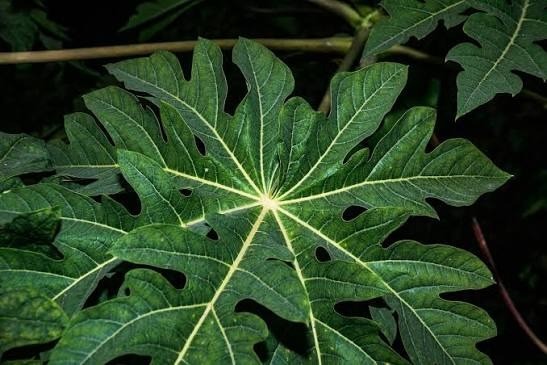
Papaya is widely enjoyed for its sweet flesh, bright colour, and nutritional value. The fruit provides vitamin C, folate, fibre, and carotenoids, making it a familiar part of diets in many tropical and subtropical regions. Yet another part of the Carica papaya plant has also attracted attention: the leaf.
Papaya leaves have a long history in traditional practices in parts of Asia, Africa, Latin America, and the Pacific. They are commonly prepared as a bitter tea, juice, or topical paste. More recently, interest in papaya leaf extract has grown because the leaves contain naturally occurring compounds, including flavonoids, phenolic compounds, alkaloids, and enzymes associated with the plant’s latex.
Scientific interest does not automatically mean that a traditional preparation is proven to treat disease. Much of the research on papaya leaves remains preliminary, involving laboratory experiments, animal studies, small clinical trials, or extracts that may differ greatly from homemade teas and juices. This distinction is especially important when health claims involve serious illnesses such as dengue fever, diabetes, or liver disease.
Here is a balanced look at eight frequently discussed papaya leaf benefits, what current research can and cannot show, and the precautions worth considering before using any herbal preparation.
1. Papaya Leaves Contain Antioxidant Plant Compounds
Papaya leaves contain several compounds that have antioxidant activity in laboratory testing. Antioxidants are substances that can help counter oxidation reactions involving unstable molecules often called free radicals. In normal biological processes, the body produces free radicals and also uses its own antioxidant systems to manage them. Excessive oxidative stress has been linked in research to cell damage and the development of some chronic conditions.
Flavonoids and phenolic compounds found in plants are among the substances researchers study for antioxidant effects. This makes papaya leaves an interesting subject for nutritional and pharmacological research. However, antioxidant activity measured in a test tube does not necessarily predict a meaningful health effect in people who drink papaya leaf tea or take an extract.
A varied diet remains the most established way to obtain beneficial plant compounds. Fruits, vegetables, legumes, whole grains, nuts, and seeds provide a broad mixture of nutrients and phytochemicals, often with stronger evidence for long-term health than any single herbal product.
2. Papaya Leaf Extract Has Been Studied in Dengue Fever
The best-known medical claim surrounding papaya leaves concerns dengue fever, a mosquito-borne viral disease found in many parts of the world. Dengue can cause high fever, headache, body aches, nausea, rash, and fatigue. In a smaller number of cases, it can progress to severe dengue, which requires urgent medical care.
Some small clinical studies have examined whether papaya leaf extract may influence platelet counts in people with dengue. Platelets are blood components involved in clotting, and low platelet counts can occur during dengue. Certain studies have reported a faster rise in platelet counts among participants given papaya leaf preparations. However, the studies vary in size, design, preparations used, and outcomes measured.
Importantly, a higher platelet count alone does not prove that an intervention prevents severe dengue, shortens illness, or improves survival. Major public health guidance continues to emphasize clinical assessment, monitoring, hydration advice from healthcare professionals, and careful recognition of warning signs.
The World Health Organization advises people with warning signs of severe dengue to seek medical care immediately. These signs include severe abdominal pain, persistent vomiting, bleeding from the nose or gums, blood in vomit or stool, marked weakness, restlessness, or difficulty breathing. Papaya leaf juice must never replace medical evaluation or hospital treatment for suspected dengue.
3. Traditional Digestive Uses Are Linked to Plant Enzymes
Papaya is associated with papain, a protein-digesting enzyme found primarily in the plant’s latex and present in several papaya tissues. Papaya leaves also contain enzymes and other bioactive substances that have led to their traditional use for digestive discomfort.
In some communities, leaf tea is used after heavy meals or for symptoms described as indigestion, bloating, or poor appetite. The bitter flavour of the preparation is often considered part of its traditional appeal. Yet there is limited high-quality human evidence showing that papaya leaf tea can reliably treat indigestion, constipation, irritable bowel syndrome, ulcers, or other digestive disorders.
People experiencing persistent digestive symptoms should not self-treat indefinitely with herbal products. Ongoing abdominal pain, unexplained weight loss, blood in stool, trouble swallowing, persistent vomiting, or a major change in bowel habits should be assessed by a qualified healthcare professional.
For routine digestive health, evidence-based habits are more dependable: eating enough dietary fibre, drinking adequate fluids, staying physically active, and including a range of plant foods in meals. Individuals with a diagnosed gastrointestinal condition should follow personalised medical advice.
4. Early Research Examines Possible Liver-Protective Effects
The liver has essential functions in metabolism, nutrient processing, production of proteins, storage of energy, and removal or transformation of many substances. Because papaya leaf extracts show antioxidant activity in laboratory research, scientists have explored whether they might affect markers related to liver injury.
Some animal and laboratory studies suggest that papaya leaf compounds may have protective effects under specific experimental conditions. These findings are useful for generating future research questions, but they do not demonstrate that papaya leaf tea “detoxifies” the liver or treats liver disease in people.
The term “liver detox” can be misleading. A healthy liver already performs the body’s normal processing and elimination functions. There is no credible evidence that a papaya leaf cleanse removes toxins in the way that many commercial wellness claims suggest.
Anyone with hepatitis, fatty liver disease, jaundice, cirrhosis, abnormal liver blood tests, or a history of alcohol-related liver problems should speak with a clinician before trying herbal remedies. Herbal and dietary supplements can sometimes cause liver injury, particularly when products are concentrated, contaminated, mislabeled, or combined with medicines.
5. Anti-Inflammatory Activity Is Still a Research Question
Inflammation is a normal part of the immune system’s response to injury or infection. It can support healing in the short term. Long-lasting inflammation, however, is associated with a range of chronic health conditions. This has prompted researchers to investigate anti-inflammatory compounds from plants, including papaya leaves.
Laboratory studies indicate that some papaya leaf constituents may affect pathways involved in inflammation. These findings are promising in a scientific sense, but they are not enough to establish a treatment. The amount of a compound used in laboratory experiments may be very different from the amount absorbed after drinking tea or consuming juice.
There is currently insufficient reliable evidence to recommend papaya leaves for arthritis, asthma, inflammatory bowel disease, autoimmune disorders, or chronic pain. People with these conditions should not stop prescribed treatment because of online claims about natural remedies. Effective management often requires medical evaluation, appropriate medication, lifestyle support, and monitoring.
6. Papaya Leaf Compounds Have Drawn Interest in Skin Care
Natural skin care products often feature plant extracts because of their antioxidant, enzyme-related, or antimicrobial properties. Papaya leaf preparations have similarly gained attention in traditional beauty routines. Some people crush leaves into a paste or use leaf-infused water as a wash.
Although papaya-derived ingredients may be included in cosmetic formulations, there is not strong clinical evidence that homemade papaya leaf paste treats acne, eczema, fungal skin infections, psoriasis, or scars. Skin conditions have many possible causes, and the wrong treatment can delay effective care.
There is also a practical safety issue. Fresh plant material is not sterile, and homemade mixtures can introduce irritation or contamination. Papaya latex may trigger allergic reactions in some people, particularly those with latex sensitivity. A person using a topical papaya product should stop immediately if itching, redness, swelling, burning, or a rash develops.
Do not apply homemade plant preparations to open wounds, infected skin, the eyes, or mucous membranes. For persistent acne, eczema flares, spreading rashes, or suspected infection, advice from a pharmacist, dermatologist, or other healthcare professional is a safer option.
7. Research on Blood Sugar Does Not Support Replacing Diabetes Care
Several laboratory and animal studies have explored whether compounds in papaya leaves could influence blood glucose metabolism. This is an area of legitimate scientific interest, especially as diabetes affects hundreds of millions of people worldwide. Still, preliminary findings do not establish an effective, safe dose for humans.
There is not enough robust clinical evidence to conclude that papaya leaf tea or juice can control type 1 diabetes, type 2 diabetes, or prediabetes. It should never replace insulin, glucose-lowering medicines, regular blood sugar monitoring, nutrition guidance, or clinical follow-up.
People taking diabetes medicines should be especially careful with herbal products. Any substance that changes food intake, digestion, or glucose regulation could theoretically affect blood sugar and increase the risk of levels becoming too low or too high. A doctor, diabetes nurse, or pharmacist can help assess potential interactions and explain how to monitor safely.
8. Hair and Scalp Claims Remain Mostly Traditional
Papaya leaf water is sometimes used as a hair rinse, while leaf extracts may appear in homemade scalp preparations. Traditional users may describe these methods as helpful for dandruff, scalp cleanliness, or stronger-looking hair. The interest is partly connected to the plant’s compounds and possible antimicrobial activity observed in early research.
However, there is no strong clinical evidence that papaya leaves stimulate hair growth, reverse hair loss, cure dandruff, or treat scalp infections. Hair shedding can occur for many reasons, including genetics, hormonal changes, nutritional deficiencies, stress, medication, autoimmune conditions, and scalp disorders.
Persistent scalp itching, thick scaling, patches of hair loss, sudden shedding, or painful skin changes should be evaluated by a healthcare professional. A diagnosis matters because treatments differ substantially between conditions.
Traditional Ways Papaya Leaves Are Prepared
Traditional preparation methods vary by region and family practice. Fresh leaves may be simmered in water to make tea, crushed and strained for juice, or ground into a paste for external use. The taste of leaf tea and juice is typically very bitter.
These methods should not be confused with regulated medicines. The concentration of active compounds can change depending on the plant variety, growing conditions, leaf age, harvesting method, storage, and preparation. Commercial supplements can also vary in purity and strength.
There is no universally accepted medicinal dosage for papaya leaf tea, juice, or extract. Claims that a specific amount is guaranteed to improve platelets, lower blood sugar, or cure a disease are not supported by sufficiently strong evidence.
Important Safety Considerations Before Using Papaya Leaves
“Natural” does not always mean safe for everyone. The safety of long-term papaya leaf use and concentrated extracts has not been fully established. Pregnancy and breastfeeding require particular caution because reliable safety data are limited. People who are pregnant, trying to conceive, or breastfeeding should avoid medicinal use unless a qualified clinician specifically recommends it.
People with allergies to papaya or latex should be cautious, as cross-reactive allergic responses can occur. It is also sensible to discuss use with a clinician or pharmacist if you take prescription medicines, especially medication for diabetes, blood clotting, or chronic conditions.
Stop using a preparation and seek medical advice if you develop symptoms such as a rash, swelling, breathing difficulty, severe stomach upset, dizziness, or other unexpected effects. Most importantly, do not rely on papaya leaves to manage serious symptoms or delay professional care.
Final Thoughts on Papaya Leaf Benefits
Papaya leaves are a compelling example of how traditional knowledge can inspire scientific research. They contain plant compounds worth studying, and early research has raised questions about antioxidant activity, inflammatory pathways, and platelet counts in dengue fever. Nevertheless, promising early findings are not the same as proven treatment benefits.
For now, papaya leaves are best viewed as a traditional botanical product with uncertain clinical effects rather than a replacement for evidence-based healthcare. A balanced diet, preventive care, recommended vaccinations where appropriate, and timely medical advice remain the foundations of good health.
Sources
- World Health Organization: Dengue and Severe Dengue
- Centers for Disease Control and Prevention: About Dengue
- National Center for Complementary and Integrative Health: Herbs at a Glance
- National Institute of Diabetes and Digestive and Kidney Diseases: What Is Diabetes?
- Mayo Clinic: Herbal Supplements and Safety
Disclaimer: This content is intended for entertainment purposes only and is not based on real events.