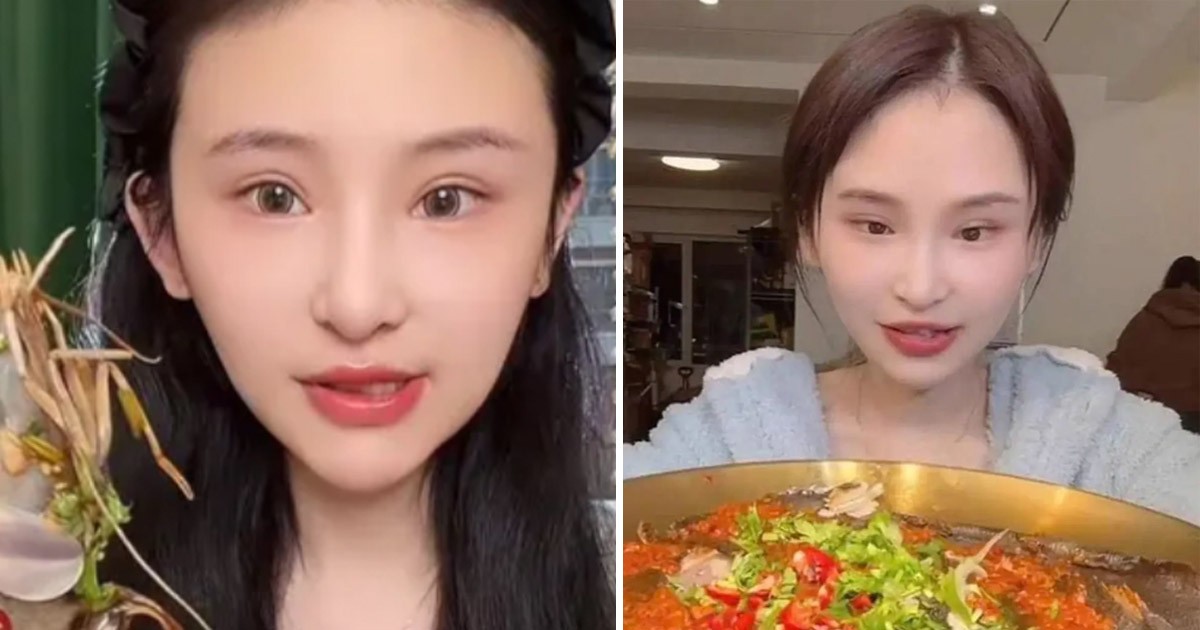
Ganfan Yingying: The Story Behind the Mukbang Creator’s Final Health Warning
For millions of people around the world, mukbang began as a simple form of online entertainment.
Viewers watched creators eat while chatting with their audiences, turning an ordinary meal into an interactive livestream. Over time, however, the format evolved. Bigger portions, unusual food challenges, longer broadcasts, sponsorships, and product promotions became increasingly common.
For some creators, attracting attention meant constantly finding a way to make the next video more impressive than the last.
Chinese mukbang creator Chen Ziyi, better known online as Yingying or Ganfan Yingying, became one of the personalities associated with this trend. With more than one million followers across her social media platforms, she built an audience around videos and livestreams featuring unusually large quantities of food.
But shortly before her death, Yingying reportedly spoke openly about the physical pressure that came with creating this type of content.
Her story has since prompted renewed discussion about the risks that can emerge when online entertainment becomes closely tied to extreme eating habits.
Who Was Ganfan Yingying?
Chen Ziyi, known online as Yingying or Ganfan Yingying, was a Chinese content creator whose videos centered around food and large eating challenges.
Like many mukbang personalities, she developed a loyal audience by turning meals into entertainment.
Her videos often featured quantities of food far beyond what would normally be considered an ordinary meal. In one widely circulated video, she was reportedly shown consuming dozens of eggs while also promoting the product.
The scale of these challenges helped her attract viewers.
For creators working in a highly competitive online environment, however, popularity can bring its own pressures.
The more attention a particular type of content receives, the greater the incentive can become to repeat it or make it even more extreme.
That dynamic appears to have been something Yingying herself became increasingly aware of.
Yingying Spoke About Her Health Before Her Death
According to reports, Yingying was hospitalized after developing hypokalemia, a condition in which the level of potassium in the blood becomes abnormally low.
The condition can have many different causes. Cleveland Clinic explains that potassium levels can fall because of factors including losses through the digestive system, certain medications, and some underlying medical conditions.
Low potassium can be particularly concerning because potassium plays an important role in normal muscle and heart function.
Yingying reportedly said that this was not her first hospitalization related to low potassium.
In a video published just days before her death, she discussed the physical toll of her eating content and acknowledged the pressure she felt to consume increasingly large quantities because such videos could attract more viewers.
Her comments offered a glimpse into the difficult relationship between audience expectations and the demands placed on online creators.
The Pressure to Make Bigger Content
Social media rewards attention.
A creator may discover that a particular video performs well and then feel pressure to recreate that success.
For mukbang creators, this can sometimes mean larger portions, longer livestreams or more unusual food combinations.
The problem is that the human body has limits.
What may look entertaining for a few minutes on a screen can require significant physical effort from the person creating the content.
Yingying reportedly acknowledged this pressure herself.
She explained that eating larger quantities could bring more viewers, which encouraged her to push herself further.
That observation is important because it highlights a broader issue with internet culture.
Creators are not simply producing content for themselves. They are responding to algorithms, audience expectations, sponsorships, competition and financial incentives.
When extreme behavior becomes profitable, the line between entertainment and personal risk can become increasingly difficult to maintain.
Understanding Hypokalemia
Hypokalemia means that potassium levels in the blood are lower than normal.
Potassium is an essential mineral and electrolyte. It helps the body maintain normal muscle function, nerve signaling and heart rhythm.
According to Cleveland Clinic, hypokalemia can result from excessive potassium loss through vomiting or diarrhea, among other causes.
The condition can range from mild to serious depending on how low potassium levels become and how quickly they change.
That is why repeated episodes of significantly low potassium should not be treated casually.
Importantly, there is no single explanation for why someone develops hypokalemia. Medical professionals generally need to determine the underlying cause before deciding on appropriate treatment.
In Yingying’s case, reports have connected her hospitalization to the demands of her eating-related content, while her family reportedly did not publicly disclose an official cause of death.
Some media reports have suggested a connection between her health condition and a later cardiac event, but those reports should be distinguished from an official statement from her family.
Her Final Message Was About Health
Perhaps the most striking part of Yingying’s final public discussion was the warning she reportedly gave her audience.
Her message was simple: health comes first.
That statement has taken on greater significance following her death.
Behind the large portions and entertaining videos was a person who recognized that the demands of online content creation could have serious consequences.
Her words also challenge viewers to think differently about what they see online.
A video may last only a few minutes, but the physical preparation and consequences behind it are not visible.
The audience sees the finished performance.
The creator experiences everything that happens before, during and after filming.
The Rise of Mukbang Culture
Mukbang originated in South Korea before spreading internationally.
The original concept was relatively straightforward: creators ate meals while talking with viewers.
Part of the appeal was social.
People who were eating alone could watch someone else eat and feel as though they were sharing a meal with another person.
The format gradually changed as creators competed for attention.
Some began eating larger meals, experimenting with unusual foods or turning meals into challenges.
As social platforms became increasingly commercial, mukbang also became connected to advertising, sponsorships, livestream shopping and product promotion.
That evolution created new opportunities for creators.
It also introduced new pressures.
When a creator’s income depends on views and engagement, stopping a popular format can become financially difficult.
China’s Efforts to Address Excessive Eating Content
The concerns surrounding extreme food content are not entirely new.
China introduced measures addressing food waste and excessive eating content in 2021.
The country’s Anti-Food Waste Law included provisions aimed at discouraging the production and distribution of content promoting excessive food consumption and binge eating.
The legislation reflected a broader concern about how online entertainment can influence attitudes toward food.
For viewers, an extreme eating video may appear harmless.
But when such content becomes highly profitable and is repeatedly rewarded with attention, it can encourage creators to continually increase the scale of their challenges.
The issue is therefore larger than any single influencer.
It is about the relationship between creators, platforms, audiences and commercial incentives.
When Entertainment Becomes a Physical Challenge
There is an important distinction between enjoying food content and encouraging dangerous behavior.
Food-focused entertainment can take many healthy forms.
Creators can share recipes, restaurant experiences, cultural traditions, cooking techniques or ordinary meals with their audiences.
The concern arises when the spectacle depends on consuming quantities that place unusual demands on the body.
At that point, the content is no longer simply about food.
It becomes a physical performance.
And physical performances have consequences that viewers may not immediately recognize.
Yingying’s experience illustrates why creators should not feel that they have to sacrifice their well-being simply to maintain audience engagement.
The Hidden Cost of Going Viral
Going viral can look like the ultimate goal for an online creator.
Millions of views can bring followers, sponsorships and new opportunities.
But popularity can also create an invisible expectation: do it again.
If an extreme video receives enormous attention, an ordinary video may seem less successful by comparison.
That can create a cycle in which creators continually search for something bigger or more surprising.
This is particularly relevant in food-related content.
A normal meal may not attract the same attention as an enormous spread or an unusual eating challenge.
Over time, the pressure to entertain can overshadow the creator’s physical limits.
Yingying’s story has therefore resonated beyond the mukbang community.
It raises a question that applies to many areas of social media: How far should someone go to keep an audience watching?
Remembering Yingying Beyond the Videos
It can be easy for audiences to remember an internet personality only through their most popular content.
For Yingying, that means remembering the enormous meals and food challenges that helped her build an audience.
But her final conversations offered another side of her story.
She was aware of the pressures surrounding her work and openly acknowledged that health was more important than money.
That message deserves attention independently of the circumstances surrounding her death.
Her story also serves as a reminder that creators are people rather than characters who exist solely for entertainment.
Behind every livestream is someone with a body that has limits, emotions, responsibilities and a life outside the screen.
A Broader Conversation About Social Media
The story of Ganfan Yingying is ultimately part of a much larger conversation.
Social media has created opportunities that would have been unimaginable a generation ago.
Anyone with a phone and an idea can potentially build an audience.
But the same systems that create opportunity can also reward increasingly extreme content.
That is why responsibility cannot fall entirely on creators.
Platforms, advertisers and audiences all influence what becomes popular.
Viewers decide what they watch.
Algorithms determine what receives greater visibility.
Advertisers choose where to place their money.
Creators respond to those incentives.
Changing the culture therefore requires awareness from everyone involved.
Health Should Never Become the Price of Entertainment
Yingying’s final warning was perhaps the most important message to emerge from her story.
Making money matters.
Building a career matters.
Connecting with an audience matters.
But none of those things should require someone to ignore serious warning signs from their own body.
Her experience reminds viewers that what looks entertaining on a screen may involve sacrifices that are invisible to the audience.
The most successful content does not necessarily have to be the most extreme.
There is room online for creativity, humor, food, storytelling and community without turning physical endurance into the main attraction.
Final Thoughts
Chen Ziyi, known to millions of viewers as Ganfan Yingying, built a significant online following through a form of entertainment that has become increasingly popular around the world.
Her story now carries a different message.
Behind the enormous meals and livestreams was a young creator who reportedly recognized the pressure of constantly pushing herself further. Her warning that health should come before money is a message that extends far beyond mukbang.
The internet moves quickly. Trends appear, audiences grow and yesterday’s viral video can be forgotten almost overnight.
Health does not work that way.
The human body has limits, and no number of views can change that.
Yingying’s story is therefore not simply about one creator or one online trend. It is a reminder of the responsibility that comes with turning everyday life into entertainment—and of why, sometimes, the most important thing a creator can say is that taking care of yourself matters more than keeping the audience watching.
Sources
-
Cleveland Clinic — Information about hypokalemia and low potassium levels.
-
Tyla — Reporting on Yingying’s death, her online career and the reported circumstances surrounding her hospitalization.
-
Chinese government / Anti-Food Waste Law — Background on China’s restrictions concerning content promoting excessive food consumption.
-
Family obituary — Reported September 4, 2026, regarding Yingying’s death on August 17.