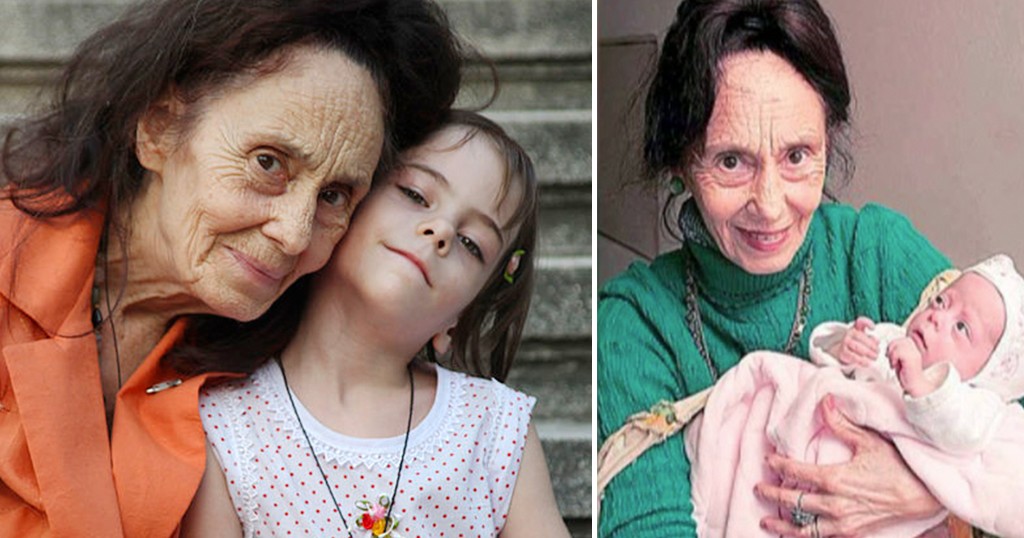
Adriana Iliescu: The Story of the World’s Oldest Mother and Her Daughter 20 Years On

Becoming a parent is a transformative moment that alters the course of a person’s life. The day a child is born is often recalled as a moment of immense joy and responsibility—a day never forgotten. For Adriana Iliescu, her journey to motherhood took an extraordinary path that set her apart on the global stage. In 2005, Adriana Iliescu made headlines worldwide by becoming a mother for the first time at age 66, making her the world’s oldest recorded mother at that time. The birth of her daughter, Eliza, brought her infinite happiness but also sparked international debate and discussion—conversations that continue to resonate, especially now, as new photographs of her daughter appear in the spotlight two decades on.
The Birth that Made History
Eliza Iliescu’s arrival in 2005 in Romania was not only a pivotal moment for her mother, but a historic event recognized globally. At 66 years old, Adriana Iliescu set a world record for the oldest age at which a woman had given birth. Media outlets from Europe to the Americas covered her story extensively, and her name was added to the Guinness Book of World Records. The case re-ignited ongoing scientific, ethical, and societal debates regarding reproductive medicine, maternal age, and the boundaries of medical intervention.
For Iliescu, however, the birth of her daughter was simply a long-awaited moment, fulfilling a dream she had harbored for decades. She described the arrival of Eliza as overwhelming joy, a precious gift she had long believed was out of reach.

Public Scrutiny and the Realities of Late Motherhood
Adriana Iliescu’s unprecedented journey into motherhood drew both admiration and criticism. Some people saw her as a pioneer, demonstrating the potential of modern medicine, while others criticized her decision. Many questioned whether it was fair for a woman of such advanced age to take on the responsibility of raising a child, voicing concerns about the child’s wellbeing and future.
In a 2010 interview with the Daily Mail, Adriana addressed these concerns directly. “The mirror is unkind to women, but if we are talking about my energy then I feel like a young woman. I feel like I’m 27 and, when I feel a bit more tired, I feel like I’m 37. I am healthier than women more than half my age,” she stated, rejecting the notion that age alone should determine one’s ability to parent.
She also noted, “People think they are being funny when they call me granny, but I didn’t have Eliza to make me look younger. I never feel my years.” At the time, she even expressed openness to the idea of having another child, citing advances in reproductive medicine involving women of similar age overseas.

Bond Between Mother and Daughter
Despite persistent scrutiny about her age, Iliescu maintained that she was a loving and competent parent. She described a special bond with her daughter, Eliza—one characterized by emotional strength and reciprocal admiration. Eliza, by all accounts, grew up as a bright, energetic, and well-adjusted child, thriving under her mother’s dedicated care.
Adriana insisted, “I don’t smoke and I don’t drink. If I live as long as my parents did, Eliza will be 20 by the time I pass away. I think I still have a lot to give her.” Her parenting was intentional and focused, prioritizing Eliza’s happiness, health, and future.
The Path to Motherhood: Obstacles and Determination
Adriana Iliescu did not set out to be the world’s oldest mother. As a young woman, she married young, but a medical emergency required an abortion. Later, at the age of 24, her husband abandoned her, leaving her to focus on academic pursuits and her career as a university lecturer. During these years, the opportunity to become a mother seemed increasingly unattainable—the concept of in vitro fertilization (IVF) was not yet a reality in Romania.

After completing her doctorate at 37, Iliescu was ready to consider motherhood, if only the medical means were available. IVF first became an option for Romanian women when she was 57. Adriana tried repeatedly, but her initial pregnancy attempt in 2000 ended in disappointment. Despite skepticism from her peers—who often regarded her ambition as unconventional—Iliescu persisted. She viewed the decision as personal and rooted in a deep desire to bring life into the world, even when others labeled her actions as immoral.
The Medical Journey and Eliza’s Birth
Turning to Dr. Bogdan Marinescu, a leading fertility expert in Bucharest, Adriana underwent a successful IVF procedure that led to her pregnancy with triplets. Tragically, only Eliza survived after the other two fetuses died in utero, and Eliza was born prematurely, requiring extended time in a neonatal intensive care unit (NICU).

Despite these challenges, Eliza grew stronger, and her mother saw her as a miracle. Adriana’s deep religious faith inspired her to baptize her daughter, but she faced further criticism, even from religious authorities, questioning the morality of her late-life motherhood. One nun reportedly referred to Eliza as “the product of dark force.” Nevertheless, Iliescu remained steadfast, declaring that Eliza was a gift from God and expressing unwavering gratitude for her daughter’s life.
Ethical and Societal Debates: International Perspectives
Adriana Iliescu’s case brought attention to an ongoing international debate about late-life pregnancy and the role of assisted reproductive technology (ART). IVF, egg donation, and other fertility treatments have created new pathways to parenthood, but they also raise complex ethical, social, and medical questions.
Some medical experts emphasize the increased risks associated with late pregnancies, such as premature birth, complications during delivery, and potential long-term health effects for both mother and child. Others point to the psychological and practical challenges of raising a child during advanced age. In many countries, medical guidelines set upper age limits for fertility treatments, though these can be flexible depending on circumstances and medical advancements.
The World Health Organization (WHO) and numerous ethical review boards highlight the importance of comprehensive assessments of parental health, support systems, and long-term welfare planning before approving fertility treatments for older parents. Public opinion on late-life pregnancy varies widely worldwide, reflecting differences in culture, religion, and access to healthcare. Adriana’s story has been extensively discussed in international media, academic articles, and bioethics seminars, often cited as a benchmark case in the ongoing debate.

Adriana Iliescu Today: Life After 20 Years of Motherhood
Twenty years after the birth that made global headlines, Adriana Iliescu and her daughter’s story continues to attract public interest. Now in her eighties, Iliescu remains active and engaged. Despite frequently being mistaken for Eliza’s grandmother, she insists she still feels young in mind and spirit. Adriana continues to write prolifically—she has published more than 25 children’s books—and remains a part-time lecturer at a university in Bucharest.
Always pragmatic, Adriana ensured that Eliza’s well-being would be safeguarded in the event of her own passing. She arranged for Dr. Bogdan Marinescu, the same fertility specialist who was fundamental to Eliza’s birth, to serve as Eliza’s godfather and legal guardian if needed. This decision reflects Adriana’s thoughtful approach to parenthood, considering not only the daily requirements of raising a child, but also her daughter’s long-term security.
The Rise of Eliza Iliescu: A Daughter’s Journey
In the years since her birth, Eliza Iliescu has developed into a well-rounded and successful young woman. According to recent reports by Brightside, Eliza is an award-winning student with a passion for philosophy, literature, and the Romanian language. She has earned public recognition and accolades within Romania for her academic and personal achievements, admired as a role model for her dedication and poise.
Recently, Eliza took the stage with former Eurovision contestant Theodor Andrei, impressing audiences with her confidence and talent. Social media reactions were overwhelmingly positive, with many praising her as a role model for young people and an embodiment of grace and ambition. Eliza’s plans include further academic study, with aspirations to attend college and continue her mother’s legacy in education and the humanities.

Lessons and Legacy: The Impact of Adriana and Eliza’s Story
Adriana Iliescu’s life story—marked by perseverance, love, and controversy—has challenged public perceptions of motherhood, age, and family. Her resilience in the face of criticism, combined with her devotion to Eliza, has inspired discussions about reproductive rights and changing family structures in the 21st century.
The story has also served as a catalyst for discussions in the medical, ethical, and legal communities regarding the appropriateness and limits of assisted reproductive technologies. It highlights the importance of prioritizing the child’s welfare, preparing comprehensive support structures, and respecting individual autonomy—all key components in ethical fertility practices worldwide.
For society at large, Adriana and Eliza’s journey is a testament to the power of determination and love. Despite initial skepticism about their circumstances, both mother and daughter have shown the ways in which families can thrive—even when they exist outside typical expectations.
Conclusion
Twenty years after Adriana Iliescu made history, her story remains as important and relevant as ever. It continues to prompt reflection on the evolving definitions of motherhood, the fascinating advances in medical science, and the complex interplay of societal values with individual rights and scientific progress. Today, both Adriana and Eliza are living proof of the possibilities that emerge when perseverance meets opportunity—a story of courage, resilience, and hope for families of every shape and form.
Sources
- Reuters
- BBC
- Al Jazeera
- The Guardian
- World Health Organization (WHO)
- Centers for Disease Control and Prevention (CDC)
- Mayo Clinic
Disclaimer: This content is intended for entertainment purposes only and is not based on real events.