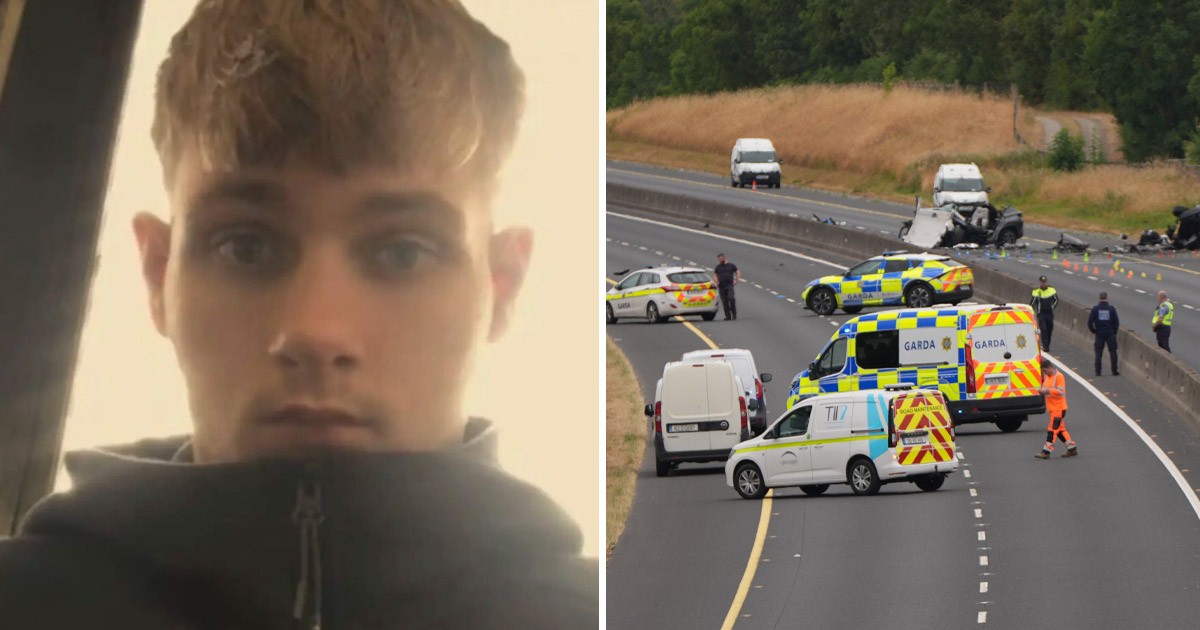
Some stories are difficult not because they are complicated, but because they leave so many unanswered questions.
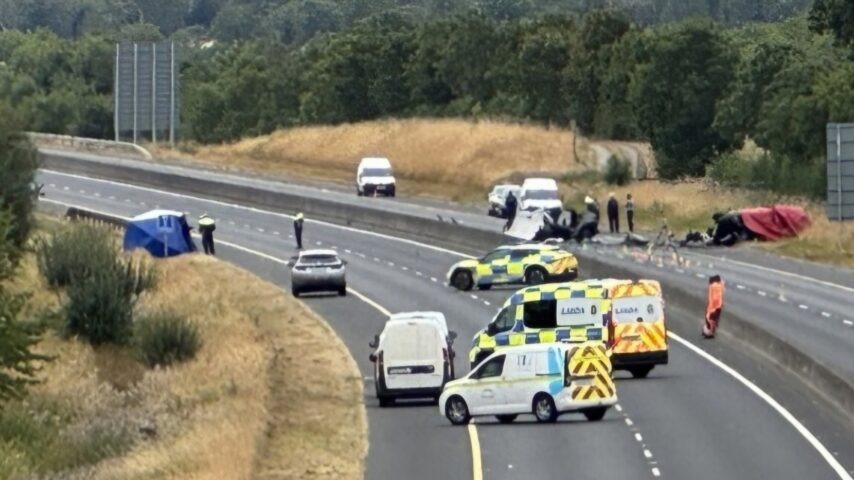
On August 16, 2026, a devastating road incident in County Kildare, Ireland, brought together several families whose lives were changed forever. Five teenagers and young men, Kamil Pustkowski, 17, Jack Kennedy, 17, Jeremy O’Brien, 18, Joe Carthy, 15, and Alex McCarthy, 16, were involved in a fatal collision after their vehicle was reportedly traveling in the wrong direction on the M9 motorway.
The incident also involved another vehicle carrying members of a family traveling toward the airport. Several passengers were seriously injured, including a seven-year-old child who was hospitalized.
In the aftermath, Kamil’s mother, Emilia Pustkowska, spoke publicly about her son’s struggles and revealed that she had previously asked a judge to take him into custody because she felt unable to manage his behavior at home.
Her comments have raised difficult questions about teenagers, parental responsibility, the justice system and whether families sometimes recognize warning signs before institutions are able to respond.
At the same time, the tragedy should not be reduced to a simple story of blame. Multiple families have been affected, and the circumstances surrounding the collision remain a matter for investigators.
What Happened on the M9?
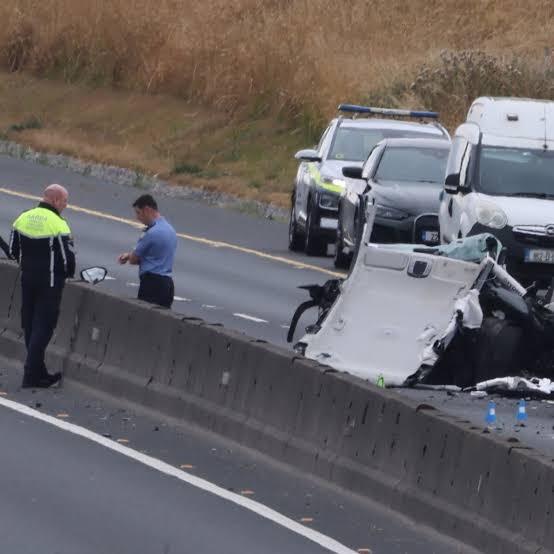
The incident occurred on August 16 in County Kildare, Ireland.
According to reports, a vehicle carrying five young people was traveling on the M9 motorway in the wrong direction when it collided with another vehicle.
The five occupants of the first vehicle were killed in the crash: Kamil Pustkowski, 17, Jack Kennedy, 17, Jeremy O’Brien, 18, Joe Carthy, 15, and Alex McCarthy, 16.
The second vehicle contained members of another family. Reports identify Niamh and Alma Kinsella, Ella Hendricken and Alma’s seven-year-old son, Yemi, among those affected.
The young boy survived but sustained serious injuries and remained in hospital while recovering.
The incident has therefore affected far more people than those inside the first vehicle. Families, friends and members of the wider community are now dealing with the consequences.
A Mother Says She Had Been Asking for Help
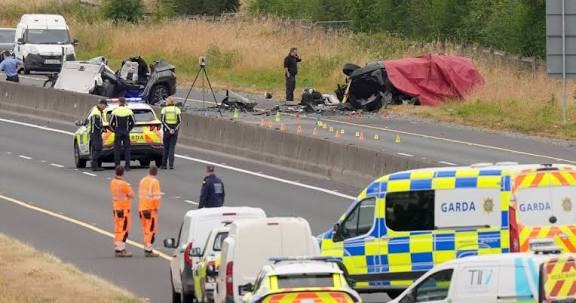
One of the most striking parts of the story has come from Emilia Pustkowska, Kamil’s mother.
Speaking to the Irish Mail, she described her son as “lost” rather than a leader of the group, rejecting descriptions that had reportedly portrayed him as the person directing the other teenagers.
Her comments offer a mother’s perspective on a young person she believed was struggling with his choices.
According to her account, problems involving her son had developed over time and became increasingly difficult to manage.
She said she attended numerous court appearances with him, including hearings in Limerick and Dublin.
For Pustkowska, these experiences were not simply legal appointments. She described them as part of a prolonged period during which she felt she was trying to find an effective solution for her son.
“I Can’t Keep Him at Home”
Perhaps the most powerful part of Pustkowska’s account was her description of asking a judge to take her son into custody.
She reportedly told the judge that she could not keep him at home and explained that she had taken extensive measures within the house because of concerns about what might happen.
Her comments reveal an unusual and painful dilemma for a parent.
Parents generally want their children to remain at home and receive support within their families. Yet when a teenager repeatedly becomes involved in risky behavior, parents may sometimes feel that they no longer have the tools or authority necessary to keep them safe.
Pustkowska said she did not actually want her son to be imprisoned.
Instead, she believed a structured environment might give him time to mature and reconsider his choices.
Her statement should not be interpreted as proof that detention would have prevented the later tragedy. That is impossible to establish.
It does, however, demonstrate that she believed there was a serious problem before the collision occurred.
A Pattern That “Snowballed”
According to Pustkowska, her son’s difficulties began relatively recently but gradually became more serious.
She said she was first contacted about possible vehicle-related offenses in January 2025.
From there, she described a series of court appearances and postponed proceedings.
She also said that her son pleaded guilty to some of the offenses rather than denying responsibility.
The situation, in her description, became increasingly difficult for the family to control.
This pattern raises a broader question about how teenagers respond to consequences.
Adolescence is a period of significant neurological and emotional development. Research in developmental psychology has shown that areas of the brain involved in planning, judgment and impulse control continue developing through adolescence and into young adulthood.
That does not mean teenagers cannot understand consequences.
Rather, it helps explain why young people may sometimes make decisions that carry significant risks despite understanding that those risks exist.
Why Adolescence Can Be a Challenging Period
The teenage years involve major changes in independence, identity and social relationships.
Young people increasingly make decisions without direct parental supervision. Friends become more influential, and the desire to belong can become particularly powerful.
At the same time, teenagers are still developing the ability to evaluate long-term consequences.
This combination can sometimes create difficult situations.
A teenager may understand that a particular action is unsafe while still underestimating how quickly circumstances can change.
Peer influence can also play a role.
None of this excuses dangerous behavior. Instead, it provides context for understanding why prevention efforts often need to begin before a serious incident occurs.
Parents, schools, youth organizations and legal systems can each play a role in helping young people develop better decision-making skills.
The Difference Between Punishment and Intervention
Pustkowska’s request also raises a difficult question about the purpose of the justice system.
Should the primary response to serious teenage offending be punishment?
Or should the system focus on rehabilitation, education and intervention?
There is no single answer that works in every case.
Young people who repeatedly break rules may need clear consequences. At the same time, teenagers are still developing, which means structured support can sometimes help change behavior before patterns become permanent.
Youth justice systems in many countries therefore attempt to balance accountability with rehabilitation.
The challenge is identifying which intervention is appropriate for a particular young person.
Pustkowska’s story suggests that she believed her son needed more structure than she could provide herself.
Whether a different intervention would have changed what happened later cannot be known.
The Other Family’s Story
The tragedy also has another side.
The people traveling in the second vehicle were reportedly on their way toward the airport as they prepared to travel to the United Kingdom for a wedding.
Instead, their journey ended in a serious collision that left several family members injured.
The seven-year-old boy, Yemi, was among those hospitalized.
For his family, the focus is understandably likely to be on recovery and supporting those who survived.
The contrast between the two vehicles is especially painful.
One group of young people was traveling together, while another family was simply continuing its journey.
The collision brought their lives together in circumstances none of them could have anticipated.
Another Mother Speaks Out
Margaret Berry, the mother of Jeremy O’Brien, also publicly expressed regret over what happened.
According to reports, she said she wished her son had never entered the vehicle that night and expressed sympathy toward the family affected by the collision.
Her comments illustrate how parents can experience conflicting emotions following a tragedy involving their children.
A parent may love their child deeply while also recognizing that something their child did had serious consequences.
Those emotions can coexist.
Berry reportedly expressed hope that the family members who remain in hospital will recover and that, in time, the affected families may find some form of forgiveness.
Her words reflect a broader human response to tragedy: grief for one’s own family member while simultaneously recognizing the suffering experienced by others.
The Importance of Road Safety
Beyond the personal stories, the incident raises an important road safety issue.
Traveling in the wrong direction on a motorway is an extremely dangerous situation because vehicles are designed to move in predictable directions.
Motorway traffic generally moves at high speed, leaving drivers very little time to react when an unexpected vehicle appears.
For that reason, road authorities place considerable emphasis on preventing wrong-way driving and responding quickly when it occurs.
Technology can also assist.
Modern vehicles increasingly include navigation systems, driver-assistance features and alerts that can help identify unusual driving patterns. Roadside monitoring systems and reports from other motorists can also help authorities respond to hazards.
However, technology cannot replace responsible driving.
Awareness, attention and adherence to road rules remain fundamental.
Why Early Warning Signs Matter
Perhaps the most important lesson from Pustkowska’s story is the value of taking warning signs seriously.
When a teenager repeatedly becomes involved in risky behavior, families may need support from professionals rather than being expected to manage everything alone.
Schools, youth services, social workers, community organizations and legal authorities can sometimes provide additional resources.
Early intervention can take many forms.
It might involve counseling, mentoring, educational programs, structured supervision or support for the family.
The appropriate response depends on the individual circumstances.
The goal is not simply to label a teenager as “bad.”
It is to identify why the behavior is happening and what practical steps might help the young person make safer decisions.
Why We Should Be Careful With Blame
After a tragedy, people naturally search for someone or something to blame.
That instinct is understandable.
But complex events rarely have a single cause.
The M9 tragedy involved a sequence of circumstances that investigators must reconstruct carefully.
It would be inappropriate to claim that one person, one court decision or one parental choice alone caused the outcome.
Similarly, it would be unfair to assume that Pustkowska’s earlier request proves that a different legal decision would certainly have prevented the collision.
We simply cannot know.
What we can know is that a mother says she was worried about her son’s behavior and felt she needed more help.
That is an important fact in itself.
The Human Cost of One Night
The statistics of a road collision can be summarized in a few sentences.
Five young lives lost.
Several people injured.
One seven-year-old child facing a difficult recovery.
Multiple families changed forever.
But behind each number is an individual person with friends, relatives, plans and memories.
Kamil, Jack, Jeremy, Joe and Alex were all young.
Their families are now left with memories of who they were beyond the circumstances of the final journey.
The people in the second vehicle likewise have their own stories and hopes for the future.
Remembering that human dimension is important because it prevents a tragedy from becoming merely another headline.
What Happens Next?
Investigators will continue examining the circumstances surrounding the collision.
Questions about the vehicle, its route, the events immediately before the incident and the condition of those involved will need to be addressed through evidence.
The families will meanwhile face a much more personal process of grieving and recovery.
For those injured, medical care and rehabilitation may become the immediate priority.
For the families who lost young relatives, there is no simple timeline for adjusting to such an enormous change.
The public conversation will eventually move on to another story.
For the families involved, however, the consequences will remain part of their lives.
Conclusion: A Tragedy That Raises Difficult Questions
The M9 tragedy cannot be understood through a single headline.
It is a story about five young people, another family caught in the same journey, a mother who says she had been desperately seeking help for her son, and communities now trying to understand how such a devastating sequence of events occurred.
Emilia Pustkowska’s decision to speak publicly offers a glimpse into the uncertainty that can exist inside families dealing with a teenager whose behavior is becoming increasingly difficult to manage.
Her account does not provide a definitive explanation for the collision, nor can anyone say with certainty what might have happened under different circumstances.
But it does raise an important question: are families given enough support when they recognize that a young person is heading toward increasingly risky choices?
Perhaps the most constructive response to a tragedy like this is not simply to ask who should be blamed.
It is to ask what can be learned.
Better communication between families and institutions, earlier intervention, appropriate youth support and continued attention to road safety may all help prevent future tragedies.
The families affected by the M9 collision will carry the memories of this August day for years to come.
And perhaps the most meaningful way to honor those memories is to turn a painful story into a reason for greater awareness, better support and safer choices.
Sources
-
LADbible, reporting on Emilia Pustkowska’s comments and her previous court appearances.
-
The Irish Mail, reporting on the mother’s account and her concerns about her son.
-
The Sun Ireland, reporting on Margaret Berry’s statement and the wider impact on the families involved.
-
Irish road safety authorities and official road safety guidance for information about motorway safety and wrong-way driving.
Featured image credit: TikTok, Niall Carson/PA Images via Getty Images.