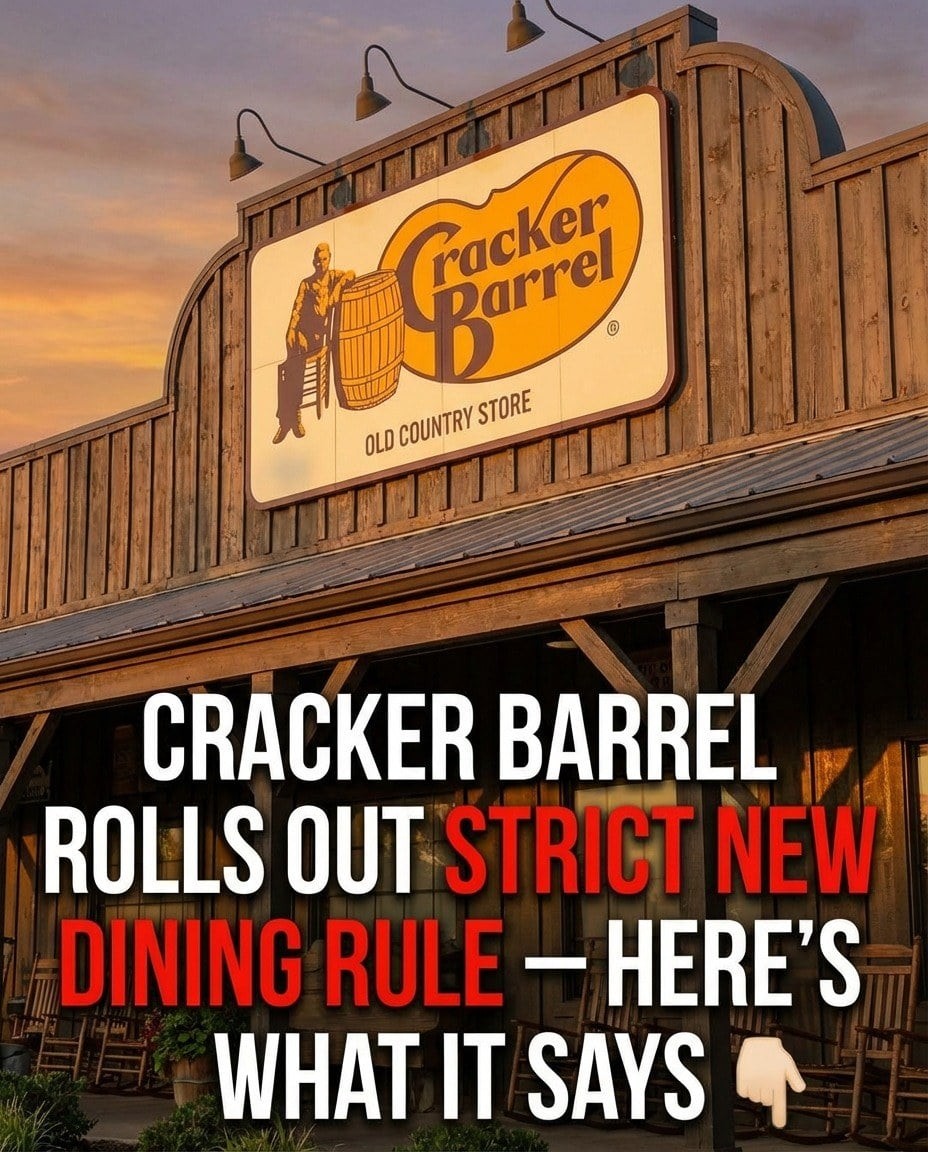
For generations, Cracker Barrel Old Country Store represented a familiar kind of American comfort. Its wooden rocking chairs, country-style decorations, antique displays, and generous homestyle meals created an atmosphere that many customers associated with family traditions and road trips.
For longtime visitors, the restaurant was about more than breakfast or dinner. It was a place where familiar surroundings created a sense of belonging.
That emotional connection became especially important in 2025, when Cracker Barrel introduced a simplified logo and began testing more modern restaurant interiors. The changes were intended to support a broader business transformation, but many customers felt that the company was moving too far away from the identity they had grown to love.
The company eventually reversed its logo decision and suspended its remodeling plans. Then, in early 2026, another debate emerged over employee dining and travel-expense guidelines.
Together, these developments revealed a difficult challenge for an established restaurant brand: how can a company modernize its business without losing the traditions that made customers loyal in the first place?
Cracker Barrel’s Identity Was Built on Familiar Traditions
Founded in 1969, Cracker Barrel developed a recognizable restaurant concept centered on Southern-inspired food and a country-store atmosphere.
Its locations became known for wooden rocking chairs outside the entrance, fireplaces, vintage decorations, peg games, and shelves filled with gifts and nostalgic merchandise.
The familiar logo also played an important role. Its illustration of an older man in overalls leaning beside a wooden barrel became one of the most recognizable elements of the brand.
For many customers, these details were not simply decorations. They helped distinguish Cracker Barrel from other restaurant chains.
That recognition created both an advantage and a challenge. A familiar brand can attract loyal customers, but changing its appearance requires careful consideration of the memories and expectations attached to it.
The 2025 Logo Redesign Sparked an Unexpected Backlash
In August 2025, Cracker Barrel introduced a simplified logo that removed the familiar Old Timer character and much of the traditional imagery associated with its previous design.
The new version used a cleaner, more modern visual identity. The company explained that the updated design would work better across digital platforms while remaining connected to its original barrel-inspired branding.
However, many customers were unhappy.
Criticism spread across social media, with longtime visitors arguing that the redesign removed an important part of the restaurant’s personality. Some viewed the change as an unnecessary departure from the company’s Southern heritage.
The controversy quickly attracted national attention. Public figures, including President Donald Trump, also criticized the redesign and called for the company to restore its original logo.
The reaction demonstrated how strongly customers can identify with a brand’s visual symbols. A logo may appear to be a small design element from a business perspective, but for customers, it can represent decades of memories and experiences.
Cracker Barrel Reversed Its Decision
After several days of criticism, Cracker Barrel announced on August 26, 2025, that it would abandon the redesigned logo and keep its traditional Old Timer identity.
The company thanked customers for sharing their opinions and acknowledged that it could have communicated its plans more effectively.
The decision was widely reported as a significant reversal in the company’s rebranding effort.
But the logo was only one part of the controversy.
Cracker Barrel had also been testing updated restaurant interiors, introducing brighter spaces, more contemporary furniture, and a cleaner approach to its country-store decorations.
Some customers welcomed the changes, while others believed the redesigned locations had lost too much of their familiar atmosphere.
On September 9, 2025, the company announced that it was suspending its restaurant remodeling plans. It reassured customers that locations that had not yet been renovated would retain their existing appearance.
This decision showed that the company was responding not only to criticism of its logo but also to concerns about the overall customer experience.
Why Changing a Familiar Brand Can Be So Difficult
Cracker Barrel’s experience illustrates an important principle in brand management: modernization does not automatically create stronger customer loyalty.
Businesses often update their visual identities to appeal to younger audiences, improve digital recognition, or communicate a more contemporary image.
These goals can be reasonable, especially when a company faces changing consumer habits and increased competition.
However, a successful rebrand must consider what customers already value.
For a restaurant such as Cracker Barrel, its identity is closely connected to its physical environment. The rocking chairs, fireplaces, vintage decorations, and traditional menu all contribute to the experience.
Removing or significantly changing several of these elements at once can make loyal customers feel that the business they recognize is disappearing.
This does not mean established brands should never change. Instead, it suggests that businesses need to distinguish between elements that are outdated and those that remain central to their appeal.
A gradual approach, customer research, and clearer communication can help companies avoid creating unnecessary confusion.

A New Debate Emerged Over Employee Travel and Dining Rules in 2026
In early 2026, Cracker Barrel faced another round of public attention after reports about internal guidance for employees traveling on company business.
A report based on an internal memo described expectations that employees should eat at Cracker Barrel restaurants for all or most meals during work trips whenever practical, depending on location and schedule.
The guidance also addressed reimbursement for alcoholic beverages.
The reports prompted questions about whether employees were required to eat at the company’s restaurants whenever they traveled.
Cracker Barrel responded by clarifying that the dining policy was not new and did not require employees to eat exclusively at its locations. The company said employees could dine elsewhere when necessary and that the recent change focused on further limiting reimbursement for alcoholic beverages.
The company explained that its dining guidance had been in place since June 2024.
This distinction matters because an internal spending guideline is not necessarily the same as a strict requirement. The company’s clarification helped explain what employees were actually expected to do and what had changed.
Why Travel-Expense Policies Matter to Company Culture
Employee travel policies may seem unrelated to a restaurant’s public image, but they can influence how workers experience the company.
Businesses need clear rules for meals, transportation, accommodation, and other expenses. These guidelines help control costs and establish consistent expectations for employees.
However, policies also need to be practical.
A restaurant may encourage employees to use its own locations when traveling, but availability, work schedules, meeting locations, and individual circumstances can affect whether that is possible.
Clear communication is therefore important. Employees should understand which expenses are reimbursable, when exceptions are allowed, and whether a guideline is an expectation or a mandatory requirement.
For a company already facing public scrutiny, transparency can help prevent internal policies from becoming another source of misunderstanding.
Cracker Barrel’s Bigger Challenge Is Rebuilding Customer Trust
The logo controversy and the employee travel-policy debate are different issues, but both highlight the importance of communication.
The 2025 rebranding dispute showed how strongly customers felt about the company’s traditional identity. The 2026 travel-policy clarification demonstrated why employees and the public need accurate explanations of internal decisions.
For Cracker Barrel, the challenge extends beyond restoring an old logo.
The company must continue improving its business while maintaining the food, hospitality, and atmosphere that customers associate with the brand.
That means listening to feedback, testing changes carefully, and explaining decisions before misunderstandings spread.
It also means recognizing that a familiar brand is built through more than its visual appearance. Customer service, food quality, restaurant atmosphere, and employee experience all contribute to the relationship between a business and its audience.
Can a Traditional American Brand Evolve Without Losing Its Identity?
Cracker Barrel’s experience offers a useful lesson for businesses with long histories and loyal customer bases.
Modernization can create opportunities, but change should not ignore the emotional connection customers already have with a brand.
The company may need to adapt its operations, improve its digital presence, and respond to new dining habits. At the same time, it must understand why people continue visiting its restaurants.
For many customers, the appeal of Cracker Barrel comes from the feeling that certain things remain familiar in a rapidly changing world.
Its decision to restore the Old Timer logo and suspend the broader remodeling program showed that customer feedback can influence major business decisions.
Ultimately, the future of Cracker Barrel will depend on its ability to balance progress with tradition. The company does not have to remain frozen in the past, but it must be careful not to lose the qualities that made it recognizable in the first place.