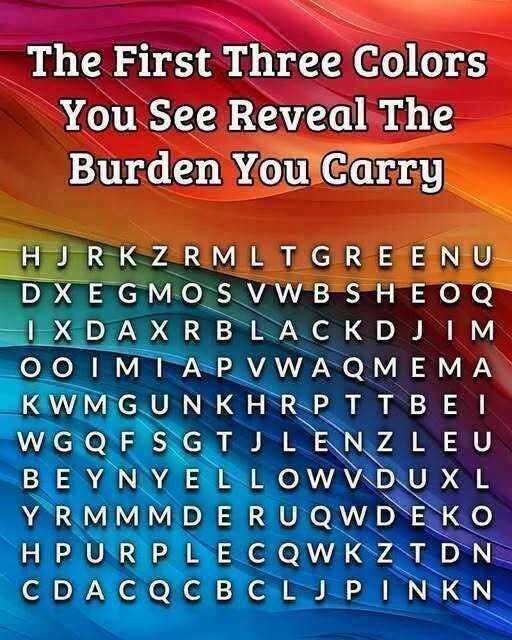
A Familiar Color Can Bring an Old Ache Rushing Back
A particular shade of blue may recall a childhood bedroom. A muted green may bring back a school uniform, a hospital waiting room, or a favorite park. A warm yellow may evoke a kitchen, a holiday, or someone no longer present in daily life. For many people, color is not simply visual decoration. It can become closely connected with memory, mood, places, relationships, and moments that felt important.
Online color-reflection exercises have become popular because they offer a simple prompt: choose several colors quickly, without trying to assign a deep meaning to each one. Then pause and consider what feelings, memories, or associations arise. These exercises can feel surprisingly personal, especially when a familiar color brings an old ache, a comforting memory, or an unfinished concern to the surface.
However, it is important to approach these activities with perspective. Choosing a color cannot diagnose anxiety, depression, trauma, personality traits, or future outcomes. There is no scientifically validated “secret meaning” hidden in a person’s color choices. What these prompts may offer is a gentle opportunity for self-reflection: a chance to notice what has been occupying the mind and what experiences may still carry emotional weight.
Why Colors Can Trigger Memories and Feelings
Human memory is strongly connected to sensory experiences. Sounds, scents, tastes, textures, and visual details can all become linked to meaningful events. Color is one of those visual details. When people repeatedly encounter a particular color in a memorable setting, the brain may associate that color with the emotions and experiences surrounding it.
This process does not mean that colors have universal emotional definitions. While people often associate red with energy or warning, blue with calm, and green with nature, personal history matters greatly. One person may find pale pink soothing because it reminds them of a supportive family member. Another may feel uneasy around the same shade because it is connected to a difficult period of life.
Context also changes how color is experienced. A bright orange wall in a cheerful café may feel welcoming, while the same orange in an unfamiliar setting may feel intense or distracting. Culture, upbringing, design trends, religious traditions, and social customs can all influence color associations. This is one reason broad claims about color psychology should be treated carefully.
Researchers generally recognize that color can influence perception, attention, and emotional response in certain situations. Yet the effects are often subtle, variable, and dependent on context. A color does not have the same psychological effect on every person, and it should not be used as a shortcut for understanding someone’s mental health or character.
What a Three-Color Reflection Exercise Can and Cannot Do
A typical color-reflection activity asks participants to select three shades quickly. The instruction to avoid overthinking is meant to encourage spontaneous choices rather than a carefully designed palette. Afterward, participants may be invited to write down the first memories, images, physical sensations, or emotions that come to mind.
Used thoughtfully, this can resemble a journaling prompt. It may help someone identify feelings they have not fully articulated. For example, a person who repeatedly chooses gray might realize they have been feeling tired or overwhelmed. Someone drawn to a vivid seaside blue may recognize that they miss travel, rest, or time outdoors. These observations can be useful starting points for reflection, but they are not conclusions or clinical assessments.
The exercise cannot tell someone whether they have a mental health condition. It cannot reveal hidden trauma with certainty, determine the quality of a relationship, or predict what will happen next. Claims that a color selection proves a person is emotionally damaged, secretly unhappy, or destined for a particular outcome are misleading.
A more responsible interpretation is personal and open-ended. Instead of asking, “What does this color prove about me?” it can be more helpful to ask, “What does this color remind me of?” or “What feeling did I notice when I saw it?” These questions leave room for nuance and avoid turning an ordinary emotional association into a fixed label.
The Science of Color Psychology: Useful but Limited
Color psychology is a broad area of interest across design, marketing, architecture, education, and health research. Designers use color to create visual hierarchy, improve readability, shape atmosphere, and help people navigate physical spaces. Hospitals may use calming palettes in some areas, while safety signs often use high-contrast colors to attract attention.
Still, popular discussions of color psychology often overstate the evidence. Research findings may differ depending on the setting, the participants, the shade being studied, the task involved, and cultural expectations. A deep navy blue, for example, may not be experienced in the same way as a bright sky blue. Lighting, surrounding colors, and personal preference can also make a difference.
Experts commonly caution against universal statements such as “yellow always makes people happy” or “purple means someone is emotionally conflicted.” Emotional responses are complex. They are shaped by biology, experience, environment, current stress levels, and the meaning a person gives to a situation.
For that reason, a color-based activity is best viewed as a reflective tool rather than a test. It can help create a pause in a busy day, encouraging people to notice their internal responses. The value comes not from an externally assigned interpretation, but from the individual’s own honest observations.
How to Try a Color Reflection Exercise Mindfully
If you would like to explore your responses to color, choose a calm moment and treat the activity as a brief check-in rather than an evaluation. You can use paint samples, colored pencils, fabric swatches, photographs, or a digital color palette.
Begin by selecting three colors that stand out to you. There is no correct way to choose them. You might pick shades that feel appealing, familiar, uncomfortable, energizing, or difficult to ignore. Once you have chosen them, take a few minutes to reflect on each one separately.
Consider writing down answers to questions such as:
- What is the first place, person, or period of life that comes to mind?
- Does this color feel comforting, neutral, unsettling, energizing, or unfamiliar?
- Does it remind you of an object, season, song, clothing item, or room?
- What physical response do you notice, such as relaxation, tension, warmth, or restlessness?
- Is there anything in your current life that connects with this feeling?
There is no need to force a dramatic answer. Sometimes a color may simply be aesthetically pleasing. Sometimes it may remind you of a favorite flower or a familiar landscape. At other times, it may bring up a more complicated memory. All of these responses are valid, and none of them require a definitive interpretation.
When a Color Brings Back a Difficult Memory
It is possible for a sensory cue, including a color, to bring back an unpleasant memory or emotional discomfort. This can happen because the brain stores details of significant experiences alongside the emotions felt at the time. A color associated with a stressful event, loss, conflict, or major life transition may briefly revive some of those feelings.
If this happens during a reflection exercise, it is reasonable to stop. You do not need to continue examining an image or memory that feels overwhelming. Grounding techniques can help some people return attention to the present: noticing objects in the room, taking slow breaths, drinking water, stepping outside, or contacting a trusted person.
Writing a few simple words can also help create distance from a difficult reaction. For instance, “This color reminds me of a hard time, and I am safe in the present” may be more helpful than trying to analyze every detail immediately. The goal is not to uncover everything at once. The goal is to respond to yourself with patience and care.
If distressing memories, anxiety, low mood, sleep problems, or daily difficulties continue or worsen, speaking with a qualified mental health professional can be an important next step. A counselor, psychologist, psychiatrist, or primary care clinician can provide individualized support that an online exercise cannot offer.
Color, Culture, and Personal Meaning
Color meanings are also shaped by culture and history. In some societies, white is commonly associated with weddings and celebration; in others, it may be associated with mourning or remembrance. Red can symbolize celebration, luck, warning, love, power, or political identity, depending on the location and context. Black may suggest formality, elegance, grief, authority, or rebellion.
These differences matter because they show why universal color interpretations are unreliable. An online quiz that assigns one fixed emotional meaning to a shade is unlikely to reflect the full range of human experience. Personal associations may be even more influential than cultural ones. A color linked to a grandparent’s home, a former school, a meaningful trip, or a major achievement can carry a unique significance that no generic chart can explain.
This is also why color can be meaningful in art, photography, fashion, and interior design. Creative choices often communicate atmosphere without needing to state every emotion directly. Artists and designers may use contrast, saturation, light, and shadow to guide attention and create a particular mood. Viewers, however, still bring their own memories and perspectives to what they see.
Using Self-Reflection Without Self-Diagnosis
In an era of fast-moving social media trends, it can be tempting to seek immediate answers from personality quizzes, visual tests, and short-form wellness content. These formats can be entertaining and occasionally thought-provoking, but they should not replace evidence-based health information or professional care.
A healthier approach is to treat reflection as information, not judgment. If a color brings up sadness, that does not mean something is wrong with you. If a bright shade makes you feel hopeful, it does not mean you have solved every problem. Emotions naturally change, and a single moment of reflection captures only one small part of a person’s life.
It can be useful to revisit the same exercise at another time. Your choices may differ with your mood, surroundings, season, or recent experiences. Rather than searching for consistency, notice the changes with curiosity. This may offer a more realistic picture of emotional life: flexible, personal, and shaped by the present as well as the past.
A Gentle Prompt to Notice What Is Beneath the Surface
A familiar color can indeed bring an old ache rushing back, but it can also bring comfort, gratitude, pride, or a sense of connection. The emotional power does not come from a hidden code inside the color. It comes from the stories, places, and relationships that a person has attached to it over time.
Selecting three colors without overthinking can therefore be a quiet invitation to pause. It may reveal nothing more than a current preference, or it may open a useful conversation with yourself about what you have been carrying beneath the surface. Both outcomes are completely ordinary.
The most valuable response is not to search for a verdict. It is to listen with curiosity, avoid self-judgment, and seek appropriate support if difficult emotions begin to interfere with everyday life. Color may be only a starting point, but a small moment of mindful attention can sometimes help people recognize what they need most: rest, connection, expression, reassurance, or professional guidance.
Sources
Disclaimer: This content is intended for entertainment purposes only and is not based on real events.