Julie Newmar’s Los Angeles Outing Recalls the Creativity Behind Her Unforgettable Catwoman
A Familiar Television Star Appears in a Relaxed Everyday Setting
Julie Newmar, the actress whose portrayal of Catwoman became one of the most recognizable performances in the history of American television, continues to attract attention from audiences who remember the classic Batman series of the 1960s. A described outing in Los Angeles has renewed interest in her life and career, offering fans an opportunity to reflect on the performer behind the iconic television character.
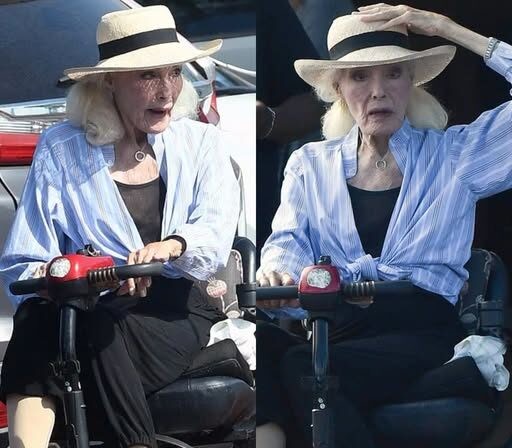
During the reported appearance, Newmar wore a loose blue shirt and black trousers, choosing a relaxed style that contrasted with the distinctive costume associated with her best-known television role. The understated outfit presented a different image from the glamorous, theatrical appearance audiences remember from her time as Catwoman.
The account places the outing shortly before her 93rd birthday, although it does not provide a confirmed date for the appearance. Consequently, the description should be treated as an undated report rather than a verified account of a recent event. Nevertheless, the attention surrounding the appearance illustrates the continuing public interest in entertainers whose work has remained culturally relevant for decades.
For longtime television viewers, Newmar represents more than a familiar face from an earlier entertainment era. Her performance demonstrated how an actor could transform an established fictional character through movement, personality, costume, and individual creative interpretation.
Her portrayal of Catwoman remains particularly significant because it combined visual sophistication with a distinctive physical performance. Rather than relying exclusively on dialogue or appearance, Newmar developed a recognizable screen presence that helped establish the character’s personality.
How Catwoman Became a Defining Part of Julie Newmar’s Career
Newmar first became widely associated with Catwoman through the popular Batman television series, which premiered in 1966. The colorful production offered a distinctive interpretation of the DC Comics superhero, combining comic-book storytelling, theatrical performances, exaggerated villains, and humorous situations.
Catwoman was among the show’s most memorable characters. Her combination of intelligence, confidence, theatrical charm, and playful rivalry with Batman provided an appealing contrast to the series’ other villains.
Newmar’s interpretation helped establish a version of Catwoman that audiences could recognize immediately. Her performance balanced humor with sophistication, creating a character who could appear mischievous and confident without losing her individuality.
One important aspect of the role was the relationship between physical presentation and personality. Catwoman’s posture, gestures, expressions, and carefully controlled movements all contributed to the character’s distinctive identity.
This approach was particularly effective in a television production where visual storytelling played an important role. The show’s colorful sets, costumes, and theatrical acting styles encouraged performers to communicate through more than spoken dialogue.
Newmar’s contribution therefore extended beyond portraying a popular comic-book character. She helped create a television performance that became an enduring reference point in discussions about Catwoman’s representation in popular culture.
A Dancer’s Background Helped Shape Her Feline Movements
One of the most interesting elements of Newmar’s interpretation was her background in dance. Before becoming widely recognized as a television actress, she developed experience in dance and stage performance, skills that influenced the way she approached physical characterization.
Dance requires an understanding of posture, balance, rhythm, timing, and controlled movement. These elements can also be valuable in acting, particularly when a character’s identity depends heavily on physical expression.
For Catwoman, Newmar incorporated movements that suggested feline characteristics without making the performance appear overly literal. Subtle changes in posture, deliberate gestures, and carefully timed turns helped create the impression of an alert and playful character.
These physical details were important because they allowed the character’s personality to remain visible even when she was not speaking. A slight change in stance or a measured movement could reinforce the impression of confidence and unpredictability.
The connection between dance and acting also demonstrates how performers can draw on different artistic disciplines when developing a role. Physical awareness can influence the way an actor occupies a scene, interacts with other performers, and communicates emotions to an audience.
In Newmar’s case, her movement choices helped distinguish her interpretation from a conventional television villain. Catwoman appeared graceful and theatrical, with a recognizable rhythm that complemented the show’s comic-book atmosphere.
This is one reason the performance remains interesting to viewers revisiting the series. The character’s identity was communicated not only through the costume but also through the way Newmar brought that costume to life.

Creative Costume Choices Helped Establish Catwoman’s Visual Identity
Costume design is an important part of television characterization. Clothing communicates information about a fictional character before the audience hears the first line of dialogue. Color, shape, texture, and silhouette can all influence how viewers understand a character’s personality.
Catwoman’s distinctive catsuit became one of the defining visual elements of Newmar’s portrayal. Its streamlined appearance complemented the character’s feline identity while supporting the graceful movements that were central to the performance.
The original account also describes Newmar as having contributed personal ideas to the costume. Although it does not identify the precise alterations or provide technical details about their development, this reported creative involvement highlights the relationship between an actor’s interpretation and a character’s visual presentation.
Costumes are not simply decorative objects. Actors must work with them while performing, and their design can affect movement, posture, and the overall appearance of a scene. A costume that supports an actor’s physical choices can make a character more convincing and memorable.
Newmar’s reported interest in the catsuit can therefore be considered alongside her work on Catwoman’s physical mannerisms. Both involved decisions about how the character should appear and how her personality could be communicated visually.
The broader lesson is that memorable screen characters are often collaborative creations. Writers, costume designers, directors, performers, and production teams contribute different elements that eventually become part of a unified television identity.
For audiences, the finished result may seem effortless. However, the distinctive appearance of a character frequently reflects a combination of artistic planning and practical creative decisions.
Julie Newmar’s Career Extended Beyond the Batman Television Series
Although Catwoman remains the role most closely associated with Newmar, her professional career was not limited to the Batman television series. She developed experience across television, film, theater, and other forms of entertainment, demonstrating a range of interests beyond a single character.
Her early performing background included dance and stage work, which helped establish the foundation for her later acting career. These experiences contributed to her ability to combine physical expression with theatrical presentation.
Newmar also appeared in other television productions and entertainment projects. Her career reflects the opportunities available to performers who worked across different formats during the development of American television in the mid-20th century.
Her continued recognition illustrates an important feature of entertainment history: certain performances become cultural reference points that remain familiar even as television technology, storytelling conventions, and audience preferences change.
The Batman series of the 1960s is particularly associated with a colorful and playful visual style. Its distinctive approach differed from later, more serious interpretations of superhero stories. For many viewers, that contrast is part of the production’s lasting appeal.
Newmar’s Catwoman remains an important example of how an actor can leave a lasting impression within an ensemble production. Her work helped establish a memorable interpretation while contributing to the show’s broader entertainment identity.
Understanding Her Public Appearance Without Making Medical Assumptions
The reported Los Angeles outing also brings attention to the distinction between an entertainer’s public image and private circumstances. Newmar has been associated in public discussions with Charcot-Marie-Tooth disease, a group of inherited neurological conditions that affect peripheral nerves.
Charcot-Marie-Tooth disease, commonly abbreviated as CMT, can affect the nerves responsible for controlling muscle movement and transmitting sensory information. According to medical organizations such as the National Institute of Neurological Disorders and Stroke, symptoms and their severity vary considerably between individuals.
Depending on the specific form of the condition, people may experience muscle weakness, changes in sensation, balance difficulties, or differences in foot and lower-leg function. The condition is generally associated with gradual changes, although its progression is not identical for everyone.
It is important to distinguish general medical information from assumptions about an individual. The description of Newmar’s appearance does not provide a medical examination, an updated diagnosis, or information about her current treatment or functional abilities.
Likewise, clothing choices and photographs cannot establish the progression or severity of a neurological condition. A person’s appearance during a public outing should not be treated as evidence of their overall health.
Responsible coverage of public figures should maintain this distinction. It is possible to acknowledge publicly discussed health circumstances while respecting personal privacy and avoiding unsupported conclusions.
For readers interested in learning more about CMT, established medical resources provide explanations of its causes, symptoms, diagnosis, and management. Reliable information is particularly important because inherited neurological conditions can differ significantly from one person to another.

Why Fans Continue to Remember Television Performances From the 1960s
The continuing interest in Newmar demonstrates how television performances can become part of collective cultural memory. For viewers who watched Batman during its original broadcast period, Catwoman may be associated with childhood entertainment, family television viewing, and the distinctive style of an earlier generation of programming.
For younger audiences, the character can offer a different kind of discovery. Streaming services, television reruns, home-video releases, and online entertainment discussions have made classic productions more accessible to people who did not experience their original broadcasts.
This renewed accessibility allows audiences to compare different interpretations of familiar fictional characters. Catwoman, for example, has appeared in numerous television and film adaptations, each reflecting the creative priorities and cultural expectations of its period.
Newmar’s portrayal occupies a distinctive place in that history. Its theatrical style, expressive movements, and playful personality reflect the tone of the 1960s Batman series rather than the more dramatic approaches found in some later adaptations.
Revisiting the performance also encourages viewers to recognize the work involved in creating a memorable screen character. What appears natural on television may result from careful decisions about timing, body language, costume, and interaction with other performers.
Fan interest is therefore not necessarily limited to nostalgia. It can also reflect an appreciation of acting techniques, television history, costume design, and the creative contributions that shape popular entertainment.
The Cultural Legacy of Catwoman Across Generations
Catwoman has remained an important character within the wider Batman universe because she offers a distinctive combination of independence, intelligence, confidence, and complexity. Different adaptations have emphasized different aspects of her personality, allowing the character to evolve alongside changing entertainment trends.
Newmar’s interpretation helped establish a particularly recognizable television version during a period when superhero adaptations were developing a broader mainstream audience.
Her performance also demonstrated the importance of individual interpretation when adapting an established fictional character. Even when the central concept remains consistent, an actor’s choices can significantly influence how audiences respond to a role.
Later performers brought their own approaches to Catwoman, reflecting different storytelling styles and production environments. These interpretations do not erase the significance of earlier portrayals. Instead, they contribute to the character’s continuing development across television, cinema, and popular culture.
Newmar’s contribution remains notable because her performance combined theatrical confidence with a carefully developed physical identity. The result became a recognizable part of the Batman television legacy.
An Enduring Image Built Through Creativity and Performance
Julie Newmar’s reported Los Angeles appearance offers an opportunity to reflect on a career that has remained connected to one of television’s most recognizable fictional characters. Her casual blue shirt and black trousers provide a contrast to the elaborate screen identity that audiences associate with Catwoman, but the interest surrounding the appearance ultimately points toward her creative legacy.
Her contribution to the Batman series involved more than portraying a familiar comic-book figure. Her dance background, expressive physical performance, and reported involvement in costume presentation helped establish a distinctive interpretation that continues to attract attention.
The enduring appeal of the performance also demonstrates how individual artistic choices can influence the development of popular fictional characters. Movement, posture, timing, and visual presentation can become just as important as dialogue in creating a memorable television personality.
At the same time, Newmar’s life and career should be understood beyond a single celebrated role. Her professional experience across entertainment reflects a broader history of performers whose work helped shape television during an important period of its development.
For longtime admirers, the reported outing may bring back memories of the classic Batman series. For newer audiences, it offers a reason to explore the original performance and understand why it continues to receive attention.
Ultimately, the lasting significance of Julie Newmar’s Catwoman lies in the combination of creativity, performance, and visual storytelling that made the character memorable. Decades after the series first appeared, that artistic contribution remains an important part of television and superhero entertainment history.
Sources
- DC Comics – Official Batman and Catwoman Character Information
- Encyclopaedia Britannica – Television and Entertainment History
- National Institute of Neurological Disorders and Stroke – Charcot-Marie-Tooth Disease
- Charcot-Marie-Tooth Association – Medical Information and Resources
- Television Academy – Television History and Industry Resources
- BBC Culture – Film and Television Cultural History
Disclaimer: This content is intended for entertainment purposes only and is not based on real events.