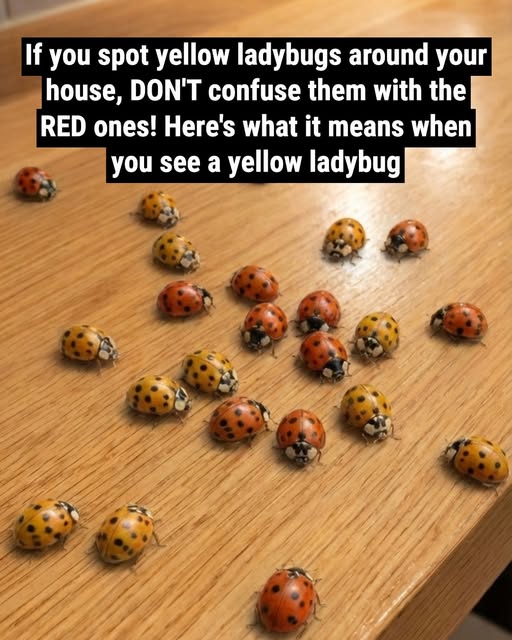
There are certain small moments in a garden that stay with you longer than you expect. You might be quietly watering your plants on a warm afternoon, or kneeling down to tend to a flower bed, when something tiny and bright catches your eye. At first glance it seems familiar — the round shape, the small spotted wings — but something is different. The color is wrong. Instead of the classic red you have always associated with ladybugs, this one is a vivid, unmistakable yellow.
If this has ever happened to you, you are far from alone. And if it left you with a head full of questions — is that really a ladybug? why is it yellow? what does it mean? — then you have come to exactly the right place.
Yes, Yellow Ladybugs Are Completely Real
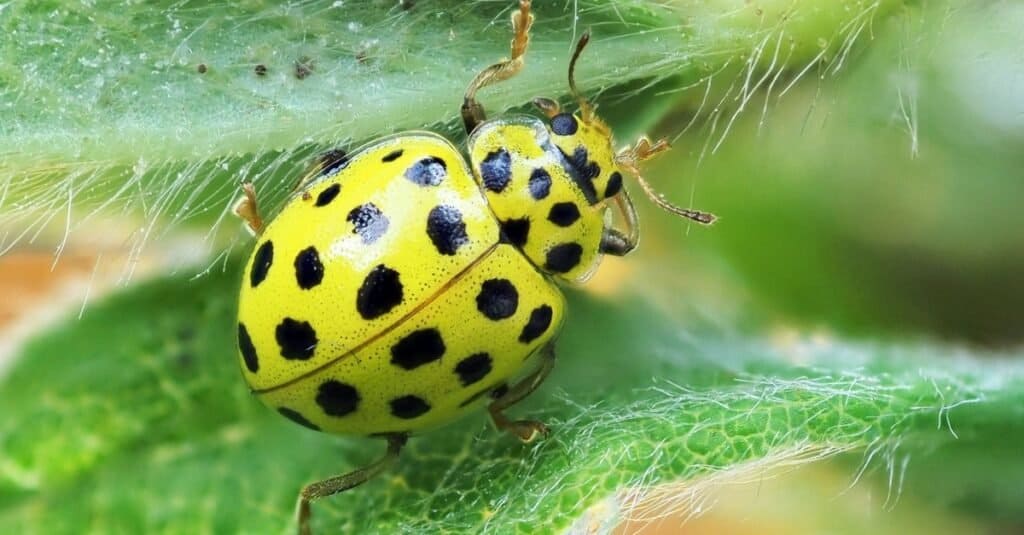
The first thing worth establishing is that yellow ladybugs are not a trick of the light or a case of mistaken identity. They are entirely real insects, and they belong to the same biological family as the familiar red-and-black spotted ladybugs that most people have grown up recognizing.
What surprises many people is just how diverse the ladybug family actually is. Scientists have identified more than 5,000 distinct species of ladybugs worldwide — a number that tends to catch people off guard, given that most of us grew up thinking of ladybugs as one relatively uniform little insect.
Across those thousands of species, the range of colors and patterns is remarkable. While red with black spots remains the most widely recognized appearance, ladybugs can also come in orange, yellow, black, and even combinations of those colors depending on the species. The yellow varieties may simply be less familiar because they are encountered less frequently in everyday life — but they are every bit as natural, and every bit as fascinating, as their red counterparts.
Why Are Some Ladybugs Yellow?
The yellow coloration of certain ladybug species is not arbitrary. It serves a very specific and important biological purpose — one that reveals something elegant about how nature protects its smaller creatures.
Bright, vivid colors in insects very often function as warning signals directed at potential predators. Birds, lizards, and other animals that might consider eating a small insect learn over time to associate certain colors with an unpleasant experience. Ladybugs — of all colors — have a clever defense mechanism: when threatened, they can release a pungent, foul-tasting liquid from their legs. This substance is highly effective at deterring predators and making the insect deeply unappealing as a meal.
The bright color, whether red, orange, or yellow, is essentially nature’s way of advertising that defense before a predator even tries. Biologists call this strategy aposematism — the use of conspicuous coloring to signal that an animal carries some form of defense. In simple terms, the yellow color of a ladybug is a visual message to the wider animal world: I am not worth the trouble.
Over generations, predators that have had an unpleasant encounter with a ladybug learn to avoid insects with similar coloring. This means that the bright yellow appearance is not just decorative — it is a survival tool, refined over countless generations of evolution.
Yellow Ladybugs and the Garden

Beyond their own survival strategy, yellow ladybugs play a genuinely useful role in garden ecosystems — though their contribution is somewhat different from the role that red ladybugs are most famous for.
Red ladybugs have long been celebrated by gardeners for their appetite for aphids — tiny sap-sucking insects that can devastate plants if their populations go unchecked. A healthy population of red ladybugs in a garden is widely considered a natural and highly effective form of pest control, one that many gardeners actively encourage.
Yellow ladybug species, while still beneficial, tend to have a somewhat different dietary focus. Many yellow varieties feed primarily on fungi, including the powdery mildew and other fungal growths that can affect plant surfaces and spread from one plant to another if left unmanaged. By feeding on these fungi, yellow ladybugs quietly perform their own form of garden maintenance — helping to keep plant surfaces cleaner and reducing the spread of fungal issues in a completely natural way.
This means that if a yellow ladybug appears in your garden, it may very well be quietly at work on your behalf, doing something genuinely useful even if its contribution is less visible than that of its aphid-eating relatives.
A Word of Caution: Know Your Look-Alikes
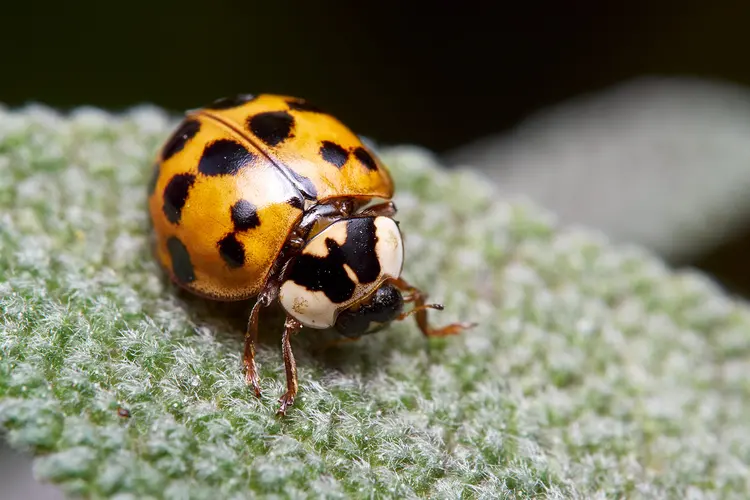
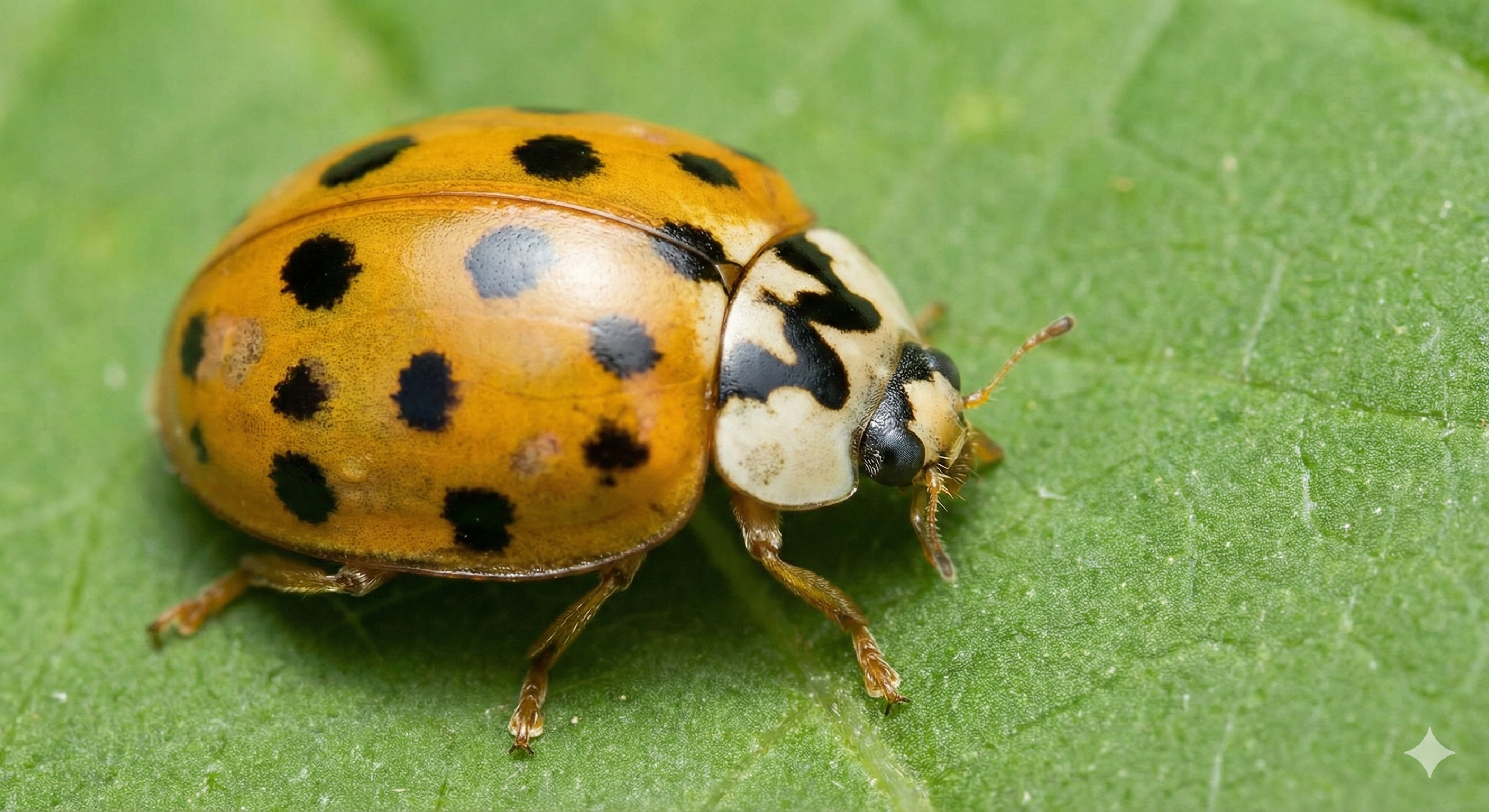
It is worth mentioning that not every yellow insect that resembles a ladybug is necessarily a native ladybug species. The yellow Asian lady beetle is one insect that shares a similar size, shape, and color and is sometimes confused for a true yellow ladybug.
In outdoor garden settings, this distinction rarely matters much — both insects are harmless to people and broadly beneficial in the garden. However, the Asian lady beetle is known for one behavior that can become mildly irritating: as temperatures drop in autumn, large groups of these beetles may seek out warm, sheltered spaces to overwinter, which can sometimes bring them indoors in noticeable numbers.
If disturbed, they can also release an unpleasant odor. In an outdoor garden context, though, this is rarely a concern. The vast majority of yellow ladybug-like insects you are likely to encounter while gardening are harmless and helpful members of the local ecosystem.
The Cultural and Symbolic Meaning of a Yellow Ladybug
Ladybugs have carried symbolic significance across many cultures and throughout many centuries. In traditions across Europe, Asia, and the Americas, these small insects have long been associated with good fortune, protection, and positive change. The very name “ladybug” in English has roots connected to the Virgin Mary in medieval European tradition, when farmers believed the insects were sent to protect their crops.
The yellow ladybug, with its distinctive and unusual color, carries these broader associations of good luck but adds an additional layer of meaning connected to its striking hue.
Yellow has deep symbolic associations in cultures around the world. It is the color of sunlight, of warmth, of energy and optimism. In many traditions, yellow is associated with creativity, clarity of thought, and the kind of positive momentum that comes with new beginnings. It is the color of early morning and fresh starts.
Because of this, many people who encounter a yellow ladybug interpret the experience as a particularly uplifting sign — a small, unexpected reminder from nature to focus on the positive, to embrace the opportunities ahead, and to pay attention to the simple beauty that surrounds everyday life.
Good Fortune and New Beginnings
In the realm of symbolism and folklore, yellow ladybugs are most commonly interpreted as signs of good fortune and new beginnings. If you have been going through a period of uncertainty or waiting for things to improve, some traditions suggest that the appearance of a yellow ladybug may signal that positive change is on its way — a new opportunity, an encouraging development, or a welcome shift in circumstances.
More specifically, the association with new beginnings connects to the symbolism of yellow as the color of sunrise and fresh starts. Some people interpret encountering a yellow ladybug as a nudge from the natural world — an invitation to begin something new, whether that means starting a project you have been putting off, making a personal change you have been considering, or simply approaching the current chapter of your life with renewed enthusiasm and openness.
Whether you place deep stock in symbolic interpretations or simply enjoy the idea of a cheerful omen, there is something undeniably pleasant about the thought that a small yellow insect landing nearby might be carrying a message of good things ahead.
Happiness, Energy, and the Reminder to Slow Down
Even setting aside questions of symbolism and folklore, there is something genuinely worthwhile about the experience of noticing a yellow ladybug.
In the pace of modern life, quiet moments of attention to the natural world are increasingly rare. A garden visit becomes dominated by a mental checklist. A walk through a park passes without genuine observation. The small details of the living world around us — the insects, the plants, the intricate biological systems quietly functioning beneath our notice — go unseen.
A yellow ladybug, precisely because it is unexpected, has a way of breaking through that inattention. It is unusual enough to make you stop. To look more closely. To ask a question. And in that brief pause, something shifts. The afternoon becomes a little more present. The garden feels a little more alive.
This is perhaps the most honest and universal meaning of a yellow ladybug encounter: it is a reminder, delivered by a creature weighing almost nothing, that the world is more varied and more interesting than our routines allow us to notice.
How to Respond If You See One
If a yellow ladybug appears in your garden or lands nearby, the best response is simply to observe it for a moment without interference. These insects are completely harmless to people, and the encounter is a rare one. Take a moment to look at the color, the markings, the way it moves. If you are a gardener, consider it a welcome visitor — a sign that your outdoor space is supporting a healthy and diverse ecosystem.
And if you are inclined toward symbolism, feel free to take it as the good omen that generations of tradition suggest it might be.
Either way, the yellow ladybug is a small and remarkable piece of the natural world — easy to overlook, but genuinely worth a moment of your time.