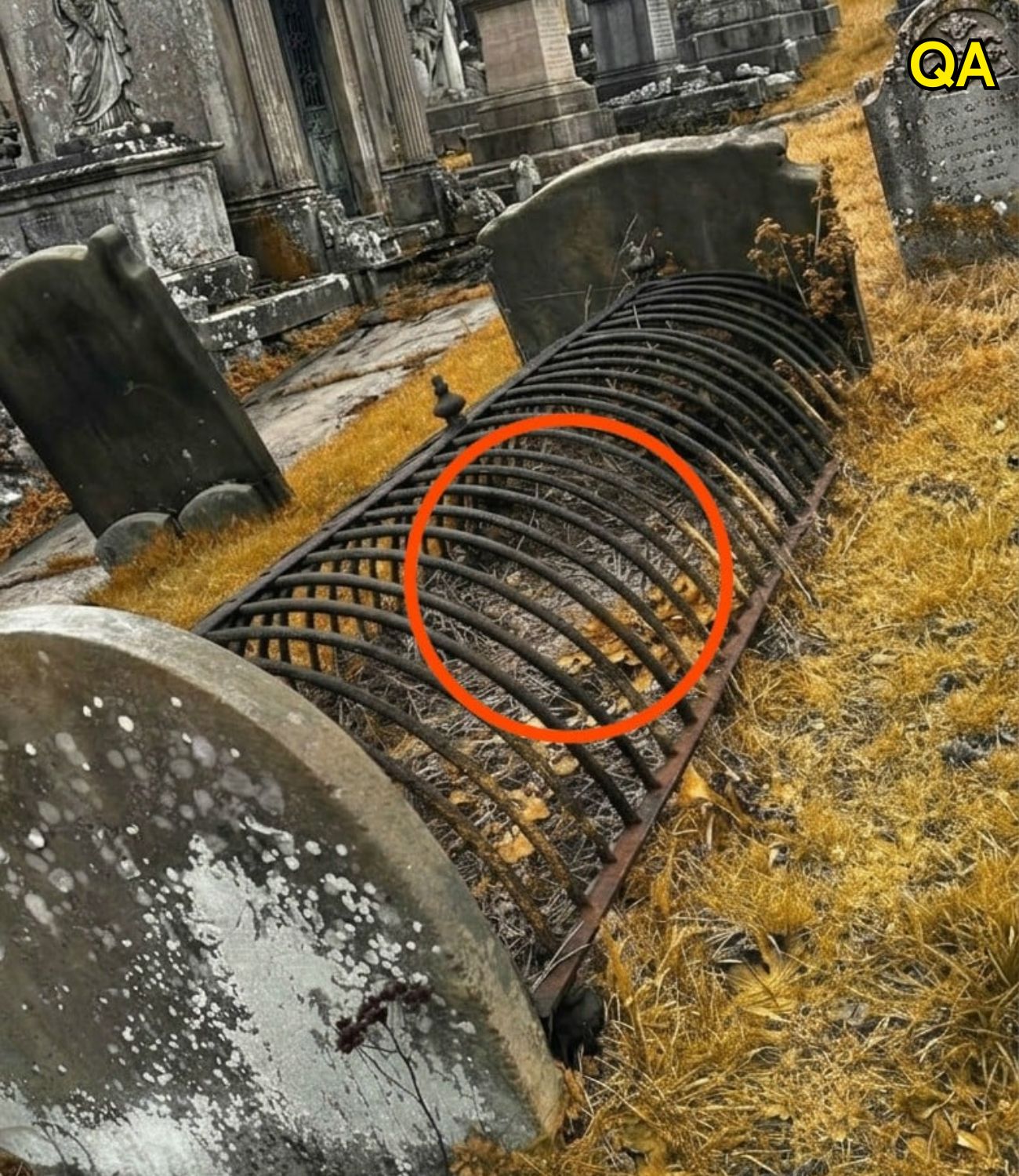
In many local cemeteries, certain graves possess a unique and eerie presence. One such grave captures attention with its striking design: surrounded by iron bars and appearing like a cage, it raises countless questions among those who pass by. A local worker once remarked, “It’s not to keep something inside… it’s to stop someone from getting in.” Such cryptic comments only enhance the intrigue surrounding this peculiar burial spot.
Understanding the Mortsafe
Curiosity often leads to deeper exploration, and for this particular grave, it entails delving into the history of a structure known as a “mortsafe.” The name itself may sound unusual, but it refers to a protective cage that has historical significance, especially during the 18th and 19th centuries. Mortsafes were designed to safeguard the deceased from body snatchers, commonly referred to as “resurrection men” during this era.
The Rise of Body Snatching
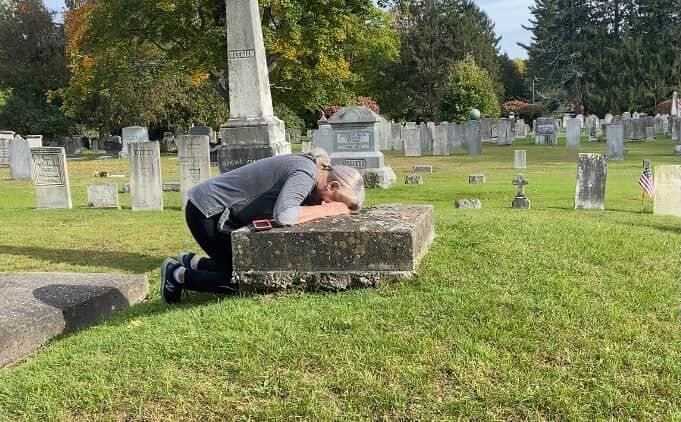
During the 18th and 19th centuries, the medical community faced a significant shortage of cadavers for educational purposes. Freshly buried bodies were often more valuable than gold, coveted by surgeons and medical schools desperately seeking to advance their knowledge and skills. Body snatchers exploited this demand by digging up graves shortly after burial, selling the remains to medical institutions, and disappearing before the crime could be detected.
The Functionality of Mortsafes
Mortsafes serve a practical purpose: to deter those wishing to disturb the deceased. They are particularly designed for fresh graves, providing a physical barrier that prevents grave robbers from accessing the bodies. The design of a mortsafes can vary, with some resembling cages and others taking on more elaborate forms, often adorned with intricate designs that reflect the era’s architectural styles.

Historical Context
The phenomenon of body snatching primarily emerged in the context of a growing medical profession. In the early 19th century, the demand for cadavers escalated, and with it, the rise of grave robbing reached alarming levels. Some cities enacted laws to curb this practice, but the allure of quick profits often outweighed the risks for those involved in body snatching. This led to a public outcry and the eventual implementation of more secure burial practices.
Societal Reactions
The societal response to body snatching varied, with many communities grappling with the morality of such actions. While some viewed resurrection men as criminals disturbing the peace of the dead, others saw them as entrepreneurs driven by the market demand for bodies. This complex perception led to different coping mechanisms, including the construction of mortsafes and the development of laws to regulate the handling of corpses.
Modern Implications
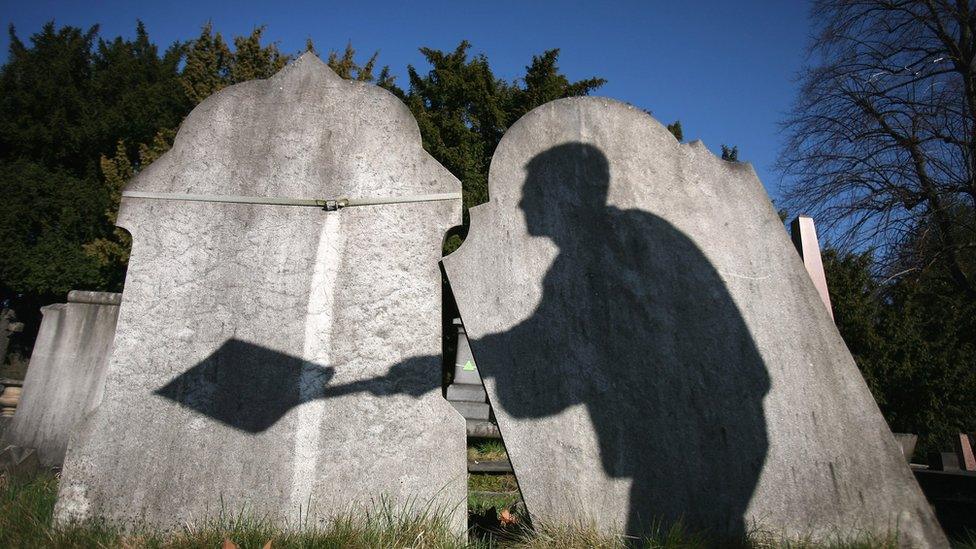
Today, the presence of mortsafes is largely a relic from a different time, serving as historical markers that tell a story of fear, morality, and the intersections between science and societal values. Modern burial practices have evolved considerably, providing a stark contrast to the concerns of the past. However, the obsession with death and the care with which we treat the deceased remain relevant themes in both historical studies and contemporary discussions about life and death.
Expert Views on Mortsafes
Historians and archaeologists often express a fascination with mortsafes and body snatching, recognizing the profound societal implications attached to these practices. Experts view mortsafes as more than just protective structures; they symbolize the lengths to which society would go to respect the dead while managing the exigencies of medical advancement. They reflect a dynamic relationship between the living and the deceased, illustrating the evolving nature of societal values.
Conclusion
The grave surrounded by a cage in our local cemetery represents much more than an unusual sight; it embodies a significant historical narrative concerning the intersection of medical progress and societal ethics. Understanding the reasons behind the construction of mortsafes broadens our comprehension of historical practices and helps us recognize how perceptions of death and the deceased have transformed over time.