The Houston summer that year felt endless.
Heat clung to the city like a second skin, pressing down on everything it touched. Inside the amusement park, the air vibrated with overlapping sounds—roller coasters screaming along steel rails, loudspeakers looping cheerful music, children shouting in bursts of joy that blended into a constant roar. The ground radiated warmth through sneakers and sandals, and the smell of sugar, oil, and sunburned pavement hung heavy between rides.
To most families, it was chaos of the happiest kind.
To Denise Carter, it was something else entirely.
At thirty-eight, Denise had learned that danger rarely announced itself. It didn’t arrive loudly or obviously. It hid behind routine, behind crowds, behind assumptions that “nothing like that happens here.” Years earlier, her younger sister had vanished without warning. No struggle. No witnesses. No resolution. The case had slipped quietly into the category of unsolved things people stopped asking about.
Everyone except Denise.
That loss reshaped her instincts. She didn’t panic easily, but she watched. She noticed exits, faces, moments that didn’t align. It made her cautious to the point of being exhausting, especially to her ten-year-old daughter, Kayla, who had grown up rolling her eyes at reminders to stay close.
That morning, Denise promised herself she would try to be different.
Kayla had waited weeks for this trip, talking about it as if the park were a place where bad things simply couldn’t exist. Denise told herself she would loosen her grip. She would stand back. She would let Kayla experience joy without inheriting her fear.
For most of the day, she almost succeeded.
They shared oversized drinks, laughed at roaming performers, and rode gentler attractions. Denise caught herself smiling at the sight of Kayla darting ahead, confident and unafraid, her laughter cutting cleanly through the noise. For a few hours, Denise let herself believe that vigilance could rest.
By late afternoon, they reached the Grand Plaza.
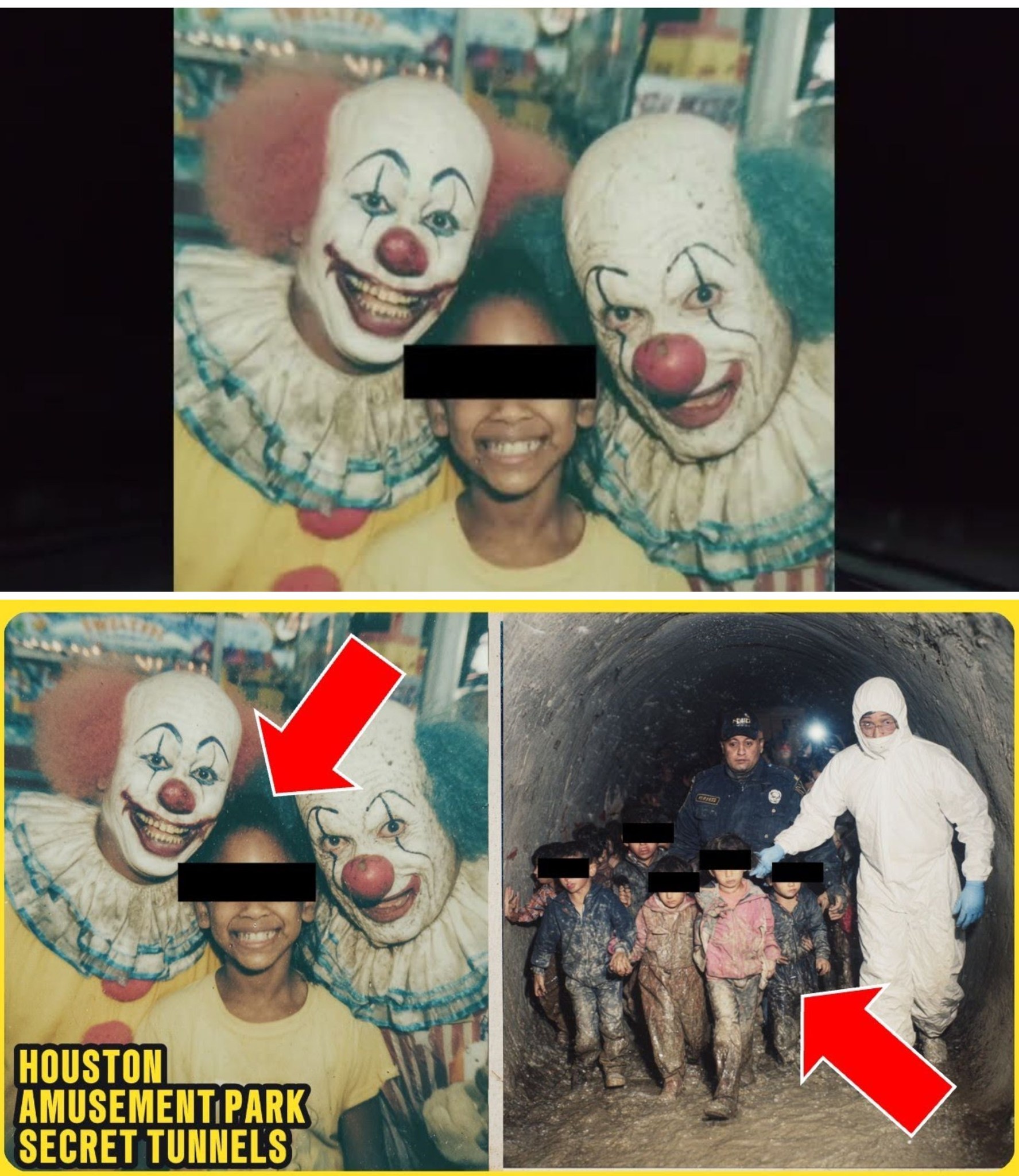
It was the center of the park, where pathways converged and crowds thickened naturally. A small stage stood near the middle, cordoned off by velvet ropes. A group of clowns performed there daily, drawing children close with exaggerated movements and bright costumes.
Kayla drifted forward instinctively.
Denise remained a few steps back, unfolding a map and checking show times. It was a moment so ordinary it barely registered—the kind of distraction parents replay endlessly later, searching for the exact second when everything shifted.
Onstage, one clown stood out. He was tall and thin, his costume stitched with mismatched patches. His painted smile never wavered, fixed in place regardless of movement. As he juggled, one brightly colored ball slipped from his hands and rolled toward the edge of the stage.
It stopped near Kayla’s feet.
The clown reacted theatrically, throwing his hands up as the audience laughed. He leaned forward, pretending he couldn’t quite reach the ball. Then he looked directly at Kayla and nodded once.
Not exaggerated. Not obvious.
Just enough.
Kayla hesitated for a heartbeat. Then she ducked under the rope, picked up the ball, and followed him behind the curtain.
When Denise looked up, the space beside the stage felt wrong.
At first, her mind resisted the idea. Kayla must be just out of sight, she thought. She scanned the crowd, waiting for her daughter to reappear. Seconds passed. The performance ended. Children dispersed. Kayla did not return.
Fear arrived cleanly and without confusion.
Denise pushed forward, calling Kayla’s name. Her voice sounded unfamiliar to her own ears—too calm, too measured, as if her body understood before her mind did. Park staff were alerted. Security arrived quickly, radios crackling, expressions professionally neutral.
Denise explained exactly what she had seen.
The dropped ball. The nod. The deliberate way Kayla had been invited forward.
The security supervisor listened with his hands folded neatly in front of him, nodding at practiced intervals. He explained calmly that performers were strictly prohibited from escorting children backstage. Such an action, he implied, simply didn’t happen. When Denise asked to review security footage, there was a pause—brief, but unmistakable. He excused himself, made a short radio call, then returned with an answer that felt oddly rehearsed.
The cameras covering the plaza, he said, had experienced a temporary malfunction. A power fluctuation. There was no usable footage.
The explanation was tidy. Complete.
And deeply unsatisfying.
Denise felt the familiar sensation of being reduced—not to a mother searching for her child, but to a problem already categorized. When the police arrived, the feeling intensified. Detective Riley spoke softly, asked careful questions, and took notes, but his eyes carried the fatigue of someone who had heard too many stories that blurred together.
Children got lost in places like this all the time, he said. Memory under stress could be unreliable. Trauma had a way of filling in gaps.
Denise recognized the language immediately. It wasn’t accusing her of lying. It was doing something worse. It was reframing her certainty into something emotional—something unstable—until it no longer required action.
As evening fell, the search slowed. Announcements ended. The park prepared to close. Denise watched families leave, children tired and safe beside them, and felt a growing certainty that something essential was being buried under procedure.
When the gates shut, Denise stayed.
She sat in her car long after the lights dimmed, replaying every detail. The nod. The timing. The way no one had truly listened. Leaving felt like surrender.
At dawn, she acted.
She followed maintenance vehicles through a service entrance, moving with the quiet confidence of someone who knew regret would be heavier than consequences. Inside, the park felt hollow. Confetti littered walkways. Rides stood motionless, stripped of sound and meaning.
Behind the arcade, she encountered Carl Simmons, a maintenance worker nearing retirement. Unlike everyone else, Carl didn’t interrupt. When Denise finished speaking, he admitted something he had never written in a report. For years, he had heard strange sounds beneath the arcade after hours—dull knocks, faint rhythms that didn’t belong to machinery. He’d been told not to speculate.
But he had never stopped listening.
Together, they moved stacks of prize crates in a back storage area. Beneath them lay a steel hatch—heavy, unmarked, absent from modern maps. Carl tried his keys. None worked.
He pried it open with a crowbar.
The air below was damp and stale, carrying the unmistakable scent of forgotten spaces. A rusted ladder descended into darkness.
They climbed.
The tunnels beneath the park were remnants of another era—service corridors built decades earlier and largely abandoned. Concrete walls sweated with moisture. The silence felt deliberate, as if sound itself had learned to avoid the place.
Then Denise saw it.
A yellow plastic hair clip on the ground.
Kayla’s.
As they moved deeper, the flashlight revealed markings scratched into the walls—names, numbers, tallies etched by small hands. The realization settled slowly and heavily: this was not the first time.
The corridor widened beneath the plaza. At the end stood a reinforced steel door with a barred window. From behind it came soft sounds—children crying quietly, as if volume itself were dangerous.
Carl raised the crowbar. Denise stopped him.
She looked through the bars.
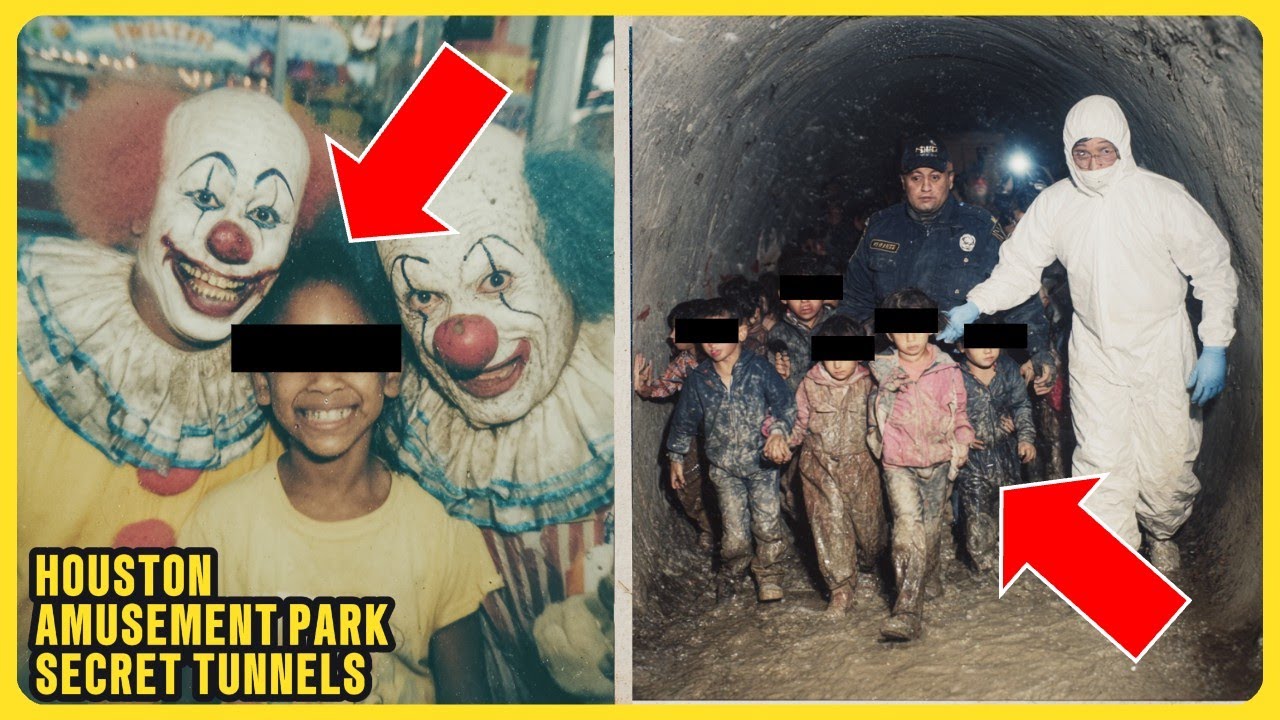
Inside, several children sat on thin mattresses beneath a single bare bulb. Dirty. Exhausted. Terrified. Kayla was there.
A man sat nearby.
Without makeup, without costume, he looked ordinary. Familiar. The kind of face people passed every day without noticing. Kayla saw her mother and whispered words that dismantled any remaining doubt.
“The clowns brought us here.”
Denise stepped back and called emergency services.
This time, no one dismissed her.
Police, tactical units, and emergency crews flooded the park. Guided through the tunnels, officers secured the room and arrested Arthur Wynn—the performer known as “Mr. Patches”—without resistance.
As the children emerged into daylight, investigators uncovered the larger truth. The tunnels connected to drainage routes beneath the city. The park’s noise, crowds, and trust in performers had been used as cover.
What shocked Denise most was not how hidden it all was—but how many signs had been ignored.
The tunnels were sealed. Policies changed. Statements were issued.
For Denise, none of that mattered as much as the weight of Kayla in her arms.
She had been told she was mistaken. Emotional. Unreliable. She had been given a story designed to make her go home.
She didn’t accept it.
And because she didn’t, her daughter did.
Sometimes, the most dangerous thing isn’t what’s hidden beneath the surface.
It’s how easily we’re taught not to look.